
Rachel Amphlett
USA Today bestselling author Rachel Amphlett is the creator of over 25 crime thrillers. Rachel’s titles are available for consideration to all parties interested in licensing IP.
View Rights Portal
USA Today bestselling author Rachel Amphlett is the creator of over 25 crime thrillers. Rachel’s titles are available for consideration to all parties interested in licensing IP.
View Rights Portal

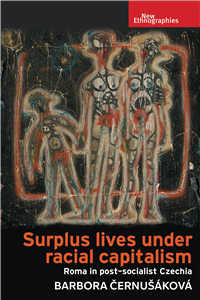
Surplus lives under racial capitalism is a critical contribution to the study of racial capitalism. It theorises the link between political economy, anti-Roma racism and modern forms of white supremacy in East Central Europe. The book shows how the introduction of capitalism in the 1990s overlapped with the rise of racialised disposability of Roma workers. Since then, their surplusing recurrently comes into sharp relief during the time of crisis. Surplus lives under racial capitalism is built on an investigation of how race and class structure the Czech labour regime and how they form a single site of struggle. One which binds workers across racialised divisions as surplusing continuously expands.
Critical theory and Independent Living explores intersections between contemporary critical theory and disabled people's struggle for self-determination. The book highlights the affinities between the Independent Living movement and studies of epistemic injustice, biopower, and psychopower. It discusses in depth the activists' critical engagement with welfare-state paternalism, neoliberal marketisation, and familialism. This helps develop a pioneering comparison between various welfare regimes grounded in Independent Living advocacy. The book draws on the activism of disabled people from the European Network on Independent Living (ENIL) by developing case studies of the ENIL's campaigning for deinstitutionalisation and personal assistance. It is argued that this work helps rethink independence as a form of interdependence, and that this reframing is pivotal for critical theorising in the twenty-first century.
 Trusted Partner
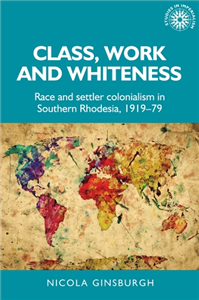
This book offers the first comprehensive history of white workers from the end of the First World War to Zimbabwean independence in 1980. It reveals how white worker identity was constituted, examines the white labouring class as an ethnically and nationally heterogeneous formation comprised of both men and women, and emphasises the active participation of white workers in the ongoing and contested production of race. White wage labourers' experiences, both as exploited workers and as part of the privileged white minority, offer insight into how race and class co-produced one another and how boundaries fundamental to settler colonialism were regulated and policed. Based on original research conducted in Zimbabwe, South Africa and the UK, this book offers a unique theoretical synthesis of work on gender, whiteness studies, labour histories, settler colonialism, Marxism, emotions and the New African Economic History.
Trusted Partner

This is the first book to situate the territories and collective identities of former Yugoslavia within the politics of race - not just ethnicity - and the history of how ideas of racialised difference have been translated globally. The book connects critical race scholarship, global historical sociologies of 'race in translation' and south-east European cultural critique to show that the Yugoslav region is deeply embedded in global formations of race. In doing this, it considers the everyday geopolitical imagination of popular culture; the history of ethnicity, nationhood and migration; transnational formations of race before and during state socialism, including the Non-Aligned Movement; and post-Yugoslav discourses of security, migration, terrorism and international intervention, including the War on Terror and the present refugee crisis.
Trusted Partner


Make or break? Advertisements repeatedly praise „plant-based“ products or promise new mobility through ointments and dietary supplements. The tools of evidence-based pharmacy help to answer the question „Does this really help?“ This practical guide offers tips and explanations on how to be confident of finding the relevant scientific literature, critically evaluate clinical studies, and interpret therapeutic results. The book provides guidance on how to classify the quality of reviews and meta-analyses and assess the reliability of guidelines in everyday healthcare practice. Practical examples help to avoid pitfalls in evaluation and to understand the statistical details. An extensive appendix with technical terms, checklists, important institutions of evidence-based medicine and further sources completes the book.
Trusted Partner
 Trusted Partner
 Trusted Partner
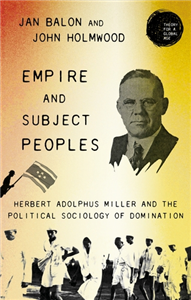
The book outlines the sociological arguments and political activities of the US pragmatist sociologist, Herbert Adolphus Miller (1875-1951). Miller was part of the milieu of Chicago sociology and involved in its studies of race and immigration. He took a distinctly more radical approach and developed a novel political sociology of domination in which he set out a critique of empires, the plight of subject minorities and the risks associated with the inevitable nationalist responses. Where others have identified with the 'internationalisation' of nationalism, Miller sought to make the nation 'international'. He was actively involved in movements for racial justice, Czechoslovakian independence, the formation of the Mid-European Union of subject peoples, as well as support for Korean and Indian independence. He was dismissed by Ohio State University for his activism in 1932.
Trusted Partner

In the first book-length study of its kind 'Dickens and Race' examines Dickens's complex relationship with race shaped by the twin poles of racial science and fancy. Examining the intersection of the lifelong influence of childhood favourites Robinson Crusoe and Tales of the Arabian Night, and the African travel narratives for which the adult Dickens had a particular 'insatiable relish' with Dickens's interest in science, Dickens and Race offers a unique contextualisation of Dickens's fictional engagements with race in relation to his lesser-known journalism, with wider nineteenth-century debates about differences between humans, with issues of empire, and with the race shows of London. Dickens and Race will be useful to academics, postgraduates and undergraduates who are interested in Charles Dickens, Victorian studies, with racial difference and empire, and childhood. 'A valuable contribution to our understanding of Dickens as a global writer' Dr Cathy Waters, Reader in Victorian Studies at the University of Kent
Trusted Partner


Welche Art von Realität hat race? Welche Rolle spielen Wahrnehmungs- und Wissensformen bei ihrer Konstruktion? Was ist und wie funktioniert Rassismus? Das sind die zentralen Fragen, denen sich seit zwei Jahrzehnten das Forschungsfeld der Critical Philosophy of Race widmet, welches insbesondere in den USA wirkmächtige akademische und außerakademische Debatten angestoßen hat. Aber auch hierzulande ist die philosophische Beschäftigung mit race und Rassismus wichtig geworden, wie aktuelle Ereignisse und Diskussionen zeigen. Der Band stellt die noch junge Disziplin vor und präsentiert – zum Teil in deutscher Erstübersetzung – die einschlägigen Texte, u. a. von Kimberlé Crenshaw, Kwame Anthony Appiah, Tommie Shelby, Linda Martín Alcoff und Sally Haslanger.
Trusted Partner
 Trusted Partner

Risk, anxiety and moral panic are endemic to contemporary societies and media forms. How do these phenomena manifest in a place like South Africa, which features heightened insecurity, deep inequality and accelerated social change? What happens when cultures of fear intersect with pervasive systems of gender, race and class? Worrier state investigates four case studies in which fear and anxiety appear in radically different ways: the far right myth of 'white genocide'; so-called 'Satanist' murders of young women; an urban legend about township crime; and social theories about safety and goodness in the suburbs. Falkof foregrounds the significance of emotion as a socio-political force, emphasising South Africa's imbrication within globalised conditions of anxiety and thus its fundamental and often-ignored hypermodernity. The book offers a bold and creative perspective on the social roles of fear and emotion in South Africa and thus on everyday life in this complex place.
Trusted Partner
 Trusted Partner
Trusted Partner
Trusted Partner

The modern ideology of race, so important in twentieth-century Europe, incorporates both a theory of human societies and a theory of human bodies. Ian Campbell's new study examines how the elite in early modern Ireland spoke about human societies and human bodies, and demonstrates that this elite discourse was grounded in a commitment to the languages and sciences of Renaissance Humanism. Emphasising the education of all of early modern Ireland's antagonistic ethnic groups in common European university and grammar school traditions, Campbell explains both the workings of the learned English critique of Irish society, and the no less learned Irish response. Then he turns to Irish debates on nobility, medicine and theology in order to illuminate the problem of human heredity. He concludes by demonstrating how the Enlightenment swept away these humanist theories of body and society, prior to the development of modern racial ideology in the late eighteenth century. ;
Trusted Partner
Why are constitutionalist ideals so prominent in science fiction? Does Independence Day depict self-defence as a legal concept with absolute limits? Is international law lost in space? This innovative interdisciplinary volume represents the first exploration of the relationship between international law and cinema. From Star Wars to Werner Herzog, The Godfather to The West Wing, this book uncovers a diverse range of representations of international law and its norms in film and television. Examining the wider links between international law, cinema, and ideology, the contributions not only examine visual representations of international law, but they offer an essential insight into the functions fulfilled by these cinematic representations. Providing an extraordinary introduction to a variety of perspectives on core international legal questions, Cinematic perspectives on international law extends a valuable methodology by which international lawyers can critique the depiction of international law in film.
Trusted Partner
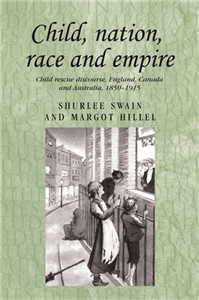
Child, nation, race and empire is an innovative, inter-disciplinary, cross cultural study that contributes to understandings of both contemporary child welfare practices and the complex dynamics of empire. It analyses the construction and transmission of nineteenth-century British child rescue ideology. Locating the origins of contemporary practice in the publications of the prominent English Child rescuers, Dr Barnardo, Thomas Bowman Stephenson, Benjamin Waugh, Edward de Montjoie Rudolf and their colonial disciples and literature written for children, it shows how the vulnerable body of the child at risk came to be reconstituted as central to the survival of nation, race and empire. Yet, as the shocking testimony before the many official enquiries into the past treatment of children in out-of-home 'care' held in Britain, Ireland, Australia and Canada make clear, there was no guarantee that the rescued child would be protected from further harm. ;
Trusted Partner

Child, nation, race and empire is an innovative, inter-disciplinary, cross cultural study that contributes to understandings of both contemporary child welfare practices and the complex dynamics of empire. It analyses the construction and transmission of nineteenth-century British child rescue ideology. Locating the origins of contemporary practice in the publications of the prominent English Child rescuers, Dr Barnardo, Thomas Bowman Stephenson, Benjamin Waugh, Edward de Montjoie Rudolf and their colonial disciples and literature written for children, it shows how the vulnerable body of the child at risk came to be reconstituted as central to the survival of nation, race and empire. Yet, as the shocking testimony before the many official enquiries into the past treatment of children in out-of-home 'care' held in Britain, Ireland, Australia and Canada make clear, there was no guarantee that the rescued child would be protected from further harm.
Trusted Partner
 Trusted Partner

Critical Games is about the games we play (whether we know it or not), the ways we play them (for fun, but also to win, and to gain approval from others), and what happens when they get out of hand. The book interrogates the theory of play and gaming, with a particular focus on the games played by literary authors and literary critics. Drawing on (often self-critical) autobiography, as well as readings in texts across a range of languages, Tim Beasley-Murray plays with academic conventions to highlight what is at stake in them, turning to the Game of Literature, from Kafka to Carrère, to seek models and warnings of the outcomes of taking games too seriously, or not taking them seriously enough.

