Your Search Results

      • Trusted Partner
        January 2016

        Das Sams und die Wunschmaschine und eine weitere Geschichte

        by Paul Maar, Monty Arnold, Santiago Ziesmer, Kay Poppe, Kay Poppe, Paul Maar, Christiane Krah

        Das Sams und die Wunschmaschine Die Wunschpunkte im Gesicht des Sams verschwinden nach und nach. Höchste Zeit, dass Herr Taschenbier seine Erfindung - die Wunschmaschine - fertig stellt. Die hat er auf dem Dachboden von Frau Rotkohl versteckt, wo er sich und das Sams hin wünscht. Doch sein Wunsch ist viel zu ungenau und die beiden landen auf einem falschen Dachboden … Matti, Momme und die Zauberbohnen Der Momps Matti lebt mit seinem Bruder Momme auf einer Insel irgendwo im Meer. Während Matti von Abenteuern in fremden Ländern träumt, ist Momme zu Hause am glücklichsten. Deshalb macht sich Matti eines Tages allein auf eine Reise. Noch ahnt er nicht, was die Zauberbohnen anrichten, die ihm der Uralte mit auf den Weg gegeben hat … Vorgelesen von Monty Arnold und Santiago Ziesmer und untermalt mit vielen Geräuschen und Musik.

      • Trusted Partner
        August 2012

        Es hummelt eine Brumm

        Geschichten und Gedichte vom Sams, Professor Monogrohm, dem Kater Traugott und anderen

        by Paul Maar, Ulrich Noethen, August Zirner, Ursula Illert, Sebastian Blomberg, Walter Kreye, Jürgen Thormann, Santiago Ziesmer, Carla Sachse, Andreas Fröhlich, Peter Weis, Felix von Manteuffel, Frank Oberpichler, Dieter Faber, Matthias Scheuer, Benjamin Dittrich, Eduardo Garcia, Uwe Zillner, Ute Krause, Frank Gustavus

        Die große Paul-Maar-Anthologie Ein wunderbarer Querschnitt durch das Werk eines der bedeutendsten Kinder- und Jugendbuchautoren deutscher Sprache: Eine Schatzkammer voll spannender Geschichten, herrlicher Gedichte und humorvoller Reime. Und natürlich sind sie alle mit dabei: das Sams, Professor Monogrohm, die Affen Kukuk und Schlevian und viele mehr. Es lesen u. a. Andreas Fröhlich, Walter Kreye, Ulrich Noethen, Felix von Manteuffel, Carla Sachse, Ursula Illert, Peter Weis, Santiago Ziesmer und August Zirner.

      • Trusted Partner
      • Trusted Partner
        Literature & Literary Studies
        May 2013

        Literary culture in Cuba

        by Par Kumaraswami, Antoni Kapcia

      • Trusted Partner
      • Trusted Partner
        1981

        Sie träumten alle von Cuba

        Die Lebensgeschichte eines spanischen Auswanderers. Roman

        by Miguel Barnet, Anneliese Botond

      • Trusted Partner
      • Trusted Partner
      • Trusted Partner
        August 2024

        Rom bin ich

        Cäsar. Der Aufstieg. Roman

        by Santiago Posteguillo

      • Trusted Partner
        February 2008

        Roter April

        Roman

        by Santiago Roncagliolo, Angelica Ammar

        Es ist Karwoche in Ayacucho, ein düsteres Spektakel von Blut und Exzeß. Als der stellvertretende Bezirksstaatsanwalt Félix Chacaltana, noch neu auf dem Posten in der Andenprovinz, mit seiner ersten Leiche konfrontiert wird, hofft er auf rasche Abwicklung. Erst aber muß er versuchen, mit den hiesigen Machtverhältnissen zurechtzukommen – der Militärkommandant jedenfalls gibt ihm deutlich genug zu verstehen, daß an einer Aufklärung des Falls hier niemand interessiert ist. Doch die Leiche ist so grausig verstümmelt, die Umstände ihres Auftauchens sind so dubios, daß Chacaltana, der an Gesetz und Ordnung glaubt und alles andere als ein Draufgänger ist, nicht anders kann, als weiterzuforschen. Was sind das für Spuren, die auf die Terrororganisation Leuchtender Pfad hinweisen? Und warum drückt ihm der Militärkommandant eine Dienstwaffe in die Hand? Schon bald hat Chacaltana alle Gewißheiten verloren und sieht sich unversehens selbst in einen Strudel aberwitziger Gewalt gezogen. Vor dem sehr realen Hintergrund der politischen und gesellschaftlichen Abgründe seines Landes erzählt der junge peruanische Autor einen temporeichen, psychologisch eindringlichen Thriller, wofür ihm sogleich die internationale Aufmerksamkeit zuteil wurde. Roter April erhielt den Alfaguara-Preis 2006 und wird in zahlreiche Sprachen übersetzt.

      • Trusted Partner
        The Arts
        December 2025

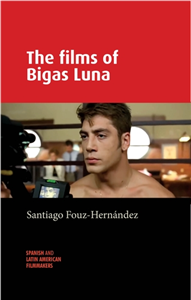
        The films of Bigas Luna

        by Santiago Fouz-Hernández

        The films of Bigas Luna is the first comprehensive English-language study of the complete filmography of Spanish filmmaker Bigas Luna, spanning from Tatuaje (1976) to DiDi Hollywood (2010). Engaging with theoretical frameworks such as haptic cinema, erotic cinema, auteur theory, and studies of gender, sexuality, and national identity, the book situates close readings of Bigas Luna's films within broader discussions of production and marketing. Fouz Hernández draws on extensive archival research-including original screenplays, press materials, and interviews with industry professionals-while engaging with previous scholarship in multiple languages. Structured into five thematic chapters, the book explores key concerns in Bigas Luna's work, including genre, gender representation, Iberian and Mediterranean identities, and meta-cinematic narratives. It can be read as a cohesive study of his oeuvre or as a reference for specific films.

      • Trusted Partner
      • Trusted Partner
      • Trusted Partner
      • Trusted Partner
        Humanities & Social Sciences
        June 2025

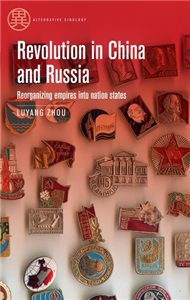
        Revolution in China and Russia

        Reorganizing empires into nation states

        by Luyang Zhou

        Most scholars believe that China's nationality policy, like that of other socialist states, imitated the Soviet nationality model, a system which has been termed an "affirmative action empire." This book offers two contributions to the literature which run counter to this convention. First, it argues that the People's Republic of China (PRC) and the Soviet Union (USSR) were different; while the PRC was aimed to build an ideal-typical nation-state, the USSR was an open union of nation-states that was only temporarily confined to a physical territory. Second, while scholars who have noted this difference attribute it to contextual factors, such as ethnic structure, geopolitical status, and Russia's intervention into the Chinese Revolution, this book contends that context shaped the Sino-Soviet difference, yet it did not determine it. Rather, there was significant leeway between the implications of the contextual factors, and what the policy-designers ultimately established. This book probes who held agency, and how these individuals bridged this gap.

      • Trusted Partner
      • Trusted Partner
        Humanities & Social Sciences
        September 2025

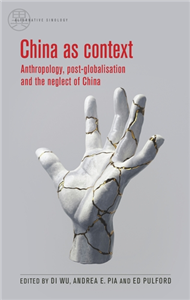
        China as context

        Anthropology, post-globalisation and the neglect of China

        by Di Wu, Andrea E. Pia, Ed Pulford

        Decades-old calls to promote the significance of China for anthropological theory and the social sciences more generally ring more urgently today given China's importance to social, political and economic life globally. Yet Chinese-grounded ideas remain marginal to the discipline, and scholarly discussions retain a sense of China as an 'Other' apart from the 'real' world, and thus unsuitable or generating widely applicable theoretical ideas. Inspired by East Asian postcolonial scholarship, this volume tackles this unsettling situation head-on, arguing that without taking China seriously as a powerful agent, a locus of knowledge production, and a new discursive topos of an emerging post-global imaginary, anthropologists and other social scientists may fail to adequately analyse the global present and make sense of both the material and immaterial forces that animate it, wherever and however they work. Amid the end of Western globalisation and shifting anthropological understandings of relations between ethnography and theory, we show how 'China' must be understood as the ordinary 'context' for anthropological research practices worldwide.

      • Trusted Partner
        2024

        Where is Russia Heading?

        by Jens Siegert

        Vladimir Putin has been ruling Russia for 25 years. There is no end in sight to his dictatorship. He relies on repression at home and is waging a war of destruction against a neighbouring country. The conflict with the West has long become a systemic conflict between an illiberal-autocratic ideology and liberal-democratic principles. Nothing will change as long as Putin remains in power. Nevertheless, as far as can be ascertained under unfree conditions, the majority of the population seems to be supporting Putin. Does this mean that too many people in Russia do not want democracy or peace? Will everything remain the same after Putin? Or is there a chance that Russia will eventually take a different, more democratic path? Whatever the outcome of the war in Ukraine, Russia is not going to disappear. We will still have to deal with our big neighbour in the east. This makes it all the more important to focus on longer-term developments. As a recognised expert on Russian history and society, the author outlines what the post-Putin era might look like. His in-depth analysis makes it clear that Russia is partly Putin, but Putin is not everything about Russia.

      Subscribe to our

      newsletter