Editions Denoël
Founded in 1930, Editions Denoël publish quality fiction and non fiction, as well as graphic novels and illustrated books.
View Rights Portal
Founded in 1930, Editions Denoël publish quality fiction and non fiction, as well as graphic novels and illustrated books.
View Rights Portal
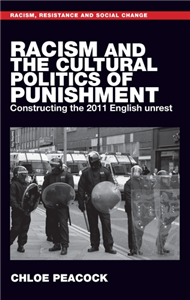
Justifying (in)justice reveals how processes of ignorance are vital to legitimising punitive and discriminatory criminal justice policy and practices. Focusing on the state's startlingly harsh response to the English 'riots' of 2011, the book draws together unique insights from interviews with prosecutors, sentencers, defence lawyers and policymakers at the heart of the response, alongside analysis of media and political debates. Peacock explores the forms of unknowing that were mobilised to justify and normalise the harsh and inequitable punishment of the 'rioters', from amnesia about police racism and Britain's long history of unrest, to widespread denial about the violence of the prison system. Looking to recent events in Britain and beyond, the book offers timely insight into the cultural processes underpinning the punitive systems that disproportionately harm marginalised and racially minoritised communities.

 Trusted Partner
 Trusted Partner

In defence of councillors is an unashamed defence of local representative democracy and of those elected to serve as councillors from the often ill-informed, ill-judged and inaccurate criticism made by the media, government and public, of councillors' personal, political and professional roles. By using qualitative research from a number of related projects, the book examines the roles, functions and responsibilities of councillors and the expectations placed upon them by citizens, communities and government. It also examines the impact council membership has on other facets of the councillor's life. The book examines how councillors develop strategies to overcome the constraints and restrictions on their office so as to be able to govern their communities, balance their political and public life and democratise and hold to account a vast array of unelected bodies that spend public money and develop public policy without the electoral mandate and legitimacy held by our councillors. ;
Trusted Partner

In defence of councillors is an unashamed defence of local representative democracy and of those elected to serve as councillors from the often ill-informed, ill-judged and inaccurate criticism made by the media, government and public, of councillors' personal, political and professional roles. By using qualitative research from a number of related projects, the book examines the roles, functions and responsibilities of councillors and the expectations placed upon them by citizens, communities and government. It also examines the impact council membership has on other facets of the councillor's life. The book examines how councillors develop strategies to overcome the constraints and restrictions on their office so as to be able to govern their communities, balance their political and public life and democratise and hold to account a vast array of unelected bodies that spend public money and develop public policy without the electoral mandate and legitimacy held by our councillors.
Trusted Partner
 Trusted Partner


This title helps people with autism to effectively cope with anger, frustration, and injustice. This practical book offers a training-program which can be completed alone, based on scientifically examined treatment methods. It is especially suited to be used together with a caretaker. The first part of the book clearly describes the connection between autism and self-control issues. The second part offers practical exercises which explain how to recognize anger in time and how strong emotions such as anger and frustration. Numerous tips, exercises and relatable examples help the reader to experience more direction and control. Target Group: Adults with autism and involved caretakers
Trusted Partner

An Apology for Poetry (or The Defence of Poesy), by the celebrated soldier-poet Sir Philip Sidney, is the most important work of literary theory published in the Renaissance. The new introduction and notes include a wealth of new information and new readings drawing on recent developments in Renassance Studies. Unfamiliar words and phrases are glossed, classical and other references explained, and difficult passages analysed in detail. The first separate edition of Sidney's seminal text to be published for more than a decade. Since 1965 Geoffrey Shepherd's edition of the Apology has been the standard, and this revision of Shepherd's edition, with a new introduction and extensive notes, is designed to introduce Sidney's best-known work to a new generation of readers at the beginning. ;
Trusted Partner

Why adopt a poststructural lens for the reading of the military strategy of national missile defence (NMD)? No doubt, when contemplating an attack on US territory by intercontinental ballistic missiles, consulting Michel Foucault and critical international relations theory scholars may not seem the obvious route to take. The answer to this lies in another question: why has there been so much interest and continuous investment in NMD deployment when there is such ambiguity surrounding the status of threat to which it responds, controversy over its technological feasibility and concern about its cost? Posed in this manner, the question cannot be answered on its own terms - the terms given in official accounts of NMD that justify the system's significance on the basis of strategic feasibility studies and conventional threat predictions guided by worst-case scenarios. Instead, this book argues that the preferences leading to NMD deployment must be understood as satisfying requirements beyond strategic approaches and issues. In turning towards the interpretative modes of inquiry provided by critical social theory and poststructuralism, this book contests the conventional wisdom about NMD and suggests reading the strategy in terms of US identity. Presented as an analysis of discourses on threats to national security, around which the need for NMD deployment is predominantly framed, this book is an effort to let the two fields of critical international relations theory and US foreign policy speak directly to each other. It seeks to do so by showing how the concept of identity can be harnessed to an analysis of a contemporary military-strategic practice. ;
Trusted Partner


Mit schönem Farbschnitt in der Erstauflage – Lieferung je nach Verfügbarkeit Auf dem Platz gewinnt er jedes Spiel. Aber kann er auch ihr Herz gewinnen? Als die Eltern der 20-jährigen Payton bei einem tragischen Unfall ums Leben kommen, bricht für sie eine Welt zusammen. Da sie die Schulden für ihr Elternhaus in Tennessee nicht abbezahlen kann, zieht sie in das Poolhaus ihres Onkels nach Cape Coral in Florida. Ein Albtraum für die mehrgewichtige Musikstudentin. Zwischen oberflächlichen Models und durchtrainierten College-Sportlern versucht Payton, mit ihrer Trauer fertig zu werden. Und mit den Gefühlen, die Cameron, der Quarterback der Cape Coral Tigers, in ihr auslöst … Bestseller-Autorin Mimi Heeger nimmt Leser*innen ab 16 Jahren in diesem bewegenden New-Adult-Roman mit auf eine emotionale Reise in Paytons Welt – eine Welt voller Trauer, Bodyshaming, Oberflächlichkeiten und der Suche nach sich selbst. Aber auch eine Welt voller Sommer, Sonnenschein und glitzerndem Meer. Lass dich mitreißen von der zarten Slow-Burn-Romance, die sich entwickelt und die Paytons Leben für immer verändern wird. Break through my Defense: Ein Sommer voller Tragödien, Touchdowns und der großen Liebe Voller Gefühle: Ein bewegender New-Adult-Roman für Leser*innen ab 16 Jahren. Spannung und Liebe: Die mitreißende Sports Romance mit dem Trope Enemies-to-Lovers fesselt von der ersten bis zur letzten Seite. Starke Protagonistin: Eine inspirierende Geschichte über Bodyshaming, Selbstfindung, die Kraft der Liebe und die Überwindung von Trauer. Genial ausgestattet in der Erstauflage: Softcover mit Klappen, trendig illustriertem Buchschnitt und coolem Lesezeichen zum Abtrennen.
Trusted Partner


The situation in our society is precarious. The ecological shocks are omnipresent. The mere continuation of our lifestyles fixated on expansion and self-development has long since reached its limits. As if intoxicated by ourselves, we consume our world voraciously and without restraint. We need moderation and frugality that lead us out of the ecological and social dead ends and hold both the individual and Politics to account. We are by no means powerless and are perfectly capable of leading a life that offers prospects for a humane future. However, our idea of freedom needs urgent correction. For this endeavour to succeed, we need the courage to face reality and the willingness, in a spirit of solidarity, to say goodbye to a false life and join the alliance of renunciation and freedom. Then we will be free – differently and better.
Trusted Partner

The phenomenon of anti-scientific disinformation has been discussed in the recent past under the acronym FLICC (Fake experts, Logical fallacies, Impossible expectations, Cherry-picking and Conspiracy theories), especially as it pertains to the topic of climate change. What is generally missing however is a more comprehensive consideration of science denial in diff erent disciplines with a critical examination of the central arguments and a comparison of the parallels. Holm Gero Hümmler dedicates himself to this task in this readable and fact-orientated book on topics such as genetic engineering, mobile phone networks, radioactivity, and chips that are implanted under the skin for medical reasons.
Trusted Partner
Trusted Partner
Critical theory and Independent Living explores intersections between contemporary critical theory and disabled people's struggle for self-determination. The book highlights the affinities between the Independent Living movement and studies of epistemic injustice, biopower, and psychopower. It discusses in depth the activists' critical engagement with welfare-state paternalism, neoliberal marketisation, and familialism. This helps develop a pioneering comparison between various welfare regimes grounded in Independent Living advocacy. The book draws on the activism of disabled people from the European Network on Independent Living (ENIL) by developing case studies of the ENIL's campaigning for deinstitutionalisation and personal assistance. It is argued that this work helps rethink independence as a form of interdependence, and that this reframing is pivotal for critical theorising in the twenty-first century.
Trusted Partner
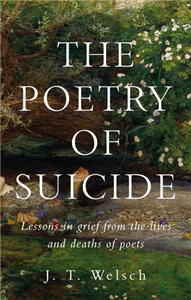
A profound exploration of the connection between poetry and suicide. 'Suicides have a special language,' Anne Sexton wrote in her 1964 poem 'Wanting to Die'. But is it a language we can learn to read? In The poetry of suicide, J. T. Welsch interweaves stories of poets who took their own lives with the long history of suicide in his own family, searching for a new way of understanding these difficult deaths. Beginning with Hamlet's 'To be or not to be?', he delves into the work of Dante, Sylvia Plath, Vladimir Mayakovsky and others, asking what it can teach us about suicide's messy reality. Suicide is more like poetry than we realise, Welsch argues. Both are filled with ambiguities, contradictions and unknowable intentions. Both demand and resist interpretation. Recovering the personal dimension often lost in our medicalised public discourse, Welsch finds practical ways of confronting suicide's poem-like difficulties.
Trusted Partner

The 1948 war that led to the creation of the State of Israel also resulted in the destruction of Palestinian society when some 80 per cent of the Palestinians who lived in the major part of Palestine upon which Israel was established became refugees. Israelis call the 1948 war their 'War of Independence' and the Palestinians their 'Nakba', or catastrophe. After many years of Nakba denial, land appropriation, political discrimination against the Palestinians within Israel and the denial of rights to Palestinian refugees, in recent years the Nakba is beginning to penetrate Israeli public discourse. This book, available at last in paperback, explores the construction of collective memory in Israeli society, where the memory of the trauma of the Holocaust and of Israel's war dead competes with the memory claims of the dispossessed Palestinians. Against a background of the Israeli resistance movement, Lentin's central argument is that co-memorating the Nakba by Israeli Jews is motivated by an unresolved melancholia about the disappearance of Palestine and the dispossession of the Palestinians, a melancholia that shifts mourning from the lost object to the grieving subject. Lentin theorises Nakba co-memory as a politics of resistance, counterpoising co-memorative practices by internally displaced Israeli Palestinians with Israeli Jewish discourses of the Palestinian right of return, and questions whether return narratives by Israeli Jews, courageous as they may seem, are ultimately about Israeli Jewish self-healing rather than justice for Palestine.
Trusted Partner
The moral problem of authority is the challenge of reconciling legitimate authority (the right to rule) with the demands of freedom and rationality. In this book, I argue that authority can have legitimacy, but when it does it generates a moral dilemma, where the obligation to obey comes at some cost to freedom and reason. Hence, not only do I depart from the views of those who insist that authority can never have legitimacy, but also those who maintain that insofar as authority is legitimate it simply satisfies the demands of freedom or rationality. My focus here will be on both what it is that justifies authority (in particular focusing on membership, and the goods of membership) as well what type of reason an authoritative directive is, how it can come into conflict with others reasons, and how those conflicts are resolved.
Trusted Partner
Suicide and the Gothic is the first protracted study of how the act of self-destruction recurs and functions within one of the most enduring and popular forms of fiction. Comprising eleven original essays and an authoritative introduction, this collection explores how the act of suicide has been portrayed, interrogated and pathologised from the eighteenth century to the present. The featured fictions embrace both canonical and the less-studied texts and examine the crisis of suicide - a crisis that has personal, familial, religious, legal and medical implications - in European, American and Asian contexts. Featuring detailed interventions into the understanding of texts as temporally distant as Thomas Percy's Reliques and Patricia Highsmith's crime fictions, and movements as diverse as Wertherism, Romanticism and fin-de-siècle decadence, Suicide and the Gothic provides a comprehensive and compelling overview of this recurrent crisis in fiction and culture.
Trusted Partner
Trusted Partner