
American Diabetes Association
The American Diabetes Association is the world’s largest publisher of titles on diabetes care and treatment, setting the standards of patient care based on the latest research.
View Rights Portal
The American Diabetes Association is the world’s largest publisher of titles on diabetes care and treatment, setting the standards of patient care based on the latest research.
View Rights Portal
Diametric Verlag is an independent publisher founded by Jutta A. Wilke providing high-quality specialized literature focused on women's issues like Women's Health, Gender Medicine and Feminism. All titles are published in German and available in print and digital editions.
View Rights Portal

This innovative study engages critically with existing conceptualisations of diaspora, arguing that if diaspora is to have analytical purchase, it should illuminate a specific angle of migration or migrancy. To reveal the much-needed transformative potential of the concept, the book looks specifically at how diasporas undertake translation and decolonisation. It offers various conceptual tools for investigating diaspora, with a specific focus on diasporas in the Global North and a detailed empirical study of the Kurdish diaspora in Europe. The book also considers the backlash diasporas of colour have faced in the Global North.

Since the early 2000s, Turkey has shown an unprecedented interest in its diaspora. This book provides the first in-depth examination of the institutionalisation of Turkey's diaspora engagement policy since the Justice and Development Party's rise to power in 2002, the Turkish diaspora's new role as an agent of diplomatic goals, and how Turkey's growing sphere of influence affects intra-diaspora politics and diplomatic relations with Europe. The book is based on fieldwork in Turkey, France and Germany, and interviews conducted with diaspora organisation leaders and policymakers. Diasporas have become transformative for relations at the state-to-state level and blur the division between the domestic and the foreign. A case study of Turkey's diasporas is significant at a time when emigrants from Turkey form the largest Muslim community in Europe and when issues of diplomacy, migration and citizenship have become more salient than ever.
 Trusted Partner
 Trusted Partner
 Trusted Partner
 Trusted Partner

This book outlines the ways sport helps to create transnational social fields that interconnect migrants dispersed across a region known as the Black Atlantic: England, North America and the Caribbean. Many Caribbean men's stories about their experiences migrating to Canada, settling in Toronto, finding jobs and travelling involved some contact with a cricket and social club. This book offers a unique contribution to black diaspora studies through showing sport as a means of allaying the pain of ageing in the diaspora, creating transnational social networks and marking ethnic boundaries on a local scale. The book also brings black diaspora analysis to sport research, and through a close look at what goes on before, during and after cricket matches provides insights into the dis-unities, contradictions and complexities of Afro-diasporic identity in multicultural Canada. It will be of interest to students and scholars in sociology, sport studies and black diaspora studies.
Trusted Partner

This edited volume reframes the Caribbean as a paradigm of ecological resilience and creativity by bringing together the voices of contemporary artists and scholars who are at the forefront of environmental activism in the region and across its diasporas. While dominant narratives percolating from the environmental sciences to the mainstream press present the Caribbean as a frontier of planetary disaster, the contributors to this volume show how the region offers radical models for overcoming the environmental challenges of the present. At the heart of this argument lies the history of the Caribbean as a centre for grassroots forms of anti-colonial and anti-capitalist resistance founded upon nature-centred cosmologies and practices. Caribbean Eco-Aesthetics shows how contemporary artists are mobilising this radical heritage in a bid to unlock alternative planetary futures.
Trusted Partner
 Trusted Partner
 Trusted Partner
 Trusted Partner

This book probes the causes of and conditions for the preference of the members of the British-Bangladeshi community for a religion-based identity vis-à-vis ethnicity-based identity, and the influence of Islamists in shaping the discourse. The first book-length study to examine identity politics among the Bangladeshi diaspora delves into the micro-level dynamics, the internal and external factors and the role of the state and locates these within the broad framework of Muslim identity and Islamism, citizenship and the future of multiculturalism in Europe. Empirically grounded but enriched with in-depth analysis, and written in an accessible language this study is an invaluable reference for academics, policy makers and community activists. Students and researchers of British politics, ethnic/migration/diaspora studies, cultural studies, and political Islam will find the book extremely useful. ;
Trusted Partner

This book examines the distinctive aspects that insiders and outsiders perceived as characteristic of Irish and Scottish ethnic identities in New Zealand. When, how, and why did Irish and Scots identify themselves and others in ethnic terms? What characteristics did the Irish and the Scots attribute to themselves and what traits did others assign to them? Did these traits change over time and if so how? Contemporary interest surrounding issues of ethnic identities is vibrant. In countries such as New Zealand, descendants of European settlers are seeking their ethnic origins, spurred on in part by factors such as an ongoing interest in indigenous genealogies, the burgeoning appeal of family history societies, and the booming financial benefits of marketing ethnicities abroad. This fascinating book will appeal to scholars and students of the history of empire and the construction of identity in settler communities, as well as those interested in the history of New Zealand.
Trusted Partner
Trusted Partner
Surviving repression tells the story of the Muslim Brotherhood following the 2013 coup d'état in Egypt. The Brotherhood gained legal recognition and quickly rose to power after the 2011 Arab uprisings, but its subsequent removal from office marked the beginning of the harshest repression of its troubled history. Forced into exile, the Brotherhood and its members are now faced with a monumental task as they rebuild this fragmented organisation. Drawing on extensive fieldwork and interviews with current and former members of the Brotherhood, the book explores this new era in the movement's history, emphasising first-hand experiences, perspectives and emotions to better understand how individual responses to repression are affecting the movement as a whole. Surviving repression offers a unique insight into the main strategic, ideological and organizational debates dividing the Brotherhood.
Trusted Partner

This book looks at India in the context of a globalized world. It starts by looking at the history of Indian civilization, exploring the roots of Indian identity and highlighting processes such as foreign invasions, foreign trade, cultural imperialism, colonial rule and the growth of Indian nationalism. The book examines the gradual democratization of Indian politics. Cultural and ethnic divisions in Indian society are examined in depth, as are the problems that have prevented economic development and stood in the way of economic liberalization. The history of India's integration into the global economy is considered, and the opportunities available to the country in the early years of the 21st century are detailed. The final chapters consider the Indian government's perception of the Indian diaspora, as well as the changing priorities reflected in India's foreign policy since 1947.
Trusted Partner
Interventions on behalf of Armenia and Armenians have come to be identified by scholars and practitioners alike as defining moments in the history of humanitarianism. This book reassesses these claims, critically examining a range of interventions by governments, international and diasporic organizations, and individuals that aimed to 'save Armenians'. Drawing on multidisciplinary perspectives, it traces the evolution of these interventions from the late-nineteenth century to the present day, paying particular attention to the aftermaths of the genocide and the upheavals of the post-Soviet period. The contributions connect diverse places (the Caucasus, Russia, the Middle East, Europe, North America, South America, and Australia) to reveal shifting transnational networks of aid and intervention. Aid to Armenia explores this history, and engages critically with contemporary humanitarian questions facing Armenia, the South Caucasus region and the wider diaspora.
Trusted Partner
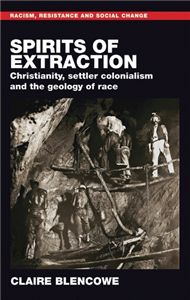
Spirits of extraction revisits the troubling history of socially reformist, ostensibly anti-racist, Christianity and its role in the expansion of the extractive industries, British imperialism, and settler colonialism. The book explores key moments in the history of Methodism and the evangelical movement. Colonial fears, and the attempt to 'civilise savages', were crucial to the movement's foundation in eighteenth-century industrialising Bristol, England. Through the culture of the Cornish mining diaspora of the nineteenth century, Methodism enmeshed with all the complexity of race and labour-structures of the British empire. At the same time, in Anishinaabewaki/Upper Canda/Ontario, Methodist missionaries laid the foundation of abusive education and racialised ideas of redemption that both enable and sacralise the mining industry. Through these histories of our present, the book theorises the relation of religion and education to racism, modernity, biopower, extractivism, and the geology of race.
Trusted Partner

This book, newly available in paperback, looks at India in the context of a globalized world. It starts by looking at the history of Indian civilization, exploring the roots of Indian identity and highlighting processes such as foreign invasions, foreign trade, cultural imperialism, colonial rule and the growth of Indian nationalism. The book examines the gradual democratization of Indian politics. Cultural and ethnic divisions in Indian society are examined in depth, as are the problems that have prevented economic development and stood in the way of economic liberalization. The history of India's integration into the global economy is considered, and the opportunities available to the country in the early years of the twenty-first century are detailed. The final chapters consider the Indian government's perception of the Indian diaspora, as well as the changing priorities reflected in India's foreign policy since 1947.
Trusted Partner
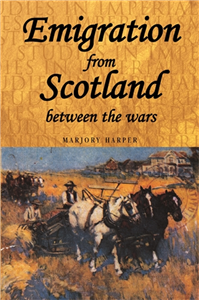
Emigration from Scotland has always been very high. However, emigration from Scotland between the wars surpassed all records; more people emigrated than were born, leading to an overall population decline. Why was it so many people left? Marjory Harper, whose knowledge is grounded in a deep understanding of the local records, maps out the many factors which worked together to cause this massive diaspora. After an opening section where the author sets the Scottish experience within the context of the rest of the British Isles, the book then divides the country geographically, starting with the Highlands, then coastal Scotland, and the urban Lowland highlighting in turn the factors that particularly influenced each of these areas. Harper then discusses the organised religious and political movements that encouraged emigration. By interweaving personal stories with statistical evidence Harper brings to life the reality behind the dramatic historical migration. ;
Trusted Partner

Emigration from Scotland has always been very high. However, emigration from Scotland between the wars surpassed all records; more people emigrated than were born, leading to an overall population decline. Why was it so many people left? Marjory Harper, whose knowledge is grounded in a deep understanding of the local records, maps out the many factors which worked together to cause this massive diaspora. After an opening section where the author sets the Scottish experience within the context of the rest of the British Isles, the book then divides the country geographically, starting with the Highlands, then coastal Scotland, and the urban Lowland highlighting in turn the factors that particularly influenced each of these areas. Harper then discusses the organised religious and political movements that encouraged emigration. By interweaving personal stories with statistical evidence Harper brings to life the reality behind the dramatic historical migration.


