
Your Search Results


-
Promoted Content

 Humanities & Social SciencesMarch 2026
Soviet materialities
Socialist things, environments and affects
by Mollie Arbuthnot, Christianna Bonin, Gabriella Ferrari
Soviet materialities explores how material transforms our understanding of Soviet culture, from the textures of domestic space in 1960s apartment blocks to Gulag labour on the Moscow canal, and from avant-garde literary theory in the 1920s to conceptual art under perestroika. It starts from the ethos that the material world shapes people and society. Taking a material approach-or a range of material approaches-can therefore illuminate aspects of the cultural production and lived experiences of Soviet socialism that are not reflected in other kinds of historical records. This edited volume brings cutting-edge research by emerging scholars together with the established voices who have broken the ground in this sub-field over the last twenty years and promises to make a major intervention in the study of Soviet history and culture.
-
Promoted Content
 Humanities & Social SciencesMarch 2022
Civic identity and public space
Belfast since 1780
by Dominic Bryan, Sean J. Connolly, John Nagle
Civic identity and public space, focussing on Belfast, and bringing together the work of a historian and two social scientists, offers a new perspective on the sometimes lethal conflicts over parades, flags and other issues that continue to disrupt political life in Northern Ireland. It examines the emergence during the nineteenth century of the concept of public space and the development of new strategies for its regulation, the establishment, the new conditions created by the emergence in 1920 of a Northern Ireland state, of a near monopoly of public space enjoyed by Protestants and unionists, and the break down of that monopoly in more recent decades. Today policy makers and politicians struggle to devise a strategy for the management of public space in a divided city, while endeavouring to promote a new sense of civic identity that will transcend long-standing sectarian and political divisions.
-
 Trusted Partner
 Humanities & Social SciencesApril 2025
The return of the housewife
Why women are still cleaning up
by Emma Casey
An illuminating look at the world of cleanfluencers that asks why the burden of housework still falls on women. Housework is good for you. Housework sparks joy. Housework is beautiful. Housework is glamorous. Housework is key to a happy family. Housework shows that you care. Housework is women's work. Social media is flooded with images of the perfect home. TikTok and Instagram 'cleanfluencers' produce endless photos and videos of women cleaning, tidying and putting things right. Figures such as Marie Kondo and Mrs Hinch have placed housework, with its promise of a life of love and contentment, at the centre of self-care and positive thinking. And yet housework remains one of the world's most unequal institutions. Women, especially poorer women and women of colour, do most low-paid and unpaid domestic labour. In The return of the housewife, Emma Casey asks why these inequalities matter and why they persist after a century of dramatic advances in women's rights. She offers a powerful call to challenge the prevailing myths around housework and the 'naturally competent' woman homemaker.
-
Trusted Partner
 Humanities & Social SciencesJuly 2022
Researching urban space and the built environment
by Jonathan Blaney, Simon Trafford, Jasmine Kilburn-Toppin, Elaine Tierney, Charlotte Wildman
-
Trusted Partner
 Literature & Literary StudiesMarch 2023
Sleep and its spaces in Middle English literature
Emotions, ethics, dreams
by Megan Leitch
Middle English literature is intimately concerned with sleep and the spaces in which it takes place. In the medieval English imagination, sleep is an embodied and culturally determined act. It is both performed and interpreted by characters and contemporaries, subject to a particular habitus and understood through particular hermeneutic lenses. While illuminating the intersecting medical and moral discourses by which it is shaped, sleep also sheds light on subjects in favour of which it has hitherto been overlooked: what sleep can enable (dreams and dream poetry) or what it can stand in for or supersede (desire and sex). This book argues that sleep mediates thematic concerns and questions in ways that have ethical, affective and oneiric implications. At the same time, it offers important contributions to understanding different Middle English genres: romance, dream vision, drama and fabliau.
-
Trusted Partner
 The ArtsMarch 2013
Space and being in contemporary French cinema
by James S. Williams
This book brings together for the first time five French directors who have established themselves as among the most exciting and significant working today: Bruno Dumont, Robert Guédiguian, Laurent Cantet, Abdellatif Kechiche, and Claire Denis. Whatever their chosen habitats or shifting terrains, each of these highly distinctive auteurs has developed unique strategies of representation and framing that reflect a profound investment in the geophysical world. The book proposes that we think about cinematographic space in its many different forms simultaneously (screenspace, landscape, narrative space, soundscape, spectatorial space). Through a series of close and original readings of selected films, it posits a new 'space of the cinematic subject'. Accessible and wide-ranging, this volume opens up new areas of critical enquiry in the expanding interdisciplinary field of space studies. It will be of immediate interest to students and researchers working not only in film studies and film philosophy, but also in French/Francophone studies, postcolonial studies, gender and cultural studies. Listen to James S. Williams speaking about his book http://bit.ly/13xCGZN. (Copy and paste the link into your browser) ;
-
Trusted Partner
 Literature & Literary StudiesAugust 2022
Edmund Spenser and the romance of space
by Tamsin Badcoe
Edmund Spenser and the romance of space advances the exploration of literary space into new areas, firstly by taking advantage of recent interdisciplinary interests in the spatial qualities of early modern thought and culture, and secondly by reading literature concerning the art of cosmography and navigation alongside imaginative literature with the purpose of identifying shared modes and preoccupations. The book looks to the work of cultural and historical geographers in order to gauge the roles that aesthetic subjectivity and the imagination play in the development of geographical knowledge: contexts ultimately employed by the study to achieve a better understanding of the place of Ireland in Spenser's writing. The study also engages with recent ecocritical approaches to literary environments, such as coastlines, wetlands, and islands, thus framing fresh readings of Spenser's handling of mixed genres.
-
Trusted Partner
-
Trusted Partner

Bis zum Mond
by Ryujin, Jang / Übersetzt von Dirks, Jan Henrik
Der Bestseller aus Südkorea, der Healing Fiction und Female Finance vereint Jang Ryujins Debütroman »Bis zum Mond« hat in Südkorea einen regelrechten Hype ausgelöst. Drei junge Frauen, die für einen der führenden Snack-Hersteller Koreas arbeiten, kämpfen mit mittelmäßigen Jobs und winzigen Wohnungen in Seoul – fast so klein wie Schuhkartons. Als eine der Freundinnen in Kryptowährungen investiert und dabei Erfolg hat, steigen auch die anderen ein. Doch führt dieser Schritt wirklich zum großen Geld und zur Freiheit vom öden Bürojob? Bestseller aus Südkorea: Ein literarischer Hype, der Leserinnen und Leser begeistert. Kryptowährungen & Female Finance: Die mutige Entscheidung, sein sowieso schon schmales Geld zu investieren. Healing Fiction: Eine Geschichte, die von Selbstbestimmung und dem Überwinden sozialer Grenzen erzählt. Der Roman erzählt eine bittersüße Geschichte über soziale Klasse, Reichtum und die Kraft starker Frauenfreundschaften. Es geht darum, sein Schicksal selbst in die Hand zu nehmen und neue Wege zu gehen.
-
Trusted Partner
 Literature & Literary StudiesJune 2021
Sleep and its spaces in Middle English literature
by Megan Leitch, Anke Bernau, David Matthews, James Paz
-
Trusted Partner
 Humanities & Social SciencesMarch 2014
The domestic, moral and political economies of post-Celtic Tiger Ireland
What rough beast?
by Kieran Keohane, Rob Kitchin, Carmen Kuhling
This book provides an analysis of neo-liberal political economics implemented in Ireland and the deleterious consequences of that model in terms of polarised social inequalities, impoverished public services and fiscal vulnerability as they appear in central social policy domains - health, housing and education in particular. Tracing the argument into the domains where the institutions are sustained and reproduced, this book examines the movement of modern economics away from its original concern with the household and anthropologically universal deep human needs to care for the vulnerable - the sick, children and the elderly - and to maintain inter-generational solidarity. The authors argue that the financialisation of social relations undermines the foundations of civilisation and opens up a marketised barbarism. Civic catastrophes of violent conflict and authoritarian liberalism are here illustrated as aspects of the 'rough beast' that slouches in when things are falling apart and people become prey to new forms of domination. ;
-
Trusted Partner
 Humanities & Social SciencesMarch 2017
Engendering whiteness
White women and colonialism in Barbados and North Carolina, 1627–1865
by Cecily Jones
Engendering whiteness represents a comparative analysis of the complex interweaving of race, gender, social class and sexuality in defining the contours of white women's lives in Barbados and North Carolina during the era of slavery. Despite their gendered subordination, their social location within the dominant white group afforded all white women a range of privileges. Hence, their whiteness, as much as their gender, shaped these women's social identities and material realities. Crucially, as the biological reproducers of whiteness, and hence the symbolic and literal embodiment and bearers of the state of freedom, they were critical to the maintenance and reproduction of the cultural boundaries of 'whiteness', and consequently the subjects of patriarchal measures to limit and control their social and sexual freedoms. Engendering whiteness draws on a wide variety of sources including property deeds, wills, court transcripts, and interrogates the ways in which white women could be simultaneously socially positioned within plantation societies as both agents and as victims. It also reveals the strategies deployed by elite and poor white women in these societies to resist their gendered subordination, to challenge the ideological and social constraints that sought to restrict their lives to the private domestic sphere, to protect the limited rights afforded to them, to secure independent livelihoods, and to create meaningful existences. A fascinating study that with be welcomed by historians of imperialism as well as scholars of gender history and women's studies.
-
Trusted Partner
-
Trusted Partner
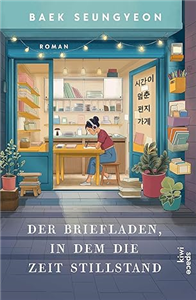
Der Briefladen, in dem die Zeit stillstand
by Seungyeon, Baek / Übersetzt von Bring, Sebastian
Ein Roman für alle, die schönes Briefpapier lieben und die nach Entschleunigung suchen. In dem Briefladen, in dem die Zeit stillstand, umgeben von schönsten Dingen, lernt Hyoyeong nach einem schweren Schicksalsschlag, das Leben wieder zu spüren. Sie hört die Geschichten von Menschen, die ihre Hoffnungen, Ängste und Träume zu Papier bringen, und lernt dabei nicht nur neue Freund*innen kennen, sondern auch, wie man zu sich selbst zurückfindet.
-
Trusted Partner
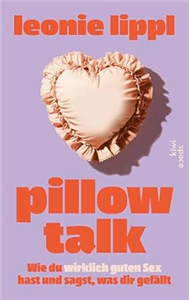
Pillow Talk
Wie du wirklich guten Sex hast und sagst, was dir gefällt
by Lippl, Leonie
Dein Pleasure Guide für den Sex, den du dir wünschst Wie findest du heraus, was dir im Bett gefällt? Wie kannst du sexuelle Begegnungen mit dir selbst und anderen maximal genießen? Und wie sprichst du am besten darüber, wenn etwas nicht so läuft, wie du es dir wünschst? Leonie Lippl deckt Mythen rund um Beziehungen und Sex auf und gibt praktische Tipps, wie du deine eigene Sexualität entspannt und selbstbewusst entdeckst. Von der Sexualberaterin und Content Creatorin Leonie Lippl (@itsleonieida).
-
Trusted Partner

Das Beste sind die Augen
by Kim, Monika / Übersetzung Humburg, Jasmin
Feministischer Horror trifft auf gesellschaftskritischen Nervenkitzel Monika Kims Sunday Times-Bestseller ist ein fesselnder feministischer Horrorroman über Wut, Obsession und die Grenzen der Moral. Nach der Trennung ihrer Eltern gerät Jiwons Leben ins Chaos – und der neue, selbstgefällige weiße Freund ihrer Mutter macht alles nur schlimmer, indem er sie und ihre Schwester fetischisiert und ihre Kultur verhöhnt. Jiwons Gedanken werden immer radikaler. Wie weit wird sie gehen, um ihre Familie zu retten? Good for her? – Eine schockierende weibliche Rachegeschichte Female Rage & Horror – Die blutige Geburt einer Serienmörderin Ein Debüt, das Grenzen sprengt: Monika Kim verbindet gesellschaftliche Themen mit Gänsehaut-Horror!
-
Trusted Partner
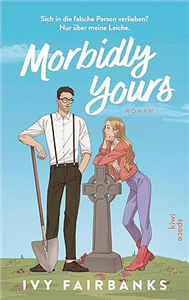
Morbidly Yours
by Fairbanks, Ivy / Übersetzung: Helweg, Andreas & Kurbasik, Pauline
Der schüchterne Bestatter Callum muss heiraten, um das Familienunternehmen zu erben – doch Dates sind ihm ein Graus. Lark, eine lebensfrohe Animationsdesignerin aus Texas, sucht in Irland einen Neuanfang. Zwischen dunklem Humor, tiefen Gefühlen und knisternder Spannung entwickelt sich eine unwiderstehliche Friends-to-Lovers-Romance. Grumpy meets Sunshine – Wenn Gegensätze sich anziehen Slow Burn – Eine Liebe, die Zeit braucht, um zu wachsen Neuanfang & Selbstfindung – Emotionale Tiefe mit neurodivergenten Charakteren »Morbidly Yours« von Ivy Fairbanks ist das perfekte Buch für Fans von tiefgründigen, humorvollen und herzerwärmenden Liebesgeschichten. Lass dich von diesem TikTok-Sensation-Roman verzaubern!
-
Trusted Partner
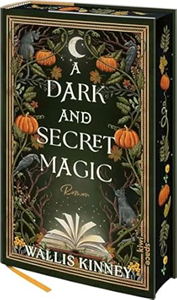
A Dark and Secret Magic
by Kinney, Wallis / Übersetzt von Humburg, Jasmin
Verbotene Magie, düstere Geheimnisse & eine prickelnde Liebesgeschichte Ein Must-Read für alle, die den Herbst und Pumpkin Spice Latte lieben! Kate hat sich in ihrem abgelegenen Hexenhaus ein ruhiges Leben eingerichtet – doch als ihre Schwester sie bittet, das jährliche Halloween-Treffen ihres Zirkels auszurichten, beginnt ihr wohlgeordnetes Dasein zu wanken. Dann taucht Matthew auf, ein Mann aus ihrer Vergangenheit, der ein dunkles Geheimnis verbirgt: Er ist ein Anhänger der verbotenen Magie. Als Kate ein rätselhaftes Buch mit einer verstörenden Nachricht ihrer verstorbenen Mutter findet, steht sie vor der wichtigsten Entscheidung ihres Lebens: Wem kann sie wirklich vertrauen? Enemies to Lovers – Leidenschaft trifft auf Gefahr He Falls First – Er verfällt ihr, bevor sie es zulässt Ein magischer, atmosphärischer Romantasy-Roman voller Geheimnisse, dunkler Magie und unwiderstehlicher Spannung. Wallis Kinney feiert mit diesem Buch das Wunder von Halloween – für alle, die sich nach einer verzaubernden Herbstlektüre sehnen! Inklusive der Rezepte der Gerichte aus dem Roman.
-
Trusted Partner

Kein Bock Club
Warum wir auch mal keine Lust auf Sex haben
by Popov, Maria
Sexuelle Lust gilt als Maßstab für Intimität, Beziehungsqualität und persönliche Erfüllung. Doch was passiert, wenn sie ausbleibt? Wenn wir keinen Bock auf Sex haben, obwohl »eigentlich alles stimmt«? Wenn »Ich bin müde« nur eine Umschreibung für etwas ist, das wir selbst kaum benennen können? Schon in ihrer Jugend hatte Maria Popov nie richtig Bock auf Sex mit Männern und stößt auf ein Wort, das ihr Gefühl zum ersten Mal beschreibt: Asexualität. Aber was heißt das eigentlich genau? In »Kein Bock Club« erzählt die Moderatorin von ihrer ersten Periode, missglückten Flirtversuchen, aufregenden Ohrmassagen – und von der Erleichterung, wenn man merkt: Ich bin mit all diesen Gefühlen nicht allein. Dieses Buch ist für dich, wenn du dich fragst: Warum wird sexuelle Unlust oft als Problem gesehen? Wie beeinflussen gesellschaftliche Erwartungen unser Sexleben? Wieso fühlen sich viele Menschen gezwungen, bestimmten Normen zu entsprechen? Müssen wir wirklich alle feministische Sexgöttinnen sein? Mit Scharfsinn und Humor deckt Maria Popov Mythen rund um Libido, Beziehungen und Sexualität auf. Sie erklärt, wie Lust funktioniert, warum sexuelle Vielfalt mehr ist als nur eine Identitätsfrage ist und was passiert, wenn wir aufhören, Lustlosigkeit als Defizit zu betrachten. »Kein Bock Club« ist eine Einladung, Begehren neu zu denken – zärtlicher, ehrlicher, mutiger.
-
Trusted Partner
 Humanities & Social SciencesFebruary 2017
Servants of the empire
The Irish in Punjab 1881–1921
by Patrick O'Leary, Andrew Thompson, John M. MacKenzie
Punjab, 'the pride of British India', attracted the cream of the Indian Civil Service, many of the most influential of whom were Irish. Some of these men, along with Irish viceroys, were inspired by their Irish backgrounds to ensure security of tenure for the Punjabi peasant, besides developing vast irrigation schemes which resulted in the province becoming India's most affluent. But similar inspiration contributed to the severity of measures taken against Indian nationalist dissent, culminating in the Amritsar massacre which so catastrophically transformed politics on the sub-continent. Setting the experiences of Irish public servants in Punjab in the context of the Irish diaspora and of linked agrarian problems in Ireland and India, this book descrides the beneficial effects the Irish had on the prosperity of India's most volatile province. Alongside the baleful contribution of some towards a growing Indian antipathy towards British rule. Links are established between policies pursued by Irishmen of the Victorian era and current happenings on the Pakistan-Afghan border and in Punjab.



