
Your Search Results
-

-

Modjaji Books
Modjaji Books is a small, independent, feminist publishing company, that started in 2007 in Cape Town.
View Rights Portal
-
Promoted Content

 Literature & Literary StudiesAugust 2025
Translating Petrarch in early modern Britain
Canzoniere and Triumphi, c. 1530–1650
by Marie-Alice Belle, Riccardo Raimondo, Francesco Venturi
Translating Petrarch in early modern Britain gathers twelve essays by international scholars focusing on the translation of Petrarch's vernacular verse (Canzoniere and Triumphi) into English, from the Tudor age to the mid-seventeenth century (and beyond). Approaching translation as an interpretive process, but also a mode of literary emulation and cultural engagement with Petrarch's prestigious precedent, the collection explores the complex and interconnected trajectories of both poetic works in English and Scottish literary milieux. While situating each translation in its distinct historical, material, and literary context, the essays trace the reception of Petrarch's works in early modern Britain through the combined processes of linguistic and metric innovation, literary imitation, musical adaptation and cultural and material 'domestication'. The collection sheds light on the origins and development of early modern English Petrarchism as part of wider transnational - and indeed, translational-European literary culture.
-
Promoted Content
 Literature & Literary StudiesJune 2022
The early modern English sonnet
Ever in motion
by Laetitia Sansonetti, Rémi Vuillemin, Enrica Zanin
This volume questions and qualifies commonly accepted assumptions about the early modern English sonnet: that it was a strictly codified form, most often organised in sequences, which only emerged at the very end of the sixteenth century and declined as fast as it had bloomed, and that minor poets merely participated in the sonnet fashion by replicating established conventions. Drawing from book history and relying on close reading and textual criticism, this collection offers a more nuanced account of the history of the sonnet. It discusses how sonnets were written, published and received in England as compared to mainland Europe, and explores the works of major (Shakespeare, Sidney, Spenser) and minor (Barnes, Harvey) poets alike. Reflecting on current editorial practices, it also provides the first modern edition of an early seventeenth-century Elizabethan miscellany including sonnets presumably by Sidney and Spenser.
-
 Trusted Partner
 Literature & Literary StudiesOctober 2025
Early modern drama and the theatre of war
Militarism, conflict and disruption in the plays of Shakespeare and his contemporaries
by Bronwen Price, Hilary Hinds
This volume explores the disruptive effects of militarism, war and social unrest in early modern drama. Engaging with Simon Barker's seminal work on dramatic representations of war and militarism, contributors highlight what often lies hidden beneath the surface of martial narratives, treating them as formative interventions in contemporary discourses, whether in justifying war, excluding dissident voices or shaping cultural identities. Discussions include new examinations of militarism, the figure of the soldier and early modern theories of war in Shakespearean tragedy, history and comedy, alongside antimasque and dramatic satire by lesser-known playwrights. The essays investigate how ideas of war underpin emerging concepts of gender, leadership, marriage and the family, as well as the continuing mobilisation of Shakespearean drama in the context of modern armed conflict. Together, they offer rich new contributions to the current lively critical debates on this topic.
-
Trusted Partner
 Literature & Literary StudiesApril 2021
Positive emotions in early modern literature and culture
by Cora Fox, Bradley J. Irish, Cassie M. Miura
-
Trusted Partner
 Humanities & Social SciencesMay 2026
Irish townspeople
The early modern urban experience, c.1400–c.1640
by Colm Lennon
Through a series of innovative perspectives, this book examines how early modern Irish townspeople experienced the urban world through a range of family and associational ties. Migrants inducted through town citizenship and marriage bonded more closely as sisters or brothers of confraternities and guilds, consolidating parish membership. Civic religion saw the integration of religion with town politics and councils, and monastic charity of the friars' hospitals preceded the era of modern municipal welfare. In circumstances of the alienation of the long-settled Catholic townspeople from the state's religious and political Reformation in the seventeenth century, they drew sustenance from the continuity of institutions such as colleges, fraternities and hospitals and forms of coexistence with Protestant fellow-citizens.
-
Trusted Partner
 Literature & Literary StudiesNovember 2019
Transnational connections in early modern theatre
by Pavel Drábek, M. A. Katritzky
-
Trusted Partner
 History of medicineNovember 2011
Women's medical work in early modern France
by Susan Broomhall
Women have long been crucial to the provision of medical services, both in the treatment of sickness and in maintaining health. In this study, Susan Broomhall situates the practices and perceptions of women's medical work in France in the context of the sixteenth century and its medical evolution and innovations. She argues that early modern understandings of medical practice and authority were highly flexible and subject to change. She furthermore examines how a focus on female practitioners, who cut across most sectors of early modern medical practice, can reveal the multifaceted phenomenon of these negotiations for authority. This new paperback edition of Women's medical work in early modern France skilfully combines detailed research with a clear presentation of the existing literature of women's medical work, making it invaluable to students of gender and medical history.
-
Trusted Partner
 Literature & Literary StudiesApril 2020
The early modern English sonnet
by Laetitia Sansonetti, Rémi Vuillemin, Enrica Zanin, Tamsin Badcoe
-
Trusted Partner
 Humanities & Social SciencesOctober 2021
Ireland and the European Union
Economic, political and social crises
by Michael Holmes, Kathryn Simpson, Dimitris Papadimitriou, Kathryn Simpson, Paul Tobin
This book examines how Ireland's relationship with the EU was affected by a succession of crises in both the Republic of Ireland and Northern Ireland. The financial crisis, the Brexit crisis and the migration crisis were not of equal significance on the island of Ireland. The financial crisis was a huge issue for the Republic but not Northern Ireland, Brexit had a major impact in both polities, the migration and populism issues were less controversial, while foreign policy challenges had a minimal impact. The book provides a summary of the main features of each of the crises to be considered, from both the EU and the Irish perspective. Ireland and the European Union is the first volume of its kind to provide a comprehensive analysis on British-Irish relations in the context of Brexit. It assesses the Withdrawal Agreement and Protocol on Ireland/Northern Ireland, the devolution settlement and the 1998 Agreement, as well as the European dimension to Northern Ireland's peace process. The contributors explore a number of policy areas that are central to the understanding of each of the crises and the impact of each for Ireland. Chapters examine issues such as security, migration and taxation as well as protest politics, political parties, the media, public opinion and the economic impact of each of these crises on Ireland's relationship with the EU.
-
Trusted Partner
 Humanities & Social SciencesJune 2026
Women in exile in early modern Europe and the Americas
by Linda Levy Peck, Adrianna E. Bakos
-
Trusted Partner
 Literature & Literary StudiesMarch 2020
Enacting the Bible in medieval and early modern drama
by Chanita Goodblatt, Eva von Contzen, David Matthews
-
Trusted Partner
 Humanities & Social SciencesAugust 2002
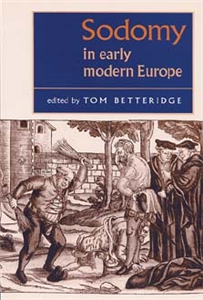
Sodomy in early modern Europe
by Joseph Bergin, Tom Betteridge, Penny Roberts, Bill Naphy
This fascinating collection of essays reflects closely the main areas of debate within gay historiography. For the last twenty years scholars have argued over the nature of early modern sodomy, responding in a number of different and contradictory ways. Questions addressed in the book include: was early modern sodomy the same as modern homosexuality? Were there homosexuals in early modern Europe? Did men who had sex with each other in this period regard their behaviour as determining their identity? What was the relationship between the grave sin of sodomy and the homoerotic images that fill Renaissance culture?. The volume includes essays on sodomy in English Protestant history writing, in Calvin's Geneva, in early modern Venice and the trial of sodomy in Germany. ;
-
Trusted Partner
 Humanities & Social SciencesJanuary 2025
Catholics and the law in Restoration Ireland
by Paul Smith
In 1660 Charles II was restored to the thrones of England, Scotland and Ireland, but his hold on power was precarious. In particular, Ireland was fundamentally unstable - Catholics formed the majority of the population in a country where Protestantism was the established religion, a state of affairs unique in Europe. It was through the law that the restored Stuart monarchy governed its subjects and its colonial dependencies, and this book examines how Catholics engaged with and experienced English common law primarily through the eyes of Catholic clerics and Gaelic poets. It also examines how Catholics engaged with the Courts and the particular challenges they faced as lawyers. The book draws on an extensive body of primary source materials, including Irish-language poetry and little-used archival material relating to elite Catholic families.
-
Trusted Partner
 Literature & Literary StudiesAugust 2023
Poison on the early modern English stage
Plants, paints and potions
by Lisa Hopkins, Bill Angus
Many early modern plays use poison, most famously Hamlet, where the murder of Old Hamlet showcases the range of issues poison mobilises. Its orchard setting is one of a number of sinister uses of plants which comment on both the loss of horticultural knowledge resulting from the Dissolution of the Monasteries and also the many new arrivals in English gardens through travel, trade, and attempts at colonisation. The fact that Old Hamlet was asleep reflects unease about soporifics troubling the distinction between sleep and death; pouring poison into the ear smuggles in the contemporary fear of informers; and it is difficult to prove. This book explores poisoning in early modern plays, the legal and epistemological issues it raises, and the cultural work it performs, which includes questions related to race, religion, nationality, gender, and humans' relationship to the environment.
-
Trusted Partner
 Humanities & Social SciencesApril 2020
Early modern war narratives and the Revolt in the Low Countries
by Raymond Fagel, Leonor Álvarez Francés, William G. Naphy, Beatriz Santiago Belmonte
-
Trusted Partner
 Humanities & Social SciencesOctober 2020
A global history of early modern violence
by Erica Charters, Marie Houllemare, Peter H. Wilson
-
Trusted Partner
 Literature & Literary StudiesJuly 2021
Old Fortunatus
By Thomas Dekker
by David McInnis
With its fantasy of magical travel and inexhaustible riches, Thomas Dekker's Old Fortunatus is the quintessential early modern journeying play. The adventures of Fortunatus and his sons, aided by a magical purse and wishing-hat, offers the period's most overt celebration of the pleasures of travel, as well as a sustained critique of the dangers of intemperance and prodigality. Written following a period of financial difficulty for Dekker, the play is also notable for its fascination with the symbolic, mercantile and ethical uses of gold. This Revels Plays edition is the first fully annotated, single-volume critical edition of Old Fortunatus. It offers scholarly discussion of the play's performance and textual history, including attention to the German version printed and performed in the early seventeenth century. It provides a long overdue critical reappraisal of this unjustly neglected play.
-
Trusted Partner
 Teaching, Language & ReferenceMay 2025
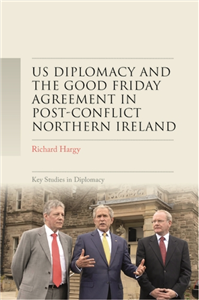
US diplomacy and the Good Friday Agreement in post-conflict Northern Ireland
by Richard Hargy
Richard Haass and Mitchell Reiss, as autonomous diplomats in the George W. Bush State Department, were able to alter US intervention in Northern Ireland and play critical roles in the post-1998 peace process. Their contributions have not been fully appreciated or understood. The restoration of Northern Ireland's power-sharing government in 2007 was made possible by State Department-led intervention in the peace process. There are few references to Northern Ireland in work examining the foreign policy legacy of the George W. Bush presidency. Moreover, the ability to control US foreign policy towards the region brought one of George W. Bush's Northern Ireland special envoys into direct diplomatic conflict with the most senior actors inside the British government. This book will uncover the extent of this fall-out and provide original accounts on how diplomatic relations between these old allies became so fraught.
-
Trusted Partner
 Literature & Literary StudiesFebruary 2020
The senses in early modern England, 1558–1660
by Simon Smith, Jacqueline Watson, Amy Kenny
Considering a wide range of early modern texts, performances and artworks, the essays in this collection demonstrate how attention to the senses illuminates the literature, art and culture of early modern England. Examining canonical and less familiar literary works alongside early modern texts ranging from medical treatises to conduct manuals via puritan polemic and popular ballads, the collection offers a new view of the senses in early modern England. The volume offers dedicated essays on each of the five senses, each relating works of art to their cultural moments, whilst elsewhere the volume considers the senses collectively in particular cultural contexts. It also pursues the sensory experiences that early modern subjects encountered through the very acts of engaging with texts, performances and artworks. This book will appeal to scholars of early modern literature and culture, to those working in sensory studies, and to anyone interested in the art and life of early modern England.
-
Trusted Partner
 Literature & Literary StudiesJuly 2015
The senses in early modern England, 1558–1660
by Edited by Simon Smith, Jackie Watson and Amy Kenny
Considering a wide range of early modern texts, performances and artworks, the essays in this collection demonstrate how attention to the senses illuminates the literature, art and culture of early modern England. Examining canonical and less familiar literary works alongside early modern texts ranging from medical treatises to conduct manuals via puritan polemic and popular ballads, the collection offers a new view of the senses in early modern England. The volume offers dedicated essays on each of the five senses, each relating works of art to their cultural moments, whilst elsewhere the volume considers the senses collectively in particular cultural contexts. It also pursues the sensory experiences that early modern subjects encountered through the very acts of engaging with texts, performances and artworks. This book will appeal to scholars of early modern literature and culture, to those working in sensory studies, and to anyone interested in the art and life of early modern England. ;

