
Your Search Results
-

-

Textofilia Ediciones
Literary publisher. It has received several awards. It has the stamp Libros del Marqués, dedicated to social relevant topics of this time.
View Rights Portal
-
Promoted Content

 Literature & Literary StudiesAugust 2025
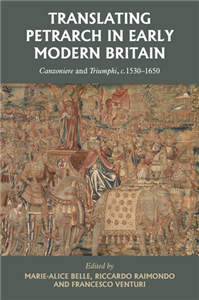
Translating Petrarch in early modern Britain
Canzoniere and Triumphi, c. 1530–1650
by Marie-Alice Belle, Riccardo Raimondo, Francesco Venturi
Translating Petrarch in early modern Britain gathers twelve essays by international scholars focusing on the translation of Petrarch's vernacular verse (Canzoniere and Triumphi) into English, from the Tudor age to the mid-seventeenth century (and beyond). Approaching translation as an interpretive process, but also a mode of literary emulation and cultural engagement with Petrarch's prestigious precedent, the collection explores the complex and interconnected trajectories of both poetic works in English and Scottish literary milieux. While situating each translation in its distinct historical, material, and literary context, the essays trace the reception of Petrarch's works in early modern Britain through the combined processes of linguistic and metric innovation, literary imitation, musical adaptation and cultural and material 'domestication'. The collection sheds light on the origins and development of early modern English Petrarchism as part of wider transnational - and indeed, translational-European literary culture.
-
Promoted Content
 Literature & Literary StudiesJune 2022
The early modern English sonnet
Ever in motion
by Laetitia Sansonetti, Rémi Vuillemin, Enrica Zanin
This volume questions and qualifies commonly accepted assumptions about the early modern English sonnet: that it was a strictly codified form, most often organised in sequences, which only emerged at the very end of the sixteenth century and declined as fast as it had bloomed, and that minor poets merely participated in the sonnet fashion by replicating established conventions. Drawing from book history and relying on close reading and textual criticism, this collection offers a more nuanced account of the history of the sonnet. It discusses how sonnets were written, published and received in England as compared to mainland Europe, and explores the works of major (Shakespeare, Sidney, Spenser) and minor (Barnes, Harvey) poets alike. Reflecting on current editorial practices, it also provides the first modern edition of an early seventeenth-century Elizabethan miscellany including sonnets presumably by Sidney and Spenser.
-
 Trusted Partner
 Literature & Literary StudiesOctober 2025
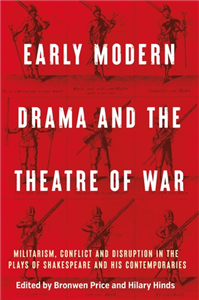
Early modern drama and the theatre of war
Militarism, conflict and disruption in the plays of Shakespeare and his contemporaries
by Bronwen Price, Hilary Hinds
This volume explores the disruptive effects of militarism, war and social unrest in early modern drama. Engaging with Simon Barker's seminal work on dramatic representations of war and militarism, contributors highlight what often lies hidden beneath the surface of martial narratives, treating them as formative interventions in contemporary discourses, whether in justifying war, excluding dissident voices or shaping cultural identities. Discussions include new examinations of militarism, the figure of the soldier and early modern theories of war in Shakespearean tragedy, history and comedy, alongside antimasque and dramatic satire by lesser-known playwrights. The essays investigate how ideas of war underpin emerging concepts of gender, leadership, marriage and the family, as well as the continuing mobilisation of Shakespearean drama in the context of modern armed conflict. Together, they offer rich new contributions to the current lively critical debates on this topic.
-
Trusted Partner
 Literature & Literary StudiesApril 2021
Positive emotions in early modern literature and culture
by Cora Fox, Bradley J. Irish, Cassie M. Miura
-
Trusted Partner
 Literature & Literary StudiesNovember 2019
Transnational connections in early modern theatre
by Pavel Drábek, M. A. Katritzky
-
Trusted Partner
 Literature & Literary StudiesApril 2020
The early modern English sonnet
by Laetitia Sansonetti, Rémi Vuillemin, Enrica Zanin, Tamsin Badcoe
-
Trusted Partner
 Humanities & Social SciencesJune 2026
Women in exile in early modern Europe and the Americas
by Linda Levy Peck, Adrianna E. Bakos
-
Trusted Partner
 Literature & Literary StudiesFebruary 2020
The senses in early modern England, 1558–1660
by Simon Smith, Jacqueline Watson, Amy Kenny
Considering a wide range of early modern texts, performances and artworks, the essays in this collection demonstrate how attention to the senses illuminates the literature, art and culture of early modern England. Examining canonical and less familiar literary works alongside early modern texts ranging from medical treatises to conduct manuals via puritan polemic and popular ballads, the collection offers a new view of the senses in early modern England. The volume offers dedicated essays on each of the five senses, each relating works of art to their cultural moments, whilst elsewhere the volume considers the senses collectively in particular cultural contexts. It also pursues the sensory experiences that early modern subjects encountered through the very acts of engaging with texts, performances and artworks. This book will appeal to scholars of early modern literature and culture, to those working in sensory studies, and to anyone interested in the art and life of early modern England.
-
Trusted Partner
 Literature & Literary StudiesJuly 2015
The senses in early modern England, 1558–1660
by Edited by Simon Smith, Jackie Watson and Amy Kenny
Considering a wide range of early modern texts, performances and artworks, the essays in this collection demonstrate how attention to the senses illuminates the literature, art and culture of early modern England. Examining canonical and less familiar literary works alongside early modern texts ranging from medical treatises to conduct manuals via puritan polemic and popular ballads, the collection offers a new view of the senses in early modern England. The volume offers dedicated essays on each of the five senses, each relating works of art to their cultural moments, whilst elsewhere the volume considers the senses collectively in particular cultural contexts. It also pursues the sensory experiences that early modern subjects encountered through the very acts of engaging with texts, performances and artworks. This book will appeal to scholars of early modern literature and culture, to those working in sensory studies, and to anyone interested in the art and life of early modern England. ;
-
Trusted Partner
 Literature & Literary StudiesMarch 2020
Enacting the Bible in medieval and early modern drama
by Chanita Goodblatt, Eva von Contzen, David Matthews
-
Trusted Partner
 Humanities & Social SciencesApril 2020
Early modern war narratives and the Revolt in the Low Countries
by Raymond Fagel, Leonor Álvarez Francés, William G. Naphy, Beatriz Santiago Belmonte
-
Trusted Partner
 Humanities & Social SciencesOctober 2020
A global history of early modern violence
by Erica Charters, Marie Houllemare, Peter H. Wilson
-
Trusted Partner
 Literature & Literary StudiesJuly 2021
Old Fortunatus
By Thomas Dekker
by David McInnis
With its fantasy of magical travel and inexhaustible riches, Thomas Dekker's Old Fortunatus is the quintessential early modern journeying play. The adventures of Fortunatus and his sons, aided by a magical purse and wishing-hat, offers the period's most overt celebration of the pleasures of travel, as well as a sustained critique of the dangers of intemperance and prodigality. Written following a period of financial difficulty for Dekker, the play is also notable for its fascination with the symbolic, mercantile and ethical uses of gold. This Revels Plays edition is the first fully annotated, single-volume critical edition of Old Fortunatus. It offers scholarly discussion of the play's performance and textual history, including attention to the German version printed and performed in the early seventeenth century. It provides a long overdue critical reappraisal of this unjustly neglected play.
-
Trusted Partner
 Humanities & Social SciencesAugust 2002
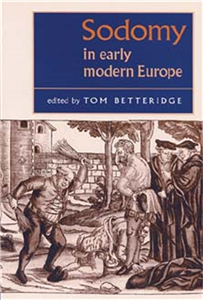
Sodomy in early modern Europe
by Joseph Bergin, Tom Betteridge, Penny Roberts, Bill Naphy
This fascinating collection of essays reflects closely the main areas of debate within gay historiography. For the last twenty years scholars have argued over the nature of early modern sodomy, responding in a number of different and contradictory ways. Questions addressed in the book include: was early modern sodomy the same as modern homosexuality? Were there homosexuals in early modern Europe? Did men who had sex with each other in this period regard their behaviour as determining their identity? What was the relationship between the grave sin of sodomy and the homoerotic images that fill Renaissance culture?. The volume includes essays on sodomy in English Protestant history writing, in Calvin's Geneva, in early modern Venice and the trial of sodomy in Germany. ;
-
Trusted Partner
 Literature & Literary StudiesMarch 2005
Early modern women's manuscript poetry
by Jill Millman, Gillian Wright
'Early modern women's manuscript poetry' is an anthology of texts by fourteen women poets writing between 1589 and 1706. It is the only currently available anthology of early modern women's writing which focuses exclusively on manuscript material. Authors include Mary Sidney, Lucy Hutchinson and Katherine Philips; central figures in the emerging canon of early modern women writers, but whose work appears in a fresh and very different light in the manuscript context emphasised by this anthology. The volume also includes substantial excerpts from a recently discovered verse paraphrase of Genesis, thought to be by the previously unknown seventeenth-century writer Mary Roper, as well as selections from the unjustly neglected poet, Hester Pulter. The mix of canonical and non-canonical writers makes this book ideal for use on undergraduate and early postgraduate courses, while specialists will be particularly interested in the sophisticated and varied material taken from less familiar sources. ;
-
Trusted Partner
 Humanities & Social SciencesJanuary 2023
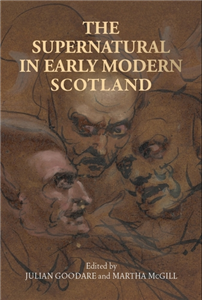
The supernatural in early modern Scotland
by Julian Goodare, Martha McGill
This book is about other worlds and the supernatural beings, from angels to fairies, that inhabited them. It is about divination, prophecy, visions and trances. And it is about the cultural, religious, political and social uses to which people in Scotland put these supernatural themes between 1500 and 1800. The supernatural consistently provided Scots with a way of understanding topics such as the natural environment, physical and emotional wellbeing, political events and visions of past and future. In exploring the early modern supernatural, the book has much to reveal about how men and women in this period thought about, debated and experienced the world around them. Comprising twelve chapters by an international range of scholars, The supernatural in early modern Scotland discusses both popular and elite understandings of the supernatural.
-
Trusted Partner
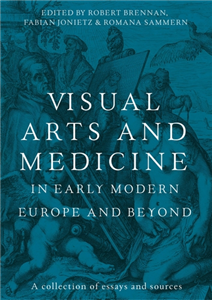 The ArtsFebruary 2026
Visual arts and medicine in early modern Europe and beyond
A collection of essays and sources
by Robert Brennan, Fabian Jonietz, Romana Sammern
This book opens up new perspectives on the relationship between art, medicine, and science in late-medieval and early modern Europe. Looking beyond the traditional nexus of art, anatomy, and optics, the volume sheds light on a broader array of connections between artists and physicians: collaborations between painters and doctors on colour charts, handwork skills common to sculptors and surgeons, the transmission of art theory through medical texts long before the emergence of art writing itself as an independent genre, and the kinship of medical diagnosis with early modes of connoisseurship. Reconfiguring the histories of art, medicine, and science, the book also traverses conventional boundaries between physical and mental health, religious and medical modes of healing, menial and exalted forms of knowledge and labour, as well as vernacular and scientific understandings of human difference, including gender, race, and neurodiversity.
-
Trusted Partner
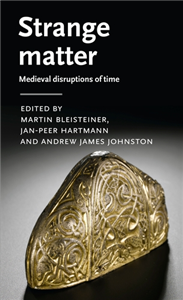 Literature & Literary StudiesJuly 2025
Strange matter
Medieval disruptions of time
by Martin Bleisteiner, Jan-Peer Hartmann, Andrew James Johnston
Medieval and early modern texts reflect a fascination with material objects, from ancient heirlooms to ingenious automata. Often imbued with power or beauty, these objects carry an uncanny sense of otherness, their mysterious origins evoking wonder and suggesting temporal and spatial distance. Acting as repositories of temporal alterity, such artefacts bridge the past and present in profound ways. This volume, featuring contributions from experts in literature and art history, explores how texts from these periods use material objects to engage with temporal otherness. From everyday items to marvellous creations, objects challenge distinctions between human and material, natural and cultural. Whether examining the hybrid status of Hector's body in Lydgate's Troy Book or the temporal agency of humble bubbles, the chapters illuminate the vibrant networks connecting people and objects. By highlighting the 'hybridity' of matter, the book offers fresh insights into Bruno Latour's critique of nature-culture divides.
-
Trusted Partner
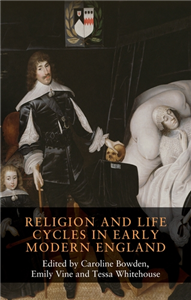 Humanities & Social SciencesOctober 2021
Religion and life cycles in early modern England
by Caroline Bowden, Emily Vine, Tessa Whitehouse
Religion and life cycles in early modern England assembles scholars working in the fields of history, English literature and art history to further our understanding of the intersection between religion and the life course in the period c. 1550-1800. Featuring chapters on Catholic, Protestant and Jewish communities, it encourages cross-confessional comparison between life stages and rites of passage that were of religious significance to all faiths in early modern England. The book considers biological processes such as birth and death, aspects of the social life cycle including schooling, coming of age and marriage and understandings of religious transition points such as spiritual awakenings and conversion. Through this inclusive and interdisciplinary approach, it seeks to show that the life cycle was not something fixed or predetermined and that early modern individuals experienced multiple, overlapping life cycles.
-
Trusted Partner
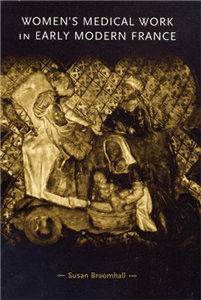 History of medicineNovember 2011
Women's medical work in early modern France
by Susan Broomhall
Women have long been crucial to the provision of medical services, both in the treatment of sickness and in maintaining health. In this study, Susan Broomhall situates the practices and perceptions of women's medical work in France in the context of the sixteenth century and its medical evolution and innovations. She argues that early modern understandings of medical practice and authority were highly flexible and subject to change. She furthermore examines how a focus on female practitioners, who cut across most sectors of early modern medical practice, can reveal the multifaceted phenomenon of these negotiations for authority. This new paperback edition of Women's medical work in early modern France skilfully combines detailed research with a clear presentation of the existing literature of women's medical work, making it invaluable to students of gender and medical history.

