
Your Search Results
-

-

Theart Press
Theart Press is a South African publisher specialisingin inspirational books - including poetry, children's books and biography.
View Rights Portal
-
Promoted Content

 Literature & Literary StudiesNovember 2019
Transnational connections in early modern theatre
by Pavel Drábek, M. A. Katritzky
-
Promoted Content
 The ArtsJune 2025
Death in modern theatre
Stages of mortality
by Adrian Curtin
Death in modern theatre offers a unique account of modern Western theatre, focusing on the ways in which dramatists and theatre-makers have explored historically informed ideas about death and dying in their work. It investigates the opportunities theatre affords to reflect on the end of life in a compelling and socially meaningful fashion. In a series of interrelated, mostly chronological, micronarratives beginning in the late nineteenth century and ending in the early twenty-first century, this book considers how and why death and dying are represented at certain historical moments using dramaturgy and aesthetics that challenge audiences' conceptions, sensibilities, and sense-making faculties. It includes a mix of well-known and lesser-known plays from an international range of dramatists and theatre-makers, and offers original interpretations through close reading and performance analysis.
-
 Trusted Partner
 Literature & Literary StudiesOctober 2025
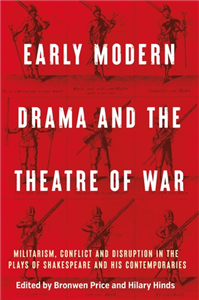
Early modern drama and the theatre of war
Militarism, conflict and disruption in the plays of Shakespeare and his contemporaries
by Bronwen Price, Hilary Hinds
This volume explores the disruptive effects of militarism, war and social unrest in early modern drama. Engaging with Simon Barker's seminal work on dramatic representations of war and militarism, contributors highlight what often lies hidden beneath the surface of martial narratives, treating them as formative interventions in contemporary discourses, whether in justifying war, excluding dissident voices or shaping cultural identities. Discussions include new examinations of militarism, the figure of the soldier and early modern theories of war in Shakespearean tragedy, history and comedy, alongside antimasque and dramatic satire by lesser-known playwrights. The essays investigate how ideas of war underpin emerging concepts of gender, leadership, marriage and the family, as well as the continuing mobilisation of Shakespearean drama in the context of modern armed conflict. Together, they offer rich new contributions to the current lively critical debates on this topic.
-
Trusted Partner
 Literature & Literary StudiesAugust 2025
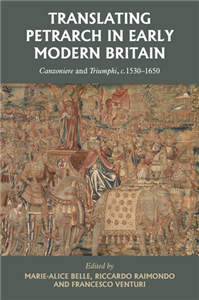
Translating Petrarch in early modern Britain
Canzoniere and Triumphi, c. 1530–1650
by Marie-Alice Belle, Riccardo Raimondo, Francesco Venturi
Translating Petrarch in early modern Britain gathers twelve essays by international scholars focusing on the translation of Petrarch's vernacular verse (Canzoniere and Triumphi) into English, from the Tudor age to the mid-seventeenth century (and beyond). Approaching translation as an interpretive process, but also a mode of literary emulation and cultural engagement with Petrarch's prestigious precedent, the collection explores the complex and interconnected trajectories of both poetic works in English and Scottish literary milieux. While situating each translation in its distinct historical, material, and literary context, the essays trace the reception of Petrarch's works in early modern Britain through the combined processes of linguistic and metric innovation, literary imitation, musical adaptation and cultural and material 'domestication'. The collection sheds light on the origins and development of early modern English Petrarchism as part of wider transnational - and indeed, translational-European literary culture.
-
Trusted Partner
 Literature & Literary StudiesMarch 2020
Enacting the Bible in medieval and early modern drama
by Chanita Goodblatt, Eva von Contzen, David Matthews
-
Trusted Partner
 Literature & Literary StudiesJune 2022
The early modern English sonnet
Ever in motion
by Laetitia Sansonetti, Rémi Vuillemin, Enrica Zanin
This volume questions and qualifies commonly accepted assumptions about the early modern English sonnet: that it was a strictly codified form, most often organised in sequences, which only emerged at the very end of the sixteenth century and declined as fast as it had bloomed, and that minor poets merely participated in the sonnet fashion by replicating established conventions. Drawing from book history and relying on close reading and textual criticism, this collection offers a more nuanced account of the history of the sonnet. It discusses how sonnets were written, published and received in England as compared to mainland Europe, and explores the works of major (Shakespeare, Sidney, Spenser) and minor (Barnes, Harvey) poets alike. Reflecting on current editorial practices, it also provides the first modern edition of an early seventeenth-century Elizabethan miscellany including sonnets presumably by Sidney and Spenser.
-
Trusted Partner
 Literature & Literary StudiesJuly 2021
Old Fortunatus
By Thomas Dekker
by David McInnis
With its fantasy of magical travel and inexhaustible riches, Thomas Dekker's Old Fortunatus is the quintessential early modern journeying play. The adventures of Fortunatus and his sons, aided by a magical purse and wishing-hat, offers the period's most overt celebration of the pleasures of travel, as well as a sustained critique of the dangers of intemperance and prodigality. Written following a period of financial difficulty for Dekker, the play is also notable for its fascination with the symbolic, mercantile and ethical uses of gold. This Revels Plays edition is the first fully annotated, single-volume critical edition of Old Fortunatus. It offers scholarly discussion of the play's performance and textual history, including attention to the German version printed and performed in the early seventeenth century. It provides a long overdue critical reappraisal of this unjustly neglected play.
-
Trusted Partner
 Literature & Literary StudiesApril 2021
Positive emotions in early modern literature and culture
by Cora Fox, Bradley J. Irish, Cassie M. Miura
-
Trusted Partner
 Humanities & Social SciencesOctober 2021
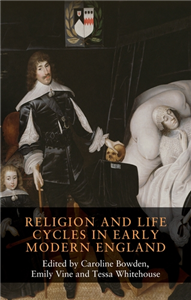
Religion and life cycles in early modern England
by Caroline Bowden, Emily Vine, Tessa Whitehouse
Religion and life cycles in early modern England assembles scholars working in the fields of history, English literature and art history to further our understanding of the intersection between religion and the life course in the period c. 1550-1800. Featuring chapters on Catholic, Protestant and Jewish communities, it encourages cross-confessional comparison between life stages and rites of passage that were of religious significance to all faiths in early modern England. The book considers biological processes such as birth and death, aspects of the social life cycle including schooling, coming of age and marriage and understandings of religious transition points such as spiritual awakenings and conversion. Through this inclusive and interdisciplinary approach, it seeks to show that the life cycle was not something fixed or predetermined and that early modern individuals experienced multiple, overlapping life cycles.
-
Trusted Partner
 Literature & Literary StudiesApril 2020
The early modern English sonnet
by Laetitia Sansonetti, Rémi Vuillemin, Enrica Zanin, Tamsin Badcoe
-
Trusted Partner
Humanities & Social SciencesJune 2026
Women in exile in early modern Europe and the Americas
by Linda Levy Peck, Adrianna E. Bakos
-
Trusted Partner
 History of medicineNovember 2011
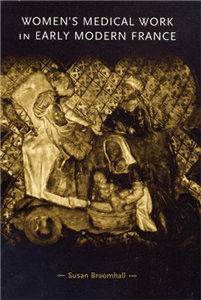
Women's medical work in early modern France
by Susan Broomhall
Women have long been crucial to the provision of medical services, both in the treatment of sickness and in maintaining health. In this study, Susan Broomhall situates the practices and perceptions of women's medical work in France in the context of the sixteenth century and its medical evolution and innovations. She argues that early modern understandings of medical practice and authority were highly flexible and subject to change. She furthermore examines how a focus on female practitioners, who cut across most sectors of early modern medical practice, can reveal the multifaceted phenomenon of these negotiations for authority. This new paperback edition of Women's medical work in early modern France skilfully combines detailed research with a clear presentation of the existing literature of women's medical work, making it invaluable to students of gender and medical history.
-
Trusted Partner
 The ArtsFebruary 2026
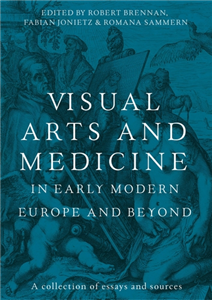
Visual arts and medicine in early modern Europe and beyond
A collection of essays and sources
by Robert Brennan, Fabian Jonietz, Romana Sammern
This book opens up new perspectives on the relationship between art, medicine, and science in late-medieval and early modern Europe. Looking beyond the traditional nexus of art, anatomy, and optics, the volume sheds light on a broader array of connections between artists and physicians: collaborations between painters and doctors on colour charts, handwork skills common to sculptors and surgeons, the transmission of art theory through medical texts long before the emergence of art writing itself as an independent genre, and the kinship of medical diagnosis with early modes of connoisseurship. Reconfiguring the histories of art, medicine, and science, the book also traverses conventional boundaries between physical and mental health, religious and medical modes of healing, menial and exalted forms of knowledge and labour, as well as vernacular and scientific understandings of human difference, including gender, race, and neurodiversity.
-
Trusted Partner
 Humanities & Social SciencesApril 2020
Early modern war narratives and the Revolt in the Low Countries
by Raymond Fagel, Leonor Álvarez Francés, William G. Naphy, Beatriz Santiago Belmonte
-
Trusted Partner
 Literature & Literary StudiesMarch 2026
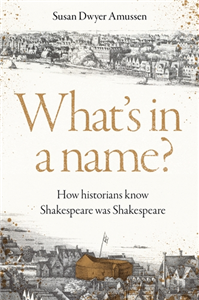
What's in a name?
How historians know Shakespeare was Shakespeare
by Susan Dwyer Amussen
A compelling tour of Shakespeare's England that makes a powerful contribution to the 'authorship question'. How do we know Shakespeare was Shakespeare? Could a glover's son who left school at fifteen really be the author behind such masterpieces as Hamlet, King Lear and The Tempest? Yes! says historian Susan Amussen. She transports readers back to early modern England, to travel the path that carried William Shakespeare from humble origins in Stratford to literary greatness on the London stage. This was a society undergoing rapid change. Grammar schools made education in Latin and Greek available to commoners, while touring players brought the latest dramatic productions to the masses. And in London, a metropolis filled with European visitors, ordinary people had the opportunity to see courtly life up close. No serious historian doubts that Shakespeare was the author of the plays that bear his name. Susan Amussen shares what they know: that Shakespeare's England was a complex and cosmopolitan place, with everything a talented young playwright needed to develop his craft and furnish his imagination.
-
Trusted Partner
 Humanities & Social SciencesJuly 2012
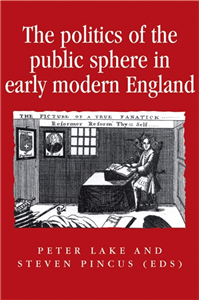
The politics of the public sphere in early modern England
Public Persons and Popular Spirits
by Peter Lake, Peter Lake, Steve Pincus, Anthony Milton, Jason Peacey, Alexandra Gajda
This book uses the notion of the public sphere to produce a new view of the history of England in the post reformation period, tracing its themes from the 1530s to the early eighteenth century. The contributors, who are all leaders in their own fields, bring a diverse range of approaches to bear on the central theme. The book aims to put the results of some of the most innovative and exciting work in the field before the reader in accessible form. Each chapter stands alone in representing an important contribution to its own area of study and sub-period as well as to the overall argument of the book. Politics, culture and religion all feature prominently in the resulting analysis, which should be of interest to students and academics of early modern English history and literature. ;
-
Trusted Partner
 Literature & Literary StudiesFebruary 2020
The senses in early modern England, 1558–1660
by Simon Smith, Jacqueline Watson, Amy Kenny
Considering a wide range of early modern texts, performances and artworks, the essays in this collection demonstrate how attention to the senses illuminates the literature, art and culture of early modern England. Examining canonical and less familiar literary works alongside early modern texts ranging from medical treatises to conduct manuals via puritan polemic and popular ballads, the collection offers a new view of the senses in early modern England. The volume offers dedicated essays on each of the five senses, each relating works of art to their cultural moments, whilst elsewhere the volume considers the senses collectively in particular cultural contexts. It also pursues the sensory experiences that early modern subjects encountered through the very acts of engaging with texts, performances and artworks. This book will appeal to scholars of early modern literature and culture, to those working in sensory studies, and to anyone interested in the art and life of early modern England.
-
Trusted Partner
 Literature & Literary StudiesJuly 2015
The senses in early modern England, 1558–1660
by Edited by Simon Smith, Jackie Watson and Amy Kenny
Considering a wide range of early modern texts, performances and artworks, the essays in this collection demonstrate how attention to the senses illuminates the literature, art and culture of early modern England. Examining canonical and less familiar literary works alongside early modern texts ranging from medical treatises to conduct manuals via puritan polemic and popular ballads, the collection offers a new view of the senses in early modern England. The volume offers dedicated essays on each of the five senses, each relating works of art to their cultural moments, whilst elsewhere the volume considers the senses collectively in particular cultural contexts. It also pursues the sensory experiences that early modern subjects encountered through the very acts of engaging with texts, performances and artworks. This book will appeal to scholars of early modern literature and culture, to those working in sensory studies, and to anyone interested in the art and life of early modern England. ;
-
Trusted Partner
 Humanities & Social SciencesOctober 2020
A global history of early modern violence
by Erica Charters, Marie Houllemare, Peter H. Wilson
-
Trusted Partner
 Humanities & Social SciencesAugust 2002
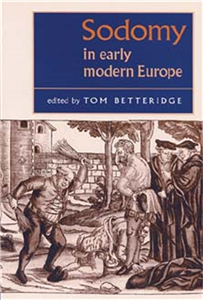
Sodomy in early modern Europe
by Joseph Bergin, Tom Betteridge, Penny Roberts, Bill Naphy
This fascinating collection of essays reflects closely the main areas of debate within gay historiography. For the last twenty years scholars have argued over the nature of early modern sodomy, responding in a number of different and contradictory ways. Questions addressed in the book include: was early modern sodomy the same as modern homosexuality? Were there homosexuals in early modern Europe? Did men who had sex with each other in this period regard their behaviour as determining their identity? What was the relationship between the grave sin of sodomy and the homoerotic images that fill Renaissance culture?. The volume includes essays on sodomy in English Protestant history writing, in Calvin's Geneva, in early modern Venice and the trial of sodomy in Germany. ;

