
Your Search Results


-
Promoted Content
-
Promoted Content

 Humanities & Social SciencesNovember 2024
Culture is bad for you
by Orian Brook, Dave O'Brien, Mark Taylor
-
 Trusted Partner

 November 2010
Die Pariser Weltausstellung 1889
Bilder von der Globalisierung
by Beat Wyss
Die gelungenste Weltausstellung aller Zeiten war die Exposition Universelle de Paris von 1889. Weit über 32 Millionen Menschen besuchten das gigantische Spektakel mit knapp 62.000 Ausstellern aus 54 Nationen und 17 französischen Kolonien. Das Wahrzeichen der Schau, der Eiffelturm, blieb Paris bis heute erhalten. Einen legendären Ruf erwarb sich auch das offizielle, wöchentlich erscheinende Journal der Weltausstellung. Auf großformatigen, mit Stahlstichen üppig illustrierten Seiten berichtete es von den Sensationen vor Ort, von dreirädrigen selbstfahrenden Karren und ethnologischen Dörfern, in denen es Kamelreiten für die Kinder und Bauchtänze für die Herren gab. Der Schweizer Kunsthistoriker Beat Wyss hat die hundert originellsten Abbildungen ausgewählt. Sie illustrieren, wie die Expo den Erdball auf ein »Weltdorf« zwischen Trocadéro und Champ de Mars schrumpfen lässt, wie räumliche Distanzen abgebaut und dabei kulturelle Differenzen freigelegt werden. Das späte 20. Jahrhundert wird dafür den Begriff der Globalisierung prägen. Beat Wyss zeigt, wie die Gesellschaften seit dem 19. Jahrhundert mit diesem Prozeß umgehen und mit der Verwestlichung der Welt eine Orientalisierung des Westens einhergeht. Dem Leser als Flaneur über die Bühne der Weltausstellung wird klar: Die Expo 1889 belegt nicht nur den aktuellen Zustand einer Zeit, sondern bietet über die spektakuläre Anordnung ihrer Exponate den Vorschein einer gesellschaftlichen Utopie.
-
Trusted Partner
 Humanities & Social SciencesDecember 2022
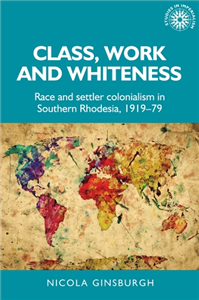
Class, work and whiteness
Race and settler colonialism in Southern Rhodesia, 1919–79
by Nicola Ginsburgh
This book offers the first comprehensive history of white workers from the end of the First World War to Zimbabwean independence in 1980. It reveals how white worker identity was constituted, examines the white labouring class as an ethnically and nationally heterogeneous formation comprised of both men and women, and emphasises the active participation of white workers in the ongoing and contested production of race. White wage labourers' experiences, both as exploited workers and as part of the privileged white minority, offer insight into how race and class co-produced one another and how boundaries fundamental to settler colonialism were regulated and policed. Based on original research conducted in Zimbabwe, South Africa and the UK, this book offers a unique theoretical synthesis of work on gender, whiteness studies, labour histories, settler colonialism, Marxism, emotions and the New African Economic History.
-
Trusted Partner

 Medicine
Manual Trigger Point Therapy and Dry Needling for Chronic Pain
Myofascial medicine as an approach to an unresolved challenge
by Beat Dejung
Medicine for the relief of pain has made little progress in the last 50 years. 16% of our population claim to suffer from chronic pain, for which no lasting help can be found, despite years of treatment by different doctors. Trigger point therapy experts have integrated myofascial techniques into their everyday therapy in recent decades and through this they have achieved good results even with complex and chronic problems. In this book, instructors from the Interest Group for Myofascial Trigger Point Therapy (IMTT) in Switzerland present 33 complex cases of patients with chronic pain, whose pain they were able to relieve permanently with manual trigger point therapy and dry needling. Using these case studies, doublepage spreads with an educational, uniform layout clearly present the diagnosis, pathophysiology and chronifcation of myofascial pain syndromes and, in conclusion, describe encouraging and surprising successes despite previous therapy resistance.
-
Trusted Partner
 Humanities & Social SciencesJuly 2010
Using Europe: territorial party strategies in a multi-level system
by Eve Hepburn
This book explores how regional political parties use Europe to advance their territorial projects in times of rapid state restructuring. It examines the ways in which decentralization and supranational integration have encouraged regional parties to pursue their strategies across multiple territorial levels. This book constitutes the first attempt to unravel the complexities of how nationalist and statewide parties manoeuvre around the twin issues of European integration and decentralization, and exploit the shifting linkages within multi-level political systems. In a detailed comparative examination of three cases - Scotland, Bavaria and Sardinia - over a thirty-year period, the book explores how integration has altered the nature of territorial party competition and identifies the limits of Europe for territorial projects. In addressing these issues, this work moves beyond present scholarship on multi-level governance to explain the diversity of regional responses to Europe. By providing important new insights and empirical research on the conduct of territorial party politics, and an innovative model of territorial mobilization in Europe, this book will be of great interest to students and scholars of comparative politics, European studies, regionalism and federalism, political parties and devolution. ;
-
Trusted Partner
 August 1985
Die Besiegten
Aus dem Schwedischen von Beat Mazenauer. Mit einem Nachwort von Gunilla Palmstierna-Weiss
by Peter Weiss, Beat Mazenauer, Gunilla Palmstierna-Weiss
Peter Weiss wurde am 8. November 1916 in Nowawes bei Berlin geboren und starb am 10. Mai 1982 in Stockholm. Zwischen 1918 und 1929 lebte er in Bremen, wo er das Gymnasium besuchte. 1929 kehrte die Familie Weiss nach Berlin zurück, musste jedoch 1934 emigrieren. Die erste Station bildete London, darauf folgte 1936 die SR. In diesen Jahren widmete sich Peter Weiss vorwiegend der Malerei – 1937/1938 studierte er Malerei an der Kunstakademie in Prag. In dieser Zeit besuchte er Hermann Hesse während zweier längerer Aufenthalte in der Schweiz. Die dritte und letzte Emigrationsstation bildete 1939 Schweden, wo Peter Weiss zunächst in Alingsås, ab 1940 in Stockholm wohnte. Hier setzte er seine Tätigkeit als Maler fort. 1947 hielt er sich als Korrespondent einer schwedischen Tagesszeitung in Berlin auf. Seine Artikel versammelte er 1948 zu seiner ersten Buchpublikation. Der Band erschien posthum 1985 unter dem Titel Die Besiegten. Ab diesem Zeitraum entstanden, in schwedischer Sprache, die ersten Prosaarbeiten, Gedichte, und Dramen. Zu den wichtigsten Erzählungen aus dieser Schaffensperiode zählen Die Situation aus dem Jahre 1956 sowie das 1980 unter dem Autorenpseudonym Sinclair veröffentlichte Buch Der Fremde. Keines seiner Manuskripte wurde jedoch von einem schwedischen Verlag zur Publikation angenommen. Mitte der fünfziger Jahre begann Peter Weiss in deutscher Sprache zu schreiben. 1960 erschien sein erstes Prosabuch Der Schatten des Körpers des Kutschers. Zu Beginn der siebziger Jahre wand sich Peter Weiss wieder der Prosa zu. Zwischen 1975 und 1981 erschien der dreibändige Roman Die Ästhetik des Widerstands, deren letzter Band begleitet wird von Notizbücher 1971 – 1980. Ihm wurde posthum der Georg-Büchner-Preis für das Jahr 1982 zuerkannt. Beat Mazenauer, geboren 1958, Germanist und Historiker, lebt als Literaturkritiker und freier Autor in Luzern.
-
Trusted Partner
 Humanities & Social SciencesSeptember 2020
Class, work and whiteness
by Nicola Ginsburgh, Alan Lester
-
Trusted Partner
 Humanities & Social SciencesMarch 2017
Sunningdale, the Ulster Workers' Council strike and the struggle for democracy in Northern Ireland
by David McCann, Cillian McGrattan
-
Trusted Partner

Does Movement Really Make Us Smart?
by Petra Jansen, Stefanie Richter
Media reports often praise movement as a cure-all. But apart from its undisputed positive effect on health, does movement really make us smarter? Consider a national football team, for example – are these excessively sports-driven players automatically the smartest people? Should we simply replace all school subjects with sports? The authors provide a detailed summary of the latest scientific findings on the influence of movement on cognitive ability. They describe the effects of movement, on old age, embodiment, emotion, school as well as other factors that influence cognition. Target Group: teachers, lecturers, psychologists, psychiatrists, neurologists, psychotherapists, movement therapists.
-
Trusted Partner
 Biography & True StoriesMay 2025
Mrs Dalloway
Biography of a novel
by Mark Hussey
A compelling biography of one of the most celebrated novels in the English language. The fourth and best-known of Virginia Woolf's novels, Mrs Dalloway is a modernist masterpiece that has remained popular since its publication in 1925. Its dual narratives follow a day in the life of wealthy housewife Clarissa Dalloway and shell-shocked war veteran Septimus Warren Smith, capturing their inner worlds with a vividness that has rarely been equalled. Mrs Dalloway: Biography of a novel offers new readers a lively introduction to this enduring classic, while providing Woolf lovers with a wealth of information about the novel's writing, publication and reception. It follows Woolf's process from the first stirrings in her diary through her struggles to create what was quickly recognised as a major advance in prose fiction. It then traces the novel's remarkable legacy to the present day. Woolf wrote in her diary that she wanted her novel 'to give life & death, sanity & insanity. to criticise the social system, & to show it at work, at its most intense.' Mrs Dalloway: Biography of a novel reveals how she achieved this ambition, creating a book that will be read by generations to come.
-
Trusted Partner
 Humanities & Social SciencesJune 2021
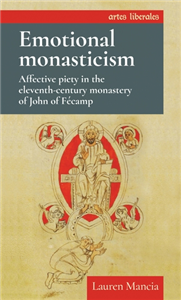
Emotional monasticism
Affective piety in the eleventh-century monastery of John of Fécamp
by Lauren Mancia
Medievalists have long taught that highly emotional Christian devotion, often called 'affective piety', appeared in Europe after the twelfth century and was primarily practiced by communities of mendicants, lay people and women. Emotional monasticism challenges this view. The first study of affective piety in an eleventh-century monastic context, it traces the early history of affective devotion through the life and works of the earliest known writer of emotional prayers, John of Fécamp, abbot of the Norman monastery of Fécamp from 1028-78. Exposing the early medieval monastic roots of later medieval affective piety, the book casts a new light on the devotional life of monks in Europe before the twelfth century and redefines how medievalists should teach the history of Christianity.
-
Trusted Partner
 Humanities & Social SciencesFebruary 2026
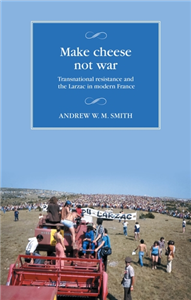
Make cheese not war
Transnational resistance and the Larzac in modern France
by Andrew W. M. Smith
In 1971, the French government announced a massive extension of its military base on the Larzac plateau in southern France. Land was to be expropriated from 107 farms around the small town of La Cavalerie. Limited resistance was expected, but what happened next exceeded all expectations. Local sheep farmers set up protest camps and occupied the land. They soon attracted an astonishing level of support, pioneering a form of regional radicalism with global implications. Drawing out the international dimensions of the protest, Make cheese not war explores a transnational resistance movement in the 1970s that challenged dominant visions of modernity and became a wellspring of radical alternatives. Exploring previously unconsulted archives in France and elsewhere, the book offers an in-depth analysis of the decade-long peasant movement and its aftermath. Repositioning the Larzac struggle within a wider network of French and international solidarities, from the US to the UK, Germany, Burkina Faso, New Caledonia and Japan, the book retraces political networks of pacifist activism, as well as environmental movements and anti-nuclear protest. It shows how this French peasant campaign became both a platform and a model for popular engagement.
-
Trusted Partner
-
Trusted Partner
 Humanities & Social SciencesApril 2025
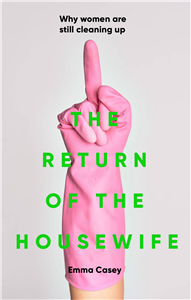
The return of the housewife
Why women are still cleaning up
by Emma Casey
An illuminating look at the world of cleanfluencers that asks why the burden of housework still falls on women. Housework is good for you. Housework sparks joy. Housework is beautiful. Housework is glamorous. Housework is key to a happy family. Housework shows that you care. Housework is women's work. Social media is flooded with images of the perfect home. TikTok and Instagram 'cleanfluencers' produce endless photos and videos of women cleaning, tidying and putting things right. Figures such as Marie Kondo and Mrs Hinch have placed housework, with its promise of a life of love and contentment, at the centre of self-care and positive thinking. And yet housework remains one of the world's most unequal institutions. Women, especially poorer women and women of colour, do most low-paid and unpaid domestic labour. In The return of the housewife, Emma Casey asks why these inequalities matter and why they persist after a century of dramatic advances in women's rights. She offers a powerful call to challenge the prevailing myths around housework and the 'naturally competent' woman homemaker.
-
Trusted Partner
 Humanities & Social SciencesJune 2021
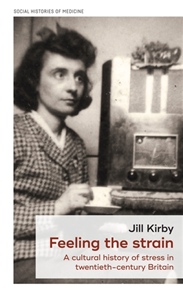
Feeling the strain
A cultural history of stress in twentieth-century Britain
by Jill Kirby
Examining the popular discourse of nerves and stress, this book provides a historical account of how ordinary Britons understood, explained and coped with the pressures and strains of daily life during the twentieth century. It traces the popular, vernacular discourse of stress, illuminating not just how stress was known, but the ways in which that knowledge was produced. Taking a cultural approach, the book focuses on contemporary popular understandings, revealing continuity of ideas about work, mental health, status, gender and individual weakness, as well as the changing socio-economic contexts that enabled stress to become a ubiquitous condition of everyday life by the end of the century. With accounts from sufferers, families and colleagues it also offers insight into self-help literature, the meanings of work and changing dynamics of domestic life, delivering a complementary perspective to medical histories of stress.
-
Trusted Partner
 Biography & True StoriesMarch 2022
Body Work
The Radical Power of Personal Narrative
by Melissa Febos,
In this bold and exhilarating mix of memoir and writing guide, Melissa Febos tackles the emotional, psychological, and physical work of writing intimately while offering an utterly fresh examination of the storyteller's life and the challenges it presents. How do we write about the relationships that have formed us? How do we describe our bodies, their desires and traumas? What does it mean to have your writing, or living, dismissed as "navel-gazing"-or else hailed as "so brave, so raw"? And to whom, in the end, do our most intimate stories belong? Drawing on her journey from aspiring writer to acclaimed author and writing professor-via addiction and recovery, sex work and academia-Melissa Febos has created a captivating guide to the writing life, and a brilliantly unusual exploration of subjectivity, privacy, and the power of divulgence. Candid and inspiring, Body Work will empower readers and writers alike, offering ideas-and occasional notes of caution-to anyone who has ever hoped to see their true self reflecting back from the open page.
-
Trusted Partner
 Biography & True StoriesMarch 2022
Body Work
The Radical Power of Personal Narrative
by Melissa Febos,
In this bold and exhilarating mix of memoir and writing guide, Melissa Febos tackles the emotional, psychological, and physical work of writing intimately while offering an utterly fresh examination of the storyteller's life and the challenges it presents. How do we write about the relationships that have formed us? How do we describe our bodies, their desires and traumas? What does it mean to have your writing, or living, dismissed as "navel-gazing"-or else hailed as "so brave, so raw"? And to whom, in the end, do our most intimate stories belong? Drawing on her journey from aspiring writer to acclaimed author and writing professor-via addiction and recovery, sex work and academia-Melissa Febos has created a captivating guide to the writing life, and a brilliantly unusual exploration of subjectivity, privacy, and the power of divulgence. Candid and inspiring, Body Work will empower readers and writers alike, offering ideas-and occasional notes of caution-to anyone who has ever hoped to see their true self reflecting back from the open page.
-
Trusted Partner
-
Trusted Partner
 Business, Economics & LawOctober 2026
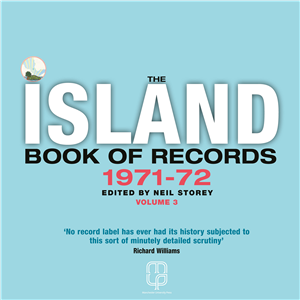
The Island Book of Records Volume III
1971-72
by Neil Storey
The third in the acclaimed Island Book of Records series chronicles 1971-72, two years that saw the label secure a position at the forefront of contemporary music around the world. Major albums from Cat Stevens, Emerson, Lake & Palmer and Jethro Tull brought international success. Traffic released their era-defining The Low Spark of High Heeled Boys and Island returned to its roots with the soundtrack to the most important Jamaican film of all time, The Harder They Come. Nick Drake's masterpieces Bryter Layter and Pink Moon were yet to find their audience, but a new sensation emerged as Roxy Music released their first LP. Meanwhile, Bob Marley & The Wailers were beginning to record Catch A Fire - the album that will be the first to be detailed in IBoR IV. Featuring material from recent interviews and comment of the time, and including a comprehensive discography of 45s, The Island Book of Records Volume III is lavishly illustrated with album art, gig adverts, tickets, flyers, international LP variants, rare photos, LP and 45 adverts and exclusive ephemera.



