
Your Search Results
-

-

The Endocrine Society
The Endocrine Society is a global organization of 18,000 researchers, educators, and clinicians advancing breakthroughs in hormone science and improving public health.
View Rights Portal
-
Promoted Content

 The ArtsJune 2025
Death in modern theatre
Stages of mortality
by Adrian Curtin
Death in modern theatre offers a unique account of modern Western theatre, focusing on the ways in which dramatists and theatre-makers have explored historically informed ideas about death and dying in their work. It investigates the opportunities theatre affords to reflect on the end of life in a compelling and socially meaningful fashion. In a series of interrelated, mostly chronological, micronarratives beginning in the late nineteenth century and ending in the early twenty-first century, this book considers how and why death and dying are represented at certain historical moments using dramaturgy and aesthetics that challenge audiences' conceptions, sensibilities, and sense-making faculties. It includes a mix of well-known and lesser-known plays from an international range of dramatists and theatre-makers, and offers original interpretations through close reading and performance analysis.
-
Promoted Content

 2024
2024The second half of your life - a manual
Tips and strategies for successful ageing
by Dr. Petra Kiedaisch
In the middle of our lives, the cards are reshuffled: marriages are divorced, careers are questioned, friendships are ended, questions of meaning are asked, bodies change - and not just hormonally. At the same time, children leave home and parents become carers. From the age of 45, the majority of our population is at the centre of a second upheaval that affects all facets of our lives and leaves us at a loss in many ways. Not only in our daily lives, but also when it comes to planning for our own old age. This guide is designed to help us find our way. It presents the most important information from all areas relevant to a good life after 45. Leading experts from the fields of medicine, nutrition, philosophy, theology, psychology, care, law and finance give recommendations on what to look out for and what tools are needed to get through these challenging years unscathed. Useful checklists round off the articles. The book shows us the unique opportunity to see these challenges not as a crisis but as a source of strength. Not only can we come through this period of our lives healthy and happy, but we can also shape it so that the next age threshold is no longer frightening. During the second phase of adolescence, we lay the foundations for whether and how we will grow older. Be it in terms of health or living together with family and friends. With contributions from: Prof. Dr. Martin Gessmann (philosophy), Dipl. Psych. Claudia Kühner (psychology), Dr Suso Lederle (medicine), Dr Petra Forster (nutrition), Christian Hald, Anja Heine (law), Prof Dr Philipp Schreiber (finance), Prof Dr Thomas Klie (nursing care insurance), Georg Eberhardt (religion).
-
 Trusted Partner
 The ArtsJanuary 2019
The secret life of romantic comedy
by Celestino Deleyto
The secret life of romantic comedy offers a new approach to one of the most popular and resilient genres in the history of Hollywood. Steering away from the rigidity and ideological determinism of traditional accounts of the genre, this book advocates a more flexible theory, which allows the student to explore the presence of the genre in unexpected places, extending the concept to encompass films that are not usually considered romantic comedies. Combining theory with detailed analyses of a selection of films, including To Be or Not to Be (1942), Rear Window (1954), Kiss Me Stupid (1964), Crimes and Misdemeanors (1989) and Before Sunset (2004), the book aims to provide a practical framework for the exploration of a key area of contemporary experience - intimate matters - through one of its most powerful filmic representations: the genre of romantic comedy. Original and entertaining, The secret life of romantic comedy is perfect for students and academics of film and film genre.
-
Trusted Partner
 The ArtsMarch 2025
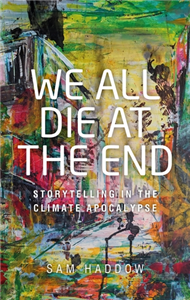
We all die at the end
Storytelling in the climate apocalypse
by Sam Haddow
We all die at the end offers a survey of contemporary end-of-the-world fiction, spanning literature, children's fiction, video games, theatre and film. It draws on eco-critical philosophy and narrative theory to show ways in which the climate crisis is reorienting storytelling in the face of foreseeable human extinction. In the process, it argues that such stories have a role to play in helping us come to terms with the severity and scale of the crisis that we face.
-
Trusted Partner
 Biography & True StoriesMay 2026
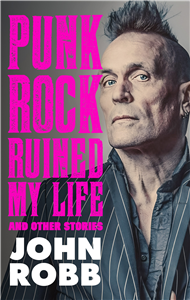
Punk rock ruined my life
And other stories
by John Robb
The irresistible story of a one-man cultural phenomenon. Minister for the Counterculture, Mancunian mainstay and alternative national treasure John Robb has lived a life in music. In this book he charts his adventures on the cultural frontline, chronicling the making of a DIY icon. Robb's quest began in his hometown of Blackpool - where punk was a battle against the odds - and went international when he toured the world with his band. The first person to interview Nirvana, he also discovered The Stone Roses for weekly newspaper Sounds and did early interviews with The Jesus and Mary Chain and The Manics, before moving on to legends such as Mark E. Smith, Nick Cave and Patti Smith. Along the way, he became an on-screen commentator and author of bestselling books. Robb's memoir tells of deep friendships with figures from Poly Styrene to Chris Packham. Packed with riotous stories, it provides an alternative account of British musical and cultural history and a triumphant blueprint for a punk rock life.
-
Trusted Partner
 July 2025
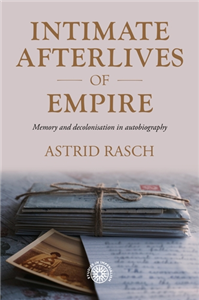
Intimate afterlives of empire
Memory and decolonisation in autobiography
by Astrid Rasch
Through close readings of almost twenty autobiographies written after the break-up of the British Empire, the book examines how individuals engage with the changing narrative landscape brought about by decolonisation. It considers the autobiographies less for what they may teach us about the moment remembered and more as windows on the act of remembering. This adds a crucial dimension to our understanding of the legacies of colonialism and how the ongoing process of decolonisation is reflected on the level of the individual. It argues that autobiographers are at once influenced by and seek to influence the cultural memory of empire and its legacies, and the authors' own position in both. Situated at the intersection of imperial/decolonisation history, memory studies, and life writing studies, the book uncovers this intimate afterlife of empire.
-
Trusted Partner
 April 2021
On the Purposes of Life and Whether They Exist
A philosophical fitting
by Axel Braig
The musician, doctor and philosopher Axel Braig considers philosophy a little like the weather: he looks for the right clothes for every situation. Braig is primarily concerned with practical, effective things from the two-and-a-half millennia fund of (Western) thinking, such as helpful approaches in existential crises. In this book, he introduces us to philosophical thinkers from Plato to Montaigne to Levinas and Feyerabend. Braig not only shares his own philosophical biography, but above all encourages us to philosophise ourselves.
-
Trusted Partner
 Literature & Literary StudiesJune 2026
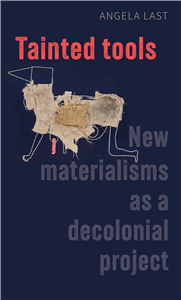
Tainted tools
New materialisms as a decolonial project
by Angela Last
Tainted Tools makes a provocative intervention into the fraught intersection between new materialist and decolonial approaches. Despite a common project of challenging European philosophical and social categories and hierarchies, the discourses are considered incompatible. Most prominently, new materialisms have been accused of harbouring a White vision of the human while disregarding the racist resonances of the 'nonhuman'. The book traces this conflict to an earlier meeting point of new materialist and decolonial projects, which came about through the experimental combination of Marx and Nietzsche. Used to fight fascism, Stalinism and colonialism, this politically contentious fusion gradually became depoliticised, leading to unaddressed tensions today. While the book does not argue for a revival of these early 'new materialisms', it brings their strategies into dialogue with today's new materialisms and decolonial approaches to develop greater theoretical solidarity in times of crisis.
-
Trusted Partner
 The ArtsFebruary 2009
The secret life of romantic comedy
by Celestino Deleyto
The secret life of romantic comedy offers a new approach to one of the most popular and resilient genres in the history of Hollywood. Steering away from the rigidity and ideological determinism of traditional accounts of the genre, this book advocates a more flexible theory, which allows the student to explore the presence of the genre in unexpected places, extending the concept to encompass films that are not usually considered romantic comedies. Combining theory with detailed analyses of a selection of films, including To Be or Not to Be (1942), Rear Window (1954), Kiss Me Stupid (1964), Crimes and Misdemeanors (1989) and Before Sunset (2004), the book aims to provide a practical framework for the exploration of a key area of contemporary experience - intimate matters - through one of its most powerful filmic representations: the genre of romantic comedy. Original and entertaining, The secret life of romantic comedy is perfect for students and academics of film and film genre. ;
-
Trusted Partner
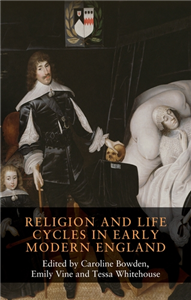 Humanities & Social SciencesOctober 2021
Religion and life cycles in early modern England
by Caroline Bowden, Emily Vine, Tessa Whitehouse
Religion and life cycles in early modern England assembles scholars working in the fields of history, English literature and art history to further our understanding of the intersection between religion and the life course in the period c. 1550-1800. Featuring chapters on Catholic, Protestant and Jewish communities, it encourages cross-confessional comparison between life stages and rites of passage that were of religious significance to all faiths in early modern England. The book considers biological processes such as birth and death, aspects of the social life cycle including schooling, coming of age and marriage and understandings of religious transition points such as spiritual awakenings and conversion. Through this inclusive and interdisciplinary approach, it seeks to show that the life cycle was not something fixed or predetermined and that early modern individuals experienced multiple, overlapping life cycles.
-
Trusted Partner
 Humanities & Social SciencesJanuary 2023
Rural quality of life
by Pia Heike Johansen, Anne Tietjen, Evald Bundgård Iversen, Henrik Lauridsen Lolle, Jens Kaae Fisker
-
Trusted Partner
 November 2023
On the Life and Death of Insects
The world of Jean-Henri Fabre
by Stephan Krall
— 200th anniversary of the birth of Jean-Henri Fabre on 21 December 2023 — First all-encompassing biography of the entomologist — Biodiversity as a hot topic Jean-Henri Fabre (1823–1915) was a French teacher, scientist and researcher. At a time when insects were not among the preferred biological objects of study (and if they were, it was only for them to be collected, pinned and identified), Fabre began to conduct behavioural research on insects. This was not appreciated until very late in his life, so Fabre and his family were largely destitute most of the time. Stephan Krall provides a very personal account of this extraordinary and passionate researcher of insects, spiders and scorpions, who managed to publish scientific documents, complete his doctorate and write books on the side. Today he is considered as one of the founding fathers of the behavioural biology of insects.
-
Trusted Partner

 July 2025
Fable for the End of the World
Tränen aus Blut und Hoffnung - Fesselnde Dystopie trifft auf queere Enemies-to-Lovers-Romance - Mit Farbschnitt in der 1. Auflage
by Ava Reid, Nadine Mannchen
Du sollst sie töten. Doch was, wenn du ohne sie nicht überleben kannst? Die Erde ist verseucht, der Meeresspiegel steigt und ein Konzern regiert Inesas Heimat. Dieser hat auch den Lauf des Lamms etabliert: einen tödlichen Wettkampf, der live übertragen wird und bei dem schwer verschuldete Menschen als „Lämmer“ von ausgebildeten „Engeln“ gejagt werden. Als Inesas Mutter zu tief in die Schulden rutscht, muss ihre Tochter für sie beim Lauf antreten. Doch der Kampf um Leben und Tod bringt Inesa ihrem Engel Melinoë näher als geahnt ... Der spannungsgeladene und berührende New York Times -Besteller Ava Reids Fable for the End of the World ist nicht nur eine mitreißende Dystopie, sondern auch eine bewegende Liebesgeschichte – verwoben mit tiefgründigen Themen und geschrieben in einem wunderschönen Stil. Der New York Times -Bestseller jetzt auf Deutsch : Über den Kampf ums Überleben, die Frage nach Menschlichkeit und den Glauben an die Hoffnung Fesselnde Dystopie : eine Welt, die unter den Folgen des Klimawandels leidet und ein tödlicher Wettkampf, der live übertragen wird. Mit queerer Liebesgeschichte : lesbische Enemies-to-Lovers-Romance Kapitalismuskritik : Ein Konzern regiert das Land, treibt seine Bevölkerung in die Schulden und handelt nur im Sinne des Profits. Feministische Botschaft : gegen Sexismus und die Objektifizierung von Frauen Poetischer Stil : SPIEGEL-Bestsellerautorin Ava Reid berührt mit wunderschönen Zeilen. Erstauflage mit opulentem Farbschnitt und exklusiver Charakterpostkarte - Nur in der 1. Auflage!
-
Trusted Partner
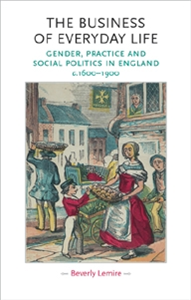 Humanities & Social SciencesJanuary 2012
The business of everyday life
Gender, practice and social politics in England, c.1600–1900
by Beverly Lemire, Pamela Sharpe, Penny Summerfield, Lynn Abrams, Cordelia Beattie, Kim Latham
From 1600 to 1900 a growing consumerism fired the English economy, shaping the priorities of individuals, and determining the allocation of resources within families. Everyday business might mean making a trip to the pawnbroker, giving a loan to a trusted friend of selling off a coat, all to make ends meet. Both women and men engaged in this daily budgeting, but women's roles were especially important in achieving some level of comfort and avoiding penury. In some communities, the daily practices in place in the seventeenth century persisted into the twentieth, whilst other groups adopted new ways, such as using numbers to chart domestic affairs and turning to the savings banks that appeared in the nineteenth century. In the material world of the past and in the changing habits of earlier generations lie crucial turning points. This book explores these previously under-researched patterns and practices that gave shape to modern consumer society. ;
-
Trusted Partner
-
Trusted Partner
-
Trusted Partner
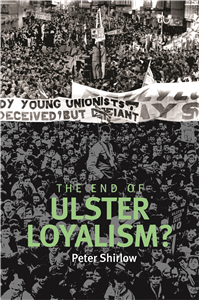 Humanities & Social SciencesJune 2012
The end of Ulster loyalism?
by Peter Shirlow
The end of Ulster loyalism? explores the dynamics and divisions within paramilitary groups since the mid-1970s. It, despite contrary public opinion, details and explains the nature of Loyalist conflict transformation. A key model of transition that is relevant to arenas beyond Northern Ireland. The book also discusses the nature and extent of loyalist violence and provides a rarely heard voice regarding State-led collusion. It locates Loyalist ideas and opinions that have been largely invisible and highlights how an extensive element of positive Loyalist renewal has been purposefully suppressed and unmentioned. It is a key text for any student of politics, criminology, human geography and conflict and conflict transformation and is particularly relevant to the scholarship of pro-State groups who are infrequently considered in academic deliberations. A book of both hope and despair that emerges from a destabilising past and a yet-to-be-decided future. ;
-
Trusted Partner

 Biography & True StoriesJune 2014
A Biography of Paul Watzlawick
The Discovery of the Present Moment
by Andrea Köhler-Ludescher
This book, the world's first biography of Paul Watzlawick, written by his great-niece, describes the life of this philosopher, therapist, and best-selling author. Paul Watzlawick had a talent for languages and he led an adventurous life, from his childhood in Villach to studying in Venice after the war, to analyst training under C. G. Jung in Zurich, an attempt at establishing himself in India and then in El Salvador as a therapist, and finally to the Mental Research Institute (MRI) in the United States, headed by Don D. Jackson, a venerable scientist. This marked the beginning of the second half of his life, his amazing career as a communication researcher, a pioneer of systemic therapy, a radical constructivist, and a great thinker regarding the divisions between East and West. With many letters, lectures, interviews, and statements from contemporary witnesses and family members, this book makes Paul Watzlawick accessible as a human being and as a spiritually inspired, leading 20th century thinker. It includes a variety of unpublished material from Watzlawick, and introduces a comprehensive and exciting picture of the scientist and cosmopolitan person, Paul Watzlawick. Target Group: For people interest in Paul Watzlawick, communication sciences, systemic therapy, and constructivism.
-
Trusted Partner
Humanities & Social SciencesSeptember 2024
Settlers at the end of empire
Race and the politics of migration in South Africa, Rhodesia and the United Kingdom
by Jean Smith
Settlers at the end of empire traces the development of racialised migration regimes in South Africa, Rhodesia (present-day Zimbabwe) and the United Kingdom from the Second World War to the end of apartheid in 1994. While South Africa and Rhodesia, like other settler colonies, had a long history of restricting the entry of migrants of colour, in the 1960s under existential threat and after abandoning formal ties with the Commonwealth they began to actively recruit white migrants, the majority of whom were British. At the same time, with the 1962 Commonwealth Immigrants Act, the British government began to implement restrictions aimed at slowing the migration of British subjects of colour. In all three nations, these policies were aimed at the preservation of nations imagined as white, revealing the persistence of the racial ideologies of empire across the era of decolonisation.
-
Trusted Partner
 November 2016
Coming to Terms with Life
by Matthias Wengenroth
Do you struggle with thoughts and feelings that make life difficult? Have you tried all sorts of ways of dealing with this without getting anywhere? Do you feel that life is passing you by? Acceptance and commitment therapy (ACT), which this book describes in a clear and entertaining way, provides new and very enlightening insights into the causes of human suffering. At the same time, ACT shows how we can improve the way we handle the difficult aspects of being human, while also developing our abilities and strengths. This title shows how using the described simple but effective methods can lead you to a happier, better life. Target Group: people who want to utilize their potential more fully, people interested in acceptance and commitment therapy, people practicing or interested in psychotherapy (psychologists, doctors, coaches, social workers)


