Your Search Results


-
Promoted Content

 Literature: history & criticismSeptember 2001
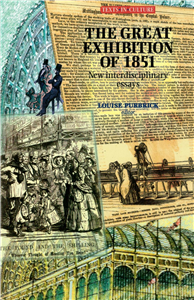
The Great Exhibition of 1851
by Susan Williams
The Great Exhibition of 1851 has become a touchstone for the nineteenth century. The Crystal Palace produced a commodity world, an imperial spectacle, a picture of capitalism, a liberal dream, a vision of modern life. Historians have saturated the Great Exhibition with meanings. This collection of essays exposes how meaning has been produced around the Great Exhibition. It contains a series of critical readings of the official and popular historical record of the Exhibition. Critics and historians of art, culture, design and literature have been brought together to examine the objects, the images, the documents and the fictions of 1851. Their essays explore the determined use of industrial knowledge, the contested definitions of nation and colony, and the actual control of the space of the Crystal Palace after the Great Exhibition closed. The Great Exhibition of 1851 presents new interpretations of one of the most significant exhibitions in the nineteenth century and will be essential reading for anyone studying cultural history, design history, art history and literature.
-
Promoted Content
 Humanities & Social SciencesMarch 2026
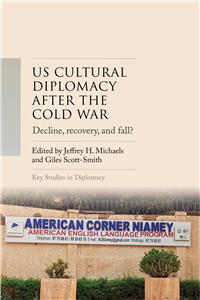
US cultural diplomacy after the Cold War
Decline, recovery, and fall
by Jeffrey H. Michaels, Giles Scott-Smith
In the decades following the USSR's collapse, the US has gone from unrivalled hegemon to a position of relative decline. With America 'triumphant' after 1991, its culture, like its diplomatic, military and economic power, remained unmatched. Such favourable circumstances seemed to undercut the need for cultural diplomacy. Why should the US government sell a product that was already selling so well? After 9/11, however, it was apparent the US image was less popular than previously assumed. To reverse this negative image, cultural diplomacy was revived. Despite being beset by internal and external challenges, US officials supported various cultural initiatives and partnerships to promote the American brand globally. Along the way, cultural diplomacy has made use of new forms of expression to promote American culture and build positive foreign relations. The arrival of the second Trump administration in 2025 has clearly signalled an end to using cultural diplomacy to further causes of empowerment and diversity, making the future uncertain for this field of activity.
-
 Trusted Partner
-
Trusted Partner
-
Trusted Partner
-
Trusted Partner
-
Trusted Partner
 The ArtsApril 2026
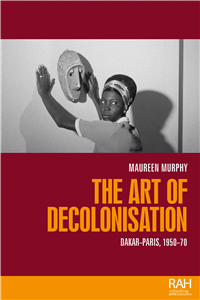
The art of decolonisation
Dakar-Paris, 1950-70
by Maureen Murphy
The art of decolonisation examines how artists challenged colonial legacies and reconfigured power through transnational networks of art and diplomacy. Adopting a global and transhistorical perspective, it explores artistic, political, and institutional relations between France and Senegal during decolonisation and the Cold War. From the emergence of a national modern art in Senegal to contested cultural policies and high-profile exhibitions-such as those featuring Picasso and Soulages in Dakar, or contemporary Senegalese art in Paris-this book traces the circulation of artworks, ideas, and influence across borders. It reveals how visual artists and filmmakers shaped a new artistic geopolitics between 1950 and 1970. Reconsidering the accepted chronology of the 'global turn', The art of decolonisation shows that the roots of global art discourse run deeper than the 1990s, and were already forming during the era of independence struggles.
-
Trusted Partner
-
Trusted Partner
 The ArtsNovember 2003
Designs on modernity
Exhibiting the city in 1920s Paris
by Tag Gronberg
Presents the 1925 Paris Exhibition as a key moment in attempts to update the image of Paris as "capital of the 19th century". At the Exposition Internationale des Arts Decoratifs et Industriels Modernes, Paris itself, as much as the commodity, was put on show. This text focuses on the Exhibition as a set of contesting representations of the modern city, stressing the importance of consumption and display for concepts of urban modernity. Here Le Corbusier's "Pavillon de L'Esprit Nouveau" with its "Plan Voisin" for the redesign of Paris confronted another equally up-to-date city - Paris "a woman's city", world centre of fashion and shopping. Taking as her starting point one of the most dramatic 1925 exhibits, the Rue des Boutiques which spanned the river Seine, the author analyzes the contemporary significance of the small Parisian luxury shop. She demonstrates how boutiques, conceived both as urbanism and as advertising, redefined Paris as the modern city. ;
-
Trusted Partner

 November 2010
Die Pariser Weltausstellung 1889
Bilder von der Globalisierung
by Beat Wyss
Die gelungenste Weltausstellung aller Zeiten war die Exposition Universelle de Paris von 1889. Weit über 32 Millionen Menschen besuchten das gigantische Spektakel mit knapp 62.000 Ausstellern aus 54 Nationen und 17 französischen Kolonien. Das Wahrzeichen der Schau, der Eiffelturm, blieb Paris bis heute erhalten. Einen legendären Ruf erwarb sich auch das offizielle, wöchentlich erscheinende Journal der Weltausstellung. Auf großformatigen, mit Stahlstichen üppig illustrierten Seiten berichtete es von den Sensationen vor Ort, von dreirädrigen selbstfahrenden Karren und ethnologischen Dörfern, in denen es Kamelreiten für die Kinder und Bauchtänze für die Herren gab. Der Schweizer Kunsthistoriker Beat Wyss hat die hundert originellsten Abbildungen ausgewählt. Sie illustrieren, wie die Expo den Erdball auf ein »Weltdorf« zwischen Trocadéro und Champ de Mars schrumpfen lässt, wie räumliche Distanzen abgebaut und dabei kulturelle Differenzen freigelegt werden. Das späte 20. Jahrhundert wird dafür den Begriff der Globalisierung prägen. Beat Wyss zeigt, wie die Gesellschaften seit dem 19. Jahrhundert mit diesem Prozeß umgehen und mit der Verwestlichung der Welt eine Orientalisierung des Westens einhergeht. Dem Leser als Flaneur über die Bühne der Weltausstellung wird klar: Die Expo 1889 belegt nicht nur den aktuellen Zustand einer Zeit, sondern bietet über die spektakuläre Anordnung ihrer Exponate den Vorschein einer gesellschaftlichen Utopie.
-
Trusted Partner
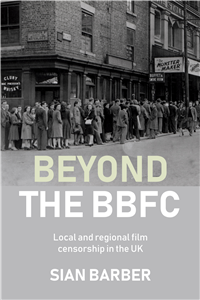 The ArtsApril 2025
Beyond the BBFC
Local and regional film censorship in the UK
by Sian Barber
This work scrutinises British film censorship from a local perspective. Examining different regions and areas, the work of individual councils and their relations with one another and with the BBFC, it offers a broad historical exploration of the intricacies of film censorship in action. Drawing on local archival material and considering the activities of local government in enforcing Cinematograph legislation, this work considers the significance of film censorship apparatus and processes in shaping and informing responses to and control of film culture in different locations across the twentieth century.
-
Trusted Partner
 Humanities & Social SciencesMarch 2023
Golden Mummies of Egypt
Interpreting identities from the Graeco-Roman period
by Campbell Price, Julia Thorne
Golden Mummies of Egypt presents new insights and a rich perspective on beliefs about the afterlife during an era when Egypt was part of the Greek and Roman worlds (c. 300 BCE-200 CE). This beautifully illustrated book, featuring photography by Julia Thorne, accompanies Manchester Museum's first-ever international touring exhibition. Golden Mummies of Egypt is a visually spectacular exhibition that offers visitors unparalleled access to the museum's outstanding collection of Egyptian and Sudanese objects - one of the largest in the UK.
-
Trusted Partner
 The ArtsJune 2025
The senses in interior design
by John Potvin, Marie-Ève Marchand, Benoit Beaulieu
-
Trusted Partner
Humanities & Social SciencesMarch 2017
Ephemeral vistas
by Paul Greenhalgh
The international exhibitions held around the world between 1851 and 1939 were spectacular gestures, which briefly held the attention of the world before disappearing into an abrupt oblivion, of the victims of their planned temporality. Known in Britain as Great Exhibitions, in France as Expositions Universelles and in America as World's Fairs, the genre became a self-perpetuating phenomenon, the extraordinary cultural spawn of industry and empire. Thoroughly in the spirit of the first industrial age, the exhibitions illustrated the relation between money and power, and revelled in the belief that the uncontrolled expression of that power was the quintessence of freedom. Philanthropy found its place on exhibition sites functioning as a conscience to the age although even here morality was inextricably linked to economic efficiency and expansion. Imperial achievement was celebrated to the full at international exhibitions. Nevertheless, most World's Fairs maintained an imperial element and out of this blossomed a vibrant racism. Between 1889 and 1914, the exhibitions became a human showcase, when people from all over the world were brought to sites in order to be seen by others for their gratification and education. In essence, the English national profile fabricated in the closing decades of the nineteenth century was derived from the pre-industrial world. The Fine Arts were an important ingredient in any international exhibition of calibre. This book incorporates comparative work on European and American empire-building, with the chronological focus primarily on the nineteenth and twentieth centuries, when these cultural exchanges were most powerfully at work.
-
Trusted Partner
 Humanities & Social SciencesDecember 2000
Ways of Knowing
A new history of science, technology and medicine
by John V. Pickstone, Martin Hargreaves
Discusses the historical development of science, technology and medicine in Western Europe and North America from the Renaissance to the present. Identifies four principle ways of knowing within specific periods: natural history in the eighteenth century analysis following the French Revolution experiment in the epoch of modernism the current presence of technoscience. Balances the historical exposition of natural magic and natural theology with a philosophical interpretation of the Scientific Revolution and reflective comments on Foucault and Collingwood. Strikes a balance between theoretical discussion and empirical illustration. Redefines the geography of science, technology and medicine. ;
-
Trusted Partner
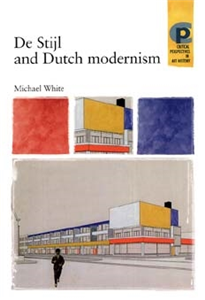 Humanities & Social SciencesJuly 2003
De Stijl and Dutch modernism
by Michael White, Marsha Meskimmon, Shearer West, Tim Barringer
De Stijl was the title of a magazine founded in the Netherlands in 1917 and is now used to identify the abstract art and functional architecture of its major contributors: Mondrian, Van Doesburg, Van der Leck, Oud, Wils and Rietveld. This book is the first to emphasize the local context of De Stijl and explore its relationship to the distinctive character of Dutch modernism. Examines the connection between debates concerning abstraction in painting and spatiality in architecture and contemporary developments in the fields of urban planning, advertising, interior design and exhibition design. Describes the interaction between the world of mass culture and the fine arts. ;
-
Trusted Partner
The ArtsOctober 2023
Windows for the world
Nineteenth-century stained glass and the international exhibitions, 1851–1900
by Jasmine Allen
Windows for the world explores the display and reception of nineteenth-century British stained glass in a secular exhibition context. International in scope, the book focuses on the global development of stained glass in this period as showcased at, and influenced by, these exhibitions. It recognises those who made and exhibited stained glass and demonstrates the long-lasting impact of the classification and modes of display at these events. A number of exhibits are illustrated in colour and are analysed in relation to stylistic developments, techniques and material innovations, as well as the broader iconographies of nation and empire in the nineteenth century.
-
Trusted Partner
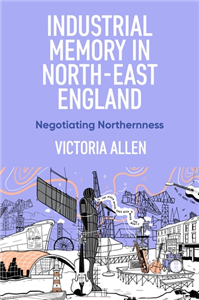 Humanities & Social SciencesSeptember 2025
Industrial memory in North East England
Negotiating northernness
by Victoria Allen
Industrial memory in North East England examines how the region's industrial myth and memory have been articulated in the renegotiation of northernness. The book offers a critical contextualisation of the concept of northernness and the English North, and an introduction to the concept of the PopCultural Portfolio, a mixed-methods approach to conjunctural analysis in cultural and memory studies. The book provides six richly illustrated case studies to demonstrate the practical application of cultural studies' expansive and inclusive understanding of texts, bringing together materials from North East football, folk, indie and exhibition culture to establish how the North East's industrial past continues to be remembered and functionalised as industrial memory. In turn, the conjunctural analysis demonstrates how industrial memory is articulated and mythologised as north(east)ernes in contemporary popular culture.
-
Trusted Partner
 Humanities & Social SciencesApril 2010
Arts and Crafts objects
by Imogen Hart, Christopher Breward, Bill Sherman
In this groundbreaking reassessment of the conventional understanding of a cohesive 'Arts and Crafts movement' in Britain, Imogen Hart argues that a sophisticated mode of looking at decorative art developed in England during the second half of the nineteenth century. Bringing to light a significant number of little-known visual and textual sources, Arts and Crafts Objects insists that the history of British design between the 1830s and the 1910s is more complex and interwoven than concepts of clearly differentiated 'movements' allow for. Reinvesting the objects with the original importance ascribed to them by their makers and users, this book places furniture, metalwork, tiles, vases, chintzes, carpets, and wallpaper at the centre of a rigorous reassessment of the concept of 'Arts and Crafts'. The book offers radical new interpretations of the Arts and Crafts Exhibition Society and the homes of William Morris, alongside illuminating analyses of less familiar but equally rich contexts. ;
-
Trusted Partner
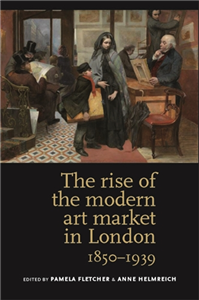 Art: Financial Aspects
The rise of the modern art market in London
1850–1939
by Edited by Pamela Fletcher and Anne Helmreich
Now available in paperback for the first time, this study of the modern London art market establishes the central importance of London for the development of the modern retail market in fine art. Leading experts track the emergence and development of the structures and practices that have come to characterize the commercial art system, including the commercial art gallery, the professional dealer, the exhibition cycle and its accompanying rhetoric of press coverage and publicity, and an international network for the circulation of goods. This new commercial system involved a massive transformation of the experience of viewing art; of the relationships between artists, dealers, collectors, art objects and audiences; and of the very criteria of aesthetic value itself. Its history is thus a vital part of the history of modern art, and this anthology will be of interest to art historians as well as scholars of Victorian Studies, Museum Studies, and Social History.