
Libre Expression
Livres Canada Books
View Rights Portal

Rights Expert Literary and Licensing Agency is representing in Romania, directly or through other agents, more than 45 publishing houses and imprints (mainly from UK and USA). Part of the publishers represented in Romania agreed to give us the international representation for other CEE territories: Poland, Czech Republic, Slovakia, Hungary, Croatia, Slovenia, Serbia, Bulgaria. Rights Expert Literary and Licensing Agency is having a portfolio of creative, independent and flexible publishers from domains like: Children and Young Adult books (non-fiction): activity books, color and stickers books. Children and Young Adult books (fiction): picture books (trendy in all the markets); story books; novels; comic magazines and books. Adult non-fiction: Self-help, Health, Body, Mind & Spirit etc. Adult fiction
View Rights Portal Trusted Partner

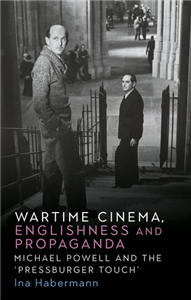
This book provides a fresh analysis of the wartime work of Michael Powell and Emeric Pressburger and their team 'the Archers'. It argues that in their earlier work, Powell and Pressburger should be seen as middlebrow storytellers whose stories explore national identity in times of war. Their wartime work is discussed in four phases: While the first phase covers their contributions to the 'phoney war', the second traces their engagement with the 'people's war'. The third phase sees the Archers move beyond propaganda, towards memodramas of Englishness, cross-cultural alliances and quests for spiritual modernity. The fourth phase dramatizes post-war preoccupations with an increasing focus on memory and trauma. Following up these thematic concerns, the conclusion is devoted to Pressburger's later work, including his two published novels Killing a Mouse on Sunday and The Glass Pearls.
Trusted Partner
Trusted Partner
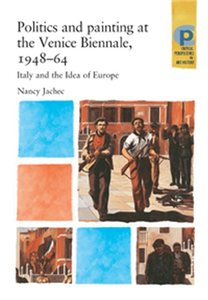
Although cultural exchanges were named within the Council of Europe in the mid- 1950s as being second only in importance to the military as a tool for ensuring a stable and integrated Western Europe in the aftermath of the Second World War, European-led initiatives have generally been overlooked in the historiography of art of the immediate post-war period. Popularly remembered as the era of the United States' cultural 'triumph', American Abstract Expressionism in particular is commonly identified as the cultural 'weapon' by which that nation conquered Western European culture. Using the Venice Biennale as a case study, this book challenges the idea that there was an American cultural conquest in the 1950s through the fine arts, arguing instead that Western Europe retained a strong sense of world cultural leadership in the immediate post-war years. An institutional history that combines political and diplomatic with art history, and is informed by extensive archival research, it argues that Italian political and cultural figures actively promoted the 'Idea of Europe' - the Council of Europe's cultural initiative of 1955 designed to promote the idea of a homogeneous post-war European culture - at the Biennale in the form of gesture painting as an international style, as the emblem of a culturally united Western Europe, and as the repository of universal humanist values for the international community. Scholarly but accessible, this book will be of interest not only to researchers and to students of international cultural relations during the Cold War, but to general, interested readers, too. ;




