
Abismos Editorial
Abismos Editorial is located in Mexico. This publishing house offers both national and international distribution. Abismos has published over 100 titles: essay, fiction, poetry, and children’s literature.
View Rights Portal
Abismos Editorial is located in Mexico. This publishing house offers both national and international distribution. Abismos has published over 100 titles: essay, fiction, poetry, and children’s literature.
View Rights Portal
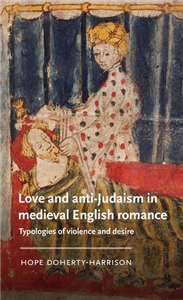
Love and anti-Judaism is a new examination of medieval romance for the questions it poses of the most significant events in Christian history. Providing new readings of Sir Gawain and the Green Knight, Sir Orfeo, Sir Gowther and Sir Amadace, the book argues that romance explores depictions of love-and the sacrifices it may necessitate-in the Hebrew Bible, especially where they do not easily fit into interpretations asserting that this history must prefigure Christ and the crucifixion. An examination of anti-Judaism as a discourse of violence and desire that could be turned inwardly to expose the irresolution in Christianity, this book will provoke new investigations into the religious crises of medieval romance.
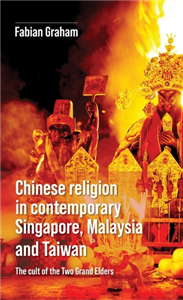
In Singapore and Malaysia, the inversion of Chinese Underworld traditions has meant that Underworld demons are now amongst the most commonly venerated deities in statue form, channelled through their spirit mediums, tang-ki. The Chinese Underworld and its sub-hells are populated by a bureaucracy drawn from the Buddhist, Taoist and vernacular pantheons. Under the watchful eye of Hell's 'enforcers', the lower echelons of demon soldiers impose post-mortal punishments on the souls of the recently deceased for moral transgressions committed during their prior incarnations. Chinese religion in contemporary Singapore, Malaysia and Taiwan offers an ethnography of contemporary Chinese Underworld traditions, where night-time cemetery rituals assist the souls of the dead, exorcised spirits are imprisoned in Guinness bottles, and malicious foetus ghosts are enlisted to strengthen a temple's spirit army. Understanding the religious divergences between Singapore and Malaysia (and their counterparts in Taiwan) through an analysis of socio-political and historical events, Fabian Graham challenges common assumptions about the nature and scope of Chinese vernacular religious beliefs and practices. Graham's innovative approach to alterity allows the reader to listen to first-person dialogues between the author and channelled Underworld deities. Through its alternative methodological and narrative stance, the book intervenes in debates on the interrelation between sociocultural and spiritual worlds, and promotes the destigmatisation of spirit possession and discarnate phenomena in the future study of mystical and religious traditions.
 Trusted Partner
Trusted Partner
Trusted Partner
Trusted Partner
Trusted Partner


The exciting texts and reports by professing Christians offer a fresh perspective for all those who have cultivated a Christian spirituality for many years. However, the book also provides easy access for those who are newly interested in the Christian faith. There are probably as many professions of Christian faith as there are believers in the world. But what do Christians think and how have they been moulded? Elisabeth Zoll and Thomas Seiterich have compiled very personal ideas about the Christian faith in this book. When selecting the contributors, the editors deliberately chose not to include people with church offices or specialised theologians. Irrespective of church policy issues and church scandals, the contributors have provided insights into their path to faith.
Trusted Partner


Although the importance of ethics is often stressed, it remains sidelined in training. Marianne Rabe makes ethics and ethical reflection the focus of nursing practice and training. Her study - presents the theoretical principles of formative learning and explores how it can be put into practice - puts forward practical curriculum suggestions for incorporating ethics into nurse training - shows how to address the ethical principles of dignity, autonomy, care, justice, responsibility, and dialogue within the framework of a teaching concept - presents Rabe’s own model of ethical reflection based on her personal experience. Target Group: Nursing trainers, lecturers
Trusted Partner
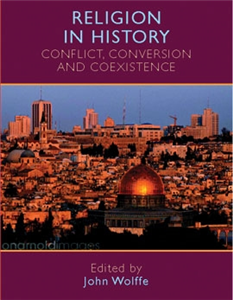
This is an integrated collection of essays by leading scholars that looks at issues of conflict, conversion and coexistence in the religious context since the third century. The range of topics explored include paganism and Christianity in the later Roman world, the Crusades, the impact of the Reformation in Britain and Ireland, subsequent Protestant-Catholic conflict, the Hindu Renaissance in nineteenth-century India, the Palestinian-Israeli conflict, Britain in the 1960s, women and the ministry, and Christianity, Judaism and the Holocaust. The book concludes by offering an historical perspective on religion, conflict and coexistence in the world today. Published in association with The Open University, this is a student-friendly and accessible volume on popular subjects within religious history, and it will be of value to students on a range of courses, as well as to a wider readership interested in the historical background to the role of religion in the contemporary world. ;
Trusted Partner
Trusted Partner

This bestselling title is a practical handbook on the concept of basic stimulation in nursing and its application for patients suffering from perceptional deficits, developmental delays and mental handicaps. It enables nurses to develop, improve and stabilize physically and mentally handicapped people with impaired perceptional, communicative and motor skills. Target Group: Nurses
Trusted Partner

This book offers the first examination of extremist Heathenry and occultism in the UK and how anti-racist Heathens act to counter this discourse. It explores the spectrum of Heathen practice today and the historical origins of racist Heathenry in nineteenth century Germanic romanticism and twentieth century folkish nationalism. Treating each of the three main extremist Heathen organisations, the book extends the analysis to the neo-Nazi occult organization the Order of the Nine Angles (O9A), and the wider racist Heathen cultural scene in Black Metal and Dark Folk music. The authors balance this with discussion of how inclusivist Heathens are countering this discourse, from visible protests at far-right rallies to inter-faith forums and an active presence on social media platforms. The book makes an important contribution to the intersecting fields of new religious movements, nationalist history and racist politics.
Trusted Partner
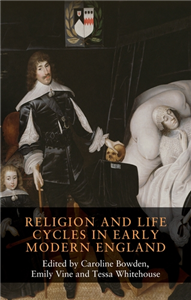
Religion and life cycles in early modern England assembles scholars working in the fields of history, English literature and art history to further our understanding of the intersection between religion and the life course in the period c. 1550-1800. Featuring chapters on Catholic, Protestant and Jewish communities, it encourages cross-confessional comparison between life stages and rites of passage that were of religious significance to all faiths in early modern England. The book considers biological processes such as birth and death, aspects of the social life cycle including schooling, coming of age and marriage and understandings of religious transition points such as spiritual awakenings and conversion. Through this inclusive and interdisciplinary approach, it seeks to show that the life cycle was not something fixed or predetermined and that early modern individuals experienced multiple, overlapping life cycles.
Trusted Partner

In this book Tatjana van Strien, the author of the Dutch Eating Behavior Questionnaire (DEBQ), presents a scientific alternative for all the ‘miracle solutions’ to lose weight. Based on more than 25 years of scientific research, she offers a self-test-method which enables readers to explore what is the cause of their eating problem, what they can do about it, and ultimately lose weight and keep it off. Target Group: people who want to lose weight, dieticians, doctors, psychologists.
Trusted Partner
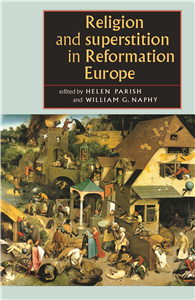
What, in the sixteenth and seventeenth centuries, was 'superstition'? Where might it be found, and how might it be countered? How was the term used, and how effective a weapon was it in the assault on traditional religion?. The ease with which accusations of 'superstition' slipped into the language of Reformation debate has ensured that one of the most fought over terms in the history of early modern popular culture, especially religious culture, is also one of the most difficult to define. Offers a novel approach to the issue, based upon national and regional studies, and examinations of attitudes to prophets, ghosts, saints and demonology, alongside an analysis of Catholic responses to the Reformation and the apparent presence of 'superstition' in the reformed churches. Challenges the assumptions that Catholic piety was innately superstitious, while Protestantism was rational, and suggests that the early modern concept of 'superstition' needs more careful treatment by historians. Demands that the terminology and presuppositions of historical discourse on the Reformation be altered to remove lingering sectarian polemic.
Trusted Partner
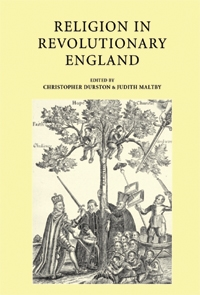
This book offers a collection of essays tightly focused around the issue of religion in England between 1640 and 1660, a time of upheaval and civil war in England. Edited by well-known scholars of the subject, topics include the toleration controversy, women's theological writing, observance of the Lord's Day and prayer books. To aid understanding, the essays are divided into three sections examining theology in revolutionary England, inside and outside the revolutionary National Church and local impacts of religious revolution. Carefully and thoughtfully presented, this book will be of great use for those seeking to better understand the practices and patterns of religious life in England in this important and fascinating period. ;
Trusted Partner

The towns of Italy in the later middle ages presents over one hundred fascinating documents, carefully selected and coordinated from the richest, most innovative and most documented society of the European Middle Ages. No other English language sourcebook has the same geographical or chronological range. This collection is carefully structured around the crisis of the fourteenth century and arranged in contrasting groups of texts. By connecting documents in translation to recent scholarship and debates, it addresses five key areas of medieval urban history: the physical environment, civic religion, economy, society and politics. Offers students well-translated and effectively contextualised documents along with some guidance to the secondary work of Italian scholars which is largely inaccessible to undergraduate students.
Trusted Partner

This book takes the reader on a fascinating journey, demonstrating in an understandable and entertaining way how the brain affects our thoughts, actions, and feelings - and that this sometimes only peripherally involves reason. It shows, that the subconscious actually exists and how it affects us, how we arrive at both right and wrong decisions, how our memory works, how fragile it can be, and yet also how robust. Using insightful experiments and the latest research results, including many examples, this book presents the reader what an incredibly impressive thinking organ the brain actually is – even if it is not a purely “rational machine”. Target Group: For people interested in the results of research into the workings of the brain in the areas of decision-making, memory, and consciousness.
Trusted Partner

The human brain is a highly complex and highly functional structure consisting of almost 90 billion nerve cells. But it can go out of sync, due to genetic factors, hormonal effects, trauma or other causes. In extreme cases, our control centre then creates bizarre delusions – brilliant narratives that are completely convincing to the person concerned. In her second book on such phenomena, Monika Niehaus has compiled 30 rare psychological disorders – from a conviction to have been abducted by aliens, to being sexually attracted to criminals, to the hyperthymestical syndrome where people can remember every detail of their past life. Narrated in an interesting, humorous and sensitive way, the author relates a variety of cases, some of them famous, others less so, while introducing us to the history of art and literature and presenting scientific explanations. This fascinating book shows the genius that resides in our brain – and how madness can often be explained.
Trusted Partner

How can humor be used to engage with and help people suffering from mental illness? This practical handbook explains the concept of humor in psychiatric treatment and sets out the case for employing it. The author outlines how nurses can assess who might benefit from the use of humor and for whom it would be out of place, and provides a toolkit of humorous interventions for daily nursing practice. Target Group: Practicing nurses, psychiatric nurses, care clowns
Trusted Partner

Die Klassiker der Soziologie hatten die Religionssoziologie als einen zentralen Teil der Gesellschaftstheorie angesehen, und zwar auch und gerade dort, wo ihnen die moderne, angeblich so religionsfern gebaute Gesellschaft vor Augen stand. Der vorliegende Band, an dem Niklas Luhmann bis kurz vor seinem Tod gearbeitet hat, erneuert diesen Anspruch, indem er die Religion als autonomes Kommunikationssystem innerhalb der modernen Gesellschaft beschreibt.
Trusted Partner
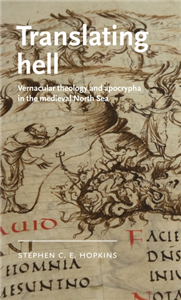
In the Middle Ages, hell was useful because it was vaguely defined. Canonical scriptures scarcely mention hell, leaving much to the imaginations of early Christians, who used it to sort out who belonged within the faith. This book explores how hell became a place for literary experiments with local challenges in theology and identity. Following the reception and transformations of two popular hell apocrypha, it argues that they served as this role because of their liminal textual authority. As noncanonical scriptures, apocrypha afforded medieval writers space to revise their hells (since they were not actually scripture), while also encouraging readers to revere those experiments as valid (since they seemed like scripture). The book brings together adaptations from early medieval England, Iceland, Ireland, and Wales, placing the early vernacular theologies of the North Sea in comparative conversation.




