Your Search Results

      • Families International

        It began when I left Ghana to study in Marburg, Germany. I entered a classroom of children with developmental concerns and instantly fell in love with them–the passion continues. I’m an indie professional author-publisher of Christian, academic and children’s books. Founder of Families International, Ottawa, Canada. An organization for all families, especially those who have children with developmental concerns. Our vision is to empower these families to believe in and help themselves, and their children. Be passionate partners of their children’s educational systems and working resiliently with special pedagogic and medical teams to support their children to achieve their full potential. We value every child and believe disabilities don’t mean inabilities. These children have educational assets exemplified by my newly released children’s books–Mommie, Snoopy Mr. Crab and Jumbolino The Dancing Clown. Inspired and created from my international work with these children and their families.

        View Rights Portal
      • Trusted Partner
        The Arts
        May 2004

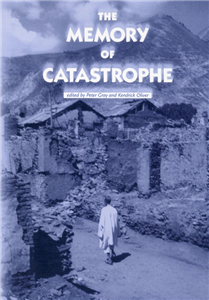
        The memory of catastrophe

        by Peter Gray, Kendrick Oliver

        Investigates the dynamic relationship between experiences of profound social and cultural disruption, and human memory. Critical comparisons are made across a wide variety of catastrophic experiences and memories; not just of war, but also of massacre, genocide, rebellion, famine, partition, shipwreck and fire. The book is an accessible showcase for a wide range of methodological approaches to the study of memory, including literary studies, cultural studies, participant-observation and historical studies, and uses a variety of oral, visual and written sources. Offers a diverse chronological and geographical range of catastrophic cases, from seventeenth-century England to the recent conflicts in the former Yugoslavia, from Ireland to the Indian sub-continent, from Mexico to wartime Leningrad. Well-written and accessible - a fascinating read. ;

      • Trusted Partner
        Humanities & Social Sciences
        August 2010

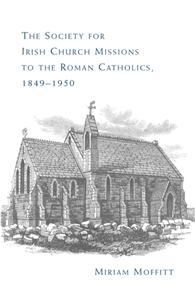
        The Society for Irish Church Missions to the Roman Catholics, 1849–1950

        by Miriam Moffitt

        This work details traces the origins, development and impact of the proselytizing organization, the Society for Irish Church Missions to the Roman Catholics, from its Protestant foundation during the famine of 1845-47 to the early decades of Irish Free State. It argues that the foundation of this ostensibly religious society was also underpinned by social, political, and economic factors and demonstrates that by the mid 1850s the mission operated on a very substantial scale. Moffitt examines the mission's role in the shifting political realities of the late nineteenth and early twentieth centuries. The impact of this inter-faith power struggle and its legacy to the present day are explored by examining contemporary sources, folklore evidence, and the depiction of proselytizing missions in both Catholic and Protestant denomination literature and fictional writings. ;

      • Trusted Partner
        Literature & Literary Studies
        March 2009

        The silence of Barbara Synge

        by Bill McCormack

        'The silence of Barbara Synge' provides a fascinating companion volume to Bill McCormack's acclaimed 'Fool of the family' (2000), a biography of the playwright J.M. Synge (1871-1909). Taking the alledged death of Mrs John Hatch (née Synge) in 1767 as a focal point, this book explores the varied strands of the Synge family tree in eighteenth and nineteenth century Ireland. Key events in the family's history are carefully documented, including a suicide in 1769 which is echoed in an early Synge play, the effects of the famine which influenced 'The playboy of the western world' in 1907, and the behaviour of Francis Synge at the time of the union. 'The silence of Barbara Synge' is a unique work of cultural enquiry, combining archival research, literary criticism, and religious and medical history to pull the strands together and relate them to the family's literary descendent J.M. Synge. ;

      • Trusted Partner
        Medieval history
        May 2006

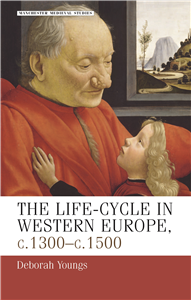
        The life–cycle in Western Europe, c.1300–c.1500

        by Deborah Youngs

        This is the first study to examine the entire life cycle in the Middle Ages. Drawing on a wide range of secondary and primary material, the book explores the timing and experiences of infancy, childhood, adolescence and youth, adulthood, old age and, finally, death. It discusses attitudes towards ageing, rites of passage, age stereotypes in operation, and the means by which age was used as a form of social control, compelling individuals to work, govern, marry and pay taxes. The wide scope of the study allows contrasts and comparisons to be made across gender, social status and geographical location. It considers whether men and women experienced the ageing process in the same way, and examines the differences that can be discerned between northern and southern Europe. The fourteenth and fifteenth centuries suffered famine, warfare, plague and population collapse. This fascinating consideration of the life cycle adds a new dimension to the debate over continuity and change in a period of social and demographic upheaval.

      • Trusted Partner
        Humanities & Social Sciences
        January 2020

        The life–cycle in Western Europe, c.1300–c.1500

        by S. H. Rigby, Deborah Youngs

        This is the first study to examine the entire life cycle in the Middle Ages. Drawing on a wide range of secondary and primary material, the book explores the timing and experiences of infancy, childhood, adolescence and youth, adulthood, old age and, finally, death. It discusses attitudes towards ageing, rites of passage, age stereotypes in operation, and the means by which age was used as a form of social control, compelling individuals to work, govern, marry and pay taxes. The wide scope of the study allows contrasts and comparisons to be made across gender, social status and geographical location. It considers whether men and women experienced the ageing process in the same way, and examines the differences that can be discerned between northern and southern Europe. The fourteenth and fifteenth centuries suffered famine, warfare, plague and population collapse. This fascinating consideration of the life cycle adds a new dimension to the debate over continuity and change in a period of social and demographic upheaval.

      • Trusted Partner
        Humanities & Social Sciences
        July 2014

        Reforming food in post-Famine Ireland

        by Ian Miller

      • Trusted Partner
        Humanities & Social Sciences
        January 2015

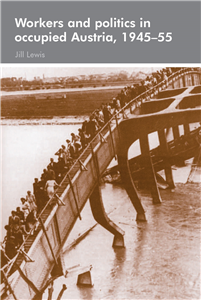
        Workers and politics in occupied Austria, 1945–55

        by Jill Lewis

        In March 1946 Winston Churchill warned the world about the 'Iron Curtain' that had descended across Europe and behind which now lay, he said, the eight capitals of the ancient states of central and Eastern Europe. In fact, one of these eight, Vienna, escaped absorption into the Soviet bloc. Between 1945 and 1955, Austria and its capital were occupied by the Four (increasingly mutually antagonistic) Allied Powers. During this decade of confusion, insecurity, suspicion and fear, and confronted by poverty and the threat of famine, Austria's political and economic elites joined forces to promote a culture of political unity and harmony from which eventually emerged the Austrian model of corporatism, commonly referred to as the Social Partnership. This book sets the social and economic difficulties that Austria encountered in this crucial decade in their international context and examines how they were contained. The author also discusses the long-term implications of the Austrian culture of consensus, not only for the way in which the country dealt with its recent past, but also for present-day political developments. A remarkable study that will be essential reading for students and scholars of twentieth-century European history. ;

      • Trusted Partner
        Literature & Literary Studies
        June 2025

        Polysituatedness

        A poetics of displacement

        by John Kinsella

        This book is concerned with the complexities of defining 'place', of observing and 'seeing' place, and how we might write a poetics of place. From Kathy Acker to indigenous Australian poet Jack Davis, the book touches on other writers and theorists, but in essence is a hands-on 'praxis' book of poetic practice. The work extends John Kinsella's theory of 'international regionalism' and posits new ways of reading the relationship between place and individual, between individual and the natural environment, and how place occupies the person as much as the person occupies place. It provides alternative readings of writers through place and space, especially Australian writers, but also non-Australian. Further, close consideration is given to being of 'famine-migrant' Irish heritage and the complexities of 'returning'. A close-up examination of 'belonging' and exclusion is made on a day-to-day basis. The book offers an approach to creating poems and literary texts constituted by experiencing multiple places, developing a model of polyvalent belonging known as 'polysituatedness'. It works as a companion volume to Kinsella's earlier Manchester University Press critical work, Disclosed Poetics: Beyond Landscape to Lyricism.

      • Trusted Partner
        Business, Economics & Law
        March 2026

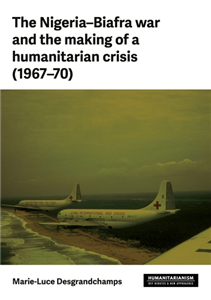
        Humanitarianism in Civil War

        The Biafra crisis, 1967-1970

        by Marie-Luce Desgrandchamps

        May 1967, in Nigeria, the Republic of Biafra declared its independence. Soon, civil war and famine ravaged the region and gradually entered the European and American media. Photographs of the conflict arouse considerable emotion in the West. The secessionist enclave and the areas taken over by the Nigerian army then became the scene of major relief operations, developed and financed by multiple organizations and governments. Part of a historiography of humanitarianism in full renewal, this book tells the story of the war, its metamorphosis into an international crisis and the responses that were provided. Based on a large body of sources from French, British, Swiss, Nigerian and American archives, it offers an insight into the world of humanitarian work at the end of the 1960s. It shows the reconfigurations taking place there. in the postcolonial era by proposing complementary scales of observation - international, national and local. The work also revisits some of the controversies which developed around the conflict regarding the instrumentalization of aid, its links with politics, the reception of relief operations on the ground or even the birth of borderlessness and testimony. It thus returns to the place occupied by the Biafran crisis in the history of humanitarian aid.

      • Trusted Partner
        Humanities & Social Sciences
        February 2026

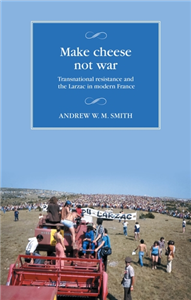
        Make cheese not war

        Transnational resistance and the Larzac in modern France

        by Andrew W. M. Smith

        In 1971, the French government announced a massive extension of its military base on the Larzac plateau in southern France. Land was to be expropriated from 107 farms around the small town of La Cavalerie. Limited resistance was expected, but what happened next exceeded all expectations. Local sheep farmers set up protest camps and occupied the land. They soon attracted an astonishing level of support, pioneering a form of regional radicalism with global implications. Drawing out the international dimensions of the protest, Make cheese not war explores a transnational resistance movement in the 1970s that challenged dominant visions of modernity and became a wellspring of radical alternatives. Exploring previously unconsulted archives in France and elsewhere, the book offers an in-depth analysis of the decade-long peasant movement and its aftermath. Repositioning the Larzac struggle within a wider network of French and international solidarities, from the US to the UK, Germany, Burkina Faso, New Caledonia and Japan, the book retraces political networks of pacifist activism, as well as environmental movements and anti-nuclear protest. It shows how this French peasant campaign became both a platform and a model for popular engagement.

      • Trusted Partner
        Nursing

        Integration of Foreign Employees in Nursing

        Theories, Concepts as Well as Pedagogical Experiences and Framework Recommendations for Practice

        by Michael Bossle / Horst Kunhardt

        The shortage of skilled nursing staff is glaring. Staffing needs will increase strongly due to retirements over the next ten years. To improve the situation, professional associations are calling for better working and general conditions, adequate staffing and remuneration, greater investment in training and professional development, and more decision-making powers for nursing professionals in the healthcare system. Recruiting and integrating foreign nursing professionals is an important element in reducing the shortage of skilled workers.

      • Trusted Partner
        June 2024

        At the Very Bottom of the System

        How migrant workers ensure prosperity for us

        by Sascha Lübbe

        The author reveals structural problems and offers solutions – an urgently necessary book, not least with a view to the acute shortage of skilled workers 450,000 migrant workers toll on German construction sites, work in sometimes inhumane conditions in meat factories or as truck drivers, and let’s not forget the hordes of cleaners in German hotels and companies. They are systematically exploited and cheated out of their wages. Sascha Lübbe exposes the octopus-like network of partly criminal companies in a shadowy world where the boundary between the legal and the illegal is blurred. In his evocative book with interviews with those aff ected, he reveals how a parallel system has established itself in the German working world, but also how those affected resist.

      • Trusted Partner
        July 2023

        Democracy Into Children's Minds

        Why our future will be decided in schools

        by Julian Nida-Rümelin/Klaus Zierer

        — By two renowned authors from the fields of philosophy and education — Julian Nida-Rümelin – a popular talk show guest The debate about the correct school policy has been going on for many years. And there's no end to the bad news regarding the shortage of teachers, poor performance by students at PISA or the lack of suitable equipment in schools. What is being neglected in the discussions about the education policy but is, in fact, a central momentum in its development, is the school's task of conveying democratic values and patterns of action. This is the only way our society's supporting pillars can be strengthened in future generations. In the light of the complex situation, from the authors' point of view it is important to formulate a wake-up call: Democracy education – now!

      • Trusted Partner
        Humanities & Social Sciences
        April 2026

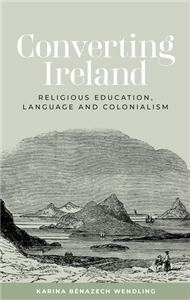
        Converting Ireland

        Religious education, language and colonialism

        by Karina Bénazech Wendling

        Karina Bénazech Wendling offers a re-assessment of 'souperism'-the long-debated claim that food was used to convert Irish Catholics to Protestantism during the Great Famine. Focusing on the Irish Society for Promoting the Education of the Native Irish through their Own Language, the first group labeled 'soupers' in 1841, she uncovers a more complex picture. Rather than a mere tool of British cultural imperialism, the Society had a deep engagement with the Irish language and Bible translation, while also encouraging religious conversions in the West. The book explores the Society's role in Ireland's religious and political landscape, the rise of Catholic counter-missions, and nationalist resistance. Offering fresh insights into Ireland's religious history and global missionary movements, this book is essential for scholars of Irish studies, interdenominational relations, and education in Ireland.

      • Trusted Partner
        Humanities & Social Sciences
        February 2009

        Full participation

        A comparative study of compulsory voting

        by Sarah Birch

        About a quarter of all democracies today legally oblige their citizens to vote, making this an important aspect of electoral systems in many settings. Moreover, numerous commentators and policy-makers in voluntary voting states are coming to view mandatory attendance at the polls as an attractive option in the context of declining turnout. Yet there has been a dearth of analysis of the way in which compulsory voting shapes attitudes, behaviour and outcomes of the political process. This volume fills that gap by providing a comprehensive description, analysis and evaluation of compulsory voting as it is practiced throughout the world. Specifically, the study systematically examines the history of the institution, the normative arguments for and against it, and the influence it has on a range of political phenomena. These include electoral campaigns, political attitudes, electoral integrity and legitimacy, policy outcomes and turnout. The book also considers the feasibility of introducing compulsory voting in a contemporary democracy, as well as variations on the institution designed to broaden its appeal. ;

      • Trusted Partner
        Literature & Literary Studies
        March 2007

        On the uses of history in recent Irish writing

        by Bernhard Klein

        This book offers a critical reassessment of the uses of history in contemporary Irish literature and culture. It argues that in much recent Irish writing, history is approached not as the proverbial 'nightmare' from which Joyce's Stephen Dedalus tried to awake, but as a rich, imaginative resource. Drawing on recent debates in Irish literary and cultural criticism, On the uses of history in recent Irish writing explores the varied, creative, and often critically challenging forms of rewriting Ireland's troubled past in contemporary prose, drama and poetry. Individual chapters focus on literary treatments of the Tudor reconquest, the Famine, the Northern Irish Troubles and other key events in Irish history, highlighting in a series of close readings the unique forms of historical thought enabled by different literary forms and genres. Canonical works by authors such as Seamus Heaney, Derek Mahon, Tom Paulin, Brian Friel, Stewart Parker and Frank McGuinness are considered alongside lesser known writers and texts, placing each in their wider social, cultural and historical contexts. ;

      • Trusted Partner
        Humanities & Social Sciences
        October 2008

        Political responsibility and the European Union

        by Myrto Tsakatika

        This book addresses the question of political legitimacy in the European Union from the much neglected angle of political responsibility. It develops an original communitarian approach to legitimacy based on Alasdair MacIntyre's ethics of virtues and practices, that can be contrasted with prevalent liberal-egalitarian and neo-republican approaches. Tsakatika argues that a 'responsibility deficit', quite distinct from the often discussed 'democratic deficit', can be diagnosed in the European Union. This is documented in chapters that provide in-depth analysis of accountability, transparency and the difficulties associated with identifying responsibility in European governance. Closing this gap requires going beyond institutional engineering. It calls for gradual convergence towards certain core social and political practices and for the flourishing of the virtues of political responsibility in Europe's nascent political community. Throughout the book, normative political theory is brought to bear on concrete dilemmas of institutional choice faced by the EU during the recent constitutional debates. 'Political responsibility and the European Union' will be of interest to specialists and postgraduate students of political theory, constitutional law and European Union Studies. ;

      • Trusted Partner
        Humanities & Social Sciences
        July 2023

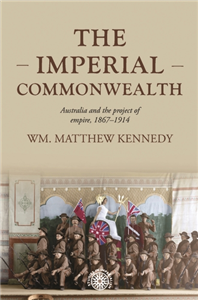
        The imperial Commonwealth

        Australia and the project of empire, 1867-1914

        by Wm. Matthew Kennedy

        From the late 1800s to the early 1900s, Australian settler colonists mobilised their unique settler experiences to develop their own vision of what 'empire' was and could be. Reinterpreting their histories and attempting to divine their futures with a much heavier concentration on racialized visions of humanity, white Australian settlers came to believe that their whiteness as well as their Britishness qualified them for an equal voice in the running of Britain's imperial project. Through asserting their case, many soon claimed that, as newly minted citizens of a progressive and exemplary Australian Commonwealth, white settlers such as themselves were actually better suited to the modern task of empire. Such a settler political cosmology with empire at its center ultimately led Australians to claim an empire of their own in the Pacific Islands, complete with its own, unique imperial governmentality.

      Subscribe to our

      newsletter