
Studies in Photography
Publishing, books, journals and photographic prints
View Rights Portal

WE HAVE BOOKS IN ENGLISH AND IN PORTUGUESE AND YOU CAN TRANSLATE THEM FOR YOUR LANGUAGE.
View Rights Portal
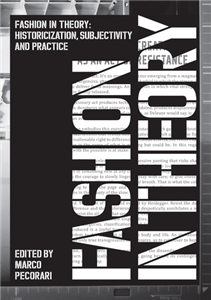
For Spring Summer 2020, Gucci showed a collection questioning identity politics and capitalism. Rather than the usual explanation of the material, shapes or inspirations behind the collection, the press release handed out at the show quoted the philosopher Michel Foucault and questioned the very nature of fashion itself. Gucci's press release reflects the popularization of critical theory in public discourse and fashion in particular. Philosophers, activists and academics are increasingly recruited to collaborate with luxury brands, and main-stream fashion brands have begun to adopt a discourse about politics and critical thinking using, in their communication, concepts such as "resistance", "gender fluidity", "national identity" or "cultural heritage" without accompanying these discourses with any form of political engagement or activism. Based on this intellectualization of the fashion industry and the recent proliferation of critical theory in fashion education, this book stresses the importance of rethinking the relationship between fashion and theory. Drawing together eleven chapters and four conversations by and with philosophers, cultural theorists, historians, anthropologists, activists, performers and designers, the book investigates both the theorization of fashion and the ways in which fashion offers a useful landscape in understanding the current state of critical theory today.
This illustrated survey of 600 years of fashion investigates its cultural and social meanings from medieval Europe to 20th-century America. It provides a guide to the changes in style and taste, and challenges existing fashion histories, showing that clothes have always played a pivotal role in defining a sense of identity and society, especially when concerned with sexual and body politics. With a chronological structure, each chapter focuses on both male and female fashion of a specific period, covering its fascinating developments. It discusses: androgynous dressing; body piercing; fabrics, clothing and the rise of city life; dress, and the changing shape of the human body; controversies surrounding trousers and leg wear for both men and women; exposure of flesh; fashion and social status; and the dissemination of fashion through travel, film, magazines and catwalk shows. ;
 Trusted Partner
This book offers the first comprehensive history of white workers from the end of the First World War to Zimbabwean independence in 1980. It reveals how white worker identity was constituted, examines the white labouring class as an ethnically and nationally heterogeneous formation comprised of both men and women, and emphasises the active participation of white workers in the ongoing and contested production of race. White wage labourers' experiences, both as exploited workers and as part of the privileged white minority, offer insight into how race and class co-produced one another and how boundaries fundamental to settler colonialism were regulated and policed. Based on original research conducted in Zimbabwe, South Africa and the UK, this book offers a unique theoretical synthesis of work on gender, whiteness studies, labour histories, settler colonialism, Marxism, emotions and the New African Economic History.
Trusted Partner
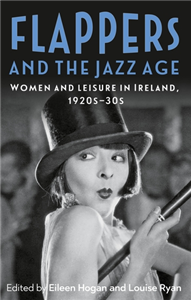
People's ordinary, everyday lives - and more specifically, their leisure activities - are often obscured within existing academic research on 1920s-30s Ireland. This book seeks to redress that neglect by exploring the relationship between identity, recreation, and culture both North and South of the border, with particular attention to women's lived experiences. Leisurely pursuits during this period were commonly overshadowed by religious influence and the nation-building projects in post-partition Ireland. Nevertheless, there existed alternative spaces, where people enjoyed dancing, singing, listening to music, shopping, glamour, reading magazines, swimming, travelling, and going to the cinema. Such activities reflected international trends beyond national borders. This book documents those activities and spaces through a feminist lens and intersectional analysis of gender, class, religion and rural/urban identities. It brings together multi-disciplinary perspectives including cultural studies, architecture, geography, fashion, and musicology. In so doing, we present new insights and advance understanding of this under-researched aspect of Irish history.
Trusted Partner
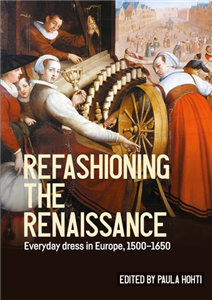
How did ordinary men and women dress in early modern Europe? What fabrics and garments formed the essential elements of fashion for artisans and shopkeepers? Did they rely on affordable alternatives to the silks, jewellery, and decorations favoured by the wealthy elite? Or did those with modest means find innovative ways to express their fashion sense? This book provides new perspectives on early modern clothing and fashion history byinvestigating the consumption and meaning of fashionable clothing and accessories among the 'popular' classes. Through a close examination of the materials, craftsmanship and cultural significance of fashion items owned by and available to a broad group of consumers, it challenges conventional assumptions that the everyday dress of ordinary families was limited to a narrow selection of garments made of coarse textiles, often produced at home and resistant to change.
Trusted Partner
 Trusted Partner
 Trusted Partner

This book offers a comprehensive film-by-film analysis of Spain's most famous living director, Pedro Almodóvar. It shows how Almodóvar's films draw on various national cinemas and genres, including Spanish cinema of the dictatorship, European art cinema, Hollywood melodrama and film noir. It also argues that Almodóvar's work is a form of social critique, his films consistently engaging with and challenging stereotypes about traditional and contemporary Spain in order to address Spain's traumatic historical past and how it continues to inform the present. Drawing on scholarship in both English and Spanish, the book will be of interest to undergraduate and postgraduate students of film studies and Hispanic studies, scholars of contemporary cinema and general readers with a passion for the films of Pedro Almodóvar.
Trusted Partner


Make or break? Advertisements repeatedly praise „plant-based“ products or promise new mobility through ointments and dietary supplements. The tools of evidence-based pharmacy help to answer the question „Does this really help?“ This practical guide offers tips and explanations on how to be confident of finding the relevant scientific literature, critically evaluate clinical studies, and interpret therapeutic results. The book provides guidance on how to classify the quality of reviews and meta-analyses and assess the reliability of guidelines in everyday healthcare practice. Practical examples help to avoid pitfalls in evaluation and to understand the statistical details. An extensive appendix with technical terms, checklists, important institutions of evidence-based medicine and further sources completes the book.
Trusted Partner
Trusted Partner

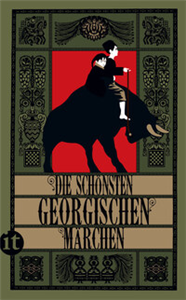
Georgien ist das Land der Märchen und Legenden, die Georgier sind für ihre Erzählfreudigkeit bekannt. Die Märchen, die durch die Verbindung von europäischen und orientalischen Motiven faszinieren, erzählen von der Sehnsucht des Volkes nach einem glücklichen Leben in Freiheit und Gerechtigkeit. Wir begegnen Helden von größter Kühnheit: Sie geben Tote dem Leben zurück, bezwingen grausame Drachen, wissen die Geliebte in fernsten landen zu finden, und der Tschonspieler betört, Orpheus gleich, mit zauberischen Melodien selbst den Herrscher über Leben und Tod, den schrecklichen Wächter des Baumes der Unsterblichkeit ... Dieser Band stellt die schönsten georgischen Märchen vor.
Trusted Partner
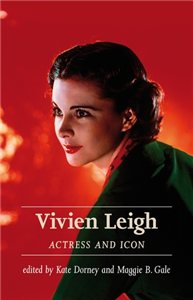
This edited volume provides new readings of the life and career of iconic actress Vivien Leigh (1913-67), written by experts from theatre and film studies and curators from the Victoria & Albert Museum, London. The collection uses newly accessible family archives to explore the intensely complex relationship between Vivien Leigh's approach to the craft of acting for stage and screen, and how she shaped, developed and projected her public persona as one of the most talked about and photographed actresses of her era. With key contributors from the UK, France and the US, chapters range from analyses of her work on stage and screen to her collaborations with designers and photographers, an analysis of her fan base, her interior designs and the 'public ownership' of Leigh's celebrity status during her lifetime and beyond.
Trusted Partner
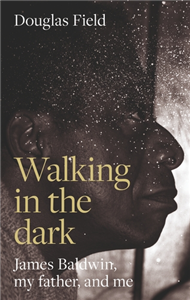
A moving exploration of the life and work of the celebrated American writer, blending biography and memoir with literary criticism. Since James Baldwin's death in 1987, his writing - including The Fire Next Time, one of the manifestoes of the Civil Rights Movement, and Giovanni's Room, a pioneering work of gay fiction - has only grown in relevance. Douglas Field was introduced to Baldwin's essays and novels by his father, who witnessed the writer's debate with William F. Buckley at Cambridge University in 1965. In Walking in the dark, he embarks on a journey to unravel his life-long fascination and to understand why Baldwin continues to enthral us decades after his death. Tracing Baldwin's footsteps in France, the US and Switzerland, and digging into archives, Field paints an intimate portrait of the writer's life and influence. At the same time, he offers a poignant account of coming to terms with his father's Alzheimer's disease. Interweaving Baldwin's writings on family, illness, memory and place, Walking in the dark is an eloquent testament to the enduring power of great literature to illuminate our paths.
Trusted Partner
Trusted Partner
Trusted Partner
 Trusted Partner

Looking at contemporary film and television, this book explores how popular genres frame our understanding of on-screen performance. Previous studies of screen performance have tended to fix upon star actors, directors, or programme makers, or they have concentrated upon particular training and acting styles. Moving outside of these confines, this book provides a truly interdisciplinary account of performance in film and television and examines a much neglected area in our understanding of how popular genres and performance intersect on screen. Each chapter concentrates upon a particular genre or draws upon generic case studies in examining the significance of screen performance. Individual chapters examine contemporary film noir, horror, the biopic, drama-documentary, the western, science fiction, comedy performance in 'spoof news' programmes and the television 'sit com' and popular Bollywood films.
Trusted Partner
Trusted Partner
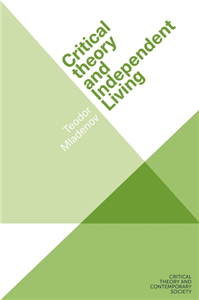
Critical theory and Independent Living explores intersections between contemporary critical theory and disabled people's struggle for self-determination. The book highlights the affinities between the Independent Living movement and studies of epistemic injustice, biopower, and psychopower. It discusses in depth the activists' critical engagement with welfare-state paternalism, neoliberal marketisation, and familialism. This helps develop a pioneering comparison between various welfare regimes grounded in Independent Living advocacy. The book draws on the activism of disabled people from the European Network on Independent Living (ENIL) by developing case studies of the ENIL's campaigning for deinstitutionalisation and personal assistance. It is argued that this work helps rethink independence as a form of interdependence, and that this reframing is pivotal for critical theorising in the twenty-first century.
Trusted Partner



