
Humanities & Social Sciences
Description
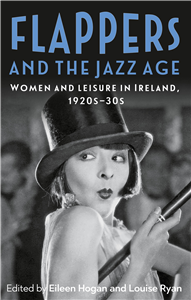
People's ordinary, everyday lives - and more specifically, their leisure activities - are often obscured within existing academic research on 1920s-30s Ireland. This book seeks to redress that neglect by exploring the relationship between identity, recreation, and culture both North and South of the border, with particular attention to women's lived experiences.
Leisurely pursuits during this period were commonly overshadowed by religious influence and the nation-building projects in post-partition Ireland. Nevertheless, there existed alternative spaces, where people enjoyed dancing, singing, listening to music, shopping, glamour, reading magazines, swimming, travelling, and going to the cinema. Such activities reflected international trends beyond national borders.
This book documents those activities and spaces through a feminist lens and intersectional analysis of gender, class, religion and rural/urban identities. It brings together multi-disciplinary perspectives including cultural studies, architecture, geography, fashion, and musicology. In so doing, we present new insights and advance understanding of this under-researched aspect of Irish history.
More Information
Rights Information
Albania, Algeria, Angola, Argentina, Armenia, Australia, Austria, Bahrain, Belgium, Belize, Benin, Bolivia, Bosnia and Herzegovina, Botswana, Brazil, Bulgaria, Burkina Faso, Burundi, Cameroon, Canada, Cape Verde, Central African Republic, Chad, Chile, China, Colombia, Comoros, Congo [DRC], Congo, Republic of the, Costa Rica, Ivory Coast, Croatia, Czech Republic, Denmark, Djibouti, Ecuador, Egypt, El Salvador, Equatorial Guinea, Eritrea, Estonia, Ethiopia, Faroe Islands, Finland, France, French Guiana, Gabon, Gambia, Georgia, Germany, Ghana, Greece, Guatemala, Guinea, Guinea-Bissau, Guyana, Honduras, Hongkong, Hungary, Iceland, India, Indonesia, Iran, Iraq, Ireland, Israel, Italy, Japan, Jordan, Kazakhstan, Kenya, Kuwait, Latvia, Lebanon, Lesotho, Liberia, Libya, Lithuania, Luxembourg, Macau, China, Macedonia [FYROM], Madagascar, Malawi, Malaysia, Mali, Malta, Mauritania, Mauritius, Mayotte, Mexico, Mongolia, Montenegro, Morocco, Mozambique, Namibia, Netherlands, New Zealand, Nicaragua, Niger, Nigeria, Norway, Oman, Pakistan, Panama, Paraguay, Peru, Philippines, Poland, Portugal, Puerto Rico, Qatar, Reunion, Romania, Russia, Rwanda, Saint Helena, Sao Tome and Principe, Saudi Arabia, Senegal, Serbia, Seychelles, Sierra Leone, Singapore, Slovakia, Slovenia, Somalia, South Africa, South Korea, Spain, Sri Lanka, Sudan, Suriname, Swaziland, Sweden, Switzerland, Syria, Taiwan, Tanzania, Thailand, Timor-Leste, Togo, Tokelau, Tunisia, Turkey, Uganda, Ukraine, United Arab Emirates, United Kingdom, United States, Uruguay, Venezuela, Vietnam, Western Sahara, Yemen, Zambia, Zimbabwe, South Sudan, Cyprus, Palestine, Bangladesh, Cambodia, Liechtenstein, Azerbaijan, Jamaica, Kyrgyzstan, Dominican Republic, Myanmar, Monaco
Endorsements
Flappers and the Jazz Age presents intriguing new insights into ordinary women's lives and leisure in post-partition Ireland. Taking a multidisciplinary and intersectional approach, the book examines diverse sources to explore popular recreational interests in the 1920s and 1930s - including glamour, music, dancing, singing, shopping, reading magazines, travelling, and going to the cinema. In these socially conservative times, modern international cultural influences were deemed morally dubious and were loudly condemned by political and religious leaders both north and south of the border. Indeed, the 'modern girl' or 'flapper' was typically embroiled in debates about modern nation-building across the world. In the context of the Irish Free State and Northern Ireland, she was also conveniently scapegoated in arguments about modernity and global influence, and traditional social order and gender roles. This edited collection reveals how women across the island of Ireland creatively resisted and negotiated attempts to control their leisure lives. The contributors challenge simplistic perspectives on Irish and Northern Irish women's lives as insular, instead evidencing the connectedness of their experiences with the wider global context. While acknowledging the reality of economic inequalities, the book reframes the stereotypical construction of women's lives in the 1920s and 1930s as dull, constricted, and colourless, and rejects the depiction of women as passive victims of social forces. Through a feminist lens, the book produces a lively, complex representation of these women as agentic, pleasure-seeking, fun-loving, playful, and even rebellious subjects that hopefully sparks new scholarship about their experiences.
Reviews
Flappers and the Jazz Age presents intriguing new insights into ordinary women's lives and leisure in post-partition Ireland. Taking a multidisciplinary and intersectional approach, the book examines diverse sources to explore popular recreational interests in the 1920s and 1930s - including glamour, music, dancing, singing, shopping, reading magazines, travelling, and going to the cinema. In these socially conservative times, modern international cultural influences were deemed morally dubious and were loudly condemned by political and religious leaders both north and south of the border. Indeed, the 'modern girl' or 'flapper' was typically embroiled in debates about modern nation-building across the world. In the context of the Irish Free State and Northern Ireland, she was also conveniently scapegoated in arguments about modernity and global influence, and traditional social order and gender roles. This edited collection reveals how women across the island of Ireland creatively resisted and negotiated attempts to control their leisure lives. The contributors challenge simplistic perspectives on Irish and Northern Irish women's lives as insular, instead evidencing the connectedness of their experiences with the wider global context. While acknowledging the reality of economic inequalities, the book reframes the stereotypical construction of women's lives in the 1920s and 1930s as dull, constricted, and colourless, and rejects the depiction of women as passive victims of social forces. Through a feminist lens, the book produces a lively, complex representation of these women as agentic, pleasure-seeking, fun-loving, playful, and even rebellious subjects that hopefully sparks new scholarship about their experiences.
Author Biography
Eileen Hogan is Lecturer in Social Policy at the School of Applied Social Studies, University College Cork, Ireland. Louise Ryan is Senior Professor of Sociology and Director of the Global Diversities and Inequalities Research Centre at London Metropolitan University.
 Trusted Partner

Manchester University Press
Manchester University Press is a leading UK publisher known for excellent research in the humanities and social sciences.
View all titlesBibliographic Information
- Publisher Manchester University Press
- Publication Date July 2026
- Orginal LanguageEnglish
- ISBN/Identifier 9781526181794 / 1526181797
- Publication Country or regionUnited Kingdom
- FormatPrint PDF
- Pages256
- ReadershipGeneral/trade; College/higher education; Professional and scholarly
- Publish StatusPublished
- Dimensions216 X 138 mm
- Biblio NotesDerived from Proprietary 6246
- Reference Code16810
Thank you for proceeding with this offer.
Manchester University Press has chosen to review this offer before it proceeds.
You will receive an email update that will bring you back to complete the process.
You can also check the status in the My Offers area
Manchester University Press has chosen to review this offer before it proceeds.
You will receive an email update that will bring you back to complete the process.
You can also check the status in the My Offers area

Please wait while the payment is being prepared.
Do not close this window.

(c) Copyright 2026 - Frankfurter Buchmesse GmbH. All Right Reserved