
Firefly Books
Livres Canada Books
View Rights Portal

A captivating non-fiction series for children aged 3 to 6, that awakens their interest in wonders of the physical, natural and human world. Transparent overlay pages reveal hidden surprises and facilitate understanding.
View Rights Portal Trusted Partner
Trusted Partner
Trusted Partner


The heroic story of the invention of antidepressants is a key part of the psychopharmaceutical turn. On Trial revolves around one of its pioneers, psychiatrist Roland Kuhn, who practiced in Münsterlingen, a state-run psychiatric hospital in Switzerland. Kuhn became famous for the 'discovery' of the first antidepressant, Tofranil, and more recently notorious for his numerous trials on often unsuspecting patients. Largely based on the extensive and previously inaccessible sources of Kuhn's private archive, the book delves into the early days of industry-sponsored clinical research in psychiatry. It examines how the clinic, patients, doctors, nursing staff, corporations, and authorities interacted in the trials. Conducted from the 1940s to 1980s, the Münsterlingen drug trials are historicised and situated in the period's evolving landscape of experimentation.
Trusted Partner
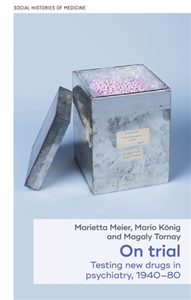
The heroic story of the invention of antidepressants is a key part of the psychopharmaceutical turn. On Trial revolves around one of its pioneers, psychiatrist Roland Kuhn, who practiced in Münsterlingen, a state-run psychiatric hospital in Switzerland. Kuhn became famous for the 'discovery' of the first antidepressant, Tofranil, and more recently notorious for his numerous trials on often unsuspecting patients. Largely based on the extensive and previously inaccessible sources of Kuhn's private archive, the book delves into the early days of industry-sponsored clinical research in psychiatry. It examines how the clinic, patients, doctors, nursing staff, corporations, and authorities interacted in the trials. Conducted from the 1940s to 1980s, the Münsterlingen drug trials are historicised and situated in the period's evolving landscape of experimentation.
Trusted Partner

This volume is the first ever attempt to unite and translate some of the key texts which informed Johan Huizinga's famous study of the Burgundian court, The Waning of the Middle Ages, a work which has never gone out of print. It combines these texts with sources that Huizinga did not consider, those that illuminate the wider civic world that the Burgundian court inhabited and the dynamic interaction between court and city. Through these sources, and an introduction offering new perspectives on recent historiography, the book tests whether Huizinga's controversial vision of the period still stands. Covering subjects including ceremonial events, such as the spectacles and gargantuan banquets that made the Burgundian dukes the talk of Europe, the workings of the court, and jousting, archery and rhetoric competitions, the book will appeal to students of late medieval and early modern Europe and to those with wider interests in court culture, ritual and ceremony.
Trusted Partner
 Trusted Partner
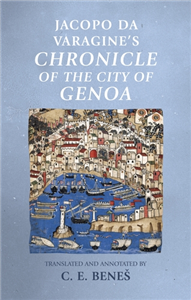
This book offers the first English translation of the Chronicle of the city of Genoa by the thirteenth-century Dominican Jacopo da Varagine, an author best known for his monumental book of saints' lives, the Golden legend. Jacopo's Chronicle presents a coherent vision of Genoa's place in history, the cosmos and Creation as written by the city's own archbishop - mixing eyewitness accounts with scholarly research about the city's origins and didactic reflections on the proper conduct of public and private life. Accompanied by an extensive introduction, this complete translation provides a unique perspective on a dynamic medieval city-state from one of its most important officials, broadening the available literature in English on medieval Italian urban life.
Trusted Partner

This book offers the first English translation of the Chronicle of the city of Genoa by the thirteenth-century Dominican Jacopo da Varagine, an author best known for his monumental book of saints' lives, the Golden legend. Jacopo's Chronicle presents a coherent vision of Genoa's place in history, the cosmos and Creation as written by the city's own archbishop - mixing eyewitness accounts with scholarly research about the city's origins and didactic reflections on the proper conduct of public and private life. Accompanied by an extensive introduction, this complete translation provides a unique perspective on a dynamic medieval city-state from one of its most important officials, broadening the available literature in English on medieval Italian urban life.
Trusted Partner


In emergency situations, a pharmacy assumes a special importance. Being an easily accessible point of contact, it is called upon to provide help in confused situations and also in those where there is a clear need for first aid. In such serious cases, it is essential to respond quickly and adequately. - How does one recognise an emergency? - How does one proceed? - What is one allowed to do, what must one do? The book provides clear answers to all these questions about emergency scenarios that can occur at a pharmacy. Whether it is an attack of asthma, a heart attack, burns or poisoning – in future, one will know what to do. In addition, the book provides information about the actions of the emergency physician and the common drugs used in emergencies.
Trusted Partner
Trusted Partner
 Trusted Partner

In this bold and exhilarating mix of memoir and writing guide, Melissa Febos tackles the emotional, psychological, and physical work of writing intimately while offering an utterly fresh examination of the storyteller's life and the challenges it presents. How do we write about the relationships that have formed us? How do we describe our bodies, their desires and traumas? What does it mean to have your writing, or living, dismissed as "navel-gazing"-or else hailed as "so brave, so raw"? And to whom, in the end, do our most intimate stories belong? Drawing on her journey from aspiring writer to acclaimed author and writing professor-via addiction and recovery, sex work and academia-Melissa Febos has created a captivating guide to the writing life, and a brilliantly unusual exploration of subjectivity, privacy, and the power of divulgence. Candid and inspiring, Body Work will empower readers and writers alike, offering ideas-and occasional notes of caution-to anyone who has ever hoped to see their true self reflecting back from the open page.
Trusted Partner

In this bold and exhilarating mix of memoir and writing guide, Melissa Febos tackles the emotional, psychological, and physical work of writing intimately while offering an utterly fresh examination of the storyteller's life and the challenges it presents. How do we write about the relationships that have formed us? How do we describe our bodies, their desires and traumas? What does it mean to have your writing, or living, dismissed as "navel-gazing"-or else hailed as "so brave, so raw"? And to whom, in the end, do our most intimate stories belong? Drawing on her journey from aspiring writer to acclaimed author and writing professor-via addiction and recovery, sex work and academia-Melissa Febos has created a captivating guide to the writing life, and a brilliantly unusual exploration of subjectivity, privacy, and the power of divulgence. Candid and inspiring, Body Work will empower readers and writers alike, offering ideas-and occasional notes of caution-to anyone who has ever hoped to see their true self reflecting back from the open page.
Trusted Partner
Trusted Partner
In this bold and exhilarating mix of memoir and writing guide, Melissa Febos tackles the emotional, psychological, and physical work of writing intimately while offering an utterly fresh examination of the storyteller's life and the challenges it presents. How do we write about the relationships that have formed us? How do we describe our bodies, their desires and traumas? What does it mean to have your writing, or living, dismissed as "navel-gazing"-or else hailed as "so brave, so raw"? And to whom, in the end, do our most intimate stories belong? Drawing on her journey from aspiring writer to acclaimed author and writing professor-via addiction and recovery, sex work and academia-Melissa Febos has created a captivating guide to the writing life, and a brilliantly unusual exploration of subjectivity, privacy, and the power of divulgence. Candid and inspiring, Body Work will empower readers and writers alike, offering ideas-and occasional notes of caution-to anyone who has ever hoped to see their true self reflecting back from the open page.
Trusted Partner
Trusted Partner
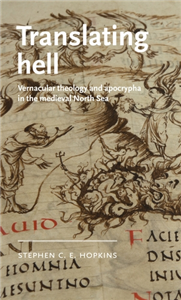
In the Middle Ages, hell was useful because it was vaguely defined. Canonical scriptures scarcely mention hell, leaving much to the imaginations of early Christians, who used it to sort out who belonged within the faith. This book explores how hell became a place for literary experiments with local challenges in theology and identity. Following the reception and transformations of two popular hell apocrypha, it argues that they served as this role because of their liminal textual authority. As noncanonical scriptures, apocrypha afforded medieval writers space to revise their hells (since they were not actually scripture), while also encouraging readers to revere those experiments as valid (since they seemed like scripture). The book brings together adaptations from early medieval England, Iceland, Ireland, and Wales, placing the early vernacular theologies of the North Sea in comparative conversation.
Trusted Partner

 Trusted Partner



