
Firefly Books
Livres Canada Books
View Rights Portal

Chemical Industry Press( hereinafter called “CIP”) was established in 1953, and is one of the most distinguished state-owned publishers in China. As one of “top 100 publishers in China”, CIP has been seen as a well-known and trusted brand in China. For years, CIP is one of the most impressive Chinese publisher with powerful overseas libraries’ collection influence. Key subjects: Chemistry, Materials, Environment, Energy, Engineering, Machine, Automotive, Electric & Electrical, Architecture, Biology, Pharmacy, Medicine, Healthcare, Business & Management, Humanities, Lifestyle, Photography, Self-help, Baby & Parenting, Language learning, Literature&Arts,etc.
View Rights Portal

The international exhibitions held around the world between 1851 and 1939 were spectacular gestures, which briefly held the attention of the world before disappearing into an abrupt oblivion, of the victims of their planned temporality. Known in Britain as Great Exhibitions, in France as Expositions Universelles and in America as World's Fairs, the genre became a self-perpetuating phenomenon, the extraordinary cultural spawn of industry and empire. Thoroughly in the spirit of the first industrial age, the exhibitions illustrated the relation between money and power, and revelled in the belief that the uncontrolled expression of that power was the quintessence of freedom. Philanthropy found its place on exhibition sites functioning as a conscience to the age although even here morality was inextricably linked to economic efficiency and expansion. Imperial achievement was celebrated to the full at international exhibitions. Nevertheless, most World's Fairs maintained an imperial element and out of this blossomed a vibrant racism. Between 1889 and 1914, the exhibitions became a human showcase, when people from all over the world were brought to sites in order to be seen by others for their gratification and education. In essence, the English national profile fabricated in the closing decades of the nineteenth century was derived from the pre-industrial world. The Fine Arts were an important ingredient in any international exhibition of calibre. This book incorporates comparative work on European and American empire-building, with the chronological focus primarily on the nineteenth and twentieth centuries, when these cultural exchanges were most powerfully at work.
 Trusted Partner
Trusted Partner
Trusted Partner


With a pinch of humor, the authors tell the story of Julia, her husband Peter, and their little whirlwind Alexander, who is starting elementary school. How do the three of them deal with this new stage in Alexander’s life? What problems do they encounter and what do they find stressful? The book sets out to help parents, uncles, aunts, and grandparents understand how children of elementary school age develop. Professionals who work with children of this age may also find it of interest. Petra Jansen and Stefanie Richter are both parents and psychologists. Through the fictional Julia they share their subjective experience as mothers, while also providing background information based on scientific studies. They demonstrate in a clear and entertaining way that some of the problems experienced by children of this age are not unexpected and are no cause for despair. Target Group: Parents of children in their early years at school.
Trusted Partner
 Trusted Partner
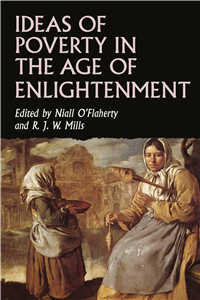
This collection of essays examines the ways in which poverty was conceptualised in the social, political, and religious discourses of eighteenth-century Europe. It brings together experts with a wide range of expertise to offer pathbreaking discussions of how eighteenth-century thinkers thought about the poor. Because the theme of poverty played important roles in many critical issues in European history, it was central to some of the key debates in Enlightenment political thought throughout the period, including the controversies about sovereignty and representation, public and private charity, as well as questions relating to crime and punishment. The book examines some of the most important contributions to these debates, while also ranging beyond the canonical Enlightenment thinkers, to investigate how poverty was conceptualised in the wider intellectual culture, as politicians, administrators and pamphlet writers grappled with the issue.
Trusted Partner
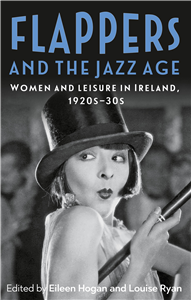
People's ordinary, everyday lives - and more specifically, their leisure activities - are often obscured within existing academic research on 1920s-30s Ireland. This book seeks to redress that neglect by exploring the relationship between identity, recreation, and culture both North and South of the border, with particular attention to women's lived experiences. Leisurely pursuits during this period were commonly overshadowed by religious influence and the nation-building projects in post-partition Ireland. Nevertheless, there existed alternative spaces, where people enjoyed dancing, singing, listening to music, shopping, glamour, reading magazines, swimming, travelling, and going to the cinema. Such activities reflected international trends beyond national borders. This book documents those activities and spaces through a feminist lens and intersectional analysis of gender, class, religion and rural/urban identities. It brings together multi-disciplinary perspectives including cultural studies, architecture, geography, fashion, and musicology. In so doing, we present new insights and advance understanding of this under-researched aspect of Irish history.
Trusted Partner
Medicine for the relief of pain has made little progress in the last 50 years. 16% of our population claim to suffer from chronic pain, for which no lasting help can be found, despite years of treatment by different doctors. Trigger point therapy experts have integrated myofascial techniques into their everyday therapy in recent decades and through this they have achieved good results even with complex and chronic problems. In this book, instructors from the Interest Group for Myofascial Trigger Point Therapy (IMTT) in Switzerland present 33 complex cases of patients with chronic pain, whose pain they were able to relieve permanently with manual trigger point therapy and dry needling. Using these case studies, doublepage spreads with an educational, uniform layout clearly present the diagnosis, pathophysiology and chronifcation of myofascial pain syndromes and, in conclusion, describe encouraging and surprising successes despite previous therapy resistance.
Trusted Partner
The heroic story of the invention of antidepressants is a key part of the psychopharmaceutical turn. On Trial revolves around one of its pioneers, psychiatrist Roland Kuhn, who practiced in Münsterlingen, a state-run psychiatric hospital in Switzerland. Kuhn became famous for the 'discovery' of the first antidepressant, Tofranil, and more recently notorious for his numerous trials on often unsuspecting patients. Largely based on the extensive and previously inaccessible sources of Kuhn's private archive, the book delves into the early days of industry-sponsored clinical research in psychiatry. It examines how the clinic, patients, doctors, nursing staff, corporations, and authorities interacted in the trials. Conducted from the 1940s to 1980s, the Münsterlingen drug trials are historicised and situated in the period's evolving landscape of experimentation.
Trusted Partner
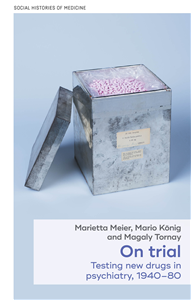
The heroic story of the invention of antidepressants is a key part of the psychopharmaceutical turn. On Trial revolves around one of its pioneers, psychiatrist Roland Kuhn, who practiced in Münsterlingen, a state-run psychiatric hospital in Switzerland. Kuhn became famous for the 'discovery' of the first antidepressant, Tofranil, and more recently notorious for his numerous trials on often unsuspecting patients. Largely based on the extensive and previously inaccessible sources of Kuhn's private archive, the book delves into the early days of industry-sponsored clinical research in psychiatry. It examines how the clinic, patients, doctors, nursing staff, corporations, and authorities interacted in the trials. Conducted from the 1940s to 1980s, the Münsterlingen drug trials are historicised and situated in the period's evolving landscape of experimentation.
Trusted Partner
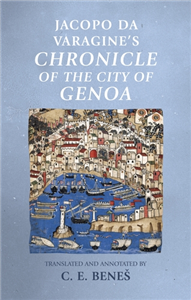
This book offers the first English translation of the Chronicle of the city of Genoa by the thirteenth-century Dominican Jacopo da Varagine, an author best known for his monumental book of saints' lives, the Golden legend. Jacopo's Chronicle presents a coherent vision of Genoa's place in history, the cosmos and Creation as written by the city's own archbishop - mixing eyewitness accounts with scholarly research about the city's origins and didactic reflections on the proper conduct of public and private life. Accompanied by an extensive introduction, this complete translation provides a unique perspective on a dynamic medieval city-state from one of its most important officials, broadening the available literature in English on medieval Italian urban life.
Trusted Partner


Not a single soul as far as the eye can see. Just sea, cliffs and the beach. And a lighthouse. It’s a wondrously beautiful place – not that Airin has a chance to enjoy it. The lighthouse has been converted into a cosy living space available for rent, and 24-year-old Airin has to look after the property while at the same time running her own bed and breakfast in Castledunn. It’s a lot of work for one person, but normally everything runs smoothly. Until Joshua, the nephew of the lighthouse owner, moves in. Arrogant and priggish, he complains ceaselessly about everything. Airin feels like strangling him. Or kissing him. Who cares, just as long as he stops talking! 16+ years The third volume of a unique romance trilogy about three young women, a lighthouse and love. All titles can be read separately! Rousing characters and a fine dry humor For all fans of Mona Kasten, Laura Kneidl and Colleen Hoover! More than 60.000 copies of this series were sold!
Trusted Partner

This book offers the first English translation of the Chronicle of the city of Genoa by the thirteenth-century Dominican Jacopo da Varagine, an author best known for his monumental book of saints' lives, the Golden legend. Jacopo's Chronicle presents a coherent vision of Genoa's place in history, the cosmos and Creation as written by the city's own archbishop - mixing eyewitness accounts with scholarly research about the city's origins and didactic reflections on the proper conduct of public and private life. Accompanied by an extensive introduction, this complete translation provides a unique perspective on a dynamic medieval city-state from one of its most important officials, broadening the available literature in English on medieval Italian urban life.
Trusted Partner

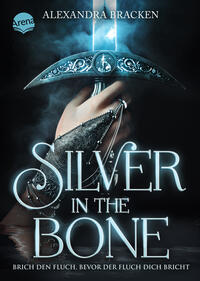
Der Auftakt von Bestsellerautorin Alexandra Brackens neuem Fantasyepos, inspiriert von der Artuslegende und voller Action, Verrat und Liebe Ohne die Fähigkeit, Magie zu sehen, gilt Tamsin als Außenseiterin unter den Hollowern. Das hindert sie jedoch nicht daran, wie die anderen Mitglieder der Gilde die ganze Welt nach legendären Artefakten zu durchkämmen. Als der Auftrag einer Zauberin sie auf die Spur eines Gegenstandes führt, der den Fluch ihres Bruders brechen könnte, beginnt für Tamsin ein Wettlauf gegen die Zeit. Andere Hollower sind ebenfalls hinter dem Artefakt her, darunter auch ihr Rivale Emrys. Ihre Suche führt sie direkt nach Avalon, den Ursprung aller Magie. Aber mit ihrem Auftauchen wecken sie eine uralte Gefahr. Denn auch auf dem magischen Land liegt ein dunkler Fluch … und diese Dunkelheit bedroht bald auch ihre eigene Welt. Eine zynische Außenseiterin, ihr verfluchter Bruder, der arrogante Goldjunge der Schatzjägergilde und eine naive Zauberin - sie alle haben unterschiedliche Ziele. Doch nur gemeinsam können sie Avalon und ihre eigene Welt retten. *** beigelegte Illustration in der ersten Auflage *** Voller Magie, Gefahr, Liebe und Herzschmerz. Brackens Geschichten stürzen Leser*innen in eine Welt voller Legenden, die man nie mehr verlassen möchte. Leigh Bardugo, Bestsellerautorin der Grisha-Verse-Romane Weitere Titel der Autorin beim Arena Verlag:LORE. Die Spiele haben begonnen. Sie kämpft um ihr Leben
Trusted Partner


In emergency situations, a pharmacy assumes a special importance. Being an easily accessible point of contact, it is called upon to provide help in confused situations and also in those where there is a clear need for first aid. In such serious cases, it is essential to respond quickly and adequately. - How does one recognise an emergency? - How does one proceed? - What is one allowed to do, what must one do? The book provides clear answers to all these questions about emergency scenarios that can occur at a pharmacy. Whether it is an attack of asthma, a heart attack, burns or poisoning – in future, one will know what to do. In addition, the book provides information about the actions of the emergency physician and the common drugs used in emergencies.
Trusted Partner

Offering a complete reading of English Literature throughout 1558-1689, this book demonstrates the continuity of Roman Catholicism in English Literature from the accession of Elizabeth I to the deposing of James II. Rist shows that poetry and plays promoted Roman Catholic ideas in a Biblicist age which established the Church of England through the Book of Common Prayer. From the very idea of literary works to chapters on the Eucharist, Purgatory, Christian worship and the Virgin Mary, Rist joins together major and minor authors of the era to present English Literature afresh. Important literary figures include William Shakespeare, Ben Jonson, Thomas Middleton, Queen Henrietta Maria, John Donne, John Dryden, Robert Herrick, Margaret Cavendish and Aphra Behn.
Trusted Partner
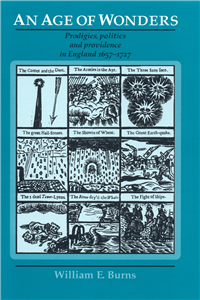
Monstrous births, rains of blood, apparitions of battles in the sky - people in early modern England found all of these events to carry important religious and political meanings. In An age of wonders, available in paperback for the first time, William E. Burns explores the process by which these events became religiously and politically insignificant in the Restoration period. The story involves the establishment of early modern science, the shift from 'enthusiastic' to reasonable religion, and the fierce political combat between the Whigs and the Tories. This historical study is based on close readings of a variety of primary sources, both print and manuscript. Burns claims that prodigies lost their religious meaning and became subjects of scientific enquiry as a result of political struggles, first by the supporters of the restored monarchy and the Church of England against Protestant dissenters, and then by the Whig defenders of the Revolution of 1688 against the Tories and the Jacobites. By integrating religious and political history with the history of science, An age of wonders will be of great use to those working in the field of early modern history. ;
Trusted Partner
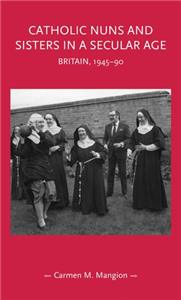
This is the first in-depth study of post-war female religious life. It draws on archival materials and a remarkable set of eighty interviews to place Catholic sisters and nuns at the heart of the turbulent 1960s, integrating their story of social change into a larger British and international one. Shedding new light on how religious bodies engaged in modernisation, it addresses themes such as the Modern Girl and youth culture, '1968', generational discourse, post-war modernity, the voluntary sector and the women's movement. Women religious were at the forefront of the Roman Catholic Church's movement of adaptation and renewal towards the world. This volume tells their stories in their own words.
Trusted Partner
Trusted Partner
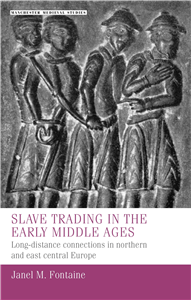
This book examines slave trading in northern and eastern central Europe from the seventh century through the eleventh century, tracing its growth, climax, and decline. Demand from the Islamic world in the ninth and tenth centuries prompted changes in warfare, trade logistics, and administrative responses to slavery in the slaving zones centred on the British Isles and the Czech lands. This study establishes slave trading as a core driver of connectivity and presents a model for this practice in politically fragmented areas of Europe.



