
Storymoja Publishers
Storymoja Publishers, based in Nairobi with branches in Uganda and Rwanda, has a 15-year legacy of promoting African literature and a vision of putting "a book in every hand".
View Rights Portal
Storymoja Publishers, based in Nairobi with branches in Uganda and Rwanda, has a 15-year legacy of promoting African literature and a vision of putting "a book in every hand".
View Rights Portal
Our books are sold around the world, have been translated into over 50 languages, won many awards, and have been adapted for film and stage. We publish stories that feature strong female characters and explore themes of social justice, human rights, equality, and ability issues. Our list spans adult fiction and nonfiction; children’s fiction, nonfiction and picture books; and young adult fiction and nonfiction.
View Rights Portal

How might our friendships shape our politics? This book examines how contemporary American fiction has rediscovered the concept of civic friendship and revived a long tradition of imagining male friendship as interlinked with the promises and paradoxes of democracy in the United States. Bringing into dialogue the work of a wide range of authors - including Philip Roth, Paul Auster, Michael Chabon, Jonathan Lethem, Dinaw Mengestu, and Teju Cole - this innovative study advances a compelling new account of the political and intellectual fabric of the American novel today.

 Trusted Partner
Trusted Partner
Trusted Partner
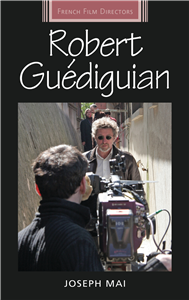
Intervening at the crossroads of philosophy, politics, and cinema, this book argues that the career of Robert Guédiguian is the result of one of the most original and coherent projects in contemporary French cinema: to make a committed, historically-conscious cinema, in a local space, over a long period of time, but most especially with friends. The account starts with in-depth consideration of friendship and its relation to philosophy, politics, time, and space. The book chronologically traces this project as it begins in Guédiguian's hometown, the Communist-leaning Marseille. It further unfolds through the political transformations of the 1980s Left and the local activism and utopias of the 1990s, and spreads into Guédiguian's varied explorations of genre and register. Close analysis is accompanied with historical and social contextualization, but also with a consistent return to the underlying, radical and philosophically rich project.
Trusted Partner

The secret life of romantic comedy offers a new approach to one of the most popular and resilient genres in the history of Hollywood. Steering away from the rigidity and ideological determinism of traditional accounts of the genre, this book advocates a more flexible theory, which allows the student to explore the presence of the genre in unexpected places, extending the concept to encompass films that are not usually considered romantic comedies. Combining theory with detailed analyses of a selection of films, including To Be or Not to Be (1942), Rear Window (1954), Kiss Me Stupid (1964), Crimes and Misdemeanors (1989) and Before Sunset (2004), the book aims to provide a practical framework for the exploration of a key area of contemporary experience - intimate matters - through one of its most powerful filmic representations: the genre of romantic comedy. Original and entertaining, The secret life of romantic comedy is perfect for students and academics of film and film genre.
Trusted Partner
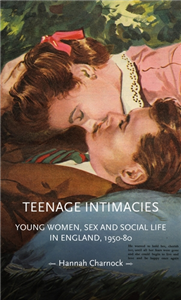
Teenage Intimacies offers a new account of 'sexual revolution' in mid-twentieth century England. Rather than focusing on 'Swinging London', the book reveals the transformations in social life that took place in school playgrounds, local cinemas, and suburban bedrooms. Based on over 300 personal testimonies, Teenage Intimacies traces the everyday experiences of teenage girls, illuminating how romance, sex and intimacy shaped their young lives. The book shows how sex became embedded in ideas about 'growing up' and explores how heterosexuality influenced young women's social lives and vice versa. It offers new explanations of why sexual mores shifted in this period, revealing the pivotal role that young women played in changing sexual values, cultures and practices in the 1950s, 1960s and 1970s.


Samuel Hall Young, a Presbyterian clergyman, met John Muir when the great naturalist's steamboat docked at Fort Wrangell, in southeastern Alaska, where Young was a missionary to the Stickeen Indians. In "Alaska Days With John Muir" he describes this 1879 meeting: "A hearty grip of the hand and we seemed to coalesce in a friendship which, to me at least, has been one of the very best things in a life full of blessings." This book, first published in 1915, describes two journeys of discovery taken in company with Muir in 1879 and 1880. Despite the pleas of his missionary colleagues that he not risk life and limb with "that wild Muir," Young accompanied Muir in the exploration of Glacier Bay. Upon Muir's return to Alaska in 1880, they traveled together and mapped the inside route to Sitka. Young describes Muir's ability to "slide" up glaciers, the broad Scotch he used when he was enjoying himself, and his natural affinity for Indian wisdom and theistic religion. From the gripping account of their near-disastrous ascent of Glenora Peak to Young's perspective on Muir's famous dog story "Stickeen," Alaska Days is an engaging record of a friendship grounded in the shared wonders of Alaska's wild landscapes.
Trusted Partner

Puma - disentangled from the three-part structure of The End of the World News and published here for the first time in its intended format - is Anthony Burgess's lost science fiction novel. Set some way into the future, the story details the crushing of the planet Earth by a heavyweight intruder from a distant galaxy - the dreaded Puma. It is a visceral book about the end of history as man has known it. Despite its apocalyptic theme, its earthquakes and tidal waves, murder and madness, Puma is a gloriously-comic novel, steeped in the rich literary heritage of a world soon to be extinguished and celebrating humanity in all its squalid glory. In Burgess's hands this meditation on destruction, mitigated by the hope of salvation for a select few, becomes powerful exploration of friendship, violence, literature and science at the end of the world.
Trusted Partner


15 year-old Lena discovers an ancient clock among her dead parents’ old things and accidentally activates the timepiece’s mechanism. Far away in the invisible city, a place not of this world, a boy takes notice of her: Dante. He is curious to find the daughter of the legendary woman who once left the time-travellers society to live a mortal life. When Lena learns about the mechanisms of time, she decides to change her own fate and travels back to the night, her parents died. Only too late she realises that meddling in her own life automatically affects the lives of everyone else around her too. The story reaches its peak when Lena has to decide between getting her parents back and saving the life of her best friend Bobbie. 12+ years The first volume of an enthralling new fantasy trilogy with two headstrong time-travellers English sample translation available!
Trusted Partner

The irresistible story of a one-man cultural phenomenon. Minister for the Counterculture, Mancunian mainstay and alternative national treasure John Robb has lived a life in music. In this book he charts his adventures on the cultural frontline, chronicling the making of a DIY icon. Robb's quest began in his hometown of Blackpool - where punk was a battle against the odds - and went international when he toured the world with his band. The first person to interview Nirvana, he also discovered The Stone Roses for weekly newspaper Sounds and did early interviews with The Jesus and Mary Chain and The Manics, before moving on to legends such as Mark E. Smith, Nick Cave and Patti Smith. Along the way, he became an on-screen commentator and author of bestselling books. Robb's memoir tells of deep friendships with figures from Poly Styrene to Chris Packham. Packed with riotous stories, it provides an alternative account of British musical and cultural history and a triumphant blueprint for a punk rock life.
Trusted Partner
Trusted Partner

Everything is lost. Lena’s enemies have taken over the invisible city and launched a witch hunt for time travellers. Together with Bobbie, Lena takes refuge in the future and tries desperately to find other rebels. The near future is already very different compared to her present life: in 2031 climate change is undeniable and people pay by using implanted memory chips, which is frightening enough. Then her chronometer picks up a faint signal – from Dante. Lena can hardly wait to see him again. But can she be sure the signal is genuine? Things take a dark turn when she is visited by a group of time tourists; in a distant future, time travel is big business. But no one seems to care about the chaos and damage this kind of tourism can cause – or even that it could destroy humanity itself. For Lena, everything is on the line: the existence of the invisible city, the fate of humanity’s forgotten stories – and even her love for Dante. 12+ years The finale of this enthralling fantasy trilogy. English sample translation available!
Trusted Partner

This study, a companion to Peter Macardle's edition of the Confabulationes, examines the ways in which the colloquies relate to their Cologne background, to the major contemporary colloquy collections (particularly Erasmus's Colloquia and Mosellanus's Paedologia), and to the humanist renewal of Classical Latin. It also looks in detail at the documentary traces of Schotten's career, and of his networks of friendship and patronage, and tries to understand how he fitted into the structures of a university which has often been (wrongly) understood as hostile to humanism. Based on primary archival material, this is the only full-length study of this underrated German humanist's life and work. ;
Trusted Partner

Lena is having a hard time adjusting to ordinary life. How can she forget Dante, the boy whose eyes are different colours? But she soon has much bigger worries. On a school trip she realises that her pursuers haven’t given up after all. At the last minute, Lena manages to pass the chronometer she uses to travel through time to her friend Bobbie. A fateful mistake. Fleeing, Bobbie stumbles into the past and becomes trapped in the year 1900. While she fights her way as a papergirl, Lena breaks her promise and returns to the invisible city to look for help – and Dante. Soon all three of them are on a mission to prevent their enemies from constructing chronometers to travel through time themselves. But they’re always a step ahead and the whole invisible world is in danger… 12+ years The first volume of an enthralling new fantasy trilogy with two headstrong time-travellers English sample translation available!
Trusted Partner
Writers have previously placed the action of kissing into categories: kisses of love, affection, peace, respect and friendship. Each of the essays in this fascinating book take a single kind of kiss and uses it as an index to the past. For rather than offering a simple history of the kiss, this book is about the kiss in history. In this collection, an eminent group of cultural historians have explored this subject using an exceptionally wide range of evidence. They explore the kiss through sources as diverse as canonical religious texts, popular prints, court depositions, periodicals, diaries and poetry. In casting the net so wide, these authors demonstrate how cultural history has been shaped by a broad concept of culture, encompassing more than simply the canons of art and literature, and integrating apparently 'historical' and 'non-historical' sources. Furthermore, this collections shows that by analyzing the kiss and its position - embedded as it is as part of our culture - history can use small gestures to take us to big issues concerning ourselves and others, the past and the present. With an afterword by Sir Keith Thomas, this book will be fascinating reading for cultural historians working on a wide range of different societies and periods.
Trusted Partner
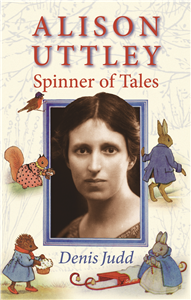
Little Grey Rabbit and Sam Pig are just two of the inspired characters created by Alison Uttley, loved by millions and still very popular today. But who was the real woman spinning enchanting tales of country life and lore, magic and friendship? Alison Uttley gathered much of the inspiration for her stories from the fond memories of her Derbyshire childhood and her love of the countryside. A talented and prolific writer, she was still producing stories in her late eighties. Yet she was often plagued by self-doubt, and extremely possessive over her close friends, family and work. Tragically, Alison's husband committed suicide before her writing successes. She soon developed a smothering relationship with her only child John, even convincing him to jilt his first fiancée and escape to Scotland - the honeymoon destination. With exclusive and unrestricted access to her personal diaries and private letters, Denis Judd paints an intriguing portrait of one of the most successful, creative and troubled children's authors of modern times. ;
Trusted Partner
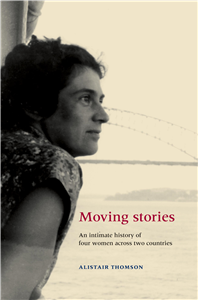
I'm not a good mother - not what Dr. Spock calls a "slow mother" who leaves her chores to make sure junior gets the right treatment. (Dorothy Wright, 1961) I must admit that I am no longer the same person who was tied to the kitchen sink at home. (Phyllis Cave, 1973) This book represents a unique collaboration between a historian and four ordinary women who were extraordinary letters-writers, family photographers and memoirists. As British migrants to Australia these women recorded in intimate detail aspects of everyday life and women's experience that are often lost to history: childcare and housework, housing and domestic appliances, friendship, family and married life. Taken together, their stories enrich and complicate our understanding of key themes in twentieth century women's history. This book will appeal to students and academics interested in British and Australian social history, oral history, women's studies and the lived experience of migration. ;
Trusted Partner

In How to be multiple, Helena de Bres - a twin herself - argues that twinhood is a unique lens for examining our place in the world and how we relate to other people. The way we think about twins offers remarkable insights into some of the deepest questions of our existence, from what is a person? to how should we treat one another? Deftly weaving together literary and cultural history, philosophical enquiry and personal experience, de Bres examines such thorny issues as binary thinking, objectification, romantic love and friendship, revealing the limits of our individualistic perspectives. In this illuminating, entertaining book, wittily illustrated by her twin sister, de Bres ultimately suggests that to consider twinhood is to imagine the possibility of a more interconnected, capacious human future.
Trusted Partner
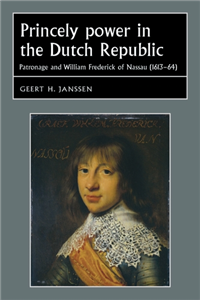
Based on one of the richest surviving diaries of the Dutch Golden Age, Princely Power in the Dutch Republic recaptures the social world of William Frederick of Nassau (1613-1664). As a Stadholder and relative of the Prince of Orange, William Frederick was among the key players in a fragmented republican state system. This study offers a vivid analysis of his political strategies and reveals how unwritten codes of patronage guided his daily contacts and shaped his mental world. As a patron at his court and as a client of the Prince of Orange, William Frederick developed distinctive patronage roles, appropriate to different social spheres. By assessing these different roles, Janssen provides a unique insight into the ways in which a seventeenth-century nobleman negotiated and articulated clientage, friendship and corruption in his life. This study offers an in-depth analysis of political practices in the Dutch Republic and reconsiders the way in which patronage shaped early modern politics, affected religious divisions and framed social identities. ;
Trusted Partner



