Your Search Results

      • Trusted Partner
        Literature & Literary Studies
        June 2026

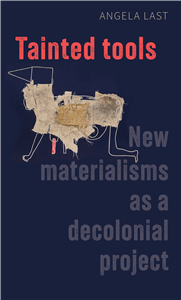
        Tainted tools

        New materialisms as a decolonial project

        by Angela Last

        Tainted Tools makes a provocative intervention into the fraught intersection between new materialist and decolonial approaches. Despite a common project of challenging European philosophical and social categories and hierarchies, the discourses are considered incompatible. Most prominently, new materialisms have been accused of harbouring a White vision of the human while disregarding the racist resonances of the 'nonhuman'. The book traces this conflict to an earlier meeting point of new materialist and decolonial projects, which came about through the experimental combination of Marx and Nietzsche. Used to fight fascism, Stalinism and colonialism, this politically contentious fusion gradually became depoliticised, leading to unaddressed tensions today. While the book does not argue for a revival of these early 'new materialisms', it brings their strategies into dialogue with today's new materialisms and decolonial approaches to develop greater theoretical solidarity in times of crisis.

      • Trusted Partner
        Psychology

        ACT: Acceptance and Commitment Therapy

        With ACT Questionnaires for Clinical Assessment, 100 Questions

        by Paolo Moderato, Giovambattista Presti, Francesco dell’Orco

        Acceptance and Commitment Therapy (ACT) is a psychotherapeutic interven­tion based on experimental evidence. Its goal is to help people implement concrete behaviors in accordance with their values ­ even in the presence of diffcult or interfering events. The au­thors clearly describe how ACT works and provide useful guidance for clinical practice. Soon the concepts of fusion and defusion become familiar and the Hexafex a way of thinking rather than appearing as a mere scheme. Accept­ance and commitment replace refusal and renunciation: this is the innovative therapeutic challenge of ACT. This manual, enriched with metaphors and exercises that can be used in a therapeutic session, is intended for reading by specialists by tackling the themes of this approach with rigor and depth, taking the reader step by step into the heart of ACT. The appendix contains seven ACT questionnaires for clinical assessment.

      • Trusted Partner
        Literature & Literary Studies
        March 2012

        The Library and archive collections of the University of Aberdeen

        An introduction and description

        by Edited by Iain Beaven, Peter Davidson and Jane Stevenson

        This volume commences with the the books and manuscripts given at the foundation of King's College in 1495, continues with the collections which accrued to Marischal College from its foundation in 1593, and comes together with the fusion of the two colleges in 1860 in the modern University of Aberdeen. From the beginning, the scope and focus of the University was international, and its developing collections represent a microcosm of the world of knowledge as it changed over the centuries. The University Colleges of Aberdeen have a distinct intellectual tradition: pragmatically tolerant in times of persecution; dissident from the religious and political policies of the Lowlands; looking outwards to the world of northern Europe and to the territories of the Jacobite diaspora. The book introduces one of the oldest continually-evolving academic library collections of the Anglophone world, surveys its history and includes a series of studies of items or collections of particular interest. ;

      • Trusted Partner
        Humanities & Social Sciences
        November 2012

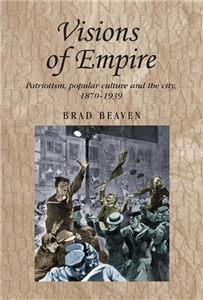
        Visions of empire

        Patriotism, popular culture and the city, 1870–1939

        by Andrew Thompson, Brad Beaven, John Mackenzie

        The emergence of a vibrant imperial culture in British society from the 1890s both fascinated and appalled contemporaries. It has also consistently provoked controversy among historians. This book offers a ground-breaking perspective on how imperial culture was disseminated. It identifies the important synergies that grew between a new civic culture and the wider imperial project. Beaven shows that the ebb and flow of imperial enthusiasm was shaped through a fusion of local patriotism and a broader imperial identity. Imperial culture was neither generic nor unimportant but was instead multi-layered and recast to capture the concerns of a locality. The book draws on a rich seam of primary sources from three representative English cities. These case studies are considered against an extensive analysis of seminal and current historiography. This renders the book invaluable to those interested in the fields of imperialism, social and cultural history, popular culture, historical geography and urban history. ;

      • Trusted Partner
        Humanities & Social Sciences
        January 2017

        Visions of empire

        Patriotism, popular culture and the city, 1870–1939

        by Andrew Thompson, Brad Beaven, John M. MacKenzie

        The emergence of a vibrant imperial culture in British society from the 1890s both fascinated and appalled contemporaries. It has also consistently provoked controversy among historians. This book offers a ground-breaking perspective on how imperial culture was disseminated. It identifies the important synergies that grew between a new civic culture and the wider imperial project. Beaven shows that the ebb and flow of imperial enthusiasm was shaped through a fusion of local patriotism and a broader imperial identity. Imperial culture was neither generic nor unimportant but was instead multi-layered and recast to capture the concerns of a locality. The book draws on a rich seam of primary sources from three representative English cities. These case studies are considered against an extensive analysis of seminal and current historiography. This renders the book invaluable to those interested in the fields of imperialism, social and cultural history, popular culture, historical geography and urban history.

      • Trusted Partner
        Humanities & Social Sciences
        February 2017

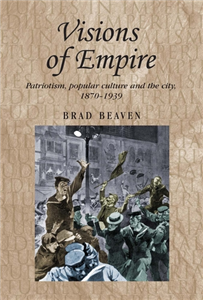
        Visions of empire

        Patriotism, popular culture and the city, 1870–1939

        by Brad Beaven

        The emergence of a vibrant imperial culture in British society from the 1890s both fascinated and appalled contemporaries. It has also consistently provoked controversy among historians. This book offers a ground-breaking perspective on how imperial culture was disseminated. It identifies the important synergies that grew between a new civic culture and the wider imperial project. Beaven shows that the ebb and flow of imperial enthusiasm was shaped through a fusion of local patriotism and a broader imperial identity. Imperial culture was neither generic nor unimportant but was instead multi-layered and recast to capture the concerns of a locality. The book draws on a rich seam of primary sources from three representative English cities. These case studies are considered against an extensive analysis of seminal and current historiography. This renders the book invaluable to those interested in the fields of imperialism, social and cultural history, popular culture, historical geography and urban history.

      • Trusted Partner
      • Lifestyle, Sport & Leisure
        March 1905

        How to Cook Fish

        by Myrtle Reed

        This book is a collection of recipes for fish cooking.

      • Trusted Partner
      • Trusted Partner
      • Trusted Partner
      • Trusted Partner
        Humanities & Social Sciences
        January 2025

        Challenging nuclearism

        by Marianne Hanson

      • Trusted Partner
      • Trusted Partner
      • Trusted Partner
        Humanities & Social Sciences
        March 2022

        The British left and the defence economy

        by Keith Mc Loughlin

      • Trusted Partner
        Children's & YA

        The Candy Guild (2). The Lost Recipe

        by Tanja Voosen/ Viktoria Gavrilenko

        Magical sweets and real miracles? Elina has experienced them both in Belony, and now she can hardly wait to dip deeper into the world of the candy crafters. But it’s not long before a new problem arises, because just before Robin’s first candy crafting examination, his magic tool goes bust. Old Mr Snotty knows where they can get help, and he takes Elina and her friends to Bittersweet Avenue. It quickly becomes clear, though, that not all candy crafters are well disposed towards “ungifted” people. There are also rumours about the return of the mysterious Otherwise Society, which has tried once before to bring down the mighty Candy Guild. When Mr Snotty suddenly disappears without a trace, it’s up to Elina, Charlie and Robin to follow the clues he has left behind for them. They soon realize that there is a reason for his disappearance, because the Otherwise Society is looking for something in particular – and Elina, Charlie and Robin have the key to this something in their hands…

      • Trusted Partner
        Humanities & Social Sciences
        September 2020

        Defense of the West

        by Stanley R. Sloan, Lawrence Freedman

      • Trusted Partner
        Humanities & Social Sciences
        December 2015

        In defence of councillors

        by Colin Copus

        In defence of councillors is an unashamed defence of local representative democracy and of those elected to serve as councillors from the often ill-informed, ill-judged and inaccurate criticism made by the media, government and public, of councillors' personal, political and professional roles. By using qualitative research from a number of related projects, the book examines the roles, functions and responsibilities of councillors and the expectations placed upon them by citizens, communities and government. It also examines the impact council membership has on other facets of the councillor's life. The book examines how councillors develop strategies to overcome the constraints and restrictions on their office so as to be able to govern their communities, balance their political and public life and democratise and hold to account a vast array of unelected bodies that spend public money and develop public policy without the electoral mandate and legitimacy held by our councillors. ;

      Subscribe to our

      newsletter