Your Search Results

      • Trusted Partner
        Humanities & Social Sciences
        March 2017

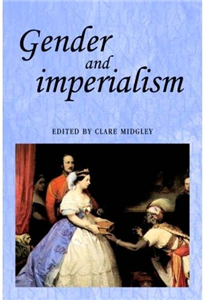
        Gender and imperialism

        by Clare Midgley

        This book marks an important new intervention into a vibrant area of scholarship, creating a dialogue between the histories of imperialism and of women and gender. By engaging critically with both traditional British imperial history and colonial discourse analysis, the essays demonstrate how feminist historians can play a central role in creating new histories of British imperialism. Chronologically, the focus is on the late eighteenth to early twentieth centuries, while geographically the essays range from the Caribbean to Australia and span India, Africa, Ireland and Britain itself. Topics explored include the question of female agency in imperial contexts, the relationships between feminism and nationalism, and questions of sexuality, masculinity and imperial power.

      • Trusted Partner
        Social & cultural history
        January 2016

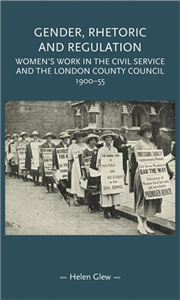
        Gender, rhetoric and regulation

        Women's work in the Civil Service and the London County Council, 1900–55

        by Helen Glew

        The Civil Service and the London County Council employed tens of thousands of women in Britain in the early twentieth century. As public employers these institutions influenced both each other and private organisations, thereby serving as a barometer or benchmark for the conditions of women's white-collar employment. Drawing on a wide range of archival sources - including policy documents, trade union records, women's movement campaign literature and employees' personal testimony - this is the first book-length study of women's public service employment in this period. It examines three aspects of their working lives - inequality of pay, the marriage bar and inequality of opportunity - and demonstrates how far wider cultural assumptions about womanhood shaped policies towards women's employment and experiences. Scholars and students with interests in gender, British social and cultural history and labour history will find this an invaluable text.

      • Trusted Partner
        August 2025

        Wer hat Angst vor Gender?

        Eine Verteidigung und Einführung der Gender-Theorie in einem

        by Judith Butler, Katrin Harlaß, Anne Emmert

        Ein kämpferisches Buch in dunklen Zeiten, um wieder aus der Defensive zu kommen Für den globalen Rechtsruck spielt der Kampf gegen »Gender« eine zentrale Rolle. Ob in der Hinterfragung geschlechtlicher Normen nun eine Gefährdung von Kindern, die Zerstörung der Familie oder ein Angriff auf die natürliche Ordnung gesehen wird – in nichts sind sich Rechtspopulisten, religiöse Frömmler und Anti-Trans-Feministinnen so einig, nichts sonst bringen sie solche Ablehnung entgegen. Judith Butler hat unser Denken über Geschlecht revolutioniert und wurde zur globalen Ikone. Nun erklärt Butler, welche politische Funktion das Schreckgespenst »Gender« in der rechten Agenda besitzt. Dabei thematisiert Butler nicht nur, wie es ist, selbst zum Hassobjekt zu werden, sondern argumentiert zudem, dass queere Politik nur in einer breiten Koalition der Bewegungen gegen verschiedene Ungerechtigkeiten gelingen kann.

      • Trusted Partner
        Humanities & Social Sciences
        March 2026

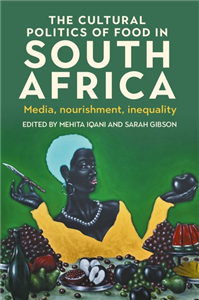
        The cultural politics of food in South Africa

        Media, nourishment, inequality

        by Mehita Iqani, Sarah Gibson

        Food is both a material system of nourishment, necessary for human survival, and a communicative system that signifies multiple meanings across human cultures. This book explores the cultural politics of food in the South African context, bringing together a range of disciplinary perspectives on the links between media, nourishment, and inequality. The chapters all highlight the multiplicity of meanings that food has in South African society. These include historical perspectives on the impact of colonialism, migration and apartheid had on food and foodways in South Africa; sociological interventions on food and society; aesthetic practices in relation to food; and mediated food cultures in South Africa. Taken together, the book critically explores the multiple ways in which food is never just food, and always linked to complex and shifting modalities of meaning and knowledge in the South African context.

      • Trusted Partner
        2018

        Rediscovering Sex

        From pressure to pleasure in bed - an excersise book for men

        by Michael Sztenc

        Penises are clever guys, sensitive and touchy. At least that’s what Michael Sztenc says. And as a sex and couples’ therapist who has worked on male sexuality for over 25 years, he should know. With practical exercises that have been tried and tested for years, he helps the men who come to him with their problems to develop a sense for their bodies and their own eroticism.

      • Trusted Partner
        Humanities & Social Sciences
        June 2022

        Affective intimacies

        by Marjo Kolehmainen, Kinneret Lahad, Annukka Lahti

        This volume provides a novel platform to re-evaluate the notion of open-ended intimacies through the lens of affect theories. Contributors address the embodied, affective and psychic, sensorial and embodied aspects of their ongoing intimate entanglements across various timely phenomena. This fascinating collection asks how the study of affect enables us to rethink intimacies, what affect theories can do to the prevailing notion of intimacy and how do they renew and enrich theories of intimacy in a manner which also considers its normative and violent forms. Lively and thought-provoking, this collection contributes to timely topics across the social sciences, representing multiple disciplines from gender studies, sociology and cultural studies to anthropology and queer studies. By so doing, it advances the value of interdisciplinary perspectives and creative methodologies to understanding affective intimacies.

      • Trusted Partner
        Humanities & Social Sciences
        August 2003

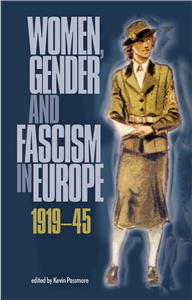
        Women, gender and fascism in Europe, 1919–45

        by Kevin Passmore

        What attracts women to far-right movements that appear to denigrate their rights? This question has vexed feminist scholars for decades and has led to many lively debates in the academy. In this context, during the 1980s, the study of women, gender, and fascism in twentieth-century Europe took off, pioneered by historians such as Claudia Koonz and Victoria de Grazia. This volume makes an exciting contribution to the evolving body of work based upon these earlier studies, bringing emerging scholarship on Central and Eastern Europe alongside that of more established Western European historiography on the topic. Women, Gender and Fascism in Europe, 1919-45 features fourteen essays covering Serbia, Croatia, Yugoslavia, Romania, Hungary, Latvia, and Poland in addition to Germany, Italy, France, Spain, and Britain, and a conclusion that pulls together a European-wide perspective. As a whole, the volume provides a compelling comparative examination of this important topic through current research, literature reviews, and dialogue with existing debates. The essays cast new light on questions such as women's responsibility for the collapse of democracy in interwar Europe, the interaction between the women's movement and the extreme right, and the relationships between conceptions of national identity and gender. ;

      • Trusted Partner
        Sociology: family & relationships
        July 2016

        Changing gender roles and attitudes to family formation in Ireland

        by Series edited by Rob Kitchin, Margret Fine-Davis

        Recent decades have witnessed major changes in gender roles and family patterns, as well as a falling birth rate in Ireland and the rest of Europe. While the traditional family is now being replaced in many cases by new family forms, we do not know the reasons why people are making the choices they are and whether or not these choices are leading to greater well-being. While demographic research has attempted to explain the new trends in family formation and fertility, there has been little research on people's attitudes to family formation and having children. This book presents the results of the first major study to examine people's attitudes to family formation and childbearing in Ireland. Based on a nationwide representative sample of 1,404 men and women in the childbearing age group, the study was carried out against a backdrop of changing gender role attitudes and behaviour as well as significant demographic change.

      • Trusted Partner
        Humanities & Social Sciences
        June 2023

        Sugar rush

        by Karen Throsby

      • Trusted Partner
        The Arts
        June 2026

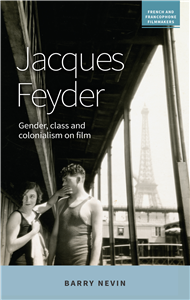
        Jacques Feyder

        Gender, class and colonialism on film

        by Barry Nevin

        This is the first English-language book on Jacques Feyder, one of the Golden Age of French cinema's most prolific directors. Although once hailed as a major filmmaker, Feyder's reputation waned in the decades following his death, and scholars tend to underestimate his contributions to cinema. This study argues that a fuller understanding of Feyder's style involves exploring his provocative portrayals of gender, class and colonialism across his body of work, including films he directed in France, Hollywood, Germany, England and elsewhere. In doing so, the book reveals an ambitious director who took cinema in new aesthetic directions and often crafted provocative reflections on social inequalities in French society.

      • Trusted Partner
        Health & Personal Development

        Affirmative Counseling for Transgender and Gender Diverse Clients

        by lore m. dickey, Jae A. Puckett

        A how-to guide to affirmative counseling with transgender clients• Presents the best evidence-basedcare• Instructions for strategies to improveinclusivity• Illustrated with case studies• Printable tools for clinical use This volume provides fundamental and evidence-based information on working with transgender and gender diverse people in mental health services. The authors, who are experts in the field, outline the key qualities of affirming mental health services, as well as explore strategies for improving inclusivity and what evidence-based care with trans clients looks like. They also provide insight into current topics, such as working with youth, the harmful and ill-advised approach known as rapid onset gender dysphoria, and whether and how autism is a co-occurring diagnostic concern. Practitioners will find the printable resources provided invaluable for their clinical practice, including sample letters of support for trans clients who are seeking gender affirming medical care. For:• clinical psychologists• psychiatrists• psychotherapists• family practitioners• counselors• students

      • Trusted Partner
        Humanities & Social Sciences
        November 2012

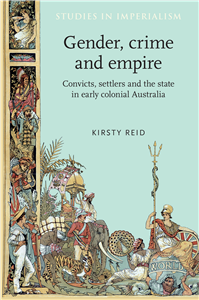
        Gender, crime and empire

        convicts, settlers and the state in early colonial Australia

        by Kirsty Reid, Andrew Thompson, John Mackenzie, Martin Hargreaves

        Between 1803 and 1853, some 80,000 convicts were transported to Van Diemen's Land. Revising established models of the colonies, which tend to depict convict women as a peculiarly oppressed group, Gender, crime and empire argues that convict men and women in fact shared much in common. Placing men and women, ideas about masculinity, femininity, sexuality and the body, in comparative perspective, this book argues that historians must take fuller account of class to understand the relationships between gender and power. The book explores the ways in which ideas about fatherhood and household order initially informed the state's model of order, and the reasons why this foundered. It considers the shifting nature of state policies towards courtship, relationships and attempts at family formation which subsequently became matters of class conflict. It goes on to explore the ways in which ideas about gender and family informed liberal and humanitarian critiques of the colonies from the 1830s and 1840s and colonial demands for abolition and self-government. ;

      • Trusted Partner
        Humanities & Social Sciences
        March 2017

        Gender, crime and empire

        Convicts, settlers and the state in early colonial Australia

        by Kirsty Reid, Andrew Thompson, John M. MacKenzie, Martin Hargreaves

        Between 1803 and 1853, some 80,000 convicts were transported to Van Diemen's Land. Revising established models of the colonies, which tend to depict convict women as a peculiarly oppressed group, Gender, crime and empire argues that convict men and women in fact shared much in common. Placing men and women, ideas about masculinity, femininity, sexuality and the body, in comparative perspective, this book argues that historians must take fuller account of class to understand the relationships between gender and power. The book explores the ways in which ideas about fatherhood and household order initially informed the state's model of order, and the reasons why this foundered. It considers the shifting nature of state policies towards courtship, relationships and attempts at family formation which subsequently became matters of class conflict. It goes on to explore the ways in which ideas about gender and family informed liberal and humanitarian critiques of the colonies from the 1830s and 1840s and colonial demands for abolition and self-government.

      • Trusted Partner
        Humanities & Social Sciences
        November 2023

        Intimacy and mobility in an era of hardening borders

        Gender, reproduction, regulation

        by Haldis Haukanes, Frances Pine

        This book is a collection of articles by anthropologists and social scientists concerned with gendered labour, care, intimacy and sexuality, in relation to mobility and the hardening of borders in Europe. Interrogating the relation between physical, geopolitical borders and ideological, conceptual boundaries, it offers a range of vivid and original ethnographic case studies that will capture the imagination of anyone interested in gendered migration, policies of inclusion and exclusion, and regulation of reproduction and intimacy. The book presents ethnographic and phenomenological discussions of people's changing lives as they cross borders, how people transgress and reshape moral boundaries of proper gender and kinship behaviour, and moral economies of intimacy and sexuality. It also focuses on migrants' navigation of social and financial services in their destination countries, putting questions about rights and limitations on citizenship at the core.

      • Trusted Partner
        The Arts
        October 2013

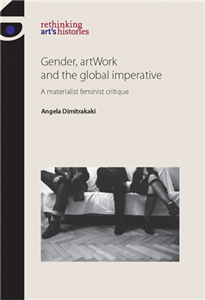
        Gender, artWork and the global imperative

        A materialist feminist critique

        by Angela Dimitrakaki

        Is gender implicated in how art does its work in the world created by global capital? Is a global imperative exclusive to capital's planetary expansion or also witnessed in oppositional practices in art and curating? And what is new in the gendered paradigms of art after the fall of the Berlin Wall? Angela Dimitrakaki addresses these questions in an insightful and highly original analysis of travel as artistic labour, the sexualisation of migration as a relationship between Eastern and Western Europe, the rise of female collectives, masculinity and globalisation's 'bad boys', the emergence of a gendered economic subject that has dethroned postmodernism, and the need for a renewed materialist feminism. This is a theoretically astute overview of developments in art and its contexts since the 1990s and the first study to attempt a critical refocusing of feminist politics in art history in the wake of globalisation. It will be essential reading in art history, gender, feminist and globalisation studies, curatorial theory, cultural studies and beyond. ;

      • Trusted Partner
        Humanities & Social Sciences
        March 2017

        Engendering whiteness

        White women and colonialism in Barbados and North Carolina, 1627–1865

        by Cecily Jones

        Engendering whiteness represents a comparative analysis of the complex interweaving of race, gender, social class and sexuality in defining the contours of white women's lives in Barbados and North Carolina during the era of slavery. Despite their gendered subordination, their social location within the dominant white group afforded all white women a range of privileges. Hence, their whiteness, as much as their gender, shaped these women's social identities and material realities. Crucially, as the biological reproducers of whiteness, and hence the symbolic and literal embodiment and bearers of the state of freedom, they were critical to the maintenance and reproduction of the cultural boundaries of 'whiteness', and consequently the subjects of patriarchal measures to limit and control their social and sexual freedoms. Engendering whiteness draws on a wide variety of sources including property deeds, wills, court transcripts, and interrogates the ways in which white women could be simultaneously socially positioned within plantation societies as both agents and as victims. It also reveals the strategies deployed by elite and poor white women in these societies to resist their gendered subordination, to challenge the ideological and social constraints that sought to restrict their lives to the private domestic sphere, to protect the limited rights afforded to them, to secure independent livelihoods, and to create meaningful existences. A fascinating study that with be welcomed by historians of imperialism as well as scholars of gender history and women's studies.

      • Trusted Partner
        The Arts
        January 2019

        Hispanic and Lusophone women filmmakers

        Theory, practice and difference

        by Parvati Nair, Julian Gutierrez-Albilla

        This volume examines the films of Hispanic and Lusophone women filmmakers from the 1930s to the present day. It establishes productive connections between film practices across these geographical areas by identifying common areas of concern on the part of these female filmmakers. Focusing on aesthetic, theoretical and socio-historical analyses, it questions the manifest or latent gender and sexual politics that inform and structure the emerging cinematic productions by women filmmakers in Portugal, Spain, Latin America and the US. With a combination of scholars from the UK, the US, Spain and Latin America, the volume documents and interprets a fascinating corpus of films made by Hispanic and Lusophone women and proposes research strategies and methodologies that can expand our understanding of socio-cultural and psychic constructions of gender and sexual politics. An essential resource to rethink notions of gender identity and subjectivity, it is a unique contribution to Spanish and Latin American Film Studies and Film Studies.

      • Trusted Partner
        Humanities & Social Sciences
        January 1998

        Gender and imperialism

        by Clare Midgley, Andrew Thompson, John Mackenzie

        This book marks an important new intervention into a vibrant area of scholarship, creating a dialogue between the histories of imperialism and of women and gender. By engaging critically with both traditional British imperial history and colonial discourse analysis, the essays demonstrate how feminist historians can play a central role in creating new histories of British imperialism. Chronologically, the focus is on the late eighteenth to early twentieth centuries, while geographically the essays range from the Caribbean to Australia and span India, Africa, Ireland and Britain itself. Topics explored include the question of female agency in imperial contexts, the relationships between feminism and nationalism, and questions of sexuality, masculinity and imperial power. ;

      Subscribe to our

      newsletter