
Rachel Amphlett
USA Today bestselling author Rachel Amphlett is the creator of over 25 crime thrillers. Rachel’s titles are available for consideration to all parties interested in licensing IP.
View Rights Portal
USA Today bestselling author Rachel Amphlett is the creator of over 25 crime thrillers. Rachel’s titles are available for consideration to all parties interested in licensing IP.
View Rights Portal
360 Grad Verlag is a new publishing house in Germany, specialised in high quality hardcover picture and children books for all ages from pre-school to young adults. We publish both non-fiction and fiction for children ranging including young adult and familys.
View Rights Portal
This book offers a comprehensive study of racialisation of Romani communities in Europe (and beyond). Drawing on the idea of unbelonging it demonstrates how Romani communities are placed in a position of visceral visibility by local, national and international institutions as well as public media discourses. It shows how such positionality impacts the ability of Roma to self-represent politically and build capacity for change. From the position of unbelonging the book offers an account of Romani agency which both challenges the mainstream representations of Roma but also develops an alternative none-nation-state sense of belonging. In doing so the book outlines an account of Romani alternative expressions in order to take control of their relationship with their own history, future, knowledge, and identity, and the rest of the society.

The book offers a novel lens to situate Europeanisation as violence - through institutions and technologies of development, cultural heritage, and borders, among others - by bringing South and East within a relational frame. Through four inter-related sections, it foregrounds Europeanisation as infrastructural violence and colonial asymmetries, slow violence and the construction of stratified subalternities, epistemic dispossession, and border epistemologies.
 Trusted Partner
 Trusted Partner
Trusted Partner
Trusted Partner

The research of pandemics, epidemics, and pathogens like COVID-19 reaches far beyond the scope of biomedicine. It is not only an objective for the health, political and social sciences, but epidemics and pandemics are a matter of geography: foci and vectors of communicable diseases continue to test the efficacy of medical control at state borders. This volume illuminates these issues from various disciplinary viewpoints. It starts by exploring historical models of quarantine, spatial isolation and detention as precautionary means against the dissemination of disease and contagion by border crossers, migrants and refugees. Besides the patterns of prejudice with which these groups are confronted, the book also deals with various kinds of fear of contamination from outside of the nation state. The contributors address the implementation of medical techniques at state borders in the twentieth and early twenty-first centuries, as well as the presently practiced measures of medical and biometric screening of migrants and refugees. Uniquely, this volume shows that the current border security regimes of Western states exhibit a high share of medicalised techniques of power, which originate both in European modernity and in the medical and biological disciplines developed during the last quarter of the millennium. Drawing on the collective expertise of a network of international researchers, this interdisciplinary volume is essential reading for those wishing to understand the medicalisation of borders across the globe, from the early eighteenth century up to the present day.
Trusted Partner
 Trusted Partner
Surplus lives under racial capitalism is a critical contribution to the study of racial capitalism. It theorises the link between political economy, anti-Roma racism and modern forms of white supremacy in East Central Europe. The book shows how the introduction of capitalism in the 1990s overlapped with the rise of racialised disposability of Roma workers. Since then, their surplusing recurrently comes into sharp relief during the time of crisis. Surplus lives under racial capitalism is built on an investigation of how race and class structure the Czech labour regime and how they form a single site of struggle. One which binds workers across racialised divisions as surplusing continuously expands.
Trusted Partner
At every level of human interaction new levels of identity-based tension are in evidence. Contributors to this book explore facets of fragmentation processes within systems of state and interstate organisation, how they influence the use of negotiation, and how negotiation might be used to effect renewed coherence. Following Anstey's (Ch1) introductory chapter framing the nature and shape of fragmentation dynamics, Zartman (Ch 2) argues that the use of negotiation as a process of conflict resolution is deeply shaped by identity groups whose internal coherence is dependent on sustaining a negative identity of others. International relations are no longer solely the realm of experienced diplomats but are shaped as Meerts (Ch3) points out by politicians seeking to be responsive to voting publics rather than wider concerns. Anstey digs into problems of fragmentation (Ch. 4) and Troitskiy (Ch 5) points out how a reluctant acceptance of the power of 'the other' can lead to a form of strategic stability in relations. Anstey and Meerts (Ch 6) point out in their analysis of the Israeli-Palestinian case as an identity conflict turned very bad. Guggenbuhl (Ch 7 ) reveals how structures and processes have been designed within the EU to prevent, contain and regulate conflicts to limit risks of confrontation and fragmentation. Schuessler (Ch 8) to advocates a shift away from a template or roadmap approach to EU membership to a cohesion based on non-dominance. There is still a strong desire on the part of some states, like Northern Macedonia, to become EU members, as reflected in Manton's (Ch 9). Paula Garzon and Frans Schram explain the success of the Colombia Peace Negotiations (Ch 10), while Odigie and da Rocha (Ch 11) analyse the struggle faced by ECOWAS to influence coup leaders in Mali to return to constitutional government and changes of government by constitutional means. Liang (Ch12) discusses how the internet as the modern vehicle of inter-state, inter-group and interpersonal communication has become weaponised. In Ch 13 Anstey draws some lessons from contributions to the compilation.
Trusted Partner
Trusted Partner

Revolutionary lives of the Red and Black Atlantic brings to light the life histories of a wide range of radical figures whose political activity in relation to the black liberation struggle was profoundly shaped by the global impact and legacy of the Russian Revolution of October 1917. The volume introduces new perspectives on the intellectual trajectories of well-known figures and critical activists including C. L. R. James, Paul Robeson, Walter Rodney and Grace P. Campbell. This biographical approach brings a vivid and distinctive lens to bear on how racialised social and political worlds were negotiated and experienced by these revolutionary figures, and on historic black radical engagements with left political movements, in the wake of the Russian Revolution.
Trusted Partner
Trusted Partner


Der Versuch über Kafka Beschreibung einer Form ist Martin Walsers Dissertation, sie erschien erstmals 1961 und ist eine bemerkenswerte Einführung in das Werk Franz Kafkas, das eine so tiefe und nicht nachlassende Wirkung ausübt.
Trusted Partner
Amid renewed anti-racist resistance to violent policing, The racial politics of police warfare unpacks the racisms that rationalise militarised policing in contemporary Britain. Jasbinder S. Nijjar shatters prevailing myths about British police as an impartial public service, by revealing it as an institution where racism and war reinforce one another. In examining flagship anti-gang and counter-terrorism policies and practices, the book offers a unique analysis of the relationship between anti-black and anti-Muslim racisms, to demonstrate how racialised populations are institutionalised as common enemies of modernity. Combining perspectives from sociology, history, criminology and social policy, Nijjar illustrates how British policing defends law and order and national security from the perceived threat of race through hyper-intrusive, pre-emptive and deathly measures. Accordingly, he gives a fresh take on resisting racial police warfare, calling for strategies that are at once political, collective, anti-militaristic and abolitionist.
Trusted Partner
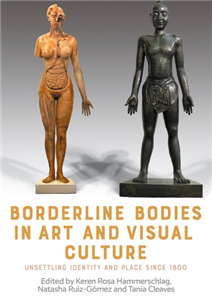
Borderline bodies offers original interpretations of visual representations of human bodies as bounded and unbounded, fortified and permeable, mobile and static-subject to borders and able to traverse and challenge them. It also takes as its focus images and objects that might be considered 'borderline' because they sit at the intersection of disciplines or sit outside accepted notions of what constitutes serious 'art.' By mapping the ways human bodies traverse borders and straddle-even dismantle-categories, this volume's essays approach afresh the relationship of bodies to traditional modes of representation, especially in art and medicine, and encourage us to think anew about how we understand the relationship between human corporeality, identity and place. Critical transdisciplinary and transnational analyses of objects and images from a range of geographies shed new light on the themes of: bodies and identity; typologies of the body; racialised bodies; 'normal' and 'abnormal' bodies; encounters between bodies; bodies in transition; bodies and mobility; and the bounded and unbounded human body. The outcome is a fresh approach to depictions of the human body produced for the purposes of artistic and medical education, aesthetic edification, and scientific and professional advancement, which disrupts assumptions about the normative human body perpetuated through Western image-making traditions.
Trusted Partner
Islamophobia is one of the most misunderstood and pernicious forms of racism in Britain. But how do those committed to challenging Islamophobia understand it? And what does this mean for their practices 'on the ground'? Islamophobia, anti-racism and the British left combines first-hand accounts from activists and community workers across two British cities with sociological theory, critically interrogating Islamophobia's relationship to 'race', racial capitalism and other modalities of racism. Setting this discussion against some of the most pertinent political shifts in Britain in recent years - from the resurgence of left nationalism to Black Lives Matter - the book assesses the limits of recent attempts to think about and tackle Islamophobia, and considers the possibilities of an alternative approach from and for the anti-racist left.
Trusted Partner
This book offers the first comprehensive history of white workers from the end of the First World War to Zimbabwean independence in 1980. It reveals how white worker identity was constituted, examines the white labouring class as an ethnically and nationally heterogeneous formation comprised of both men and women, and emphasises the active participation of white workers in the ongoing and contested production of race. White wage labourers' experiences, both as exploited workers and as part of the privileged white minority, offer insight into how race and class co-produced one another and how boundaries fundamental to settler colonialism were regulated and policed. Based on original research conducted in Zimbabwe, South Africa and the UK, this book offers a unique theoretical synthesis of work on gender, whiteness studies, labour histories, settler colonialism, Marxism, emotions and the New African Economic History.
Trusted Partner
This fascinating work challenges many of the accepted facts about the concentration camps run by the British during the South African War. The author demonstrates that much of what we have traditionally understood about these camps originates the testimony which was solicited, selected and published by key women activists within Boer proto-nationalist circles. Using detailed archival evidence, she shows that much of the history of the camps results from a deliberate imposition of 'post/memory' - a process by which what was 'remembered' was shaped and reshaped to support the development of a racialised nationalist framework. Many of the camps' occupants died from successive epidemics of measles, typhoid, enteritis and pneumonia rather than deliberate ill-treatment, yet the book shows how mourning for those who died was overridden by state commemorative activities concerned with promoting pan-Boer nationalist aspirations. The innovative and groundbreaking approach of the author invites the reader to step into and explore with her the commemorative sites passed by nationalist land acts, which still powerfully mark the South African landscape. ;
Trusted Partner

(B)ordering Britain argues that Britain is the spoils of empire, its immigration law is colonial violence and irregular immigration is anti-colonial resistance. In announcing itself as postcolonial through immigration and nationality laws passed in the 60s, 70s and 80s, Britain cut itself off symbolically and physically from its colonies and the Commonwealth, taking with it what it had plundered. This imperial vanishing act cast Britain's colonial history into the shadows. The British Empire, about which Britons know little, can be remembered fondly as a moment of past glory, as a gift once given to the world. Meanwhile immigration laws are justified on the basis that they keep the undeserving hordes out. In fact, immigration laws are acts of colonial seizure and violence. They obstruct the vast majority of racialised people from accessing colonial wealth amassed in the course of colonial conquest. Regardless of what the law, media and political discourse dictate, people with personal, ancestral or geographical links to colonialism, or those existing under the weight of its legacy of race and racism, have every right to come to Britain and take back what is theirs.
Trusted Partner
Trusted Partner


