Your Search Results

      • Trusted Partner
        Psychology
        April 2018

        What is “Good” Dementia Care?

        by Christoph Held

        People with dementia experience their condition as a big change in which, for example, new events are not linked to existing experiences and wishes, thoughts, and actions can no longer be connected to each other. This kind of experience of the self, due to the intergative function of the brainbeing temporarily or permanently lost, is called dissociative self-experience. Based on this understanding of dementia, the author develops an approach to effectively understand and support people with dementia in everyday activities. Typical everyday situations and behaviours are presented and reflected on in a practical context.

      • Trusted Partner
        2019

        Good Evening, Good Night

        The cultural history of sleep

        by Karoline Walter

        What we associate with sleep is shaped by the culture we live in. Whereas the God of the Bible never sleeps, the sinful human falls asleep every night and is thus marked as an inferior being. In the Age of Enlightenment, (too much) sleep was considered a waste of strength, which could otherwise be used to change the world. These days, sleep seems to be subject to the same tenets of usefulness as everything else and is seen to assist with the optimization of one’s self. However, culture and technology also influence how we sleep: for example, the constant availability of light, the modern conditions of work and all sorts of distractions have meant that we no longer follow our natural rhythm – a first sleep before midnight and a second sleep after a longer period of wakefulness, during which we may be active. In “Good Evening, Good Night”, Karoline Walter uses numerous examples from history, literature and research to illustrate how sleep and sleeping have changed across cultures and eras – an entertaining read, certainly nothing to put you to sleep.

      • Trusted Partner
        The Arts
        February 2026

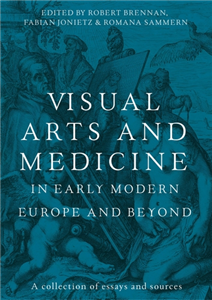
        Visual arts and medicine in early modern Europe and beyond

        A collection of essays and sources

        by Robert Brennan, Fabian Jonietz, Romana Sammern

        This book opens up new perspectives on the relationship between art, medicine, and science in late-medieval and early modern Europe. Looking beyond the traditional nexus of art, anatomy, and optics, the volume sheds light on a broader array of connections between artists and physicians: collaborations between painters and doctors on colour charts, handwork skills common to sculptors and surgeons, the transmission of art theory through medical texts long before the emergence of art writing itself as an independent genre, and the kinship of medical diagnosis with early modes of connoisseurship. Reconfiguring the histories of art, medicine, and science, the book also traverses conventional boundaries between physical and mental health, religious and medical modes of healing, menial and exalted forms of knowledge and labour, as well as vernacular and scientific understandings of human difference, including gender, race, and neurodiversity.

      • Trusted Partner
        The Arts
        June 2026

        Becoming couture

        by Chiara Faggella

      • Trusted Partner
        Humanities & Social Sciences
        August 2023

        The bad German and the good Italian

        by Paul Barnaby, Filippo Focardi

      • Trusted Partner
        Computing & IT
        May 2025

        The myth of good AI

        by Arshin Adib-Moghaddam

      • Trusted Partner
        Teaching, Language & Reference
        May 2025

        US diplomacy and the Good Friday Agreement in post-conflict Northern Ireland

        by Richard Hargy

        Richard Haass and Mitchell Reiss, as autonomous diplomats in the George W. Bush State Department, were able to alter US intervention in Northern Ireland and play critical roles in the post-1998 peace process. Their contributions have not been fully appreciated or understood. The restoration of Northern Ireland's power-sharing government in 2007 was made possible by State Department-led intervention in the peace process. There are few references to Northern Ireland in work examining the foreign policy legacy of the George W. Bush presidency. Moreover, the ability to control US foreign policy towards the region brought one of George W. Bush's Northern Ireland special envoys into direct diplomatic conflict with the most senior actors inside the British government. This book will uncover the extent of this fall-out and provide original accounts on how diplomatic relations between these old allies became so fraught.

      • Trusted Partner
        The Arts
        November 2022

        In good taste

        How Britain’s middle classes found their style

        by Ben Highmore, Christopher Breward

        In postwar Britain, journalists and politicians prophesised that the class system would not survive a consumer culture where everyone had TVs and washing machines, and where more and more people owned their own homes. They were to be proved entirely wrong. In good taste charts how class culture, rather than being destroyed by mass consumption, was remade from flat-pack furniture, Mediterranean cuisine and lifestyle magazines. Novelists, cartoonists and playwrights satirised the tastes of the emerging middle classes, and sociologists claimed that an entire population was suffering from status anxiety, but underneath it all, a world was being constructed out of duvets, quiches and mayonnaise, easy chairs from Habitat, white emulsion paint and ubiquitous well-scrubbed, second-hand pine kitchen tables. This was less a world of symbolic goods and more an intimate environment alive with new feelings and attitudes.

      • Trusted Partner
        Social & cultural history
        October 2000

        Women's leisure in England 1920–60

        by Claire Langhame

        This insightful book offers a timely assessment of the complex relationship between women and leisure in England, drawing upon recent feminist theory. Departing from approaches which focus on particular activities or institutions, it places everyday experiences at its centre, presenting a wide-ranging and lively account of changing perceptions, representations and experiences of leisure across the period 1920-60. It addresses the nature of leisure within women's lives, examining shifting understandings of the concept and identifying areas of definitional ambiguity such as the 'family' holiday, shopping and handicrafts. Focusing upon experiences of leisure across the life cycle, it provides a detailed assessment of the particular forms of leisure enjoyed by women at distinct stages of their lives, including cinema-going, dancing, socialising and home-based pursuits. The book demonstrates that experiences and perceptions of leisure were fundamentally structured along life cycle lines: leisure in youth was often characterised by freedom and independence whilst leisure in adulthood became a vehicle for service and duty to others.

      • Trusted Partner
      • Trusted Partner
        1982

        Von der Verantwortung des Wissens

        Positionen der neueren Philosophie der Wissenschaft

        by Paul Good

      • Trusted Partner
        November 2020

        Good Vibes, Good Life

        Wie Selbstliebe dein größtes Potenzial entfaltet

        by King, Vex

      • Trusted Partner
        Literature & Literary Studies
        January 2021

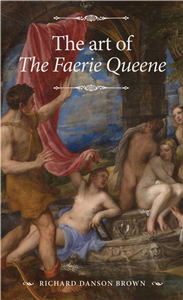
        The art of The Faerie Queene

        by Richard Danson Brown

        The Art of The Faerie Queene is the first book centrally focused on the forms and poetic techniques employed by Spenser. It offers a sharp new perspective on Spenser by rereading The Faerie Queene as poetry which is at once absorbing, demanding and experimental. Instead of the traditional conservative model of Spenser as poet, this book presents the poem as radical, edgy and unconventional, thus proposing new ways of understanding the Elizabethan poetic Renaissance. The book moves from the individual words of the poem to metre, rhyme and stanza form onto its larger structures of canto and book. It will be of particular relevance to undergraduates studying Elizabethan poetry, graduate students and scholars of Renaissance poetry, for whom the formal aspect of the poetry has been a topic of growing relevance in recent years.

      • Trusted Partner
        2022

        Over-the-Counter Trainer

        160 double-sided flashcards for learning and counselling

        by Dr. Kirsten Lennecke, Kirsten Hagel and Claudia Rothermel

        Working at the sales counter is never dull: Every day, people come to you with the widest possible variety of questions and expect good advice. It does not matter whether it is about self-medication for adults, pregnant women, children, about aids and appliances, vegan diets or alternative medicine: Whatever your customer’s concerns – you always offer well-founded counselling. Based on real-life counselling situations routinely encountered in a pharmacy, the authors – all pharmacists with experience of retail sales – provide important information for such conversations and suggest helpful questions to ask when patients seek advice. Become a sales counter expert in no time!

      • Trusted Partner
        Literature & Literary Studies
        September 2020

        The art of The Faerie Queene

        by Richard Danson Brown, Joshua Samuel Reid

        The Art of The Faerie Queene is the first book centrally focused on the forms and poetic techniques employed by Spenser. It offers a sharp new perspective on Spenser by rereading The Faerie Queene as poetry which is at once absorbing, demanding and experimental. Instead of the traditional conservative model of Spenser as poet, this book presents the poem as radical, edgy and unconventional, thus proposing new ways of understanding the Elizabethan poetic Renaissance. The book moves from the individual words of the poem to metre, rhyme and stanza form onto its larger structures of canto and book. It will be of particular relevance to undergraduates studying Elizabethan poetry, graduate students and scholars of Renaissance poetry, for whom the formal aspect of the poetry has been a topic of growing relevance in recent years.

      • Trusted Partner
        2023

        Food Composition Table for the Practice

        The small Souci/Fachmann/Kraut

        by Founded by S.W. Souci, W. Fachmann and H. Kraut. Revised by Dr. Petra Steinhaus. Edited by the Leibniz Institute of Food Systems Biology at the Technical University of Munich.

        ■ How many omega-3 fatty acids does salmon contain? ■ Which dairy product contains the most calcium? ■ How iron-rich is spinach, really? Whether calories, vitamins or amino acids – whether in field beans, bananas, eggs, chicken, parmesan cheese or onion – it is all here. The compact edition of the time-tested „large SFK [Souci/Fachmann/Kraut]“ offers tested data on over 70 ingredients in more than 360 foods, systematically structured according to food groups. This edition with thousands of values has been completely revised and updated by the Leibniz Institute of Food Systems Biology at the Technical University of Munich. Extra: 32 summary tables cover more than 300 other, less common foods and allow for targeted, clear comparisons. 16 orientation tables provide information about foods with particularly high or low amounts of ingredients. Nutritional values, energy content, main components and ingredients displayed in uniform systematics and a practical format – just look it up!

      • Trusted Partner
        Literature & Literary Studies
        October 2012

        Narration in nineteenth-century French short fiction

        Prosper Mérimée to Marcel Schwob

        by Peter Cogman

        The short fiction that flourished in nineteenth-century France has attracted relatively little critical attention compared with the novel. This study focuses on some key stories by major authors of contes and nouvelles from the late 1820s to the 1890s, taking as a starting-point, aspects of narrative technique as a way of exploring not just characteristic strategies of short fiction, but also the ends to which they were put: recurrent themes, and the vision of mankind. Each chapter looks in some detail at three or four stories, referring briefly to other tales for illustration. The underlying point that emerges from this study is that the interest of a tale lies in the telling, not the events. ;

      • Trusted Partner
        The Arts
        June 2011

        Alain Robbe-Grillet

        by John Phillips, Diana Holmes, Robert Ingram

        Placing Robbe-Grillet's filmic oeuvre in the related contexts of both his novelistic work and the different historical and cultural periods in which his films were made, from the early 1960s to the present, the book traces lines of influence and continuity throughout his work, which is shown to exhibit a consistent preoccupation with an identifiable body of themes, motifs and structures. Close readings of all the films are skilfully combined with a thematic approach, ranging across the entire filmic corpus. The book also contains chapters on cinematography and technique. Ultimately, this lucid, comprehensive and fascinating study shows Robbe-Grillet's contribution to the evolution of the cinematic art both in France and internationally to have been considerably more important than previously acknowledged. ;

      Subscribe to our

      newsletter