
Your Search Results


-
Promoted Content
-
Promoted Content

 September 2022
Lust
Fuckability, orgasm gap and #metoo
by Henriette Hell
Lust, a mortal sin? These times are over. In today's public perception, it is more likely for a boring sex life to be categorised as that. In statistical terms, people have never had as little sex with each other as they do today. And yet tips for a good sex life are to be found on every (digital) corner. Sex has mutated into a lifestyle product, and terms like 'fuckability' and 'MILF' trip lightly off our tongues. Henriette Hell takes a closer look at the thing about sex. She traces the history and genesis of 'sexual liberation', and sheds light on the 'cheating gene' and the #metoo debate. The author asks (and answers) the question of whether sex is becoming more and more antisocial and what actually still turns us on today. In doing so, she focuses on the former mortal sin of lust, which is inseparably linked to the systematic suppression of female lust (and its liberation).
-
 Trusted Partner
-
Trusted Partner
-
Trusted Partner
-
Trusted Partner
-
Trusted Partner
-
Trusted Partner
-
Trusted Partner
-
Trusted Partner
-
Trusted Partner
-
Trusted Partner

 April 2016
Assessment of Vocational Interests
Themenheft der Zeitschrift für Arbeits- und Organisationspsychologie (Heft 2/2016)
by Höft, Stefan / Herausgegeben von Hell, Benedikt; Herausgegeben von Wille, Bart
-
Trusted Partner

 Literature & Literary StudiesMay 2026
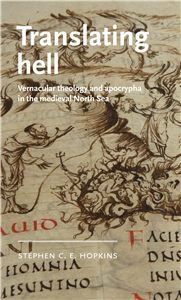
Translating hell
Vernacular theology and apocrypha in the medieval North Sea
by Stephen C. E. Hopkins
In the Middle Ages, hell was useful because it was vaguely defined. Canonical scriptures scarcely mention hell, leaving much to the imaginations of early Christians, who used it to sort out who belonged within the faith. This book explores how hell became a place for literary experiments with local challenges in theology and identity. Following the reception and transformations of two popular hell apocrypha, it argues that they served as this role because of their liminal textual authority. As noncanonical scriptures, apocrypha afforded medieval writers space to revise their hells (since they were not actually scripture), while also encouraging readers to revere those experiments as valid (since they seemed like scripture). The book brings together adaptations from early medieval England, Iceland, Ireland, and Wales, placing the early vernacular theologies of the North Sea in comparative conversation.
-
Trusted Partner
 Humanities & Social SciencesApril 2022
Voices from the underworld
by Fabian Graham, Yangwen Zheng, Richard Madsen
-
Trusted Partner
-
Trusted Partner
-
Trusted Partner
-
Trusted Partner

 August 2019
Am Tag zu heiß und nachts zu hell
Was unser Körper kann - und warum er heute überfordert ist
by Hanns-Christian Gunga
-
Trusted Partner

 September 2002
Dein Herz ist wie die Nacht so hell
Liebesgedichte
by Else Lasker-Schüler, Eva Demski, Eva Demski
Eine der letzten Äußerungen Else Lasker-Schülers vor ihrem Tod soll gewesen sein: »Mit mir geht es zu Ende, ich kann nicht mehr lieben.« Ihr großes lyrisches Werk zeugt davon, wie mutig, wie rücksichtslos, wie unbedingt die Liebe sein kann – und wie die Liebe auch die Kunst. Liebe ist für diese allem Gemäßigten abholde Dichterin das Recht und der Wunsch, jemanden so sehr zu fordern, bis er den Ansprüchen des anderen zu gleichen beginnt. Die Liebende erschafft sich den Geliebten, und keine hat das so groß- und fremdartig gekonnt wie Else Lasker-Schüler. Daraus resultieren zuweilen auch Irritationen, wenn wir das Objekt ihrer Leidenschaft zu kennen glauben – oder gelingt es uns, den Giselheer ihrer wunderbaren und ungestümen, fast gewalttätigen Gedichte mit dem Dr. Gottfried Benn, der uns vor Augen steht, in Übereinstimmung zu bringen? »Ihr kennt ja All’ die Liebe nicht« – die Liebesgedichte Else Lasker-Schülers zeigen uns, wie sie sein kann, die Liebe, von der Einsamkeit unerwiderten Begehrens bis zu ihrem verschwenderischen Überschwang.
-
Trusted Partner

 February 2026
Es ist hell und draußen dreht sich die Welt
Roman
by Dita Zipfel
Ein fulminanter, kraftvoller Roman, ebenso wütend wie zart, über weibliche Selbstbestimmung, über Körper und wem sie gehören, über das Kinder haben und die Sehnsucht danach. Nach dem Urlaub, so ist der Plan, wird Linn ein perfekt gereifter Embryo eingesetzt und sie wird sein, was sie sich schon lange wünscht: schwanger. In den schicken Bungalow am Strand hat der Jugendfreund ihres Partners Matze sie beide eingeladen, Felix, ein wohlhabender Selfmademan. Während Matze und Felix sich mit Crémant betrinken, angeln gehen und versuchen, die Statusunterschiede zwischen ihnen zu verdrängen, entwickelt sich zwischen Linn und Felix’ Frau Eva aus Neid und Widerwillen eine Faszination, die die beiden einander näherbringt. Während Linn sich zerrissen fühlt zwischen dem unbedingten Wunsch, Mutter zu werden, und dem Zweifel, ob sie das überhaupt kann, eine »gute« Mutter sein, buddelt Eva geduldig mit ihrem Sohn, cremt und tröstet und wischt Sandkörner aus Babyaugen. Und im Laufe der Urlaubstage geraten zwischen Muschelessen und Crémant, zwischen heimlich geteiltem Cannabis und geflüsterten Gesprächen festgefahrene Bilder ins Wanken, verschieben sich sachte die Regeln, und Eva und Linn werden mehr als Freundinnen: Sie werden Verbündete.





