
Your Search Results


-
Promoted Content

 Literature & Literary StudiesSeptember 2013
Region, religion and patronage
Lancastrian Shakespeare
by Richard Dutton, Alison Findlay, Richard Wilson, Mary Norris
Explores the network of social, political and spiritual connections in north west England as a site for regional drama, introducing the reader to the non-metropolitan theatre spaces which formed a vital part of early modern dramatic activity. Uses the possibility that Shakespeare began his theatrical career to provide a range of new contexts for reading his plays. Examines the contexts in which the apprentice dramatist would have worked, providing new insight into regional performance, touring theatre & the patronage of the Earls of Derby. Examines the experiences of Catholic families and the way in which Lancashire's status as a Catholic stronghold led to conflict with central government's attempts to create a united state.. All this feeds into innovative readings of individual plays such as Twelfth Night, Romeo and Juliet and A Midsummer Night's Dream. ;
-
Promoted Content
 Humanities & Social SciencesMay 2004
A history of the Ulster Unionist Party
Protest, pragmatism and pessimism
by Graham Walker
This is the first substantial history to trace the political development of the Ulster Unionist Party through the years of protest and opposition to Irish Home Rule to the half-century as a governing party within Northern Ireland, and beyond to the current attempts to bring peace to the Province. It demonstrates why the Party is so central to efforts to reach a political settlement, and explains why it has for so long been the main political voice of the pro-Union electorate in Northern Ireland. An important and scholarly work based on extensive primary source research, it brings to light forgotten historical episodes of contemporary political significance, and provides new angles on old controversies and debates. The book discusses the evolution of the Ulster Unionist Party with reference to competing ideological currents, class and social tensions within the Unionist movement, and the role of leadership figures and maverick personalities. This is a book that maps the party's historical journey from the dramatic days of Carson to the current predicaments of Trimble. ;
-
 Trusted Partner
-
Trusted Partner
 Material cultureJanuary 2002
The study of dress history
by Lou Taylor
Over the past ten years the study of dress history has finally achieved academic respectability. This book shows how the fields of dress history and dress studies are now benefitting from the adoption of new multi-disciplinary approaches and outlines the full range of these approaches which draw on material culture, ethnography, and cultural studies. Raises a series of frank and fresh issues surrounding approaches to the history of dress, including analysis of the academic gender and subject divides that have riven it in the past. Comprehensive, engaging and trenchant, this will become the benchmark volume in the study of dress history.
-
Trusted Partner
 Humanities & Social SciencesDecember 2008
Princely power in the Dutch Republic
Patronage and William Frederick of Nassau (1613–64)
by Geert Janssen, Joseph Bergin, Penny Roberts, Bill Naphy
Based on one of the richest surviving diaries of the Dutch Golden Age, Princely Power in the Dutch Republic recaptures the social world of William Frederick of Nassau (1613-1664). As a Stadholder and relative of the Prince of Orange, William Frederick was among the key players in a fragmented republican state system. This study offers a vivid analysis of his political strategies and reveals how unwritten codes of patronage guided his daily contacts and shaped his mental world. As a patron at his court and as a client of the Prince of Orange, William Frederick developed distinctive patronage roles, appropriate to different social spheres. By assessing these different roles, Janssen provides a unique insight into the ways in which a seventeenth-century nobleman negotiated and articulated clientage, friendship and corruption in his life. This study offers an in-depth analysis of political practices in the Dutch Republic and reconsiders the way in which patronage shaped early modern politics, affected religious divisions and framed social identities. ;
-
Trusted Partner
 Humanities & Social SciencesFebruary 2025
An unorthodox history
British Jews since 1945
by Gavin Schaffer
A bold, new history of British Jewish life since the Second World War. Historian Gavin Schaffer wrestles Jewish history away from the question of what others have thought about Jews, focusing instead on the experiences of Jewish people themselves. Exploring the complexities of inclusion and exclusion, he shines a light on groups that have been marginalised within Jewish history and culture, such as queer Jews, Jews married to non-Jews, Israel-critical Jews and even Messianic Jews, while offering a fresh look at Jewish activism, Jewish religiosity and Zionism. Weaving these stories together, Schaffer argues that there are good reasons to consider Jewish Britons as a unitary whole, even as debates rage about who is entitled to call themselves a Jew. Challenging the idea that British Jewish life is in terminal decline. An unorthodox history demonstrates that Jewish Britain is thriving and that Jewishness is deeply embedded in the country's history and culture.
-
Trusted Partner
 Humanities & Social SciencesJanuary 2026
Premodern ruling sexualities
by Gabrielle Storey, Zita Eva Rohr
-
Trusted Partner
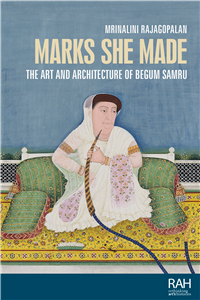 March 2026
Marks she made
The art and architecture of Begum Samru
by Mrinalini Rajagopalan
Begum Samru (b. circa 1750-d. 1836) was a north Indian woman ruler who used art and architecture to facilitate her social, political, and financial station in early modern India. Rising from the ranks of courtesans in Mughal Delhi to become the commander of her own mercenary army, she later became the ruler of an independent territory of Sardhana (60 km northwest of Delhi). The begum (Urdu/ Hindustani title for noblewoman) was a trusted ally to the Mughal emperor and the English East India Company, two of the dominant political powers in north India at the time. As a sovereign ruler, she corresponded with two popes and King Louis Philippe of France, exchanging portraits, architectural drawings, and letters with these powerful men in addition to her Mughal counterparts in India. Art and architecture played a key role in establishing Begum Samru as a powerful but non-threatening ruler; as an upholder and patron of the Catholic faith in India; as a political ally to several European and Indian factions that were vying for power; and as ruling matriarch of a cosmopolitan household, court, and army. In narrating the story of a single woman in nineteenth-century India, this book offers a path to think of the creative ways in which women participated in public and political spheres. It also illustrates how women without pedigree, women who did not bear biological children or produce male heirs, and women who lived in contravention of gendered norms found alternative methods of recognition, dignity, power, and sometimes, as in the case of Begum Samru, global visibility.
-
Trusted Partner
 Humanities & Social SciencesMay 2021
Doing digital history
by Jonathan Blaney, Jane Winters, Sarah Milligan, Martin Steer
-
Trusted Partner
-
Trusted Partner
 Humanities & Social SciencesJuly 2023
Now that's what I call a history of the 1980s
by Lucy Robinson
-
Trusted Partner

 2020
2020History of the German Language
A textbook for German studies; Part 1: Introduction, prehistory and history; Part 2: Old High German, Middle High German and Early New High German
by Wilhelm Schmidt, Edited by Dr. Elisabeth Berner and Prof. Dr. Dr. h.c. Dr. h.c. Norbert Richard Wolf
The 12th revised and updated version of the History of the German language – long regarded as an indispensable standard work for German Studies, has just been published. From now on, this comprehensive textbook on the history of the language is divided into two volumes. In addition to introducing questions about historical linguistics, the first volume provides a detailed account of the prehistory and history of German right up to the present day. Based on extensive source analyses, the focus is on aspects of culture and social history; only the chapters on the Indo-Germanic and Germanic language include key information about structural history. The second part contains concise, but readily understandable accounts of Old, Middle and Early New High German in terms of phonology, graphemics, morphology and syntax. Not only are synchronous descriptions given of the particular language period, but also the development of German language construction at all structural levels is explained. The association of grammatical synchrony and structural diachrony is a particular characteristic of this second part of Schmidt’s work on the history of language.
-
Trusted Partner
 Humanities & Social SciencesMay 2020
A history of humanitarianism, 1755–1989
In the name of others
by Silvia Salvatici
The book traces the history of international humanitarianism from the anti-slavery movement to the end of the cold war. It is based on an extensive survey of the international literature and is retold in an original narrative that relies on a close examination of the sources. The reconstruction of humanitarianism's long history unfolds around some crucial moments and events: the colonial expansion of European countries, the two world wars and their aftermaths, the emergence of a new postcolonial order. In terms of its contents, narrative style, interpretative approach the book is aimed at a large and diverse public including: scholars who are studying and teaching humanitarianism; students who need to learn about humanitarianism as part of their training or research; operators and volunteers who are engaged in the field; non-specialist readers who are interested in the topic because of its relevance to current events.
-
Trusted Partner
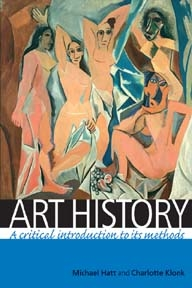 The ArtsMarch 2006
Art history
A critical introduction to its methods
by Michael Hatt, Charlotte Klonk
Art History: A critical introduction to its methods provides a lively and stimulating introduction to methodological debates within art history. Offering a lucid account of approaches from Hegel to post-colonialism, the book provides a sense of art history's own history as a discipline from its emergence in the late-eighteenth century to contemporary debates. By explaining the underlying philosophical and political assumptions behind each method, along with clear examples of how these are brought to bear on visual and historical analysis, the authors show that an adherence to a certain method is, in effect, a commitment to a set of beliefs and values. The book makes a strong case for the vitality of the discipline and its methodological centrality to new fields such as visual culture. This book will be of enormous value to undergraduate and graduate students, and also makes its own contributions to ongoing scholarly debates about theory and method. ;
-
Trusted Partner
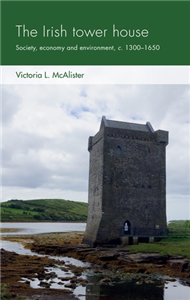 Humanities & Social SciencesApril 2021
The Irish tower house
Society, economy and environment, c. 1300–1650
by Victoria L. McAlister
The Irish tower house examines the social role of castles in late-medieval and early modern Ireland. It uses a multidisciplinary methodology to uncover the lived experience of this historic culture, demonstrating the interconnectedness of society, economics and the environment. Of particular interest is the revelation of how concerned pre-modern people were with participation in the economy and the exploitation of the natural environment for economic gain. Material culture can shed light on how individuals shaped spaces around themselves, and tower houses, thanks to their pervasiveness in medieval and modern landscapes, represent a unique resource. Castles are the definitive building of the European Middle Ages, meaning that this book will be of great interest to scholars of both history and archaeology.
-
Trusted Partner
Business, Economics & LawNovember 2024
The Island Book of Records Volume II
1969-70
by Neil Storey
The second volume of this highly collectable series, covering the pivotal years of 1969-70. The Island Book of Records Volume II documents the years 1969-70, during which Island sought to build on its success with the Spencer Davis Group by seeking out new British rock talent. By the end of the period, Island was emerging as a major British label, one that could boast releases from Jethro Tull, Nick Drake, King Crimson, John and Beverley Martyn, Fairport Convention and Cat Stevens. Featuring material from recent interviews and from media interviews of the time, and including a comprehensive discography of 45s, The Island Book of Records Volume II is lavishly illustrated with gig adverts (very many at venues that no longer exist), concert tickets, flyers, international LP variants, labels, LP and 45 adverts and other ephemera collector's dream.
-
Trusted Partner
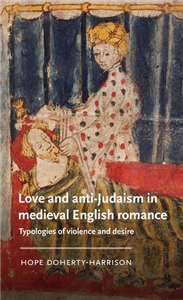 Literature & Literary StudiesSeptember 2025
Love and anti-Judaism in medieval English romance
Typologies of violence and desire
by Hope Doherty-Harrison
Love and anti-Judaism is a new examination of medieval romance for the questions it poses of the most significant events in Christian history. Providing new readings of Sir Gawain and the Green Knight, Sir Orfeo, Sir Gowther and Sir Amadace, the book argues that romance explores depictions of love-and the sacrifices it may necessitate-in the Hebrew Bible, especially where they do not easily fit into interpretations asserting that this history must prefigure Christ and the crucifixion. An examination of anti-Judaism as a discourse of violence and desire that could be turned inwardly to expose the irresolution in Christianity, this book will provoke new investigations into the religious crises of medieval romance.
-
Trusted Partner
 November 2025
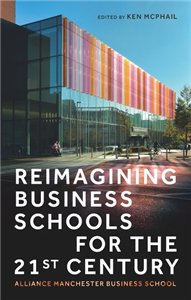
Reimagining business schools for the 21st century
Alliance Manchester Business School
by Kenneth McPhail, James Pendrill
Whether it's dealing with regional economic disparities, global geopolitical upheaval, climate change, or the impact of new technologies such as artificial intelligence, we are living in pivotal times. To mark its 60th anniversary in 2025, this accessible book from Alliance Manchester Business School outlines in detail how business schools can play a significant role in confronting these huge challenges, and equip the next generation of business leaders with the skills they need to embrace them. Informing public and political debate on the role of business in both the causes and solutions to our biggest challenges the book offers a rethinking of the role of business in society. It will also discuss specific examples of how collaborations with business are leading to impact and change in society. Featuring a range of thought-provoking essays co-authored by eminent academics and business leaders, this collection will challenge the status quo and outline how business and management research is helping address grand challenges, generate economic growth, inform policy development, and define business thinking over the next generation.
-
Trusted Partner
 Humanities & Social SciencesAugust 1995
British Business History, 1720–1994
by J. F. Wilson
This textbook covers over three centuries of British business history from 1720 to the present day. Wilson argues that company culture has been the most important component in the evolution of business organisations and management practices. The influence of business culture on firms' structure, sources of finance, and the background and training of senior managers are investigated to show its pivotal importance in determining business performance. The book also examines how British business adapted to changing economic, institutional and socio-cultural environments yet failed to develop the kind of managerial hierarchies typified by American and German corporations. Wilson uses an extensive number of case studies to support his conclusions. The book covers the subject chronologically with an extra chapter comparing Britain's experience with the USA, Germany and Japan. ;
-
Trusted Partner
 Humanities & Social SciencesSeptember 2011
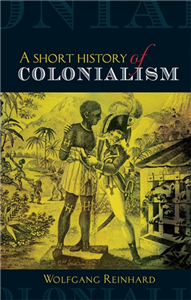
A short history of colonialism
by Wolfgang Reinhard
This well-written and comprehensive book by an outstanding expert provides students of history and the general reader with reliable up-to-date information on an essential part of the history of mankind: the global impact of European colonial expansion from the late Middle Ages to the present. It deals with the discoveries, with Portuguese, Dutch and English trade systems in Asia, with the Spanish, Portuguese, Dutch, French and British Colonies in America, the American plantation economy and the trade in African slaves, with settler colonies in the southern hemisphere, with US-, Russian and Chinese continental imperialism, with western colonial rule in Asia and Africa and the several waves of decolonisation between 1775 and 1989. Twenty-four maps illustrate the narrative. A useful teaching text, it combines traditional and more recent perspectives to produce a final balance sheet of Western colonialism and its global heritage. A carefully selected bibliography encourages further reading. ;



