
Your Search Results
-

-

Dylan-Related-Books (Agentur für englishsprachige Dylan-Autoren und Literatur)
Dylan-Related-Books is a literature agency only for books with a relation to the artist and the many different themes, which he´s able to connect with his songs. It´s about the aim to bring this special field in writing to a German readership, which might get the lyrics in a song, but have some struggle to get through a sophisticated analysis of a song. Dylan-Related-books is also a network of and for Dylan-authors and presents the new books of the Dylan-Kosmos in a series of musical readings, the ONE-MORE-CUP-OF-COFFEE-READINGS. To realize these projects, especially during the culture cutting times of Corona the agency is running a Crowdfunding-Campain which is explore on startnext.com/one-more-cup-of-coffee-reading
View Rights Portal
-
Promoted Content

 Humanities & Social SciencesNovember 2023
Critical theory and human rights
From compassion to coercion
by David McGrogan
This book describes how human rights have given rise to a vision of benevolent governance that, if fully realised, would be antithetical to individual freedom. It describes human rights' evolution into a grand but nebulous project, rooted in compassion, with the overarching aim of improving universal welfare by defining the conditions of human well-being and imposing obligations on the state and other actors to realise them. This gives rise to a form of managerialism, preoccupied with measuring and improving the 'human rights performance' of the state, businesses and so on. The ultimate result is the 'governmentalisation' of a pastoral form of global human rights governance, in which power is exercised for the general good, moulded by a complex regulatory sphere which shapes the field of action for the individual at every turn. This, unsurprisingly, does not appeal to rights-holders themselves.
-
Promoted Content
 Literature & Literary StudiesJuly 2025
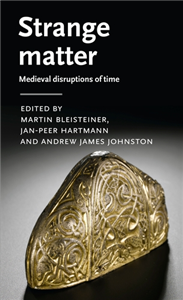
Strange matter
Medieval disruptions of time
by Martin Bleisteiner, Jan-Peer Hartmann, Andrew James Johnston
Medieval and early modern texts reflect a fascination with material objects, from ancient heirlooms to ingenious automata. Often imbued with power or beauty, these objects carry an uncanny sense of otherness, their mysterious origins evoking wonder and suggesting temporal and spatial distance. Acting as repositories of temporal alterity, such artefacts bridge the past and present in profound ways. This volume, featuring contributions from experts in literature and art history, explores how texts from these periods use material objects to engage with temporal otherness. From everyday items to marvellous creations, objects challenge distinctions between human and material, natural and cultural. Whether examining the hybrid status of Hector's body in Lydgate's Troy Book or the temporal agency of humble bubbles, the chapters illuminate the vibrant networks connecting people and objects. By highlighting the 'hybridity' of matter, the book offers fresh insights into Bruno Latour's critique of nature-culture divides.
-

 Biography & True StoriesMarch 1905
Chopin: The Man and His Music
by James Huneker
Chopin: The Man and His Music reflects the intimate, thorough knowledge of Chopin's music that Huneker acquired while studying to be a concert pianist and his unusually keen insight into the character of the great Polish composer whose music he adored.
-
 Trusted Partner
 The ArtsSeptember 2019
Queer Objects
by Chris Brickell, Judith Collard
Queer lives give rise to a vast array of objects: the things we fill our houses with, the gifts we share with our friends, the commodities we consume at work and at play, the clothes and accessories we wear, and the analogue and digital technologies we use to communicate with one another. But what makes an object queer? The sixty-three chapters in Queer Objects consider this question in relation to lesbian, gay and transgender communities across time, cultures and space. In this unique international collaboration, well-known and newer writers traverse world history to write about items ranging from ancient Egyptian tomb paintings and Roman artefacts to political placards, snapshots, sex toys and the smartphone. Fabulous, captivating, transgressive.
-

 Business, Economics & LawApril 1905
Creating Capital
Money-making as an aim in business
by Fredrick L. Lipman
The object of this paper is to discuss money-making; to examine its prevalence as an aim among people generally and the moral standards which obtain among those who consciously seek to make money.
-

 Lifestyle, Sport & LeisureMarch 1905
Dogs and All about Them
by Robert Leighton
The popularity of the dog as a companion, as a guardian of property, as an assistant in the pursuit of game, and as the object of a pleasurable hobby, has never been so great as it is at the present time.
-
Trusted Partner
 Literature & Literary StudiesOctober 2025
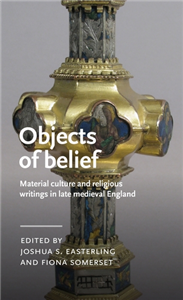
Objects of belief
Material culture and religious writings in late Medieval England
by Joshua Easterling, Fiona Somerset
Objects in late medieval Europe were a means for lay people and clergy to negotiate their access to powers beyond the everyday, in folk practice as well as religious observance. As has been noted by scholars, this period is marked by a profusion of objects granted special importance, imaginary as well as material. These objects prompt reconsideration of cultural and intellectual frameworks, for example of superstition, reform, and heresy, that never quite successfully contain them. Essays in this volume center attention on these things themselves, from puppets to rosaries, as indeed do the written accounts through which they are often mediated. With a focus on England, contributors re-evaluate our understanding of works and authors including Geoffrey Chaucer, Walter Hilton, Nicholas Love, Julian of Norwich, miracles of the Virgin, Edward Hall's Chronicle, the Wycliffite Glossed Gospels, and the Croxton Play of the Sacrament.
-

 Technology, Engineering & AgricultureMarch 1905
The First Book of Farming
by Charles L. Goodrich
This book is a result of the author's search for these facts and truths as a student and farmer and his endeavor as a teacher to present them in a simple manner to others. The object in presenting the book to the general public is the hope that it may be of assistance to farmers, students and teachers, in their search for the fundamental truths and principles of farming.
-
Trusted Partner
-
Trusted Partner

 2022
2022aporello: Human Parasites
by Christine Bender-Leitzig, Dr. Reiner Pospischil
Infestation with parasites usually causes revulsion in those affected and many infections are kept secret through shame. In recent times there has also been a rise in non-native parasites, which often remain undetected. This book gives an overview of the most significant human parasites as well as their - prevalence - symptoms - treatment possibilities. The text is accompanied by illustrations that help when giving everyday advice. Practical icons show at a glance when, for example, the authorities must be notified and what special things need to be considered. Highly concentrated knowledge in an instant? That’s aporello!
-
Trusted Partner
 Humanities & Social SciencesMarch 2010
Negotiating sovereignty and human rights
International society and the International Criminal Court
by Sibylle Scheipers
Negotiating sovereignty and human rights takes the transatlantic conflict over the International Criminal Court as a lens for an enquiry into the normative foundations of international society. The author shows how the way in which actors refer to core norms of the international society such as sovereignty and human rights affect the process and outcome of international negotiations. The book offers an innovative take on the long-standing debate over sovereignty and human rights in international relations. It goes beyond the simple and sometimes ideological duality of sovereignty versus human rights by showing that sovereignty and human rights are not competing principles in international relations, as is often argued, but complement each other. The way in which the two norms and their relationship are understood lies at the core of actors' broader visions of world order. The author shows how competing interpretations of sovereignty and human rights and the different visions of world order that they imply fed into the transatlantic debate over the ICC and transformed this debate into a conflict over the normative foundations of international society. ;
-
Trusted Partner
 Humanities & Social SciencesApril 2021
Critical theory and human rights
by David McGrogan, Darrow Schecter
-

 Classic fiction (pre c 1945)January 2018
Ulysses
by James Joyce
Ulysses chronicles the peripatetic appointments and encounters of Leopold Bloom in Dublin in the course of an ordinary day, 16 June 1904.[4][5] Ulysses is the Latinised name of Odysseus, the hero of Homer's epic poem Odyssey, and the novel establishes a series of parallels between the poem and the novel, with structural correspondences between the characters and experiences of Leopold Bloom and Odysseus, Molly Bloom and Penelope, and Stephen Dedalus and Telemachus, in addition to events and themes of the early 20th century context of modernism, Dublin, and Ireland's relationship to Britain. The novel imitates registers of centuries of English literature and is highly allusive.
-
 Biography & True StoriesMarch 1905
Alaska Days with John Muir
by Samuel Hall Young
Samuel Hall Young, a Presbyterian clergyman, met John Muir when the great naturalist's steamboat docked at Fort Wrangell, in southeastern Alaska, where Young was a missionary to the Stickeen Indians. In "Alaska Days With John Muir" he describes this 1879 meeting: "A hearty grip of the hand and we seemed to coalesce in a friendship which, to me at least, has been one of the very best things in a life full of blessings." This book, first published in 1915, describes two journeys of discovery taken in company with Muir in 1879 and 1880. Despite the pleas of his missionary colleagues that he not risk life and limb with "that wild Muir," Young accompanied Muir in the exploration of Glacier Bay. Upon Muir's return to Alaska in 1880, they traveled together and mapped the inside route to Sitka. Young describes Muir's ability to "slide" up glaciers, the broad Scotch he used when he was enjoying himself, and his natural affinity for Indian wisdom and theistic religion. From the gripping account of their near-disastrous ascent of Glenora Peak to Young's perspective on Muir's famous dog story "Stickeen," Alaska Days is an engaging record of a friendship grounded in the shared wonders of Alaska's wild landscapes.
-
Trusted Partner
Humanities & Social SciencesOctober 2024
Humanitarianism, empire and transnationalism, 1760-1995
Selective humanity in the Anglophone world
by Joy Damousi, Trevor Burnard, Alan Lester
This is the first book to examine the shifting relationship between humanitarianism and the expansion, consolidation and postcolonial transformation of the Anglophone world across three centuries, from the antislavery campaign of the late eighteenth century to the role of NGOs balancing humanitarianism and human rights in the late twentieth century. Contributors explore the trade-offs between humane concern and the altered context of colonial and postcolonial realpolitik. They also showcase an array of methodologies and sources with which to explore the relationship between humanitarianism and colonialism. These range from the biography of material objects to interviews as well as more conventional archival enquiry. They also include work with and for Indigenous people whose family histories have been defined in large part by 'humanitarian' interventions.
-
 PoetryJuly 1904
Paradise Lost
by John Milton
Paradise Lost is an epic poem in blank verse by the 17th-century English poet John Milton. The first version, published in 1667, consisted of ten books with over ten thousand lines of verse. A second edition followed in 1674, arranged into twelve books (in the manner of Virgil's Aeneid) with minor revisions throughout and a note on the versification. The poem concerns the biblical story of the Fall of Man: the temptation of Adam and Eve by the fallen angel Satan and their expulsion from the Garden of Eden. Milton's purpose, stated in Book I, is to "justify the ways of God to men".
-

 The ArtsJanuary 1905
The Elements of Drawing
by John Ruskin
Can drawing — sound, honest representation of the world as the eye sees it, not tricks with the pencil or a few "effects" — be learned from a book? One of the most gifted draftsmen, who is also one of the greatest art critics and theorists of all time, answers that question with a decided "Yes." He is John Ruskin, the author of this book, a classic in art education as well as a highly effective text for the student and amateur today. The work is in three parts, cast in the form of letters to a student, successively covering "First Practice," "Sketching from Nature," and "Colour and Composition." Starting with the bare fundamentals (what kind of drawing pen to buy; shading a square evenly), and using the extremely practical method of exercises which the student performs from the very first, Ruskin instructs, advises, guides, counsels, and anticipates problems with sensitivity. The exercises become more difficult, developing greater and greater skills until Ruskin feels his reader is ready for watercolors and finally composition, which he treats in detail as to the laws of principality, repetition, continuity, curvature, radiation, contrast, interchange, consistency, and harmony. All along the way, Ruskin explains, in plain, clear language, the artistic and craftsmanlike reasons behind his practical advice — underlying which, of course, is Ruskin's brilliant philosophy of honest, naturally observed art which has so much affected our aesthetic. Three full-page plates and 48 woodcuts and diagrams (the latter from drawings by the author) show the student what the text describes. An appendix devotes many pages to the art works which may be studied with profit.
-
 The ArtsMarch 1905
Concerning the Spiritual in Art
by Wassily Kandinsky
A pioneering work in the movement to free art from its traditional bonds to material reality, this book is one of the most important documents in the history of modern art. Written by the famous nonobjective painter Wassily Kandinsky (1866–1944), it explains Kandinsky's own theory of painting and crystallizes the ideas that were influencing many other modern artists of the period. Along with his own groundbreaking paintings, this book had a tremendous impact on the development of modern art. Kandinsky's ideas are presented in two parts. The first part, called "About General Aesthetic," issues a call for a spiritual revolution in painting that will let artists express their own inner lives in abstract, non-material terms. Just as musicians do not depend upon the material world for their music, so artists should not have to depend upon the material world for their art. In the second part, "About Painting," Kandinsky discusses the psychology of colors, the language of form and color, and the responsibilities of the artist. An Introduction by the translator, Michael T. H. Sadler, offers additional explanation of Kandinsky's art and theories, while a new Preface by Richard Stratton discusses Kandinsky's career as a whole and the impact of the book. Making the book even more valuable are nine woodcuts by Kandinsky himself that appear at the chapter headings. This English translation of Über das Geistige in der Kunst was a significant contribution to the understanding of nonobjectivism in art. It continues to be a stimulating and necessary reading experience for every artist, art student, and art patron concerned with the direction of 20th-century painting.
-

 September 1904
Hamlet
by William Shakespeare
Hamlet is Shakespeare's longest play, and is considered among the most powerful and influential works of world literature, with a story capable of "seemingly endless retelling and adaptation by others". The play likely was one of Shakespeare's most popular works during his lifetime, and still ranks among his most performed, topping the performance list of the Royal Shakespeare Company and its predecessors in Stratford-upon-Avon since 1879. It has inspired many other writers—from Johann Wolfgang von Goethe and Charles Dickens to James Joyce and Iris Murdoch—and has been described as "the world's most filmed story after Cinderella"
-
 Colonialism & imperialismMarch 1905
Heart of Darkness
by Joseph Conrad
Heart of Darkness (1899) is a novella by Polish-British novelist Joseph Conrad, about a voyage up the Congo River into the Congo Free State, in the heart of Africa, by the story's narrator Charles Marlow. Marlow tells his story to friends aboard a boat anchored on the River Thames, London, England. This setting provides the frame for Marlow's story of his obsession with the ivory trader Kurtz, which enables Conrad to create a parallel between London and Africa as places of darkness.


