
ZNN Network Literary and Illustrator Agency
- International Copyright, Licensing, and Literary Agency - International Illustrator Agency and Management Services - Creative Content Development Services
View Rights Portal
- International Copyright, Licensing, and Literary Agency - International Illustrator Agency and Management Services - Creative Content Development Services
View Rights Portal

In 'Digging up stories', James Thompson explores the problems of theatre practice in communities affected by war and exclusion. Each chapter or 'story' is written in a lively and accessible style and draws on a range of contemporary performance theories. The chapters discuss: - participatory theatre in refugee camps - theatre workshop and stories of a massacre - traditional dance-dramas in an insurgent controlled village - 'Forum' theatre with the Mahabharata - ethical issues - the struggle to teach the author to dance 'Digging up stories' documents a range of theatre practice and includes project reports, ethnographic accounts, performance analysis and diary-style reflection. Taken from Thompson's research and practice in Sri Lanka, these diverse examples question the link between applied theatre, traditional performance and performances in everyday life. The book blurs lines between research and travel writing to create rich and provocative accounts of applying theatre in a troubled setting. ;

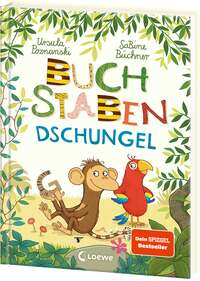
Help the animals to find their letters ... easy as ABC!• By best-selling author Ursula Poznanski• Get a first feeling for letters and words!• Humorously illustrated, with funny details!After a big storm in the jungle, the little monkey collects many funny-looking things. “That are letters,” knows the smart parrot. “Somebody must have lost them”. And indeed, monkey and parrot come across strange animals that seem like something is missing. A "iger", a "nake", a "at" … An exciting letter story for reading aloud and early reading, guessing and poetizing by yourself!
 Trusted Partner

The Island Book of Records brings the early years of this iconic record label to life. A fifteen-year labour of love, the volumes will fully document the analogue era of Island. Offering a comprehensive archive of album cover design and photography, together with the voices of the musicians, designers, photographers, producers, studio engineers and record company personnel that worked on each project, the volumes show in unique depth the workings of the label, covering every LP. Featuring material from recent interviews and from media interviews of the time, and each including a comprehensive discography of 45s, the books are lavishly illustrated with gig adverts (very many at venues which no longer exist), concert tickets, flyers, international LP variants, labels, LP and 45 adverts and other ephemera. These LP-sized editions are a collector's dream, offering a truly unparalleled resource for those interested in music history and a perfect gift for any music lover.
Trusted Partner
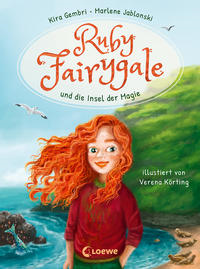
Ruby Fairygale and the Island of Magic Ruby Fairygale's first adventure - lovingly and excitingly told, with many atmospheric illustrations• Feel-good fantasy for Story Time, Early Readers and Fans of "Ruby Fairygale"!• Written by Marlene Jablonski (“Liliane Susewind” Chapter book series), based on a synopsis by Kira Gembri• Strong female protagonist and lovingly developed characters, with a high sympathy factor8-year-old Ruby Fairygale lives on a small island near the west coast of Ireland. After school, she always helps her grandmother, who works as a veterinarian. But the two of them have a big secret: they know that there are not only animals on the island, but also magical mythical creatures that need their help.Summer vacation at last! Now Ruby can spend the whole day helping her grandma. The two of them not only take care of animals, but also fairies, goblins and other mythical creatures! It's not easy to keep this secret - especially from Briana, the most unfriendly girl in Ruby's class. When Bri's father's fishing nets are destroyed, Briana suspects a pack of seals and is determined to drive them away. But Ruby suspects that something else is behind this. Something completely magical ... And indeed: a little mermaid had become entangled in the fishing net! Can Ruby still stop Bri without revealing her secret?
Trusted Partner
Trusted Partner

The second volume of this highly collectable series, covering the pivotal years of 1969-70. The Island Book of Records Volume II documents the years 1969-70, during which Island sought to build on its success with the Spencer Davis Group by seeking out new British rock talent. By the end of the period, Island was emerging as a major British label, one that could boast releases from Jethro Tull, Nick Drake, King Crimson, John and Beverley Martyn, Fairport Convention and Cat Stevens. Featuring material from recent interviews and from media interviews of the time, and including a comprehensive discography of 45s, The Island Book of Records Volume II is lavishly illustrated with gig adverts (very many at venues that no longer exist), concert tickets, flyers, international LP variants, labels, LP and 45 adverts and other ephemera collector's dream.


In The Path of the Law, Holmes discusses his personal philosophy on legal practice. The Common Law is a series of lectures that established Holmes's reputation as a witty and articulate writer.


Published anonymously in 1776, six months before the Declaration of Independence, Thomas Paine’s Common Sense was a radical and impassioned call for America to free itself from British rule and set up an independent republican government. Savagely attacking hereditary kingship and aristocratic institutions, Paine urged a new beginning for his adopted country in which personal freedom and social equality would be upheld and economic and cultural progress encouraged.
Trusted Partner

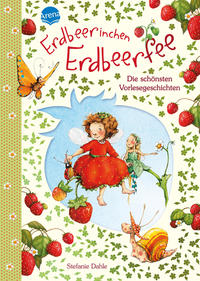
The Strawberry Fairy works her magic again! For this top-quality gift edition, decorated with glitter and foil embossing, the author and illustrator Stefanie Dahle has chosen her own favourite stories from the three books. There is always something going on in the strawberry garden: the little fairy cures the sore throats of the frog choir, helps Don Carlo to win the love of his sweetheart, and enjoys some jolly parties in the garden. Later everyone cuddles up by the fire and makes plans for the spring while drinking a delicious cup of strawberry tea. A book to treasure, and not just for Strawberry Fairy fans.
Trusted Partner
 Trusted Partner
The Arctic region has been the subject of much popular writing. This book considers nineteenth-century representations of the Arctic, and draws upon an extensive range of evidence that will allow the 'widest connections' to emerge from a 'cross-disciplinary analysis' using different methodologies and subject matter. It positions the Arctic alongside more thoroughly investigated theatres of Victorian enterprise. In the nineteenth century, most images were in the form of paintings, travel narratives, lectures given by the explorers themselves and photographs. The book explores key themes in Arctic images which impacted on subsequent representations through text, painting and photography. For much of the nineteenth century, national and regional geographical societies promoted exploration, and rewarded heroic endeavor. The book discusses images of the Arctic which originated in the activities of the geographical societies. The Times provided very low-key reporting of Arctic expeditions, as evidenced by its coverage of the missions of Sir John Franklin and James Clark Ross. However, the illustrated weekly became one of the main sources of popular representations of the Arctic. The book looks at the exhibitions of Arctic peoples, Arctic exploration and Arctic fauna in Britain. Late nineteenth-century exhibitions which featured the Arctic were essentially nostalgic in tone. The Golliwogg's Polar Adventures, published in 1900, drew on adult representations of the Arctic and will have confirmed and reinforced children's perceptions of the region. Text books, board games and novels helped to keep the subject alive among the young.


Samuel Hall Young, a Presbyterian clergyman, met John Muir when the great naturalist's steamboat docked at Fort Wrangell, in southeastern Alaska, where Young was a missionary to the Stickeen Indians. In "Alaska Days With John Muir" he describes this 1879 meeting: "A hearty grip of the hand and we seemed to coalesce in a friendship which, to me at least, has been one of the very best things in a life full of blessings." This book, first published in 1915, describes two journeys of discovery taken in company with Muir in 1879 and 1880. Despite the pleas of his missionary colleagues that he not risk life and limb with "that wild Muir," Young accompanied Muir in the exploration of Glacier Bay. Upon Muir's return to Alaska in 1880, they traveled together and mapped the inside route to Sitka. Young describes Muir's ability to "slide" up glaciers, the broad Scotch he used when he was enjoying himself, and his natural affinity for Indian wisdom and theistic religion. From the gripping account of their near-disastrous ascent of Glenora Peak to Young's perspective on Muir's famous dog story "Stickeen," Alaska Days is an engaging record of a friendship grounded in the shared wonders of Alaska's wild landscapes.


Heart of Darkness (1899) is a novella by Polish-British novelist Joseph Conrad, about a voyage up the Congo River into the Congo Free State, in the heart of Africa, by the story's narrator Charles Marlow. Marlow tells his story to friends aboard a boat anchored on the River Thames, London, England. This setting provides the frame for Marlow's story of his obsession with the ivory trader Kurtz, which enables Conrad to create a parallel between London and Africa as places of darkness.


Hamlet is Shakespeare's longest play, and is considered among the most powerful and influential works of world literature, with a story capable of "seemingly endless retelling and adaptation by others". The play likely was one of Shakespeare's most popular works during his lifetime, and still ranks among his most performed, topping the performance list of the Royal Shakespeare Company and its predecessors in Stratford-upon-Avon since 1879. It has inspired many other writers—from Johann Wolfgang von Goethe and Charles Dickens to James Joyce and Iris Murdoch—and has been described as "the world's most filmed story after Cinderella"

Little Women "has been read as a romance or as a quest, or both. It has been read as a family drama that validates virtue over wealth", but also "as a means of escaping that life by women who knew its gender constraints only too well".[6]:34 According to Sarah Elbert, Alcott created a new form of literature, one that took elements from Romantic children's fiction and combined it with others from sentimental novels, resulting in a totally new format. Elbert argued that within Little Women can be found the first vision of the "All-American girl" and that her multiple aspects are embodied in the differing March sisters.
Trusted Partner

An innovative & different princess story! • The three princesses love to quarrel • Original and incredibly witty • Written by Ursula Poznanski and stunning illustrations by Sabine Büchner • Translation Grant! Bianca, Violetta and Rosalind are three adorable princesses. But they share a tiny quirk: they love to argue! One day a visitor asks for entrance into the castle. Prince Waldomir doesn’t enjoy hunting dragons anymore and rather prefers to get married know. Of course each princess is convinced to be the best choice and the prince’s one and only. So a rat race is launched before they have even met the puny prince for the first time…
Trusted Partner


— True crime stories from the morgue — Famous deaths and autopsy stories resolved, such as Antarctic explorer Sir Ernest Shackleton and the case of Anne Greene, who survived her execution by hanging The post-mortem examination. A glimpse inside the interior of the human being. Many find the idea fascinating; for others it is creepy or even repugnant. There are still numerous myths and horror stories surrounding the autopsy, many of them associated with primal human fears such as that of being buried alive, which have existed since Antiquity. It is precisely for this reason that it is important to carry out the post-mortem examination with the utmost conscientiousness. Pathologist Roland Sedivy provides an exciting insight into his profession. Profound and with tremendous humour, he tells us about the early days of the autopsy, and shares with us some macabre and some mysterious cases.
Trusted Partner

The short fiction that flourished in nineteenth-century France has attracted relatively little critical attention compared with the novel. This study focuses on some key stories by major authors of contes and nouvelles from the late 1820s to the 1890s, taking as a starting-point, aspects of narrative technique as a way of exploring not just characteristic strategies of short fiction, but also the ends to which they were put: recurrent themes, and the vision of mankind. Each chapter looks in some detail at three or four stories, referring briefly to other tales for illustration. The underlying point that emerges from this study is that the interest of a tale lies in the telling, not the events. ;


The story of a schoolboy who proves himself through rugged feats in football and hockey.

Examining the nature of law and grace, the novel elaborates upon the history of France, the architecture and urban design of Paris, politics, moral philosophy, antimonarchism, justice, religion, and the types and nature of romantic and familial love. Les Misérables has been popularized through numerous adaptations for the stage, television, and film, including a musical and a film adaptation of that musical.



