
Humanities & Social Sciences
May 2021


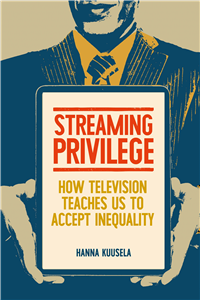
Streaming Privilege examines how today's serial television plays a powerful role in legitimating the 'new Gilded Age' of extreme inequality. Through a sharp cultural analysis, the book reveals popular culture's obsession with wealth and dynastic families - and how it helps to sustain economic divides. Focusing on four major series - Downton Abbey, The Crown, Succession and Yellowstone - the book explores what today's most-watched television dramas reveal about contemporary attitudes toward wealth. At the heart of the book is a concern with the intersection of family, wealth and morality. As dynastic structures once again dominate economy, stories of wealthy families offer a cultural lens through which audiences make sense of economic disparities. The book shows how television does not merely reflect inequality but actively shapes our understandings of it. Streaming Privilege is essential reading for scholars and students in media studies, cultural studies and economic sociology - as well as for general readers interested in how popular culture influences our perceptions of inequality.
 Trusted Partner
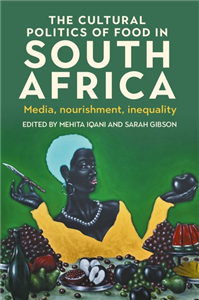
Food is both a material system of nourishment, necessary for human survival, and a communicative system that signifies multiple meanings across human cultures. This book explores the cultural politics of food in the South African context, bringing together a range of disciplinary perspectives on the links between media, nourishment, and inequality. The chapters all highlight the multiplicity of meanings that food has in South African society. These include historical perspectives on the impact of colonialism, migration and apartheid had on food and foodways in South Africa; sociological interventions on food and society; aesthetic practices in relation to food; and mediated food cultures in South Africa. Taken together, the book critically explores the multiple ways in which food is never just food, and always linked to complex and shifting modalities of meaning and knowledge in the South African context.
Trusted Partner
Trusted Partner
 Trusted Partner
This highly original book constitutes one of the first attempts to examine the problem of distributive justice in the European Union in a systematic manner. João Labareda argues that the set of shared political institutions at EU level, including the European Parliament and the Court of Justice of the EU, generate democratic duties of redistribution among EU citizens. Furthermore, the economic structure of the EU, comprising a common market, a common currency and a free-movement area, triggers duties of reciprocity among member states. The responsibilities to fulfil these duties, Labareda argues, should be shared by the local, national and supranational levels of government. Not only should the EU act as a safety net to the national welfare systems, applying the principle of subsidiarity, but common market and Eurozone regulations should balance their efficiency targets with fair cooperation terms. The concrete policy proposals presented in this book include a threshold of basic goods for all EU citizens, an EU labour code, a minimum EU corporate tax rate and an EU fund for competitiveness. Labarada argues that his proposals match the political culture of the member states, are economically feasible, can be translated into functioning institutions and policies and are consistent with the limited degree of social solidarity in Europe. This book is a major contribution to the understanding of what a just Europe would look like and what it might take to get us there. This book is relevant to United Nations Sustainable Development Goal 10, Reduced inequalities
Trusted Partner
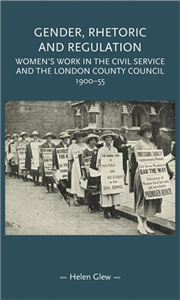
The Civil Service and the London County Council employed tens of thousands of women in Britain in the early twentieth century. As public employers these institutions influenced both each other and private organisations, thereby serving as a barometer or benchmark for the conditions of women's white-collar employment. Drawing on a wide range of archival sources - including policy documents, trade union records, women's movement campaign literature and employees' personal testimony - this is the first book-length study of women's public service employment in this period. It examines three aspects of their working lives - inequality of pay, the marriage bar and inequality of opportunity - and demonstrates how far wider cultural assumptions about womanhood shaped policies towards women's employment and experiences. Scholars and students with interests in gender, British social and cultural history and labour history will find this an invaluable text.
Trusted Partner
At a time when education appears to be simply reproducing social class relations, Radical childhoods offers a timely consideration of how children's and young people's education can confront and challenge social inequality. Presenting detailed analysis of archival material and oral testimony, the book examines the experiences of students and educators in two schooling initiatives that were connected to two of the most significant social movements in Britain: Socialist Sunday Schools (est. 1892) and Black Saturday/Supplementary Schools (est. 1967). Analysing across time, the author explores the ways in which these two very different schooling movements incorporated large numbers of women, challenged class and race inequality, and attempted to create spaces of 'emancipatory' education independent to the state. It argues that despite appearing to be on the 'margins' of the public sphere these schools were important, if contested and complex, sites of political struggle.
Trusted Partner
Trusted Partner
Combining the fields of evolutionary economics and the humanities, this book examines McCarthy's literary works as a significant case study demonstrating our need to recognise the interrelated complexities of economic policies, environmental crises, and how public policy and rhetoric shapes our value systems. In a world recovering from global economic crisis and poised on the brink of another, studying the methods by which literature interrogates narratives of inevitability around global economic inequality and eco-disaster is ever more relevant.
Trusted Partner
Trusted Partner

Democratizing AI offers a powerful rethinking of how artificial intelligence should be governed. Challenging the dominance of tech elites in shaping AI's future, Zimmermann argues that AI deployment is a political act-one that must be subject to democratic control. She proposes a practical "playbook" for reclaiming agenda-setting power through civic participation, public ownership, and institutional reform. Engaging with leading critics, Zimmermann defends a risk-sensitive proceduralist approach while acknowledging the deeper structural challenges posed by capitalism, inequality, and democratic fatigue. This book is a call to action: to resist learned helplessness, confront techno-authoritarianism, and shape AI's trajectory in line with democratic values. Thoughtful, urgent, and visionary, the book is essential reading for anyone concerned with the future of technology and democracy.
Trusted Partner
The US Economy Today provides an invaluable introduction to American economic history since 1929. Its coverage includes the New Deal, the post-war boom, "stagflation" in the 1970s, "Reaganomics", the Clinton and Bush years, the 2008 - 2009 economic crisis and President Obama's first hundred days. In addition, this volume considers core contemporary economic policy debates and draws conclusions about the strengths and weaknesses of the US economic "model". It looks at the causes and consequences of inequality, the extent to which there is economic mobility, and the impact of globalization and foreign trade. This book will be essential reading for those studying or teaching American economics, economic history or politics and all those looking for a thorough and comprehensive introduction to this area. ;
Trusted Partner

This book considers the reasons for Donald Trump's surprise victory in the 2016 presidential election. It charts the prolonged campaign and the realigning processes that took place, analysing the ideas that defined the Trump platform, the electoral shifts in states regarded as solid 'firewalls' for the Democratic Party and the responses of Republican Party elites. Although he is subject to contradictory pressures, the book places Trump firmly within the right-wing populist tradition. However, it argues that the sentiments that drove his campaign were not only a response to economic fears, high levels of inequality and racial resentment - they were also shaped by the structural character of American governance, which fuels hostility towards Washington DC and the 'political class'. The book concludes by assessing the extent to which Trump's victory and parallel developments in Europe mark a reconfiguration of neoliberalism.
Trusted Partner

The book provides a 'flâneur's eye view' of Parisian life in the first half of the nineteenth century: dress, cafés and restaurants, but also shops and passages, the omnibus, bals publics and carnival. The author provides general conclusions about the private and public spheres in 'le vieux Paris'. Like the flâneur, the author concentrates less on factual information for its own sake - which may be found in the secondary works cited in the text and footnotes - than on the 'semiological' or anthropological significance of the cultural forms in question. Links are drawn between cultural institutions and class relations in pre-1850 Paris, with particular emphasis on cultural inequality, on the persistence of cross-class contacts, and the growing differences between classes as reflected in behaviour and attitudes. ;
Trusted Partner
The politics of Middle English parables examines the dynamic intersection of fiction, theology and social practice in late-medieval England. Parables occupy a prominent place in Middle English literature, appearing in dream visions and story collections as well as in lives of Christ and devotional treatises. While most scholarship approaches the translated stories as stable vehicles of Christian teaching, this book highlights the many variations and points of conflict across Middle English renditions of the same story. In parables related to labour, social inequality, charity and penance, the book locates a creative theological discourse through which writers attempted to re-construct Christian belief and practice. Analysis of these diverse retellings reveals not what a given parable meant in a definitive sense but rather how Middle English parables inscribe the ideologies, power structures and cultural debates of late-medieval Christianity.
Trusted Partner

This instructive study examines how a transnational discourse on 'modern' social policy - based the guiding principles of 'activation' and an 'activating welfare state' - intervenes in the concepts and practices of citizenship. What are the consequences of this reorientation for citizenship? How does it relate to patterns of exclusion and inequality inherent in each historical citizenship formation? What exactly is the EU's role in this context? The detailed qualitative study focuses on the European Employment Strategy - and in particular its gender equality dimension - as a central process where the activation agenda is constructed and equipped with meanings. It traces how this discourse is received and translated into practices of citizenship in three EU member states - Germany, the UK, and Hungary. The activation of citizenship in Europe will be principally of interest to academics and practitioners in the fields of European integration, social policy, and citizenship. ;
Trusted Partner

This exploration of one of the most concentrated immigrant communities in Britain combines a fascinating narrative history, an original theoretical analysis of the evolving relationship between progressive left politics and ethnic minorities, and an incisive critique of political multiculturalism. It recounts and analyses the experiences of many of those who took part in over six decades of political history that range over secular nationalism, trade unionism, black radicalism, mainstream local politics, Islamism and the rise and fall of the Respect Coalition. Through this Bengali case study and examples from wider immigrant politics, it traces the development and adoption of the concepts of popular frontism, revolutionary stages theory and identity politics. It demonstrates how these theories and tactics have cut across class-based organisation and acted as an impediment to addressing socio-economic inequality; and it argues for a left materialist alternative. It will appeal equally to sociologists, political activists and local historians. ;
Trusted Partner
Social democratic parties struggle to appeal to a divided electorate. Particularly prescient is the clash between working-class voters thatare socially conservative and middle-class voters who are liberally inclined but economicallyleft. Are politics and policies that appeal to both even a possibility? Nowhere is thatdebate more acute than in European cities, yet in no other political space are answers more likely to be found.Where urban voters turn left, they are increasingly attracted by radical and green alternatives to social democracy.Social democracy and urban politicsdelves into the changing relationship between these three party families on the urban scene. Mapping electoral geography, governing strategies and the interface between parties and social movements on the left, the authors reflect upon the formation and dilemmas of a broader progressive alliance.
Trusted Partner

The ABC of the projectariat contributes new thinking on and practical responses to the widespread problem of precarious labour in the field of contemporary art. It works as both a critical analysis and a practical handbook, speaking to and about the vast cohort of artistic freelancers worldwide. In an accessible ABC format, the book strikes a unique balance between the practical and the theoretical: the analysis is backed up by lived experience, the arguments are rooted in concrete examples and there are suggestions for constructive action. Roughly half of the entries expose the structural underpinnings of projects and circulation, isolating traits such as opportunism, neoliberalism, inequality, fear and cynicism at the root of the condition of the projectariat. This discussion is paired with a practical account of different modes of action, such as art strikes, productive withdrawals, political struggles and better social time machines. Just as proletarians had nothing to lose but their chains, the projectarians have nothing to miss but their deadlines.


