
Agriculture & International Development
Textbooks, research and professional titles in Agriculture and International Development
View Rights Portal
Textbooks, research and professional titles in Agriculture and International Development
View Rights Portal
Parkstone International is a cosmopolitan publishing house that specialises in fine art books.
View Rights Portal
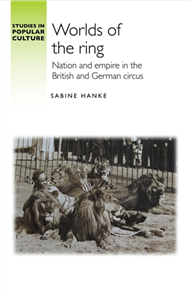
Worlds of the Ring is a groundbreaking exploration of the interwar European circus scene, focusing on the German Sarrasani and British Bertram W. Mills' circuses. This study illuminates the correlation between the circus's evolution and imperialism/nationalism, revealing how these enterprises shaped national identities for popular audiences. Examining the years 1918-45, the book takes a transnational perspective, uncovering the interplay of international and national forces that influenced the modern circus. Through case studies, it delves into the lives of individuals in the industry, using diverse sources like newspapers, legal documents, and performer archives. The book introduces the concept of Orientalism to analyse how circuses depicted foreign worlds, and provides a fresh perspective on interwar popular culture, globalising forces, and the circus's ties to European imperialism in the early 20th century.
 Trusted Partner

Drawing on an eclectic range of primary and secondary sources Chaplin examines the development of darts in the context of English society in the early twentieth century. He reveals how darts was transformed during the interwar years to become one of the most popular recreations in England, not just amongst working class men and, to a lesser extent, working class women but even (to some extent) among the middle and upper classes. This book assesses the social, economic and cultural forces behind this transformation. This work also considers the growth of the darts manufacturing industry and assesses the overall effect the growing popularity of darts had on interwar society and popular culture, with particular reference to the changing culture and form of the English public house. This original study will be of interest to sports historians, social historians, business historians, sociologists and sports scientists.
Trusted Partner
 Trusted Partner
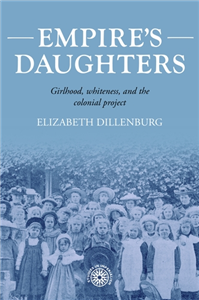
Girlhood and whiteness in the British empire traces the interconnected histories of girlhood, whiteness, and British colonialism in the late nineteenth and early twentieth centuries through the study of the Girls' Friendly Society. The society functioned as both a youth organisation and emigration society, making it especially valuable in examining girls' multifaceted participation with the empire. The book charts the emergence of the organisation during the late Victorian era through its height in the first decade of the twentieth century to its decline in the interwar years. Employing a multi-sited approach and using a range of sources-including correspondences, newsletters, and scrapbooks-the book uncovers the ways in which girls participated in the empire as migrants, settlers, laborers, and creators of colonial knowledge and also how they resisted these prescribed roles and challenged systems of colonial power.
Trusted Partner
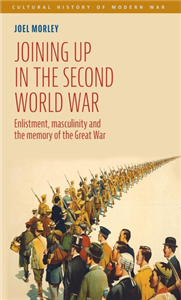
This book connects the First and Second World Wars. It uses oral histories and Mass Observation material to explore men's attitudes to Second World War enlistment and the relationship they perceived between military service and masculinity, and how these were influenced by understandings of the First World War. Locating the cultural legacy of First World War in the subjectivities of men who participated in the Second World War demonstrates the breadth of sources that informed men's understandings of the First World War in interwar Britain. Its cultural legacy was omnipresent and diverse, and informed young men's attitudes and service preferences, but it reinforced Edwardian conceptions of wartime masculinity as often as it undermined them. Two decades after the First World War ended, they remained resilient in the subjective understandings of men who grew up in the Great War's shadow.
Trusted Partner

During the first half of the twentieth century, world politics was reshaped in pursuit of a new international order. The ideological foundations of the 'new diplomacy' (and its fate during the interwar period) are well known. This book instead examines the practices of internationalism and diplomacy from the First Hague Conference of 1899 to the aftermath of the Second World War. By focusing on these practices, such as disarmament regimes or public diplomacy, and their use as instruments to build international order(s), it emphasises the constructed, contested, and experimental character of what subsequently became a standard repertoire of international politics. Essays from a range of interdisciplinary scholars address well-established principles such as self-determination, and also less prominent practices such as small arms control or parliamentary inquiry. The book makes a major contribution to the growing historiography on twentieth-century internationalism.
Trusted Partner
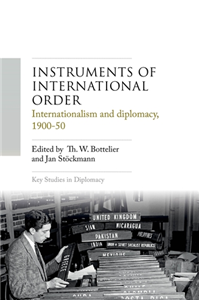
During the first half of the twentieth century, world politics was reshaped in pursuit of a new international order. The ideological foundations of the 'new diplomacy' (and its fate during the interwar period) are well known. This book instead examines the practices of internationalism and diplomacy from the First Hague Conference of 1899 to the aftermath of the Second World War. By focusing on these practices, such as disarmament regimes or public diplomacy, and their use as instruments to build international order(s), it emphasises the constructed, contested, and experimental character of what subsequently became a standard repertoire of international politics. Essays from a range of interdisciplinary scholars address well-established principles such as self-determination, and also less prominent practices such as small arms control or parliamentary inquiry. The book makes a major contribution to the growing historiography on twentieth-century internationalism.
Trusted Partner
Trusted Partner

Jane Garrity shows how four British women modernists - Dorothy Richardson, Sylvia Townsend Warner, Mary Butts and Virginia Woolf - used experimental literary techniques in order to situate themselves as national subjects. Reading literary texts through the lens of material culture, this book makes a major contribution to the new modernist studies by arguing that women's imaginative work is inseparable from their ambivalent and complicated relation to Britain's imperial history. Drawing on extensive archival research, Garrity takes as her point of departure the ubiquitous maternal and racial link to national identification during the interwar period. Each chapter foregrounds a different range of cultural developments that coincided with the rise of modernism, such as emerging visual techniques, the revival of British neo-medievalism, ethnographic work on primitive mysticism, and nostalgia for English ruralism. By locating both canonical and non-canonical works of female literary modernism within broader cultural discourses, Garrity demonstrates the intersections among nationalism, imperialism, gender and sexuality in the construction of English national culture.
Trusted Partner
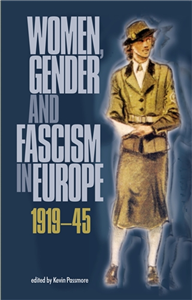
What attracts women to far-right movements that appear to denigrate their rights? This question has vexed feminist scholars for decades and has led to many lively debates in the academy. In this context, during the 1980s, the study of women, gender, and fascism in twentieth-century Europe took off, pioneered by historians such as Claudia Koonz and Victoria de Grazia. This volume makes an exciting contribution to the evolving body of work based upon these earlier studies, bringing emerging scholarship on Central and Eastern Europe alongside that of more established Western European historiography on the topic. Women, Gender and Fascism in Europe, 1919-45 features fourteen essays covering Serbia, Croatia, Yugoslavia, Romania, Hungary, Latvia, and Poland in addition to Germany, Italy, France, Spain, and Britain, and a conclusion that pulls together a European-wide perspective. As a whole, the volume provides a compelling comparative examination of this important topic through current research, literature reviews, and dialogue with existing debates. The essays cast new light on questions such as women's responsibility for the collapse of democracy in interwar Europe, the interaction between the women's movement and the extreme right, and the relationships between conceptions of national identity and gender. ;
Trusted Partner
Trusted Partner
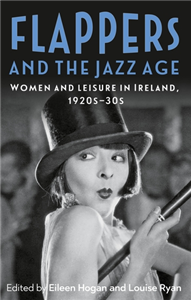
People's ordinary, everyday lives - and more specifically, their leisure activities - are often obscured within existing academic research on 1920s-30s Ireland. This book seeks to redress that neglect by exploring the relationship between identity, recreation, and culture both North and South of the border, with particular attention to women's lived experiences. Leisurely pursuits during this period were commonly overshadowed by religious influence and the nation-building projects in post-partition Ireland. Nevertheless, there existed alternative spaces, where people enjoyed dancing, singing, listening to music, shopping, glamour, reading magazines, swimming, travelling, and going to the cinema. Such activities reflected international trends beyond national borders. This book documents those activities and spaces through a feminist lens and intersectional analysis of gender, class, religion and rural/urban identities. It brings together multi-disciplinary perspectives including cultural studies, architecture, geography, fashion, and musicology. In so doing, we present new insights and advance understanding of this under-researched aspect of Irish history.
Trusted Partner
Trusted Partner
Trusted Partner
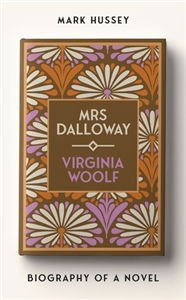
A compelling biography of one of the most celebrated novels in the English language. The fourth and best-known of Virginia Woolf's novels, Mrs Dalloway is a modernist masterpiece that has remained popular since its publication in 1925. Its dual narratives follow a day in the life of wealthy housewife Clarissa Dalloway and shell-shocked war veteran Septimus Warren Smith, capturing their inner worlds with a vividness that has rarely been equalled. Mrs Dalloway: Biography of a novel offers new readers a lively introduction to this enduring classic, while providing Woolf lovers with a wealth of information about the novel's writing, publication and reception. It follows Woolf's process from the first stirrings in her diary through her struggles to create what was quickly recognised as a major advance in prose fiction. It then traces the novel's remarkable legacy to the present day. Woolf wrote in her diary that she wanted her novel 'to give life & death, sanity & insanity. to criticise the social system, & to show it at work, at its most intense.' Mrs Dalloway: Biography of a novel reveals how she achieved this ambition, creating a book that will be read by generations to come.
Trusted Partner
Trusted Partner
 Trusted Partner
Trusted Partner
Trusted Partner



