
Editions Les Malins
A French Canadian award winning independent publisher, specialised in middle grade and YA fiction and comic books.
View Rights Portal
A French Canadian award winning independent publisher, specialised in middle grade and YA fiction and comic books.
View Rights Portal

Popular television drama: critical perspectives' is a collection of essays examining landmark programmes of the last forty years, from 'Doctor Who' to 'The Office', and from 'The Demon Headmaster' to 'Queer As Folk'. Contributions from prominent academics focus on the full range of popular genres, from sitcoms to science fiction, gothic horror and children's drama, and challenge received wisdom by reconsidering how British television drama can be analysed. Each section is preceded by an introduction in which the editors discuss how the essays address existing problems in the field and also suggest new directions for study. The book is split into three sections, addressing the enduring appeal of popular genres, the notion of 'quality' in television drama, and analysing a range of programmes past and present. Popular television drama: critical perspectives will be of interest to students and researchers in many academic disciplines that study television drama. Its breadth and focus on popular programmes will also appeal to those interested in the shows themselves.

Gothic television is the first full length study of the Gothic released on British and US television. An historical account, the book combines detailed archival research with analyses of key programmes, from Mystery and Imagination and Dark Shadows, to The Woman in White and Twin Peaks, and uncovers an aspect of television drama history which has, until now, remained critically unexplored. While some have seen television as too literal or homely a medium to successfully present Gothic fictions, Gothic television argues that the genre, in its many guises, is, and has always been, well-suited to television as a domestic medium, given the genre's obsessions with haunted houses and troubled families. This book will be of interest to lecturers and students across a number of disciplines including television studies, Gothic studies, and adaptation studies, as well as to the general reader with an interest in the Gothic, and in the history of television drama.
 Trusted Partner

The first and only book length study of British screenwriter, director and producer Sally Wainwright. Authors Gorton and Johnson brings together Wainwright's key television series and television films with theoretical work on the concept of emotion and feminist television criticism, exploring Wainwright's contributions to British television through the heroic female characters she creates. The book covers a wide range of theoretical work on melodrama, genre and emotion to explore Wainwright's televisual texts, offering analysis of globally recognised television series such as Happy Valley, Last Tango in Halifax, and Gentleman Jack.
Trusted Partner

Looking at contemporary film and television, this book explores how popular genres frame our understanding of on-screen performance. Previous studies of screen performance have tended to fix upon star actors, directors, or programme makers, or they have concentrated upon particular training and acting styles. Moving outside of these confines, this book provides a truly interdisciplinary account of performance in film and television and examines a much neglected area in our understanding of how popular genres and performance intersect on screen. Each chapter concentrates upon a particular genre or draws upon generic case studies in examining the significance of screen performance. Individual chapters examine contemporary film noir, horror, the biopic, drama-documentary, the western, science fiction, comedy performance in 'spoof news' programmes and the television 'sit com' and popular Bollywood films.
Trusted Partner
This book represents the first comprehensive collection of essays in English dedicated entirely to the study of lesbian inscriptions in francophone society and culture. Spanning the period from the early nineteenth to the twenty-first century, the volume offers a range of interdisciplinary perspectives on ways in which lesbianism has been represented and represented itself, with essays on poetry and the novel, contemporary film and television, photography and architecture. These essays will appeal to students and scholars of gender studies and French literature and culture. ;
Trusted Partner
Queer lives give rise to a vast array of objects: the things we fill our houses with, the gifts we share with our friends, the commodities we consume at work and at play, the clothes and accessories we wear, and the analogue and digital technologies we use to communicate with one another. But what makes an object queer? The sixty-three chapters in Queer Objects consider this question in relation to lesbian, gay and transgender communities across time, cultures and space. In this unique international collaboration, well-known and newer writers traverse world history to write about items ranging from ancient Egyptian tomb paintings and Roman artefacts to political placards, snapshots, sex toys and the smartphone. Fabulous, captivating, transgressive.
Trusted Partner
Public issue television is a major contribution to understanding the relationship between television, politics and society. Based on full access to the archives, it offers a fascinating historical account of how one television series, Granada's World in Action, celebrated for its tough journalism, visual directness and public impact, functioned and developed over its run across 35 years between 1963 and 1998. In a succession of chapters looking at different periods in the series' development and at key dimensions of its distinctive identity, it gets deep inside the making of factual television and examines how a particular culture of production works within broader conditions of possibility and constraint. In particular, it charts the interwoven processes of change - technological, professional, aesthetic, institutional, economic, social and political. As well as discussing achievement and success, it examines the tensions, the debates and open conflicts that formed part of the context within which the series was made and transmitted across four decades. ;
Trusted Partner

In A New Genre for Television?, filmmaker Justin Hardy argues the dramatised history documentaries broadcast by British public service channels in the 2000s constituted a distinct television genre. Offering a vital distinction between docudramas and drama documentaries, Hardy contributes to the field of television history through exclusive interviews with key figures from BBC and Channel 4 - many of whom have never been publicly interviewed before - and envisions a future model for the portrayal of national histories on screen.
Trusted Partner

'Popular television drama: critical perspectives' is a collection of essays examining landmark programmes of the last forty years, from 'Doctor Who' to 'The Office', and from 'The Demon Headmaster' to 'Queer As Folk'. Contributions from prominent academics focus on the full range of popular genres, from sitcoms to science fiction, gothic horror and children's drama, and challenge received wisdom by reconsidering how British television drama can be analysed. Each section is preceded by an introduction in which the editors discuss how the essays address existing problems in the field and also suggest new directions for study. The book is split into three sections, addressing the enduring appeal of popular genres, the notion of 'quality' in television drama, and analysing a range of programmes past and present. Popular television drama: critical perspectives will be of interest to students and researchers in many academic disciplines that study television drama. Its breadth and focus on popular programmes will also appeal to those interested in the shows themselves. ;
Trusted Partner

Jacques Martineau, Olivier Ducastel, Alain Guiraudie, Sébastien Lifshitz and Céline Sciamma. The films of these five major French directors exemplify queer cinema in the twenty-first century. Comprehensive in scope, Queer cinema in contemporary France traces the development of the meaning of queer across these directors' careers, from their earliest, often unknown films to their later, major films with wide international release. Whether having sex on the beach or kissing in the high school swimming pool, these cinematic characters create or embody forward-looking, open-ended and optimistic forms of queerness and modes of living, loving and desiring. Whether they are white, beur or black, whether they are lesbian, gay, trans* or queer, they open up hetero- and cisnormativity to new ways of being a gendered subject.
Trusted Partner

Entertaining television challenges the idea that the BBC in the 1950s was elitist and 'staid', upholding Reithian values in a paternalistic, even patronising way. By focusing on a number of (often controversial) programme case studies - such as the soap opera, the quiz/ game show, the 'problem' show and programmes dealing with celebrity culture - Su Holmes demonstrates how BBC television surprisingly explored popular interests and desires. She also uncovers a number of remarkable connections with programmes and topics at the forefront of television today, ranging from talk shows, 'Reality TV', even to our contemporary obsession with celebrity. The book is iconclastic, percipient and grounded in archival research, and will be of use to anyone studying television history. ;
Trusted Partner

Throughout its history, British television has found a place, if only in its margins, for programmes that consciously worked to expand the boundaries of television aesthetics. Even in the present climate of increased academic interest in television history, its experimental tradition has generally either been approached generically or been lost within the assumption that television is simply a mass medium. Avaible for the first time in paperback, Experimental British television uncovers the history of experimental television, bringing back forgotten programmes in addition to looking at relatively more privileged artists or programme strands from fresh perspectives. The book therefore goes against the grain of dominant television studies, which tends to place the medium within the flow of the 'everyday', in order to scrutinise those productions that attempted to make more serious interventions within the medium.
Trusted Partner

Throughout its history, British television has found a place, if only in its margins, for programmes that consciously worked to expand the boundaries of television aesthetics. Even in the present climate of increased academic interest in television history, its experimental tradition has generally either been approached generically or been lost within the assumption that television is simply a mass medium. Avaible for the first time in paperback, Experimental British television uncovers the history of experimental television, bringing back forgotten programmes in addition to looking at relatively more privileged artists or programme strands from fresh perspectives. The book therefore goes against the grain of dominant television studies, which tends to place the medium within the flow of the 'everyday', in order to scrutinise those productions that attempted to make more serious interventions within the medium. ;
Trusted Partner

This lively and ground-breaking collection brings together work on forms of popular television within the authoritarian regimes of Europe after World War Two. Ten chapters based on new and original research examine approaches to programming and individual programmes in Spain, Greece, Czechoslovakia, Romania, the USSR and the GDR at a time when they were governed as dictatorships or one-party states. Drawing on surviving archives, scripts and production records, contemporary publications, YouTube clips and interviews with producers and performers, its chapters recover examples of television programming history unknown beyond national borders and often preserved largely in the memories of the audiences who lived with them. The introduction examines how television can be considered 'popular' in circumstances where audience appeal is often secondary to the need for state control. Published in English, Popular television in authoritarian Europe represents a significant intervention in transnational television studies, making these histories available to scholars for the first time, encouraging comparative enquiry and extending the reach - intellectually and geographically - of European television history. There is a foreword by John Corner and an informative timeline of events in the history of television in the countries covered. ;
Trusted Partner
Trusted Partner
Trusted Partner
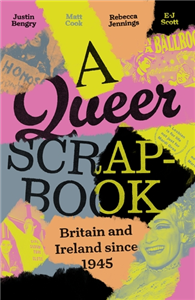
A beautifully illustrated compendium of LGBTIQ+ life. A queer scrapbook offers a treasure trove of LGBTIQ+ histories from across Britain and Ireland. Packed with materials, from interviews and newspaper articles to photographs and flyers, the book explores urban, rural and regional queer life since 1945. Commentaries and short essays introduce a changing queer landscape, spotlighting four broad themes: home and family, sex and socialising, arts and culture and politics and activism. The book delves into the meaning and experiences of domesticity and parenting and explores the sometimes unexpected places LGBTIQ+ people met to have fun. It examines the importance of creative work in forming community and identity and shows how people fought injustice and advocated for equal rights. Collecting has been a way for the marginalised to explore and assert identity and community. A queer scrapbook vividly illustrates the diversity of queer and trans lives across the British and Irish isles since the Second World War.
Trusted Partner
Trusted Partner
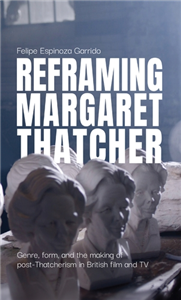
Against the backdrop of Britain's historically anti-Thatcherite films of the 1980s and 1990s, Reframing Margaret Thatcher outlines a decisive shift in the collective imagination of Thatcher. Drawing on genre, trauma, and queer studies, it demonstrates how post-Thatcherite films reflect upon their own entanglement in the polarization of the Thatcher years but also rewrite the clichéd Iron Lady. Chapters on The Iron Lady, This is England, Doomsday, 9 Dead Gay Guys, and the Sherlock TV series investigate various Thatcher imaginations, ranging from Thatcher as a lesbian mob boss, as prime minister in apocalyptic England, to Thatcher as an empty bust. This innovative study shows how the apparent depoliticization of British film makes visible new relations between genre, cinematic form, and imaginations of the past and offers fresh perspectives that both critique and reinterpret Thatcher's enduring impact.
Trusted Partner
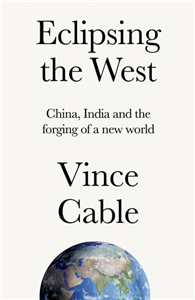
As the international order begins to crumble, this incisive book asks what the rise of the Asian superstates means for the future. The Western-dominated world we have known for the past three hundred years is coming to an end. As America withdraws from its role as enforcer of the international order, other countries are moving in to fill the void. Among them are two rising Asian 'superstates'. Accounting for almost half of the world's population, China and India have the potential to wield enormous economic and political power. China is already vying with the US for the top spot in the global economy, and on some measures has surpassed it. By the middle of the century India may be number two. How will these countries navigate their growing roles on the world stage? What are the implications for commerce, international law and the fight against climate change? Vince Cable has followed China and India for decades, first as a professional economist and later as a senior government minister. In Eclipsing the West he draws on the latest data and a lifetime of political and economic experience to offer a compelling account of what the rise of the Asian superstates means for the future.



