Your Search Results

      • Trusted Partner
        Humanities & Social Sciences
        February 2026

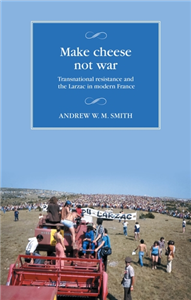
        Make cheese not war

        Transnational resistance and the Larzac in modern France

        by Andrew W. M. Smith

        In 1971, the French government announced a massive extension of its military base on the Larzac plateau in southern France. Land was to be expropriated from 107 farms around the small town of La Cavalerie. Limited resistance was expected, but what happened next exceeded all expectations. Local sheep farmers set up protest camps and occupied the land. They soon attracted an astonishing level of support, pioneering a form of regional radicalism with global implications. Drawing out the international dimensions of the protest, Make cheese not war explores a transnational resistance movement in the 1970s that challenged dominant visions of modernity and became a wellspring of radical alternatives. Exploring previously unconsulted archives in France and elsewhere, the book offers an in-depth analysis of the decade-long peasant movement and its aftermath. Repositioning the Larzac struggle within a wider network of French and international solidarities, from the US to the UK, Germany, Burkina Faso, New Caledonia and Japan, the book retraces political networks of pacifist activism, as well as environmental movements and anti-nuclear protest. It shows how this French peasant campaign became both a platform and a model for popular engagement.

      • Trusted Partner
        Humanities & Social Sciences
        April 2021

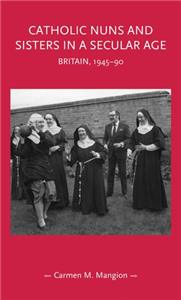
        Catholic nuns and sisters in a secular age

        Britain, 1945–90

        by Carmen M. Mangion

        This is the first in-depth study of post-war female religious life. It draws on archival materials and a remarkable set of eighty interviews to place Catholic sisters and nuns at the heart of the turbulent 1960s, integrating their story of social change into a larger British and international one. Shedding new light on how religious bodies engaged in modernisation, it addresses themes such as the Modern Girl and youth culture, '1968', generational discourse, post-war modernity, the voluntary sector and the women's movement. Women religious were at the forefront of the Roman Catholic Church's movement of adaptation and renewal towards the world. This volume tells their stories in their own words.

      • Trusted Partner
        Humanities & Social Sciences
        January 2022

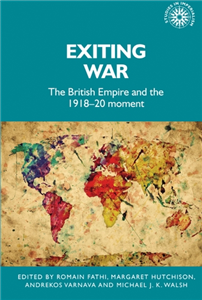
        Exiting war

        The British Empire and the 1918–20 moment

        by Romain Fathi, Margaret Hutchison, Andrekos Varnava, Michael Walsh, Alan Lester

        Exiting war explores a particular 1918-20 'moment' in the British Empire's history, between the First World War's armistices of 1918, and the peace treaties of 1919 and 1920. That moment, we argue, was a challenging and transformative time for the Empire. While British authorities successfully answered some of the post-war tests they faced, such as demobilisation, repatriation, and fighting the widespread effects of the Spanish flu, the racial, social, political and economic hallmarks of their imperialism set the scene for a wide range of expressions of loyalties and disloyalties, and anticolonial movements. The book documents and conceptualises this 1918-20 'moment' and its characteristics as a crucial three-year period of transformation for and within the Empire, examining these years for the significant shifts in the imperial relationship that occurred and as laying the foundation for later change in the imperial system.

      • Trusted Partner
        Business, Economics & Law
        March 2026

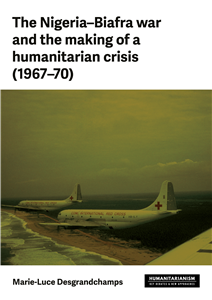
        Humanitarianism in Civil War

        The Biafra crisis, 1967-1970

        by Marie-Luce Desgrandchamps

        May 1967, in Nigeria, the Republic of Biafra declared its independence. Soon, civil war and famine ravaged the region and gradually entered the European and American media. Photographs of the conflict arouse considerable emotion in the West. The secessionist enclave and the areas taken over by the Nigerian army then became the scene of major relief operations, developed and financed by multiple organizations and governments. Part of a historiography of humanitarianism in full renewal, this book tells the story of the war, its metamorphosis into an international crisis and the responses that were provided. Based on a large body of sources from French, British, Swiss, Nigerian and American archives, it offers an insight into the world of humanitarian work at the end of the 1960s. It shows the reconfigurations taking place there. in the postcolonial era by proposing complementary scales of observation - international, national and local. The work also revisits some of the controversies which developed around the conflict regarding the instrumentalization of aid, its links with politics, the reception of relief operations on the ground or even the birth of borderlessness and testimony. It thus returns to the place occupied by the Biafran crisis in the history of humanitarian aid.

      • Trusted Partner
        The Arts
        March 2017

        Images of the army

        The military in British art, 1815-1914

        by J. W. M. Hichberger

        In an age when engraving and photography were making artistic images available to a much wider public, artists were able to influence public attitudes more powerfully than ever before. This book examines works of art on military themes in relation to ruling-class ideologies about the army, war and the empire. The first part of the book is devoted to a chronological survey of battle painting, integrated with a study of contemporary military and political history. The chapters link the debate over the status and importance of battle painting to contemporary debates over the role of the army and its function at home and abroad. The second part discusses the intersection of ideologies about the army and military art, but is concerned with an examination of genre representations of soldiers. Another important theme which runs through the book is the relation of English to French military art. During the first eighty years of the period under review France was the cynosure of military artists, the school against which British critics measured their own, and the place from which innovations were imported and modified. In every generation after Waterloo battle painters visited France and often trained there. The book shows that military art, or the 'absence' of it, was one of the ways in which nationalist commentators articulated Britain's moral superiority. The final theme which underlies much of the book is the shifts which took place in the perception of heroes and hero-worship.

      • Trusted Partner
        Humanities & Social Sciences
        April 2026

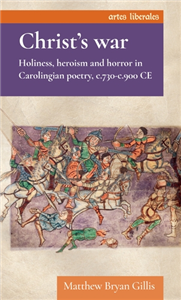
        Christ’s war

        Holiness, heroism and horror in Carolingian poetry, c.730-c.900 CE

        by Matthew Bryan Gillis

        Christ's war examines Carolingian holy war from the forging of their empire in the eighth century to its dissolution in the late ninth century during the Northmen's attacks. It argues that the Franks understood their wars to be holy when their soldiers were without sin and, therefore, were holy themselves. God heard their prayers as they begged for divine aid, and he helped them overcome and slaughter their foes. Therefore, the Carolingian vision of holy war differed from the pious, apocalyptic military pilgrimages of the subsequent Crusades. Latin poetry serves as an important source in this study for understanding holy war, including how poets dramatized glorious victories or horrifying defeats for their audiences. The book offers important insights into the religious nature of Frankish warfare, while also contributing a fresh and innovative perspective on medieval holy war overall.

      • Trusted Partner
      • Trusted Partner
        Humanities & Social Sciences
        January 2025

        England’s military heartland

        Preparing for war on Salisbury Plain

        by Vron Ware, Antonia Dawes, Mitra Pariyar, Alice Cree

        A considered investigation of a long-standing army base's impact on the British countryside. What is it like to live next door to a British Army base? Beyond the barracks provides an eye-opening account of the sprawling military presence on Salisbury Plain, drawing on a wide range of voices from both sides of the divide. Targeted for expansion under government plans to reorganise the UK's global defence estate, the Salisbury 'super garrison' offers a unique opportunity to explore the impact of the military footprint in a particular place. But this is no ordinary environment: as well as being the world-famous site of Stonehenge, the grasslands of Salisbury Plain are home to rare plants and wildlife. How does the army take responsibility for conserving this unique landscape as it trains young men and women to use lethal weapons? Are its claims that its presence is a positive for the environment anything more than propaganda? Beyond the barracks investigates these questions against the backdrop of a historic landscape inscribed with the legacy of perpetual war.

      • Trusted Partner
        Humanities & Social Sciences
        September 2023

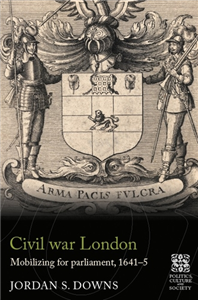
        Civil war London

        Mobilizing for parliament, 1641–5

        by Jordan S. Downs

        This book looks at London's provision of financial and military support for parliament's war against King Charles I. It explores for the first time a series of episodic, circumstantial and unique mobilisations that spanned from late 1641 to early 1645 and which ultimately led to the establishment of the New Model Army. Based on research from two-dozen archives, Civil war London charts the successes and failures of efforts to move London's vast resources and in the process poses a number of challenges to longstanding notions about the capital's 'parliamentarian' makeup. It reveals interactions between London's Corporation, parochial communities and livery companies, between preachers and parishioners and between agitators, propagandists and common people. Within these tangled webs of political engagement reside the untold stories of the movement of money and men, but also of parliament's eventual success in the English Civil War.

      • Trusted Partner
        Humanities & Social Sciences
        July 2025

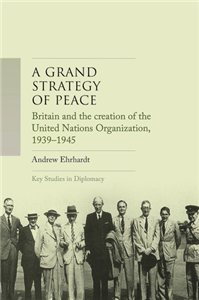
        A grand strategy of peace

        Britain and the creation of the United Nations Organization, 1939-1945

        by Andrew Ehrhardt

        A grand strategy of peace is the first detailed account of Britain's role in the creation of the United Nations Organization during the Second World War. As a work of traditional diplomatic history that brings in elements of intellectual history, the book describes how British officials, diplomats, politicians, and writers - previously seen to be secondary actors to the United States in this period - thought about, planned for, and helped to establish a future international order. While in the present day, many scholars and analysts have returned to the origins of the post- 1945 international system, this book offers an exhaustive account of how the statesmen and more importantly, the officials working below the statesmen, actually conceived of and worked to establish a post-war world order.

      • Trusted Partner
        Humanities & Social Sciences
        March 2017

        The French empire at War, 1940–1945

        by Martin Thomas

        The French empire at war draws on original research in France and Britain to investigate the history of the divided French empire - the Vichy and the Free French empires - during the Second World War. What emerges is a fascinating story. While it is clear that both the Vichy and Free French colonial authorities were only rarely masters of their own destiny during the war, preservation of limited imperial control served them both in different ways. The Vichy government exploited the empire in an effort to withstand German-Italian pressure for concessions in metropolitan France and it was key to its claim to be more than the mouthpiece of a defeated nation. For Free France too, the empire acquired a political and symbolic importance which far outweighed its material significance to the Gaullist war effort. As the war progressed, the Vichy empire lost ground to that of the Free French, something which has often been attributed to the attraction of the Gaullist mystique and the spirit of resistance in the colonies. In this radical new interpretation, Thomas argues that it was neither of these. The course of the war itself, and the initiatives of the major combatant powers, played the greatest part in the rise of the Gaullist empire and the demise of Vichy colonial control.

      • Trusted Partner
        2024

        The second half of your life - a manual

        Tips and strategies for successful ageing

        by Dr. Petra Kiedaisch

        In the middle of our lives, the cards are reshuffled: marriages are divorced, careers are questioned, friendships are ended, questions of meaning are asked, bodies change - and not just hormonally. At the same time, children leave home and parents become carers. From the age of 45, the majority of our population is at the centre of a second upheaval that affects all facets of our lives and leaves us at a loss in many ways. Not only in our daily lives, but also when it comes to planning for our own old age. This guide is designed to help us find our way. It presents the most important information from all areas relevant to a good life after 45. Leading experts from the fields of medicine, nutrition, philosophy, theology, psychology, care, law and finance give recommendations on what to look out for and what tools are needed to get through these challenging years unscathed. Useful checklists round off the articles. The book shows us the unique opportunity to see these challenges not as a crisis but as a source of strength. Not only can we come through this period of our lives healthy and happy, but we can also shape it so that the next age threshold is no longer frightening. During the second phase of adolescence, we lay the foundations for whether and how we will grow older. Be it in terms of health or living together with family and friends. With contributions from: Prof. Dr. Martin Gessmann (philosophy), Dipl. Psych. Claudia Kühner (psychology), Dr Suso Lederle (medicine), Dr Petra Forster (nutrition), Christian Hald, Anja Heine (law), Prof Dr Philipp Schreiber (finance), Prof Dr Thomas Klie (nursing care insurance), Georg Eberhardt (religion).

      • Trusted Partner
        Humanities & Social Sciences
        January 2022

        Reconstructing lives

        Victims of war in the Middle East and Médecins Sans Frontières

        by Vanja Kovacic, Bertrand Taithe

        This book attempts to establish a more holistic approach to the rehabilitation of war-injured civilians, one that adjusts to the patients' long-term needs. Kovacic not only offers an insight into the daily realities of patients during and after rehabilitation, but seeks to develop a new way to perceive, respect and involve them in health care. Based on comprehensive interviews with patients and MSF staff, as well as extended field observations, Reconstructing lives follows Syrian and Iraqi war-injured civilians in their journey to recovery. From their improvised medical treatment in their home countries, to the MSF-run hospital in Amman Jordan, to their return home, Kovacic explores how individuals attempt to pick up the pieces of their previous lives, add new elements from their treatment and travel experiences, and finally establish a new reconstructed reality. The book explores how the interaction between MSF staff and their patients contributes to the immense task of healing that awaits victims of war. The reader visits the intimate medical and domestic spaces that usually remain closed to the outside observer, spaces rich with human contact, perceptions, emotions, conflicts and reconciliations.

      • Trusted Partner
        Humanities & Social Sciences
        March 2017

        Popular imperialism and the military, 1850-1950

        by John M. MacKenzie

        Colonial war played a vital part in transforming the reputation of the military and placing it on a standing equal to that of the navy. The book is concerned with the interactive culture of colonial warfare, with the representation of the military in popular media at home, and how these images affected attitudes towards war itself and wider intellectual and institutional forces. It sets out to relate the changing image of the military to these fundamental facts. For the dominant people they were an atavistic form of war, shorn of guilt by Social Darwinian and racial ideas, and rendered less dangerous by the increasing technological gap between Europe and the world. Attempts to justify and understand war were naturally important to dominant people, for the extension of imperial power was seldom a peaceful process. The entertainment value of war in the British imperial experience does seem to have taken new and more intensive forms from roughly the middle of the nineteenth century. Themes such as the delusive seduction of martial music, the sketch of the music hall song, powerful mythic texts of popular imperialism, and heroic myths of empire are discussed extensively. The first important British war correspondent was William Howard Russell (1820-1907) of The Times, in the Crimea. The 1870s saw a dramatic change in the representation of the officer in British battle painting. Up to that point it was the officer's courage, tactical wisdom and social prestige that were put on display.

      • Trusted Partner
        Humanities & Social Sciences
        June 2026

        Home front heroism

        by Ellena Matthews

      • Trusted Partner
        June 2026

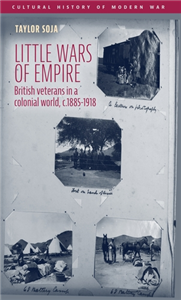
        Little wars of empire

        British veterans in a colonial world, c.1885–1918

        by Taylor Soja

        Little Wars of Empire is a group biography of British veterans who experienced multiple wars across the British empire. Throughout the nineteenth century, Britain was constantly at war in its colonies, defending against anti-colonial resistance or trying to expand its influence. The veterans of these wars did not disappear once they were over, and many of them went on to later experience World War I. By using personal sources such as letters, diaries, and photograph albums, this book works to show how colonial violence and British military history depend upon one another, and argues that colonial war fundamentally shaped the British experience of empire. This was true for all kinds of British veterans, from British Army soldiers and officers to nurses and military families, whose experiences demonstrate the central place of colonial violence to British life.

      • Trusted Partner
        Humanities & Social Sciences
        February 2025

        Global counter-terrorism

        by Tahir Abbas, Sylvia I. Bergh, Sagnik Dutta

        This collection aims to inaugurate a new direction in research on counterterrorism by exploring global connections - both in terms of practices and discourses, as well as shared ideas and epistemes - that animate counterterrorism practices. The chapters - grouped under the themes of postcoloniality and coloniality, and entanglements of the transnational and the local, and counterterrorism and right-wing extremism - are attentive to global connections and are mindful of the complexities of global historical processes that constitute the politics of counterterrorism. This book aims to bring together scholars studying counterterrorism in the global North and the global South to explore convergence and divergence in how counterterrorism policies function in a range of national and local contexts.

      • Trusted Partner
        The Arts
        September 2024

        The renewal of post-war Manchester

        Planning, architecture and the state

        by Richard Brook

        A compelling account of the project to transform post-war Manchester, revealing the clash between utopian vision and compromised reality. Urban renewal in Britain was thrilling in its vision, yet partial and incomplete in its implementation. For the first time, this deep study of a renewal city reveals the complex networks of actors behind physical change and stagnation in post-war Britain. Using the nested scales of region, city and case-study sites, the book explores the relationships between Whitehall legislation, its interpretation by local government planning officers and the on-the-ground impact through urban architectural projects. Each chapter highlights the connections between policy goals, global narratives and the design and construction of cities. The Cold War, decolonialisation, rising consumerism and the oil crisis all feature in a richly illustrated account of architecture and planning in post-war Manchester.

      Subscribe to our

      newsletter