
Al Masriah Al Lubnaniah
Al-Masriah Al-Lubnaniahwas established to create and maintain a high status in the publishing field and the Arab world,andalways has the aim of producing quality books in its content and shape.
View Rights Portal
Al-Masriah Al-Lubnaniahwas established to create and maintain a high status in the publishing field and the Arab world,andalways has the aim of producing quality books in its content and shape.
View Rights Portal
MSL Master focuses on developing Chinese learning materials for young adult and adult students. We are keen to solve problems they face when learning Chinese. When students are not making progress, we usually find problems else where. Take a brief look at our products here: https://www.mslmaster.com/index.php/chinese-textbooks/9-books/165-msl-master-products-at-a-glance
View Rights Portal

Victorian demons provides the first extensive exploration of largely middle-class masculinities in crisis at the fin de siècle. It analyses how ostensibly controlling models of masculinity became demonised in a variety of literary and medical contexts, revealing the period to be much more ideologically complex than has hitherto been understood, and makes a significant contribution to Gothic scholarship. Andrew Smith demonstrates how a Gothic language of monstrosity, drawn from narratives such as 'The Strange Case of Dr Jekyll and Mr Hyde' and 'Dracula', increasingly influenced a range of medical and cultural contexts, destabilising these apparently dominant masculine scripts. He provides a coherent analysis of a range of examples relating to masculinity drawn from literary, medical, legal and sociological contexts, including Joseph Merrick ('The Elephant Man'), the Whitechapel murders of 1888, Sherlock Holmes's London, the writings and trials of Oscar Wilde, theories of degeneration and medical textbooks on syphilis.
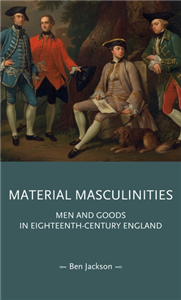
Material Masculinities examines the material and consumer practices of over 1000 men from the middling and upper ranks of eighteenth-century society, c.1650-1850. It draws upon evidence from over 35 archives and museum collections to detail how material objects were integral for men in forming identities and shaping experiences. For men of all social ranks, ages, and geographic locations, material knowledge was imperative for masculine social identities to operate in a commercial society. Before the centralised factory and widespread mass-produced goods, men personalised and repaired their goods; products were shaped by men's attitudes and concerns. Objects were tools in men's identity formation and the exercise of social and gendered power. There was a reciprocal relationship between men and goods in this period; men were active agents of material and commercial change driving product and aesthetic innovation.
 Trusted Partner

This collection explores the role of martial masculinities in shaping nineteenth-century British culture and society in a period framed by two of the greatest wars the world had ever known. It offers a fresh, interdisciplinary perspective on an emerging field of study and draws on historical, literary, visual and musical sources to demonstrate the centrality of the military and its masculine dimensions in the shaping of Victorian and Edwardian personal and national identities. Focusing on both the experience of military service and its imaginative forms, it examines such topics as bodies and habits, families and domesticity, heroism and chivalry, religion and militarism, and youth and fantasy. This collection will be required reading for anyone interested in the cultures of war and masculinity in the long nineteenth century.
Trusted Partner
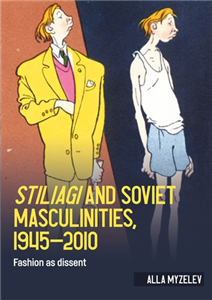
This book provides an in-depth analysis of the Stiliagi, the Soviet Union's pioneering youth subculture from the late 1940s to the early 1960s. Characterized by their distinctive Western-influenced fashion, affinity for jazz, and resistance to Soviet ideological conformity, the Stiliagi represented a significant cultural shift in post-war Soviet society. The book examines how this subculture, through its embrace of alternative masculinities and nonconformist behaviours, challenged prevailing social norms and influenced Soviet cinema, theatre, and broader cultural discourse. Drawing on rigorous research, the book situates the Stiliagi within the broader context of Soviet and Post-Soviet history, arguing that their legacy persisted well beyond their absorption into mainstream culture. Essential reading for scholars of Soviet history, cultural studies, and subcultural movements, this work offers a nuanced understanding of the Stiliagi's enduring impact on Soviet identity and cultural resistance.
Trusted Partner
Victorian demons provides the first extensive exploration of largely middle-class masculinities in crisis at the fin de siècle. It analyses how ostensibly controlling models of masculinity became demonised in a variety of literary and medical contexts, revealing the period to be much more ideologically complex than has hitherto been understood, and makes a significant contribution to Gothic scholarship. Andrew Smith demonstrates how a Gothic language of monstrosity, drawn from narratives such as 'The Strange Case of Dr Jekyll and Mr Hyde' and 'Dracula', increasingly influenced a range of medical and cultural contexts, destabilising these apparently dominant masculine scripts. He provides a coherent analysis of a range of examples relating to masculinity drawn from literary, medical, legal and sociological contexts, including Joseph Merrick ('The Elephant Man'), the Whitechapel murders of 1888, Sherlock Holmes's London, the writings and trials of Oscar Wilde, theories of degeneration and medical textbooks on syphilis. ;
Trusted Partner

This book explores how and why Scottish Highlanders, Punjabi Sikhs, and Nepalese Gurkhas became identified as the British Empire's fiercest, most manly soldiers in nineteenth century discourse. As 'martial races' these men were believed to possess a biological or cultural disposition to the racial and masculine qualities necessary for the arts of war. Because of this, they were used as icons to promote recruitment in British and Indian armies - a phenomenon with important social and political effects in India, in Britain, and in the armies of the Empire. Martial Races bridges regional studies of South Asia and Britain while straddling the fields of racial theory, masculinity, imperialism, identity politics, and military studies. Of particular importance is the way it exposes the historical instability of racial categories based on colour and its insistence that historically specific ideologies of masculinity helped form the logic of imperial defence, thus wedding gender theory with military studies in unique ways. Moreover, Martial Races challenges the marginalisation of the British Army in histories of Victorian popular culture, and demonstrates the army's enduring impact on the regional cultures of the Highlands, the Punjab and Nepal. This unique study will make fascinating reading for higher level students and experts in imperial history, military history and gender history.
Trusted Partner
Trusted Partner
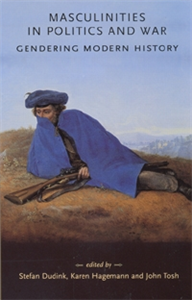
Politics and war are crucial to the history of masculinity, yet have been neglected in the emergent historiography of masculinity. This book opens up new avenues in gender history by mapping masculinity's part in making revolution, waging war, building nations, and constructing welfare states. Preceded by extensive historical and theoretical introductions, the volume is clearly divided into sections on revolution, nation, politics and subjectivity. An innovative collection with contributions from an international group of eminent historians who are recognised experts in their fields, with essays on Europe, the United States, Latin America, Australia, Africa and Asia. Written in a highly accessible style, targeted at both students, professional historians and the interested general reader. ;
Trusted Partner
 Trusted Partner
 Trusted Partner
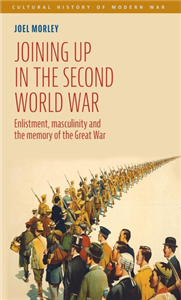
This book connects the First and Second World Wars. It uses oral histories and Mass Observation material to explore men's attitudes to Second World War enlistment and the relationship they perceived between military service and masculinity, and how these were influenced by understandings of the First World War. Locating the cultural legacy of First World War in the subjectivities of men who participated in the Second World War demonstrates the breadth of sources that informed men's understandings of the First World War in interwar Britain. Its cultural legacy was omnipresent and diverse, and informed young men's attitudes and service preferences, but it reinforced Edwardian conceptions of wartime masculinity as often as it undermined them. Two decades after the First World War ended, they remained resilient in the subjective understandings of men who grew up in the Great War's shadow.
Trusted Partner
This book examines key moments in which collective and state violence invigorated racialized social boundaries around Mexican and African Americans in the United States, and in which they violently contested them. Bringing anti-Mexican violence into a common analytical framework with anti-black violence, A savage song examines several focal points in this oft-ignored history, including the 1915 rebellion of ethnic Mexicans in South Texas, and its brutal repression by the Texas Rangers and the 1917 mutiny of black soldiers of the 24th Infantry Regiment in Houston, Texas, in response to police brutality. Aragon considers both the continuities and stark contrasts across these different moments: how were racialized constructions of masculinity differently employed? How did African and Mexican American men, including those in uniform, respond to the violence of racism? And how was their resistance, including their claims to manhood and nation, understood by law enforcement, politicians, and the press? Building on extensive archival research, the book examines how African and Mexican American men have been constructed as 'racial problems', investigating, in particular, their relationship with law enforcement and ideas about black and Mexican criminality.
Trusted Partner
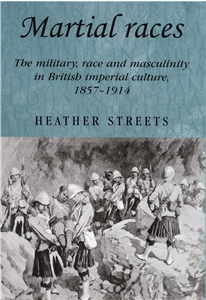
This book explores how and why Scottish Highlanders, Punjabi Sikhs, and Nepalese Gurkhas became identified as the British Empire's fiercest, most manly soldiers in nineteenth century discourse. As 'martial races' these men were believed to possess a biological or cultural disposition to the racial and masculine qualities necessary for the arts of war. Because of this, they were used as icons to promote recruitment in British and Indian armies - a phenomenon with important social and political effects in India, in Britain, and in the armies of the Empire. Martial races bridges regional studies of South Asia and Britain while straddling the fields of racial theory, masculinity, imperialism, identity politics, and military studies. It challenges the marginalisation of the British Army in histories of Victorian popular culture, and demonstrates the army's enduring impact on the regional cultures of the Highlands, the Punjab and Nepal. This unique study will make fascinating reading for higher level students and experts in imperial history, military history and gender history. ;
Trusted Partner
Popular culture is invariably a vehicle for the dominant ideas of its age. Never was this truer than in the late-nineteenth and early twentieth centuries, when it reflected the nationalist and imperialist ideologies current throughout Europe. It both reflects popular attitudes, ideas and preconceptions and it generates support for selected views and opinions. This book examines the various media through which nationalist ideas were conveyed in late-Victorian and Edwardian times: in the theatre, "ethnic" shows, juvenile literature, education and the iconography of popular art. It seeks to examine in detail the articulation and diffusion of imperialism in the field of juvenile literature by stressing its pervasiveness across boundaries of class, nation and gender. It analyses the production, distribution and marketing of imperially-charged juvenile fiction, stressing the significance of the Victorians' discovery of adolescence, technological advance and educational reforms as the context of the great expansion of such literature. An overview of the phenomenon of Robinson Crusoe follows, tracing the process of its transformation into a classic text of imperialism and imperial masculinity for boys. The imperial commitment took to the air in the form of the heroic airmen of inter-war fiction. The book highlights that athleticism, imperialism and militarism become enmeshed at the public schools. It also explores the promotion of imperialism and imperialist role models in fiction for girls, particularly Girl Guide stories.
Trusted Partner
Engendering an avant-garde is the first book to comprehensively examine the origins of Vancouver photo-conceptualism in its regional context between 1968 and 1990. Employing discourse analysis of texts written by and about artists, feminist critique and settler-colonial theory, the book discusses the historical transition from artists' creation of 'defeatured landscapes' between 1968-71 to their cinematographic photographs of the late 1970s and the backlash against such work by other artists in the late 1980s. It is the first study to provide a structural account for why the group remains all-male. It accomplishes this by demonstrating that the importation of a European discourse of avant-garde activity, which assumed masculine social privilege and public activity, effectively excluded women artists from membership.
Trusted Partner
Imperial cities explores the influence of imperialism in the landscapes of modern European cities including London, Paris, Rome, Vienna, Marseilles, Glasgow and Seville. Examines large-scale architectural schemes and monuments, including the Queen Victoria Memorial in London and the Vittoriano in Rome. Focuses on imperial display throughout the city, from spectacular exhibitions and ceremonies, to more private displays of empire in suburban gardens. Cconsiders the changing cultural and political identities in the imperial city, looking particularly at nationalism, masculinity and anti-imperialism.
Trusted Partner
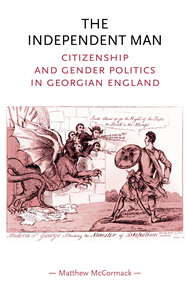
'Independence' was an important ideal for men in Georgian England. In this period, however, the word meant much more than simply the virtues of self-sufficiency and impartiality. Most people believed that obligations absolutely compromised freedom and conscience, whereas 'independence' was associated with manly virtue and physical vigour. Fundamentally, the political world was thought to consist of 'independent men', exercising their consciences and standing up for the general good. As such, Georgians thought about political action and masculine virtue very differently to the ways in which we do today. In study, newly available in paperback, Matthew McCormack establishes the links between the histories of masculinity and politics, highlighting the centrality of 'manly' ideals in the political world and - conversely - the role of politics in the operation of gender ideology. ;
Trusted Partner
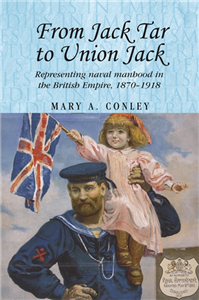
Jack Tar to Union Jack examines the intersection between empire, navy, and manhood in British society from 1870 to 1918. Through analysis of sources that include courts-martial cases, sailors' own writings, and the HMS Pinafore, Conley charts new depictions of naval manhood during the Age of Empire, a period which witnessed the radical transformation of the navy, the intensification of imperial competition, the democratisation of British society, and the advent of mass culture. Jack Tar to Union Jack argues that popular representations of naval men increasingly reflected and informed imperial masculine ideals in Victorian and Edwardian Britain. Conley shows how the British Bluejacket as both patriotic defender and dutiful husband and father stood in sharp contrast to the stereotypic image of the brave but bawdy tar of the Georgian navy. This book will be essential reading for students of British imperial history, naval and military history, and gender studies. ;
Trusted Partner
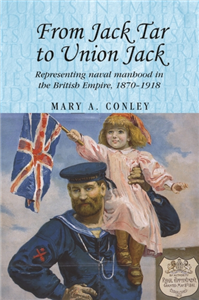
Jack Tar to Union Jack examines the intersection between empire, navy, and manhood in British society from 1870 to 1918. Through analysis of sources that include courts-martial cases, sailors' own writings, and the HMS Pinafore, Conley charts new depictions of naval manhood during the Age of Empire, a period which witnessed the radical transformation of the navy, the intensification of imperial competition, the democratisation of British society, and the advent of mass culture. Jack Tar to Union Jack argues that popular representations of naval men increasingly reflected and informed imperial masculine ideals in Victorian and Edwardian Britain. Conley shows how the British Bluejacket as both patriotic defender and dutiful husband and father stood in sharp contrast to the stereotypic image of the brave but bawdy tar of the Georgian navy. This book will be essential reading for students of British imperial history, naval and military history, and gender studies.
Trusted Partner

Jack Tar to Union Jack examines the intersection between empire, navy, and manhood in British society from 1870 to 1918. Through analysis of sources that include courts-martial cases, sailors' own writings, and the HMS Pinafore, Conley charts new depictions of naval manhood during the Age of Empire, a period which witnessed the radical transformation of the navy, the intensification of imperial competition, the democratisation of British society, and the advent of mass culture. Jack Tar to Union Jack argues that popular representations of naval men increasingly reflected and informed imperial masculine ideals in Victorian and Edwardian Britain. Conley shows how the British Bluejacket as both patriotic defender and dutiful husband and father stood in sharp contrast to the stereotypic image of the brave but bawdy tar of the Georgian navy. This book will be essential reading for students of British imperial history, naval and military history, and gender studies.


