
The Arts
Description
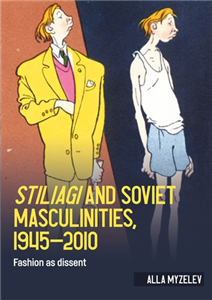
This book provides an in-depth analysis of the Stiliagi, the Soviet Union's pioneering youth subculture from the late 1940s to the early 1960s. Characterized by their distinctive Western-influenced fashion, affinity for jazz, and resistance to Soviet ideological conformity, the Stiliagi represented a significant cultural shift in post-war Soviet society. The book examines how this subculture, through its embrace of alternative masculinities and nonconformist behaviours, challenged prevailing social norms and influenced Soviet cinema, theatre, and broader cultural discourse. Drawing on rigorous research, the book situates the Stiliagi within the broader context of Soviet and Post-Soviet history, arguing that their legacy persisted well beyond their absorption into mainstream culture. Essential reading for scholars of Soviet history, cultural studies, and subcultural movements, this work offers a nuanced understanding of the Stiliagi's enduring impact on Soviet identity and cultural resistance.
More Information
Rights Information
Albania, Algeria, Angola, Argentina, Armenia, Australia, Austria, Bahrain, Belgium, Belize, Benin, Bolivia, Bosnia and Herzegovina, Botswana, Brazil, Bulgaria, Burkina Faso, Burundi, Cameroon, Canada, Cape Verde, Central African Republic, Chad, Chile, China, Colombia, Comoros, Congo [DRC], Congo, Republic of the, Costa Rica, Ivory Coast, Croatia, Czech Republic, Denmark, Djibouti, Ecuador, Egypt, El Salvador, Equatorial Guinea, Eritrea, Estonia, Ethiopia, Faroe Islands, Finland, France, French Guiana, Gabon, Gambia, Georgia, Germany, Ghana, Greece, Guatemala, Guinea, Guinea-Bissau, Guyana, Honduras, Hongkong, Hungary, Iceland, India, Indonesia, Iran, Iraq, Ireland, Israel, Italy, Japan, Jordan, Kazakhstan, Kenya, Kuwait, Latvia, Lebanon, Lesotho, Liberia, Libya, Lithuania, Luxembourg, Macau, China, Macedonia [FYROM], Madagascar, Malawi, Malaysia, Mali, Malta, Mauritania, Mauritius, Mayotte, Mexico, Mongolia, Montenegro, Morocco, Mozambique, Namibia, Netherlands, New Zealand, Nicaragua, Niger, Nigeria, Norway, Oman, Pakistan, Panama, Paraguay, Peru, Philippines, Poland, Portugal, Puerto Rico, Qatar, Reunion, Romania, Russia, Rwanda, Saint Helena, Sao Tome and Principe, Saudi Arabia, Senegal, Serbia, Seychelles, Sierra Leone, Singapore, Slovakia, Slovenia, Somalia, South Africa, South Korea, Spain, Sri Lanka, Sudan, Suriname, Swaziland, Sweden, Switzerland, Syria, Taiwan, Tanzania, Thailand, Timor-Leste, Togo, Tokelau, Tunisia, Turkey, Uganda, Ukraine, United Arab Emirates, United Kingdom, United States, Uruguay, Venezuela, Vietnam, Western Sahara, Yemen, Zambia, Zimbabwe, South Sudan, Cyprus, Palestine, Bangladesh, Cambodia, Liechtenstein, Azerbaijan, Jamaica, Kyrgyzstan, Dominican Republic, Myanmar, Monaco
Endorsements
This book offers an in-depth exploration of the Stiliagi, the Soviet Union's first youth subculture, which emerged in the late 1940s and flourished until the early 1960s. These young people, known for their distinctive fashion blending Western styles with Soviet sensibilities and their use of English slang, represented a striking departure from the rigid norms of post-World War II Soviet society. The Stiliagi's passion for blues and jazz, along with their embrace of nonconformity, challenged the prevailing Soviet ideology, marking them as both rebels and trendsetters in a time of intense cultural repression. As the subculture evolved, it gradually merged with mainstream Soviet culture by the mid-1960s. However, the Stiliagi's influence persisted long after they were absorbed into the broader society. Their legacy lived on, influencing Soviet cinema and theatre and contributing to the redefinition of masculinity in the Soviet Union. The book argues that the Stiliagi were not just fashion-forward youth but also pioneers of alternative masculinities, offering non-heteronormative avenues of expression through their sartorial choices and musical preferences. Through meticulous research and a keen understanding of Soviet history, this work underscores the Stiliagi's role in reshaping perceptions of dissent and masculinity. It also highlights how this subculture evoked nostalgia for the early Thaw period, a time of relative cultural openness, in the late Soviet and Post-Soviet eras. This book is an essential read for anyone interested in Soviet history, youth culture, and the power of subcultural movements to challenge societal norms.
Reviews
This book offers an in-depth exploration of the Stiliagi, the Soviet Union's first youth subculture, which emerged in the late 1940s and flourished until the early 1960s. These young people, known for their distinctive fashion blending Western styles with Soviet sensibilities and their use of English slang, represented a striking departure from the rigid norms of post-World War II Soviet society. The Stiliagi's passion for blues and jazz, along with their embrace of nonconformity, challenged the prevailing Soviet ideology, marking them as both rebels and trendsetters in a time of intense cultural repression. As the subculture evolved, it gradually merged with mainstream Soviet culture by the mid-1960s. However, the Stiliagi's influence persisted long after they were absorbed into the broader society. Their legacy lived on, influencing Soviet cinema and theatre and contributing to the redefinition of masculinity in the Soviet Union. The book argues that the Stiliagi were not just fashion-forward youth but also pioneers of alternative masculinities, offering non-heteronormative avenues of expression through their sartorial choices and musical preferences. Through meticulous research and a keen understanding of Soviet history, this work underscores the Stiliagi's role in reshaping perceptions of dissent and masculinity. It also highlights how this subculture evoked nostalgia for the early Thaw period, a time of relative cultural openness, in the late Soviet and Post-Soviet eras. This book is an essential read for anyone interested in Soviet history, youth culture, and the power of subcultural movements to challenge societal norms.
Author Biography
Alla Myzelev is an Associate Professor of Art History and Museum Studies State University of New York at Geneseo
 Trusted Partner

Manchester University Press
Manchester University Press is a leading UK publisher known for excellent research in the humanities and social sciences.
View all titlesBibliographic Information
- Publisher Manchester University Press
- Publication Date January 2026
- Orginal LanguageEnglish
- ISBN/Identifier 9781526182197 / 152618219X
- Publication Country or regionUnited Kingdom
- FormatPrint PDF
- Pages248
- ReadershipGeneral/trade; College/higher education; Professional and scholarly
- Publish StatusPublished
- Dimensions240 X 170 mm
- Biblio NotesDerived from Proprietary 6322
- SeriesStudies in Design and Material Culture
- Reference Code16834
Thank you for proceeding with this offer.
Manchester University Press has chosen to review this offer before it proceeds.
You will receive an email update that will bring you back to complete the process.
You can also check the status in the My Offers area
Manchester University Press has chosen to review this offer before it proceeds.
You will receive an email update that will bring you back to complete the process.
You can also check the status in the My Offers area

Please wait while the payment is being prepared.
Do not close this window.

(c) Copyright 2026 - Frankfurter Buchmesse GmbH. All Right Reserved