Your Search Results

      • Suug Productions

        Kontexte, Blickwinkel, Sichtachsen und Perspektivwechsel Was wir machen Das Internet sollte Zugang zu Wissen organisieren und ist ein Werkzeug zum Austausch von Ideen, Visionen und Lösungen. – Suug Productions kreiert Projekte mit Sinn – und dem Anspruch, die Welt durch neue und ungewöhnliche Kontexte, Blickwinkel, Sichtachsen und Perspektivwechsel zu einem etwas reizvolleren Ort zu machen.

        View Rights Portal
      • Trusted Partner

        HBG Productions

        HBG represents educational, spiritually empowering and life-affirming works from small and independent publishers. Dedicated to alternativeperspectivesand self-healing, self-empowerment, enlightenment, inspiration, and joy, our consciousness-expanding, self-help and educational books contribute to greater awareness for our readers. Through new science, sacred teachings, transmitted wisdom, humor, real-life stories and more, each book offers its own unique gift and guidance. Our topics include Alternative Healing, Body-Mind-Spirit, Business Entrepreneurship, Children's Literature, Consciousness Studies, Health and Wellness, Nature, Parenting, Psychology, Relationships/Communication, Self-Help and more.

        View Rights Portal
      • Trusted Partner
        Business, Economics & Law
        October 2004

        Qualities of food

        by Mark Harvey, Andrew McMeekin, Alan Warde

        In this book, the complexity and the significance of the foods we eat are analysed from a variety of perspectives, by sociologists, economists, geographers and anthropologists. Chapters address a number of intriguing questions: how do people make judgments about taste? How do such judgments come to be shared by groups of people?; what social and organisational processes result in foods being certified as of decent or proper quality? How has dissatisfaction with the food system been expressed? What alternatives are thought to be possible? The multi-disciplinary analysis of this book explores many different answers to such questions. The first part of the book focuses on theoretical and conceptual issues, the second part considers processes of formal and informal regulation, while the third part examines social and political responses to industrialised food production and mass consumption. Qualities of food will be of interest to researchers and students in all the social science disciplines that are concerned with food, whether marketing, sociology, cultural studies, anthropology, human nutrition or economics.

      • Trusted Partner
        Humanities & Social Sciences
        September 2025

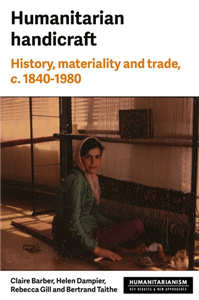
        Humanitarian handicraft

        History, materiality and trade, c. 1840–1980

        by Rebecca Gill, Claire Barber, Helen Dampier, Bertrand Taithe

        This book uncovers the overlooked history of artisanal textiles in projects aimed at social uplift and moral reform. The contributors ask what the implications of this form of gendered craft production are for our understanding of the humanitarian imagination, relations of humanitarian production and the generation of meaning and social and artistic value. It also opens a dialogue with contemporary socially-engaged textile artists to engender critical reflection on the socially-situated meaning of textile craft in past and present humanitarian contexts.

      • Trusted Partner
        Humanities & Social Sciences
        July 2025

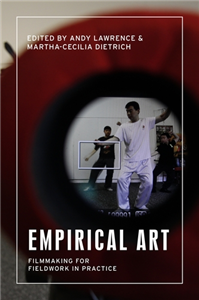
        Empirical art

        Filmmaking for fieldwork in practice

        by Andy Lawrence, Martha-Cecilia Dietrich

        Empirical art: Filmmaking for fieldwork in practice is an insightful exploration of what the craft of filmmaking brings to social science research. Providing creative avenues on how to narrate encounters, relationships, and experiences during fieldwork, this comprehensive volume offers a rich tapestry of theoretical explorations and explorative methodologies. Skilfully connecting the worlds of ethnography, art and cinema, the contributors in this book act as a compass for filmmakers and researchers venturing to use a camera and microphone to relate and narrate their research collaborations and fieldsites. Drawing from the authors' extensive experience in disciplines like social anthropology, environmental humanities, and political science, "Empirical Art" breaks down the intricate process of crafting ethnographic films that departs from the researcher's subjectivity. Covering aspects of filmmaking from conceptualisation to production and distribution, readers are equipped with a treasure trove of collaborative techniques, innovative approaches, and ethical considerations necessary to generate and examine storytelling practices in contemporary fields of study. The authors discuss the significance of the multiple roles that technologies of filmmaking play in reflecting on cultural practices, social dynamics, and (beyond) human storytelling and their transformative potentials. Whether a seasoned filmmaker, an aspiring ethnographer, or an academic seeking new dimensions for their research, Empirical Art serves as a guide to integrating visual storytelling, cinema craft and empirical research.

      • Trusted Partner
        Humanities & Social Sciences
        March 2025

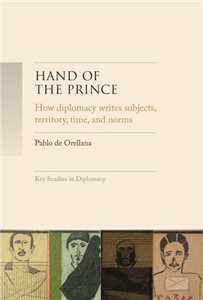
        Hand of the prince

        How diplomacy writes subjects, territory, time, and norms

        by Pablo de Orellana

        This book is dedicated to how diplomacy makes, develops, and trades in knowledge. It proposes an approach to examine how diplomatic knowledge production describes what diplomats see, how these descriptions develop, and whether they were convincing to one's own policymakers or even those of other actors. These descriptions are vital: actors can be inserted into global categories Communism or Terrorism that beget significant security, relational and policy consequences. Diplomacy and policy constitute the world we inhabit based on what policymakers made of descriptions, assessments, and analysis. Such is the power of knowing who we and the others are.

      • Trusted Partner
        September 2021

        Big Fat Notebook - Alles, was du für Informatik brauchst

        Das Starterkit für angehende Programmierer - Nachschlagewerk und Übungsbuch für Schule und Studium

        by Grant Smith, Chris Pearce, Christian Bubenheim, Alexander Ritter Thern, Miriam Zimmermann, Philipp Thern

        Nur Fragezeichen im Kopf? Diese Bücher schaffen Abhilfe! Denn sie enthalten alles rund um die wichtigsten Schulfächer von der 5. bis zur 9. Klasse – und darüber hinaus! Knapp und verständlich werden die einzelnen Themen zusammengefasst und einprägsam vermittelt. Die Scribble-Optik lockert das Ganze auf und sorgt für einen modernen Look. Aufgabenseiten bieten außerdem die Möglichkeit, das Gelernte noch einmal zu überprüfen. Vom Fünftklässler bis zum Informatik-Noob – die Notebooks sind der perfekte Begleiter! Das neue Big Fat Notebook ist genauso dick, genauso bunt und genauso vollgepackt mit Wissen wie seine Vorgänger – diesmal zu den spannenden Themen Informatik und Programmieren. Wie gewohnt wartet es nicht nur mit kurzen, leicht verständlichen Definitionen und Erklärungen auf, sondern dient ebenfalls als modernes Notizbuch. Jedes Kapitel schließt mit Übungsseiten, mit deren Hilfe die Lektionen wiederholt werden können. Ab jetzt sind Programmiersprachen keine Fremdsprachen mehr!

      • Trusted Partner
        Business, Economics & Law
        July 2024

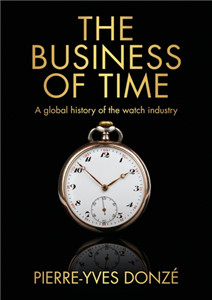
        The business of time

        A global history of the watch industry

        by Pierre-Yves Donzé

        The business of time presents a comprehensive history of the global watch industry from the mid-nineteenth century to the present. Watch production in the twenty-first century is concentrated in three countries: Switzerland, Japan and China. The industry is dominated by a dozen or so large companies, including the Swatch Group, Richemont, LVMH, Seiko and Fossil. But a hundred years ago the picture was dramatically different. Over the course of a century, Great Britain, France, the United States and Russia saw the manufacture of watches disappear from their territory. At the same time, Hong Kong went from being a subcontractor of watch components to an intermediary between Chinese factories and the world market. Revealing the conditions that drove the spread of watch production around the globe, The business of time explains how multinationals emerged to dominate the industry and highlights how Swiss companies were able to establish themselves as the undisputed leader in luxury watches.

      • Trusted Partner
        Humanities & Social Sciences
        November 2007

        Public issue television

        World in Action' 1963–98

        by Peter Goddard, John Corner, Kay Richardson

        Public issue television is a major contribution to understanding the relationship between television, politics and society. Based on full access to the archives, it offers a fascinating historical account of how one television series, Granada's World in Action, celebrated for its tough journalism, visual directness and public impact, functioned and developed over its run across 35 years between 1963 and 1998. In a succession of chapters looking at different periods in the series' development and at key dimensions of its distinctive identity, it gets deep inside the making of factual television and examines how a particular culture of production works within broader conditions of possibility and constraint. In particular, it charts the interwoven processes of change - technological, professional, aesthetic, institutional, economic, social and political. As well as discussing achievement and success, it examines the tensions, the debates and open conflicts that formed part of the context within which the series was made and transmitted across four decades. ;

      • Trusted Partner
        Literature & Literary Studies
        March 2024

        Borrowed objects and the art of poetry

        Spolia in Old English verse

        by Denis Ferhatovic

        This study examines Exeter riddles, Anglo-Saxon biblical poems (Exodus, Andreas, Judith) and Beowulf in order to uncover the poetics of spolia, an imaginative use of recycled fictional artefacts to create sites of metatextual reflection. Old English poetry famously lacks an explicit ars poetica. This book argues that attention to particularly charged moments within texts - especially those concerned with translation, transformation and the layering of various pasts - yields a previously unrecognised means for theorising Anglo-Saxon poetic creativity. Borrowed objects and the art of poetry works at the intersections of materiality and poetics, balancing insights from thing theory and related approaches with close readings of passages from Old English texts.

      • Trusted Partner
        Humanities & Social Sciences
        April 2025

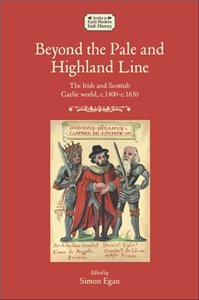
        Beyond the Pale and Highland Line

        The Irish and Scottish Gaelic world

        by Simon Egan

        This book offers important new insights into the history and culture of the Gaelic-speaking world from the mid-fifteenth century through to the reign of James VI and I. Throughout this period, the reach of the English and Scottish crowns within these western regions was limited. The initiative lay with local communities and royal power was contingent upon negotiating with well-established and largely autonomous aristocratic lineages. Moreover, events within this western world could exert a powerful, often unpredictable, influence upon the affairs of the wider archipelago. Using a series of case studies, this collection examines the evolving relationship between Ireland and Scotland in rich detail. It demonstrates how this world interacted with the encroaching English and Scottish states and underlines the importance of paying closer attention to this neglected area of Irish and British history.

      • The Arts
        March 1905

        Concerning the Spiritual in Art

        by Wassily Kandinsky

        A pioneering work in the movement to free art from its traditional bonds to material reality, this book is one of the most important documents in the history of modern art. Written by the famous nonobjective painter Wassily Kandinsky (1866–1944), it explains Kandinsky's own theory of painting and crystallizes the ideas that were influencing many other modern artists of the period. Along with his own groundbreaking paintings, this book had a tremendous impact on the development of modern art. Kandinsky's ideas are presented in two parts. The first part, called "About General Aesthetic," issues a call for a spiritual revolution in painting that will let artists express their own inner lives in abstract, non-material terms. Just as musicians do not depend upon the material world for their music, so artists should not have to depend upon the material world for their art. In the second part, "About Painting," Kandinsky discusses the psychology of colors, the language of form and color, and the responsibilities of the artist. An Introduction by the translator, Michael T. H. Sadler, offers additional explanation of Kandinsky's art and theories, while a new Preface by Richard Stratton discusses Kandinsky's career as a whole and the impact of the book. Making the book even more valuable are nine woodcuts by Kandinsky himself that appear at the chapter headings. This English translation of Über das Geistige in der Kunst was a significant contribution to the understanding of nonobjectivism in art. It continues to be a stimulating and necessary reading experience for every artist, art student, and art patron concerned with the direction of 20th-century painting.

      • Trusted Partner
        The Arts
        June 2026

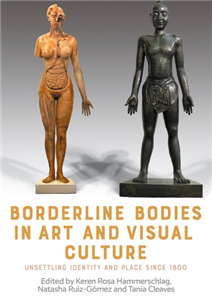
        Borderline bodies in art and visual culture

        Unsettling identity and place since 1800

        by Keren Hammerschlag, Natasha Ruiz-Gómez, Tania Anne Cleaves

        Borderline bodies offers original interpretations of visual representations of human bodies as bounded and unbounded, fortified and permeable, mobile and static-subject to borders and able to traverse and challenge them. It also takes as its focus images and objects that might be considered 'borderline' because they sit at the intersection of disciplines or sit outside accepted notions of what constitutes serious 'art.' By mapping the ways human bodies traverse borders and straddle-even dismantle-categories, this volume's essays approach afresh the relationship of bodies to traditional modes of representation, especially in art and medicine, and encourage us to think anew about how we understand the relationship between human corporeality, identity and place. Critical transdisciplinary and transnational analyses of objects and images from a range of geographies shed new light on the themes of: bodies and identity; typologies of the body; racialised bodies; 'normal' and 'abnormal' bodies; encounters between bodies; bodies in transition; bodies and mobility; and the bounded and unbounded human body. The outcome is a fresh approach to depictions of the human body produced for the purposes of artistic and medical education, aesthetic edification, and scientific and professional advancement, which disrupts assumptions about the normative human body perpetuated through Western image-making traditions.

      • Trusted Partner
        Humanities & Social Sciences
        September 2025

        Writing power

        Intellectuals, legitimacy, and the making of knowledge

        by Sarah Victoria Alexandra Burton

        Writing power radically rethinks the place of the canon and canonicity as objects and concepts in contemporary academia and the everyday intellectual practices of academics. It is distinctive in its demonstration of how academics' engagements with canons shape their writing practices but also how scholars' writing practices, spaces, proclivities, and desires shape the canon and changing ideas of value in canonicity. The book thinks through frequently discussed problems of legitimacy and knowledge production from fresh perspectives of lived experience and the everyday to offer new insights into the politics of knowledge in contemporary social sciences.

      • Trusted Partner
        Humanities & Social Sciences
        March 2017

        Silk and empire

        by Brenda King

        In this book, Brenda M. King challenges the notion that Britain always exploited its empire. Creativity, innovation and entrepreneurship were all part of the Anglo-Indian silk trade and were nurtured in the era of empire through mutually beneficial collaboration. The trade operated within and without the empire, according to its own dictates and prospered in the face of increasing competition from China and Japan. King presents a new picture of the trade, where the strong links between Indian designs, the English silk industry and prominent members of the English the arts and crafts movement led to the production of beautiful and luxurious textiles. Lavishly illustrated, this book will be of interest to those interested in the relationship between the British Empire and the Indian subcontinent, as well as by historians of textiles and fashion.

      • Trusted Partner
        Humanities & Social Sciences
        September 2025

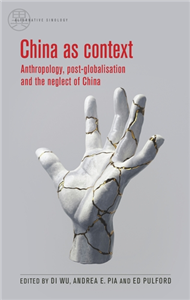
        China as context

        Anthropology, post-globalisation and the neglect of China

        by Di Wu, Andrea E. Pia, Ed Pulford

        Decades-old calls to promote the significance of China for anthropological theory and the social sciences more generally ring more urgently today given China's importance to social, political and economic life globally. Yet Chinese-grounded ideas remain marginal to the discipline, and scholarly discussions retain a sense of China as an 'Other' apart from the 'real' world, and thus unsuitable or generating widely applicable theoretical ideas. Inspired by East Asian postcolonial scholarship, this volume tackles this unsettling situation head-on, arguing that without taking China seriously as a powerful agent, a locus of knowledge production, and a new discursive topos of an emerging post-global imaginary, anthropologists and other social scientists may fail to adequately analyse the global present and make sense of both the material and immaterial forces that animate it, wherever and however they work. Amid the end of Western globalisation and shifting anthropological understandings of relations between ethnography and theory, we show how 'China' must be understood as the ordinary 'context' for anthropological research practices worldwide.

      • Trusted Partner
        2024

        Intoxicating Drugs

        Known and new psychoactive substances

        by Prof. Dr. Niels Eckstein

        Intoxicating? Intoxicating drugs are as old as mankind itself. Whether herbal or produced synthetically in a laboratory, their variety is almost limitless. And every year, more substances are added to the list. Niels Eckstein, who is a Professor of Drug Regulatory Affairs and Pharmacology and a long-standing expert in the narcotics scene, explores the abysses of the darknet and dealer hell, provides insider information, conducts interviews with dealers and producers, and offers profound insights into the bizarre, parallel world of intoxicating substances. At the same time, the author takes a thorough look at the chemistry of the different substance classes and the neurobiological basis of addiction. He also covers production and assesses the danger and addiction potential of designer drugs, BTM, NPS, medicinal drugs and doping substances. This book outlines the political and sociopolitical dimensions of the use of psychoactive substances, classifies them legally, describes risks, approaches, and help strategies, highlights routes out of drug problems and alternatives to drug prohibition, and comments on the opioid crisis in the United States and the „war on drugs.“ “I don‘t care how it‘s regulated: if he wants it and can pay for it, he gets it. If I get caught, I‘ll go to jail for a few years, whether it‘s for a kilo of coke, meph or testo, it doesn‘t matter.“ – In an interview with a dealer

      • Trusted Partner
        The Arts
        November 2018

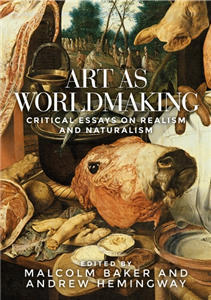
        Art as worldmaking

        Critical essays on realism and naturalism

        by Malcolm Baker, Andrew Hemingway, Andrew Hemingway, Briony Fer, Joshua Shannon, Adrian Rifkin, Malcolm Baker, Martina Droth, Caroline Arscott, Anne Wagner, Martin Powers, Neil McWilliam, Celeste Brusati, T.J. Clark, Rebecca Zurier, Steve Edwards, Tamar Garb, Lisa Tickner, Alistair Rider, Thomas Crow, Gail Day

        Art as worldmaking is a response to Alex Potts's provocative 2013 book Experiments in modern realism. Twenty essays by leading scholars test Potts's recasting of realism through examinations of art produced in different media and periods, ranging from eighth-century Chinese garden aesthetics to video work by the contemporary Russian collective Radek Community. While the book does not neglect avatars of pictorial realism such as Menzel and Eakins, or the question of nineteenth-century realism's historical antecedents, it is contemporary in orientation in that many contributors are particularly concerned with the questions that sculpture, photography and non-traditional media pose for realism as an aesthetic norm. It will be essential reading for students of art history concerned with art's truth value or more broadly with conceptual problems of representation and the intersections of art and politics.

      • Trusted Partner
        The Arts
        June 2021

        Contemporary Spanish cinema and genre

        by Jay Beck, Vicente Rodríguez Ortega

        This volume is the first English-language collection exclusively dedicated to the study of genre in relation to Spanish cinema. Providing a variety of critical perspectives, the collection gives the reader a thorough account of the relationship between Spanish cinema and genre, drawing on case studies of several of the most remarkable Spanish films in recent years. The book analyses the significant changes in the aesthetics, production and reception of Spanish film from 1990 onwards. It brings together European and North American scholars to establish a critical dialogue on the topics under discussion, while providing multiple perspectives on the concepts of national cinemas and genre theory. In recent years film scholarship has attempted to negotiate the tension between the nationally specific and the internationally ubiquitous, discussing how globalisation has influenced film making and surrounding cultural practice. These broader social concerns have prompted scholars to emphasise a redefinition of national cinemas beyond strict national boundaries and to pay attention to the transnational character of any national site of film production and reception. This collection provides a thorough investigation of contemporary Spanish cinema within a transnational framework, by positing cinematic genres as the meeting spaces between a variety of diverse forces that necessarily operate within but also across territorial spaces. Paying close attention to the specifics of the Spanish cinematic and social panorama, the essays investigate the transnational economic, cultural and aesthetic forces at play in shaping Spanish film genres today.

      • Trusted Partner
        The Arts
        January 2019

        Contemporary Spanish cinema and genre

        by Jay Beck, Vicente Rodríguez Ortega

        This volume is the first English-language collection exclusively dedicated to the study of genre in relation to Spanish cinema. Providing a variety of critical perspectives, the collection gives the reader a thorough account of the relationship between Spanish cinema and genre, drawing on case studies of several of the most remarkable Spanish films in recent years. The book analyses the significant changes in the aesthetics, production and reception of Spanish film from 1990 onwards. It brings together European and North American scholars to establish a critical dialogue on the topics under discussion, while providing multiple perspectives on the concepts of national cinemas and genre theory. In recent years film scholarship has attempted to negotiate the tension between the nationally specific and the internationally ubiquitous, discussing how globalisation has influenced film making and surrounding cultural practice. These broader social concerns have prompted scholars to emphasise a redefinition of national cinemas beyond strict national boundaries and to pay attention to the transnational character of any national site of film production and reception. This collection provides a thorough investigation of contemporary Spanish cinema within a transnational framework, by positing cinematic genres as the meeting spaces between a variety of diverse forces that necessarily operate within but also across territorial spaces. Paying close attention to the specifics of the Spanish cinematic and social panorama, the essays investigate the transnational economic, cultural and aesthetic forces at play in shaping Spanish film genres today.

      Subscribe to our

      newsletter