
Your Search Results
-

-

Guangdong Economy Publishing House Co., Ltd.
Guangdong Economics Publishing House Co., Ltd. is a leading professional publisher in China who aims at deliver engaging and adaptive solutions to readers in the fields of business management, investment, marketing & advertising, personal finance,military and scholarly monography in print and electrically. Located in Guangzhou, the capital city of Guangdong Province, the publishing house takes editing, publishing and distributing books, magazines, digital publication as well as copyright trading as its major business.Founded in 1995, we now publish over 500 books annually and provide our diversified products to readers all over China as well as overseas customers in Asia and Europe,. We joined the Guangdong Publishing Group in 1999 and now as a member of the Southern Publishing and Media Company Ltd., which went to the market in 2016, we look to a brighter future and greater marker globally.
View Rights Portal
-
Promoted Content

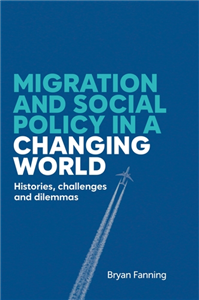 Humanities & Social SciencesJanuary 2026
Migration and social policy in a changing world
Histories, challenges and dilemmas
by Bryan Fanning
Migration and social policy in a changing world bridges the generally separate fields of social policy and migration studies. This book traces social policy responses to migration from the Industrial Revolution to today's era of globalisation and large-scale migration. Through case studies from across the globe, the book explores key themes including rural-urban migration, social citizenship, welfare internationalism and diasporic care systems. It examines how migrants are included in or excluded from social citizenship in host societies, and how they become providers of welfare services such as health and social care. Moving beyond a methodological nationalist focus, the book investigates migrant incorporation into welfare states through family networks, faith communities, and other informal welfare structures. It combines migrants' experiences with host societies' immigration politics, institutional perspectives and policies to present a comprehensive analysis of the migration-welfare relationship. This volume fills a gap in academic literature and offers policymakers, practitioners and scholars a framework for understanding the interplay between migration and social policy in our changing world.
-
Promoted Content
 Humanities & Social SciencesAugust 2022
The power of citizens and professionals in welfare encounters
The influence of bureaucracy, market and psychology
by Nanna Mik-Meyer
This book is about power in welfare encounters. Present-day citizens are no longer the passive clients of the bureaucracy and welfare workers are no longer automatically the powerful party of the encounter. Instead, citizens are expected to engage in active, responsible and coproducing relationships with welfare workers. However, other factors impact these interactions; factors which often pull in different directions. Welfare encounters are thus influenced by bureaucratic principles and market values as well. Consequently, this book engages with both Weberian (bureaucracy) and Foucauldian (market values/NPM) studies when investigating the powerful welfare encounter. The book is targeted Academics, post-graduates, and undergraduates within sociology, anthropology and political science.
-
 Trusted Partner
 Business, Economics & LawJune 2025
Foundations of social ecological economics
The fight for revolutionary change in economic thought
by Clive L Spash
This book explores radical dissent from orthodox mainstream economics, and sets out a theoretically grounded vision for the emerging paradigm of social ecological economics. At the heart of this paradigmatic shift lies an acknowledgement of the inextricable embeddedness of economies in biophysical reality and social structure. The struggle for this transformative vision unfolds through a critical examination of mainstream environmental thought, followed by a nuanced evaluation of contributions from Marxists, socialists, critical institutionalists, feminists and Post-Keynesians grappling with the urgent environmental crisis. Synthesising insights from these diverse and heterodox schools, the book navigates the philosophical underpinnings of science, embracing a critical realist approach that challenges not only mainstream economic thought but also eclectic pluralism, relativism and strong constructionism. The question of what constitutes revolutionary science is explored in light of works by Kuhn, Schumpeter and Neurath, emphasising the pivotal role of values and ideology in works from Marx to Gramsci. Building on these radical and philosophical foundations, the book articulates a preanalytic vision of social ecological economics, dismantling entrenched notions of growth and efficiency in favour of a framework centered on social provisioning and needs embedded in ethics. In a thought-provoking conclusion, the book applies its analytical lens to the multiple crises of modernity within industrialised capital-accumulating economies. An agenda for social ecological transformation toward diverse alternative economies emerges, providing a compelling call to action in the face of contemporary challenges.
-
Trusted Partner
 Humanities & Social SciencesSeptember 2020
Refugees and the violence of welfare bureaucracies in Northern Europe
by Dalia Abdelhady, Nina Gren, Martin Joormann
-
Trusted Partner
-
Trusted Partner
 Sociology & anthropologyFebruary 2017
Environment, labour and capitalism at sea
'Working the ground' in Scotland
by Penny McCall Howard. Series edited by Alexander Smith
This book explores how fishers make the sea productive through their labour, using technologies ranging from wooden boats to digital GPS plotters to create familiar places in a seemingly hostile environment. It shows how their lives are affected by capitalist forces in the markets they sell to, forces that shape even the relations between fishers on the same boat. Fishers frequently have to make impossible choices between safe seamanship and staying afloat economically, and the book describes the human impact of the high rate of deaths in the fishing industry. The book makes a unique contribution to understanding human-environment relations, examining the places fishers create and name at sea, as well as technologies and navigation practices. It combines phenomenology and political economy to offer new approaches for analyses of human-environment relations and technologies. It contributes to the social studies of fisheries through an analysis of how deeply fishing practices and social relations are shaped by political economy. It will be read in universities by social scientists and anthropologists and also by those with an interest in maritime Scotland.
-
Trusted Partner
 Business, Economics & LawFebruary 2025
The political economy of Turkey’s integration to Europe
Uneven development and hegemony
by Elif Uzgören
This book examines Turkey's integration with Europe within structural dynamics of globalisation from a critical political economy perspective. Critical approaches have been sidelined within European Studies. Turkish enlargement is not an exemption. The analyses are based on original data generated by 109 interviews conducted in 2010, 2017 and 2023 with five categories of actors: representatives of capital and labour, political parties, state officials, and struggles around ecology, patriarchy and migration. It argues that the pro-membership was hegemonic in the 2000s which was contested by two rival class strategies, Ha-vet and neo-mercantilism. In the 2010s, pro-membership is no longer hegemonic within rising critical tone of social forces supporting rival class strategies. Unevenness of Turkey's trajectory of integration to Europe is likely to be consolidated through market integration and management of migration through transactional approach.
-
Trusted Partner
 Humanities & Social SciencesJanuary 2019
Sickness, medical welfare and the English poor, 1750-1834
by Steven King, Keir Waddington, David Cantor
At the core of this book are three central contentions: That medical welfare became the totemic function of the Old Poor Law in its last few decades; that the poor themselves were able to negotiate this medical welfare rather than simply being subject to it; and that being doctored and institutionalised became part of the norm for the sick poor by the 1820s, in a way that had not been the case in the 1750s. Exploring the lives and medical experiences of the poor largely in their own words, Sickness, medical welfare and the English poor offers a comprehensive reinterpretation of the so-called crisis of the Old Poor Law from the later eighteenth century. The sick poor became an insistent presence in the lives of officials and parishes and the (largely positive) way that communities responded to their dire needs must cause us to rethink the role and character of the poor law.
-
Trusted Partner
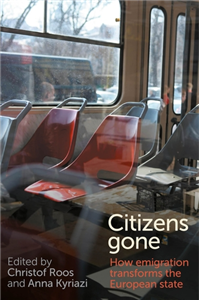 Humanities & Social SciencesJuly 2026
Citizens gone
How emigration transforms the European state
by Christof Roos, Anna Kyriazi
Emigration of scale challenges states at the European periphery at their core. The book documents these struggles along their effects for politics and policy within their economic and welfare dimensions. The politics of emigration describe changing voter attitudes and behaviour pointing towards more support for nationalist and right-wing parties. The policies of emigration show state and local level efforts for the return of emigrant citizens. The welfare and economic dimensions explore the context for emigration and its effects for growth models and systems of health and care within the European single market. The book observes two types of state transformations: the re-emergent nation-state that re-discovers its core resource, the citizenry, as well as states that functionally and socially adapt to population loss.
-
Trusted Partner
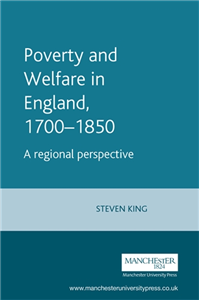 Humanities & Social SciencesSeptember 2000
Poverty and Welfare in England, 1700–1850
A regional perspective
by Steve King
The first comprehensive and up-to-date overview of the literature on poverty, communal welfare systems and alternative welfare strategies. Offers a new perspective on how we should conceptualise poverty and how ordinary families and communities responded to that poverty.. Indicates the need for new directions in the study of poverty and welfare using previously unpublished results form one of the biggest poor law databases in existence.. Argues that welfare historians have paid too little attention to the complexities of defining and measuring poverty, and a variety of primary source material is used to reconsider the extent of poverty in the period 1700-1850.. Provides the first systematic attempt to discuss the regional dimensions of the welfare system in an English context. ;
-
Trusted Partner
 Business, Economics & LawMarch 2025
Tadeusz Kowalik and Poland’s return from socialism to capitalism
Full circle
by Gavin Rae
Tadeusz Kowalik lived through ten decades and three economic and political systems in Poland. He combined his academic study of economic ideas with his socialist ideals of building a fairer and more just society. This book covers the intellectual and political work of Kowalik, within the context of modern Polish history. Kowalik was part of a Polish School of critical left-wing political economists, that included Michal Kalecki and Oskar Lange. Kowalik contributed to the body of work produced by this group, which included his interpretation of their work. Kowalik participated in some of the most momentous events in post-war Polish history, helping to organise a group of intellectuals to advise the shipyard workers at the Gdansk shipyards in 1980. He became a vehement opponent of Poland's neoliberal form of capitalism and left a body of work that illuminates our understanding of capitalism and socialism today.
-
Trusted Partner
 Humanities & Social SciencesApril 2025
Bordering social reproduction
Migrant mothers and children making lives in the shadows
by Rachel Rosen, Eve Dickson
Bordering social reproduction explores what happens when migrants subject to policies that seek to deny them the means of life nonetheless endeavour to make and sustain meaningful lives. Developing innovative theorisations of welfare bordering, the volume provides rich ethnographic insights into the everyday lives of destitute mothers and children who are denied mainstream welfare support in the United Kingdom due to their immigration status. This book shows how enforced destitution and debt work alongside detention and deportation as part of a tripartite of exclusionary technologies of the racial state. It advances the novel concept of weathering to comprehend mother's and children's life-making practices under duress - arguing that these are neither acts of heroic resilience nor solely symptomatic of lives rendered disposable, but indications of the fragilities of repressive migration regimes and, on occasion, refusals to accept their terms of existence.
-
Trusted Partner
 Humanities & Social SciencesNovember 2010
Globalisation, Integration and the Future of European Welfare States
by Theodora-Ismene Gizelis, Emil Kirchner, Thomas Christiansen
This book argues that the welfare state cannot be understood purely as a set of social policy arrangements, but must be seen as a political institution, intended to achieve certain political objectives. The political dimension of the welfare state is essential for understanding its initial emergence as well as assessing its ability to deal with contemporary challenges. Governments use welfare transfers to decrease the risk of political instability that may be politically disruptive and threaten to undermine social cohesion. The success of welfare institutions stems from their ability to foster a redistribution of resources and political consensus that has enabled long-term political stability and economic development. The book develops a general model that looks at the interactive effects between welfare transfers, political instability and state capacity. It provides a unique theoretical contribution to the study of welfare spending in the context of globalisation and integration, analyses the key politial rationale for welfare programmes, namely their role in preserving social cohesion and governance and demonstrates clearly that welfare policies can be successfully adopted to meet new challenges and that retrenchment of the welfare state is not inevitable, using Scandinavia as a leading example of modern thinking policies. ;
-
Trusted Partner
 Humanities & Social SciencesApril 2018
Disability in the Industrial Revolution
Physical impairment in British coalmining, 1780–1880
by David M. Turner, Daniel Blackie, Julie Anderson
An electronic version of this book is also available under a Creative Commons (CC-BY-NC-ND) license, thanks to the support of the Wellcome Trust. The Industrial Revolution produced injury, illness and disablement on a large scale and nowhere was this more visible than in coalmining. Disability in the Industrial Revolution sheds new light on the human cost of industrialisation by examining the lives and experiences of those disabled in an industry that was vital to Britain's economic growth. Although it is commonly assumed that industrialisation led to increasing marginalisation of people with impairments from the workforce, disabled mineworkers were expected to return to work wherever possible, and new medical services developed to assist in this endeavour. This book explores the working lives of disabled miners and analyses the medical, welfare and community responses to disablement in the coalfields. It shows how disability affected industrial relations and shaped the class identity of mineworkers. The book will appeal to students and academics interested in disability, occupational health and social history.
-
Trusted Partner
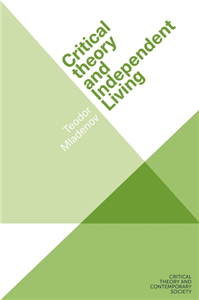 Humanities & Social SciencesDecember 2024
Critical theory and Independent Living
by Teodor Mladenov
Critical theory and Independent Living explores intersections between contemporary critical theory and disabled people's struggle for self-determination. The book highlights the affinities between the Independent Living movement and studies of epistemic injustice, biopower, and psychopower. It discusses in depth the activists' critical engagement with welfare-state paternalism, neoliberal marketisation, and familialism. This helps develop a pioneering comparison between various welfare regimes grounded in Independent Living advocacy. The book draws on the activism of disabled people from the European Network on Independent Living (ENIL) by developing case studies of the ENIL's campaigning for deinstitutionalisation and personal assistance. It is argued that this work helps rethink independence as a form of interdependence, and that this reframing is pivotal for critical theorising in the twenty-first century.
-
Trusted Partner
 Humanities & Social SciencesDecember 2022
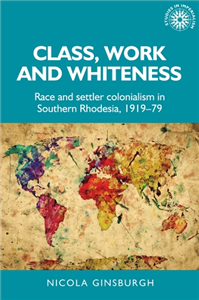
Class, work and whiteness
Race and settler colonialism in Southern Rhodesia, 1919–79
by Nicola Ginsburgh
This book offers the first comprehensive history of white workers from the end of the First World War to Zimbabwean independence in 1980. It reveals how white worker identity was constituted, examines the white labouring class as an ethnically and nationally heterogeneous formation comprised of both men and women, and emphasises the active participation of white workers in the ongoing and contested production of race. White wage labourers' experiences, both as exploited workers and as part of the privileged white minority, offer insight into how race and class co-produced one another and how boundaries fundamental to settler colonialism were regulated and policed. Based on original research conducted in Zimbabwe, South Africa and the UK, this book offers a unique theoretical synthesis of work on gender, whiteness studies, labour histories, settler colonialism, Marxism, emotions and the New African Economic History.
-
Trusted Partner
 Humanities & Social SciencesJuly 2024
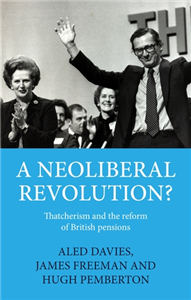
A neoliberal revolution?
Thatcherism and the reform of British pensions
by Hugh Pemberton, James Freeman, Aled Davies
This book examines the Thatcher government's attempt to revolutionise Britain's pensions system in the 1980s and create a nation of risk-taking savers with an individual stake in capitalism. Drawing upon recently-released archival records, it shows how the ideas motivating these reforms journeyed from the writings of neoliberal intellectuals into government and became the centrepiece of a plan to abolish significant parts of the UK's welfare state and replace these with privatised personal pensions. Revealing a government that veered between political caution and radicalism, the book explains why this revolution failed and charts the malign legacy left by the evolutionary changes that ministers salvaged from the wreckage of their reforms. The book contributes to understanding of policy change, Thatcherism, and international neoliberalism by showing how major reforms to social security could reflect neoliberal thought and yet profoundly disappoint their architects.
-
Trusted Partner
Humanities & Social SciencesJune 2026
A neoliberal revolution?
Thatcherism and the reform of British pensions
by Aled Davies, James Freeman, Hugh Pemberton
This book examines the Thatcher government's attempt to revolutionise Britain's pensions system in the 1980s and create a nation of risk-taking savers with an individual stake in capitalism. Drawing upon recently-released archival records, it shows how the ideas motivating these reforms journeyed from the writings of neoliberal intellectuals into government and became the centrepiece of a plan to abolish significant parts of the UK's welfare state and replace these with privatised personal pensions. Revealing a government that veered between political caution and radicalism, the book explains why this revolution failed and charts the malign legacy left by the evolutionary changes that ministers salvaged from the wreckage of their reforms. The book contributes to understanding of policy change, Thatcherism, and international neoliberalism by showing how major reforms to social security could reflect neoliberal thought and yet profoundly disappoint their architects.
-
Trusted Partner
 Humanities & Social SciencesApril 2026
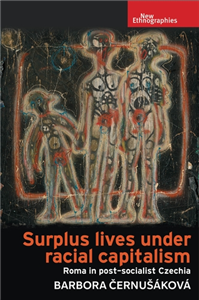
Surplus lives under racial capitalism
Roma in post-socialist Czechia
by Barbora Cernušáková
Surplus lives under racial capitalism is a critical contribution to the study of racial capitalism. It theorises the link between political economy, anti-Roma racism and modern forms of white supremacy in East Central Europe. The book shows how the introduction of capitalism in the 1990s overlapped with the rise of racialised disposability of Roma workers. Since then, their surplusing recurrently comes into sharp relief during the time of crisis. Surplus lives under racial capitalism is built on an investigation of how race and class structure the Czech labour regime and how they form a single site of struggle. One which binds workers across racialised divisions as surplusing continuously expands.
-
Trusted Partner
 MedicineMay 2024
Creative approaches to wellbeing
The pandemic and beyond
by Victoria Tischler, Karen Gray
A compilation of case studies illustrating the use of arts, culture and other community assets individuals and communities used to cope and develop resilience during the Covid-19 pandemic, demonstrating valuable lessons that might help us develop resilience in similar future crises.


