
Your Search Results
-

-

Organisation for Researching and Composing University Textbooks in the Humanities (SAMT)
Over 140 titles of books in cooperation with universities and research centers in countries in Asia and Europe
View Rights Portal
-
Promoted Content

 Humanities & Social SciencesFebruary 2026
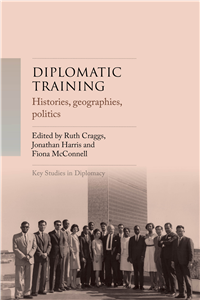
Diplomatic training
Histories, geographies, politics
by Ruth Craggs, Jonathan Harris, Fiona McConnell
Despite the essential role diplomatic training plays in the everyday workings of international relations, international law and in the various multilateral organisations, this practice has received little critical attention in the humanities, social and political sciences. Bringing together detailed accounts of the histories, development and contemporary practices of diplomatic training with insights from key practitioners, this edited collection places training centrally within our understanding of international relations. It argues that diplomatic training both reflects and reproduces hegemonic power relations, whilst at the same time offering opportunities to contest them, and imagine alternative futures. The book includes a substantive introduction, nine full-length chapters from a range of disciplinary and regional perspectives drawing on archival research, oral history, interviews, and ethnographic methods, and four 'interventions': reflection pieces from trainers and directors of training programmes. It offers a globe-spanning, interdisciplinary account of the politics of diplomatic training and appeals to both scholarly and practitioner audiences.
-
Promoted Content
 Business, Economics & LawJanuary 2026
International organisations, non-State actors, and the formation of customary international law
by Sufyan Droubi, Jean d'Aspremont
This volume offers new practical and theoretical perspectives on one of the most complex questions regarding the formation of international law, namely that actors other than states contribute to the making of customary international law. Notwithstanding the International Law Commission's valuable contribution, the making of customary international law remains riddled with acute practical and theoretical controversies that continue to be intensively debated. Making extensive reference to the case-law of international law courts and tribunals, as well as the most recent scholarly work on customary international law, this volume provides a comprehensive study of the contribution of international organisations and non-state actors to the formation of customary international law. With innovative tools and guidance for law students, legal scholars, and researchers in law, as well as legal practitioners, advisers, judges, arbitrators, and counsels, this collection is essential reading for those wishing to understand and address contemporary questions of international law-making.
-
 Trusted Partner
 International lawAugust 2005
The law of international organisations
Second edition
by Nigel D. White
This new edition considers the unifying legal attributes that span vastly differing inter-governmental organisations, from the UN to the EU. A law of international organisations has become established in certain areas, such as legal personality, powers, membership, finance, and decision-making. In other, newer, areas - accountability, responsibility and democracy - politics is still much rawer, and has not yet been fully converted into legal concepts and principles. As with the first edition, there are plenty of examples of organisations given in the text. Individual organisations dealing with issues such as security, health, civil aviation, finance and trade are scrutinised by way of example, to illustrate how different they can be, but also to show how it is possible to debate a set of legal principles that transcend each institution. This new edition of an established text will appeal to students and academics as well as individuals seeking a legal and political insight into international organisations.
-
Trusted Partner
-
Trusted Partner
 Humanities & Social SciencesApril 2010
World Bank Group interactions with environmentalists
Changing international organisation identities
by Susan Park, Mikael Anderssen, Duncan Liefferink
This book shows how environmentalists have shaped the world's largest multilateral development lender, investment financier and political risk insurer to take up sustainable development. The book challenges an emerging consensus over international organisational change to argue that international organisations (IOs) are influenced by their social structure and may change their practices to reflect previously antithetical norms such as sustainable development. This important text locates sources of organisational change with environmentalists, thus demonstrating the ways in which non-state actors can effect change within large intergovernmental organisations through socialisation. It combines a theoretically sophisticated account of international organisation change with detailed empirical evidence of change in one issue area across three institutions. The book will be of interest to academics, postgraduate and upper undergraduate students in international relations, international political economy, environmental politics, development and globalisation studies and geography as well as policy makers, international bureaucrats and development practitioners. ;
-
Trusted Partner
 Humanities & Social SciencesFebruary 2020
The United States in the Indo-Pacific
Obama's legacy and the Trump Transition
by Inderjeet Parmar, Oliver Turner
This edited volume examines the political, economic and security legacies former US President Barack Obama leaves across Asia and the Pacific, following two terms in office between 2009 and 2017. The aim is to advance our understanding of Obama's style, influence and impact during that time and the regional footprint he leaves behind. Moreover, it is to inform upon the endurance of, and prospects for, that legacy after two years of the Presidency of Donald Trump. The volume uniquely explores US engagement with key Indo-Pacific states including China, India and Japan; multilateral institutions and organisations such the East Asia Summit and ASEAN; and issue areas such as regional security, politics and diplomacy, and the economy. It does so with contributions from high-profile scholars and policy practitioners including Michael Mastanduno, Bruce Cumings, Maryanne Kelton, Robert Sutter, and Sumit Ganguly.
-
Trusted Partner
Literature & Literary StudiesJune 2026
The politics of Middle English parables
Fiction, theology, and social practice
by Mary Raschko
The politics of Middle English parables examines the dynamic intersection of fiction, theology and social practice in late-medieval England. Parables occupy a prominent place in Middle English literature, appearing in dream visions and story collections as well as in lives of Christ and devotional treatises. While most scholarship approaches the translated stories as stable vehicles of Christian teaching, this book highlights the many variations and points of conflict across Middle English renditions of the same story. In parables related to labour, social inequality, charity and penance, the book locates a creative theological discourse through which writers attempted to re-construct Christian belief and practice. Analysis of these diverse retellings reveals not what a given parable meant in a definitive sense but rather how Middle English parables inscribe the ideologies, power structures and cultural debates of late-medieval Christianity.
-
Trusted Partner
 Literature & Literary StudiesJanuary 2013
The English manor c.1200–c.1500
by Mark Bailey
Provides a comprehensive introduction and essential guide to one of the most important institutions in medieval England and to its substantial archive. This is the first book to offer a detailed explanation of the form, structure and evolution of the manor and its records. Offers translations of, and commentaries upon, each category of document to illustrate their main features. Examples of each category of record are provided in translation, followed by shorter extracts selected to illustrate interesting, commonly occurring, or complex features. A valuable source of reference for undergraduates wishing to understand the sources which underpin the majority of research on the medieval economy and society.
-
Trusted Partner
-
Trusted Partner
 Business, Economics & LawFebruary 2021
International organisations, non-state actors and the formation of customary international law
by Sufyan Droubi, Jean D'Aspremont
-
Trusted Partner
 Literature & Literary StudiesAugust 2023
Poison on the early modern English stage
Plants, paints and potions
by Lisa Hopkins, Bill Angus
Many early modern plays use poison, most famously Hamlet, where the murder of Old Hamlet showcases the range of issues poison mobilises. Its orchard setting is one of a number of sinister uses of plants which comment on both the loss of horticultural knowledge resulting from the Dissolution of the Monasteries and also the many new arrivals in English gardens through travel, trade, and attempts at colonisation. The fact that Old Hamlet was asleep reflects unease about soporifics troubling the distinction between sleep and death; pouring poison into the ear smuggles in the contemporary fear of informers; and it is difficult to prove. This book explores poisoning in early modern plays, the legal and epistemological issues it raises, and the cultural work it performs, which includes questions related to race, religion, nationality, gender, and humans' relationship to the environment.
-
Trusted Partner
 November 2025
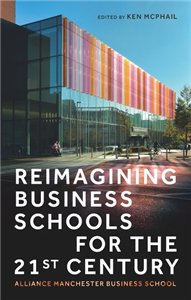
Reimagining business schools for the 21st century
Alliance Manchester Business School
by Kenneth McPhail, James Pendrill
Whether it's dealing with regional economic disparities, global geopolitical upheaval, climate change, or the impact of new technologies such as artificial intelligence, we are living in pivotal times. To mark its 60th anniversary in 2025, this accessible book from Alliance Manchester Business School outlines in detail how business schools can play a significant role in confronting these huge challenges, and equip the next generation of business leaders with the skills they need to embrace them. Informing public and political debate on the role of business in both the causes and solutions to our biggest challenges the book offers a rethinking of the role of business in society. It will also discuss specific examples of how collaborations with business are leading to impact and change in society. Featuring a range of thought-provoking essays co-authored by eminent academics and business leaders, this collection will challenge the status quo and outline how business and management research is helping address grand challenges, generate economic growth, inform policy development, and define business thinking over the next generation.
-
Trusted Partner
-
Trusted Partner
 Business, Economics & LawNovember 2016
The law of international organisations
Third edition
by Iain Scobbie, Jean D'Aspremont, Dominic McGoldrick, Nigel White
This book provides a concise account of the principles and norms of international law applicable to the main-type of international organisation - the inter-governmental organisation (IGO). That law consists of principles and rules found in the founding documents of IGOs along with applicable principles and rules of international law. The book also identifies and analyses the law produced by IGOs, applied by them and, occasionally, enforced by them. There is a concentration upon the United Nations, as the paradigmatic IGO, not only upon the UN organisation headquartered in New York, but on other IGOs in the UN system (the specialised agencies such as the World Health Organisation).
-
Trusted Partner
 Humanities & Social SciencesSeptember 2024
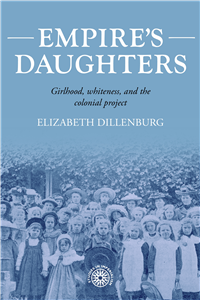
Empire's daughters
Girlhood, whiteness and the colonial project
by Elizabeth Dillenburg
Girlhood and whiteness in the British empire traces the interconnected histories of girlhood, whiteness, and British colonialism in the late nineteenth and early twentieth centuries through the study of the Girls' Friendly Society. The society functioned as both a youth organisation and emigration society, making it especially valuable in examining girls' multifaceted participation with the empire. The book charts the emergence of the organisation during the late Victorian era through its height in the first decade of the twentieth century to its decline in the interwar years. Employing a multi-sited approach and using a range of sources-including correspondences, newsletters, and scrapbooks-the book uncovers the ways in which girls participated in the empire as migrants, settlers, laborers, and creators of colonial knowledge and also how they resisted these prescribed roles and challenged systems of colonial power.
-
Trusted Partner
-
Trusted Partner
 Humanities & Social SciencesJuly 2014
Unpacking international organisations
by Jarle Trondal, Martin Marcussen, Torbjörn Larsson, Frode Veggeland
-
Trusted Partner
Literature & Literary StudiesMarch 2023
Sleep and its spaces in Middle English literature
Emotions, ethics, dreams
by Megan Leitch
Middle English literature is intimately concerned with sleep and the spaces in which it takes place. In the medieval English imagination, sleep is an embodied and culturally determined act. It is both performed and interpreted by characters and contemporaries, subject to a particular habitus and understood through particular hermeneutic lenses. While illuminating the intersecting medical and moral discourses by which it is shaped, sleep also sheds light on subjects in favour of which it has hitherto been overlooked: what sleep can enable (dreams and dream poetry) or what it can stand in for or supersede (desire and sex). This book argues that sleep mediates thematic concerns and questions in ways that have ethical, affective and oneiric implications. At the same time, it offers important contributions to understanding different Middle English genres: romance, dream vision, drama and fabliau.
-
Trusted Partner
 Humanities & Social SciencesApril 2023
The fall and rise of the English upper class
Houses, kinship and capital since 1945
by Daniel R. Smith
The fall and rise of the English upper class explores the role traditionalist worldviews, articulated by members of the historic upper-class, have played in British society in the shadow of her imperial and economic decline in the twentieth century. Situating these traditionalist visions alongside Britain's post-Brexit fantasies of global economic resurgence and a socio-cultural return to a green and pleasant land, Smith examines Britain's Establishment institutions, the estates of her landed gentry and aristocracy, through to an appetite for nostalgic products represented with pastoral or pre-modern symbolism. It is demonstrated that these institutions and pursuits play a central role in situating social, cultural and political belonging. Crucially these institutions and pursuits rely upon a form of membership which is grounded in a kinship idiom centred upon inheritance and descent: who inherits the houses of privilege, inherits England.
-
Trusted Partner



