
Theart Press
Theart Press is a South African publisher specialisingin inspirational books - including poetry, children's books and biography.
View Rights Portal
Theart Press is a South African publisher specialisingin inspirational books - including poetry, children's books and biography.
View Rights Portal
About Naxos licensing service As the world's leading classical music label, we can offer you an unparalleled range of repertoire for licensing. Our continuously-expanding catalogue now contains over 750,000 tracks, all of the highest artistic standard, all in state-of-the-art digital sound and many critically-acclaimed. From Early music to Opera, from Medieval to Post-Modern, from Bach to Wagner, Naxos has it. And because we own our recordings outright we can clear the right overnight without involving third parties. Are you looking for unique music for your project? We are offering a complete service from your initial concept to the finished product. Julia Brunzlow eMail: jb@naxos.de Tel.: 0171-3312975 Julia Gärtner eMail: jg@naxos.de Tel.: 08121-2500747 Web: www.naxoslicensing.com
View Rights Portal
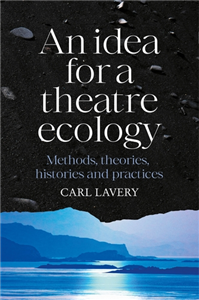
An Idea for a Theatre Ecology is the first book in the discipline of Theatre and Performance Studies to provide a rigorous and coherent theory of the ecology that is immanent to the theatrical medium. Over six clearly written chapters, the book provides a genealogy, outlines a method, provides a lexicon and demonstrates an alternative practice of ecoperformance analysis grounded in the figure of the archipelago. Focusing on Antonin Artaud's theatre of cruelty, the book argues that theatre has no need to provide ecological messages nor to transform itself into a platform for the narration of ecological stories. Instead, more is to be gained, environmentally and politically, by concentrating on the power of images, gestures and voices to create corporeal affects and sensations that implicate the spectators in a terrestrial event.

Death in modern theatre offers a unique account of modern Western theatre, focusing on the ways in which dramatists and theatre-makers have explored historically informed ideas about death and dying in their work. It investigates the opportunities theatre affords to reflect on the end of life in a compelling and socially meaningful fashion. In a series of interrelated, mostly chronological, micronarratives beginning in the late nineteenth century and ending in the early twenty-first century, this book considers how and why death and dying are represented at certain historical moments using dramaturgy and aesthetics that challenge audiences' conceptions, sensibilities, and sense-making faculties. It includes a mix of well-known and lesser-known plays from an international range of dramatists and theatre-makers, and offers original interpretations through close reading and performance analysis.
 Trusted Partner
 Trusted Partner
The first in a new annual series, Women, Theatre and Performance that will consist of themed volumes on diverse aspects of women's engagement with theatre and performance. Ranging across three hundred years the essays in this volume address key questions in women's theatre history and retrieve a number of hitherto 'hidden' histories of women performers. Resituates women's, largely neglected, creative contribution within theatre and cultural history and seeks to challenge orthodox readings of both history and text. Topics include: Susanna Centlivre and the notion of intertheatricality; gender and theatrical space; the repositioning of women performers such as Wagner's Muse, Willhelmina Schröder-Devrient, the Comédie Français' 'Mademoiselle Mars', Mme Arnould-Plessey, and the actresses of the Russian serf theatre. ;
Trusted Partner
There is no-one else in theatre who takes this position There is a lack of books on serious theatre theory Written in a particularly accessible form. ;
Trusted Partner
Trusted Partner

This electronic version has been made available under a Creative Commons (BY-NC-ND) open access license. This book is about science in theatre and performance. It explores how theatre and performance engage with emerging scientific themes from artificial intelligence to genetics and climate change. The book covers a wide range of performance forms from Broadway musicals to educational theatre, from Somali drama to grime videos. It features work by pioneering companies including Gob Squad, Headlong Theatre and Theatre of Debate as well as offering fresh analysis of global blockbusters such as Wicked and Urinetown. The book offers detailed description and analysis of theatre and performance practices as well as broader commentary on the politics of theatre as public engagement with science. Science in performance is essential reading for researchers, students and practitioners working between science and the arts within fields such as theatre and performance studies, science communication, interdisciplinary arts and health humanities.
Trusted Partner
This volume analyses major French plays of the 1830s, focusing on their theatricality, and on the ways in which they expose the workings of the theatre rather than conceal them. Through an examination of performance within these plays, the study posits that the stage is a privileged site of demonstration, a literal 'proving ground' that lends a physical reality to abstract values announced in the text and shared or questioned by the audience. Negotiating between the literary study of drama and performance theory, this work breaks new ground in nineteenth-century theatre scholarship while proposing a fresh direction in the study of text and performance. The limits of performance 'challenges conventional wisdom', offering 'a novel take on the mal du siècle, that thematic hardy perennial of French Romanticism and the nineteenth century in general', combined with 'eminently readable and, therefore, compelling' analysis of plays - 'a thought-provoking addition to work in the field' (Glyn Hambrook, Modern and Contemporary France, November 2008). ;
Trusted Partner

This volume is the first English-language collection exclusively dedicated to the study of genre in relation to Spanish cinema. Providing a variety of critical perspectives, the collection gives the reader a thorough account of the relationship between Spanish cinema and genre, drawing on case studies of several of the most remarkable Spanish films in recent years. The book analyses the significant changes in the aesthetics, production and reception of Spanish film from 1990 onwards. It brings together European and North American scholars to establish a critical dialogue on the topics under discussion, while providing multiple perspectives on the concepts of national cinemas and genre theory. In recent years film scholarship has attempted to negotiate the tension between the nationally specific and the internationally ubiquitous, discussing how globalisation has influenced film making and surrounding cultural practice. These broader social concerns have prompted scholars to emphasise a redefinition of national cinemas beyond strict national boundaries and to pay attention to the transnational character of any national site of film production and reception. This collection provides a thorough investigation of contemporary Spanish cinema within a transnational framework, by positing cinematic genres as the meeting spaces between a variety of diverse forces that necessarily operate within but also across territorial spaces. Paying close attention to the specifics of the Spanish cinematic and social panorama, the essays investigate the transnational economic, cultural and aesthetic forces at play in shaping Spanish film genres today.
Trusted Partner

This volume is the first English-language collection exclusively dedicated to the study of genre in relation to Spanish cinema. Providing a variety of critical perspectives, the collection gives the reader a thorough account of the relationship between Spanish cinema and genre, drawing on case studies of several of the most remarkable Spanish films in recent years. The book analyses the significant changes in the aesthetics, production and reception of Spanish film from 1990 onwards. It brings together European and North American scholars to establish a critical dialogue on the topics under discussion, while providing multiple perspectives on the concepts of national cinemas and genre theory. In recent years film scholarship has attempted to negotiate the tension between the nationally specific and the internationally ubiquitous, discussing how globalisation has influenced film making and surrounding cultural practice. These broader social concerns have prompted scholars to emphasise a redefinition of national cinemas beyond strict national boundaries and to pay attention to the transnational character of any national site of film production and reception. This collection provides a thorough investigation of contemporary Spanish cinema within a transnational framework, by positing cinematic genres as the meeting spaces between a variety of diverse forces that necessarily operate within but also across territorial spaces. Paying close attention to the specifics of the Spanish cinematic and social panorama, the essays investigate the transnational economic, cultural and aesthetic forces at play in shaping Spanish film genres today.
Trusted Partner
 Trusted Partner
A wide-ranging look at the state of contemporary theatre practice, economics, and issues related to identity, politics, and technology. Contains a snapshot dissection of where theatre is, where it has been and where it might be going through the voices of established and emerging theatre artists and scholars from the UK, US and elsewhere. Offers an examination of how to make theatre in a time of crisis and why it is a vital form of communication are at the heart of the book's mission. Asks questions such as: where is theatre now taking place?; what is the relationship between play and performance?; how does funding work?; what states does theatre flourish under?; and if there is a current 'crisis of theatre' should it not be seen as a welcome opportunity to develop a vigorous 'theatre of crisis'?. The international list of contributors includes Jim Carmody, Phyllis Nagy, Michael Billington, Max Stafford-Clark, Peter Sellars, Dragan Klaic, Goat Island, Erik Ehn and many others, making up a vast array of practising artists, thinkers, and scholars. ;
Trusted Partner
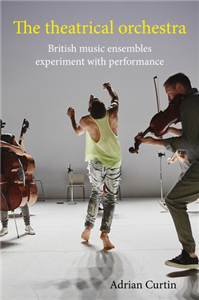
The Theatrical Orchestra analyses experimental performances by British music ensembles in the twenty-first century. Orchestras are reconceiving how concerts are programmed and presented, how musicians perform, where performance can occur, and the role of the audience in the co-creation of the live event. They are embracing theatricality, thereby realising music more fully as a multi-sensory performance art. This book explains how and why orchestras are thinking theatrically about performance, and uses the work of British music ensembles as exemplars. It analyses performances by Aurora Orchestra, London Contemporary Orchestra, London Sinfonietta, Manchester Collective, Multi-Story Orchestra, Paraorchestra, Scottish Ensemble, and Southbank Sinfonia. The book bridges musicology and theatre studies to analyse the theatrical orchestra on the concert stage and beyond, addressing such topics as visuality, storytelling, physical performance, site-engaged performance, and immersive performance.
Trusted Partner
This is the first book to appear in English about theatre from the entire Nazi period (1933-45). It is based on detailed statistical analysis, contemporary press reports, research in German archives and interviews with surviving playwrights, actors and musicians. The volume has an extensive bibliography and is fully illustrated. It forms a much needed guide to this neglected area of European culture and will be of interest to historians, Germanists and theatre specialists. The international contributors are William J. Niven, Glen Gadberry, Erik Levi, Rebecca Rovit, William Abbey and Katharina Havekamp. ;
Trusted Partner

Looking at contemporary film and television, this book explores how popular genres frame our understanding of on-screen performance. Previous studies of screen performance have tended to fix upon star actors, directors, or programme makers, or they have concentrated upon particular training and acting styles. Moving outside of these confines, this book provides a truly interdisciplinary account of performance in film and television and examines a much neglected area in our understanding of how popular genres and performance intersect on screen. Each chapter concentrates upon a particular genre or draws upon generic case studies in examining the significance of screen performance. Individual chapters examine contemporary film noir, horror, the biopic, drama-documentary, the western, science fiction, comedy performance in 'spoof news' programmes and the television 'sit com' and popular Bollywood films.
Trusted Partner

Contemporary focus, right up to date with material from 1980s and 90s. Wide-ranging analyses of major directors, themes, genres and issues, including historical film, genre cinema, women in film and autonomies.
Trusted Partner
A moving exploration of the life and work of the celebrated American writer, blending biography and memoir with literary criticism. Since James Baldwin's death in 1987, his writing - including The Fire Next Time, one of the manifestoes of the Civil Rights Movement, and Giovanni's Room, a pioneering work of gay fiction - has only grown in relevance. Douglas Field was introduced to Baldwin's essays and novels by his father, who witnessed the writer's debate with William F. Buckley at Cambridge University in 1965. In Walking in the dark, he embarks on a journey to unravel his life-long fascination and to understand why Baldwin continues to enthral us decades after his death. Tracing Baldwin's footsteps in France, the US and Switzerland, and digging into archives, Field paints an intimate portrait of the writer's life and influence. At the same time, he offers a poignant account of coming to terms with his father's Alzheimer's disease. Interweaving Baldwin's writings on family, illness, memory and place, Walking in the dark is an eloquent testament to the enduring power of great literature to illuminate our paths.
Trusted Partner
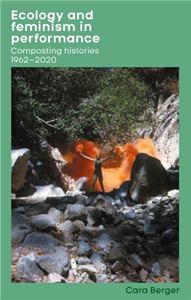
This book provides a vital new history of feminist performance through an ecological lens. It argues that from the 1960s to the present, artists have used performance to challenge the linked oppression of women and nature. Proposing 'composting' as a new method for writing feminist history, the study moves beyond linear narratives to trace regenerative connections between generations of practitioners. It provides sustained analysis of genres from land art to postdramatic theatre, re-evaluating the work of canonical figures while examining how contemporary artists continue to address these urgent themes. By placing ecofeminism in dialogue with feminist new materialism, queer ecology, and transecological thought, this study demonstrates how performance has been a crucial site for imagining more just and sustainable futures in an age of environmental crisis.
Trusted Partner

Stage rights! explores the work and legacy of the first feminist political theatre group of the twentieth century, the Actresses' Franchise League. Formed in 1908 to support the suffrage movement through theatre, the League and its membership opened up new roles for women on stage and off, challenged stereotypes of suffragists and actresses, created new work inspired by the movement and was an integral part of the performative propaganda of the campaign. Introducing new archival material to both suffrage and theatre histories, this book is the first to focus in detail on the Actresses' Franchise League, its membership and its work. The volume is formulated as a historiographically innovative critical biography of the organisation over the fifty years of its activities, and invites a total reassessment of the League within the accepted narratives of the development of political theatre in the UK.
Trusted Partner
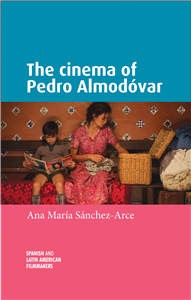
This book offers a comprehensive film-by-film analysis of Spain's most famous living director, Pedro Almodóvar. It shows how Almodóvar's films draw on various national cinemas and genres, including Spanish cinema of the dictatorship, European art cinema, Hollywood melodrama and film noir. It also argues that Almodóvar's work is a form of social critique, his films consistently engaging with and challenging stereotypes about traditional and contemporary Spain in order to address Spain's traumatic historical past and how it continues to inform the present. Drawing on scholarship in both English and Spanish, the book will be of interest to undergraduate and postgraduate students of film studies and Hispanic studies, scholars of contemporary cinema and general readers with a passion for the films of Pedro Almodóvar.

