
Your Search Results
-

-

Narrative Landscape Press Ltd
Narrative Landscape Press is an independent publisher and a provider of publishing services and independent authors in Nigeria.
View Rights Portal
-
Promoted Content

 The ArtsDecember 2015
Classical Hollywood cinema
Point of view and communication
by James Zborowski
This book offers a new approach to filmic point of view by combining close analyses informed by the tools of narratology and philosophy with concepts derived from communication studies. Each chapter stages a conversation between two masterpieces of classical Hollywood cinema and one critical concept that can enrich our understanding of them: Vertigo (Alfred Hitchcock, 1958) and Mr. Deeds Goes to Town (Frank Capra, 1936) are interpreted in relation to point of view; Anatomy of a Murder (Otto Preminger, 1959) and The Man Who Shot Liberty Valance (John Ford, 1962) are considered with reference to the concept of distance; and Letter from an Unknown Woman (Max Ophuls, 1948) and Only Angels Have Wings (Howard Hawks, 1939) are explored through the lens of communication. Each encounter reveals new, exciting and mutually illuminating ways of appreciating not only these case studies, but also the critical concepts at stake. ;
-
Promoted Content
 The ArtsJuly 2021
Tuning in to the neo-avant-garde
by Inge Arteel, Lars Bernaerts, Siebe Bluijs, Pim Verhulst
-
 Trusted Partner
-
Trusted Partner
 Literature & Literary StudiesApril 2022
The narrative grotesque in medieval Scottish poetry
by Caitlin Flynn
-
Trusted Partner
 The ArtsMay 2026
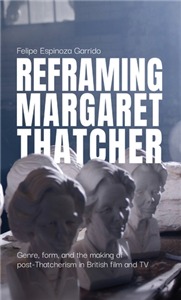
Reframing Margaret Thatcher
Genre, form, and the making of post-Thatcherism in British film and TV
by Felipe Espinoza Garrido
Against the backdrop of Britain's historically anti-Thatcherite films of the 1980s and 1990s, Reframing Margaret Thatcher outlines a decisive shift in the collective imagination of Thatcher. Drawing on genre, trauma, and queer studies, it demonstrates how post-Thatcherite films reflect upon their own entanglement in the polarization of the Thatcher years but also rewrite the clichéd Iron Lady. Chapters on The Iron Lady, This is England, Doomsday, 9 Dead Gay Guys, and the Sherlock TV series investigate various Thatcher imaginations, ranging from Thatcher as a lesbian mob boss, as prime minister in apocalyptic England, to Thatcher as an empty bust. This innovative study shows how the apparent depoliticization of British film makes visible new relations between genre, cinematic form, and imaginations of the past and offers fresh perspectives that both critique and reinterpret Thatcher's enduring impact.
-
Trusted Partner
-
Trusted Partner
 The ArtsJune 2017
Monstrous adaptations
Generic and thematic mutations in horror film
by Richard Hand, Jay McRoy
The fifteen groundbreaking essays contained in this book address the concept of adaptation in relation to horror cinema. Adaptation is not only a key cultural practice and strategy for filmmakers, but it is also a theme of major importance within horror cinema as a hole. The history of the genre is full of adaptations that have drawn from fiction or folklore, or that have assumed the shape of remakes of pre-existing films. The horror genre itself also abounds with its own myriad transformations and transmutations. The essays within this volume engage with an impressive range of horror texts, from the earliest silent horror films by Thomas Edison and Jean Epstein through to important contemporary phenomena, such as the western appropriation of Japanese horror motifs. Classic works by Alfred Hitchcock, David Cronenberg and Abel Ferrara receive cutting-edge re-examination, as do unjustly neglected works by Mario Bava, Guillermo del Toro and Stan Brakhage.



