
Narrative Landscape Press Ltd
Narrative Landscape Press is an independent publisher and a provider of publishing services and independent authors in Nigeria.
View Rights Portal
Narrative Landscape Press is an independent publisher and a provider of publishing services and independent authors in Nigeria.
View Rights Portal
For over 175 years Springer Nature has been advancing discovery by providingthe best possible service to the whole research community.We help researchers uncover new ideas, makesure all the research we publish is significant, robust and stands up to objectivescrutiny, that it reaches all relevant audiences in the best possible format, and can be discovered, accessed, used, re-used and shared.Wesupport librarians and institutions with innovations in technology and data; and providequality publishing support to societies. As a research publisher, Springer Nature is home to trusted brands including Springer, Nature Research, BMC, Palgrave Macmillan and Scientific American. https://group.springernature.com/gp/group
View Rights Portal
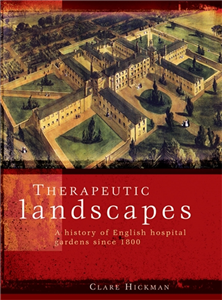
Therapeutic landscapes uniquely brings together historical and contemporary debates on the use of the garden as a therapeutic space. Hickman narrates the story of the landscapes associated with psychiatric, general and specialist medical institutions and asks what did they look like, how were they used and how did this relate to medical concepts? It traces the history of these gardens from the grottos, Chinese galleries and summer houses of elite nineteenth-century lunatic asylums, through Florence Nightingale's championing of the Victorian pavilion hospital design with its courtyard gardens, and the open-air institutions of the Edwardian period with their revolving chalets. It concludes with a discussion of new hospital gardens being created by designers such as Dan Pearson in the twenty-first century. This book will be essential reading for those interested in the histories of place, space and material culture, and in particular medical historians, garden historians and historical geographers. ;

British rural landscapes on film offers insights into how rural areas in Britain have been represented on film, from the silent era, through both world wars, and on into the twenty-first century. It is the first book to exclusively deal with representations of the British countryside on film. The contributors demonstrate that the countryside has provided Britain (and its constituent nations and regions) with a dense range of spaces in which cultural identities have been (and continue to be) worked through. British rural landscapes on film demonstrates that British cinema provides numerous examples of how national identity and the identity of the countryside have been partly constructed through filmic representation, and how British rural films can allow us to further understand the relationship between the cultural identities of specific areas of Britain and the landscapes they inhabit.
 Trusted Partner


What happened with forest dieback? The predictions of the 1980s that forests would be in decline across Europe have not come true. Currently, attention again focuses on the doom scenarios of the loss of entire forests and cultural landscapes in an emotional and sometimes hysterical debate. Biogeographer Hans Jürgen Böhmer refers to updated case studies and his 30 years of research experience on global ecosystems to demonstrate extremely complex interrelations of the natural world that various actors monitor in contrasting ways and characterized by different times and ideologies. Böhmer advocates to embed the sustainability debate more strongly in the living environment, rather than relying exclusively on model calculations.
Trusted Partner
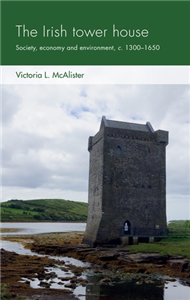
The Irish tower house examines the social role of castles in late-medieval and early modern Ireland. It uses a multidisciplinary methodology to uncover the lived experience of this historic culture, demonstrating the interconnectedness of society, economics and the environment. Of particular interest is the revelation of how concerned pre-modern people were with participation in the economy and the exploitation of the natural environment for economic gain. Material culture can shed light on how individuals shaped spaces around themselves, and tower houses, thanks to their pervasiveness in medieval and modern landscapes, represent a unique resource. Castles are the definitive building of the European Middle Ages, meaning that this book will be of great interest to scholars of both history and archaeology.
Trusted Partner

Dundee had an interesting role to play in the jute trade, but the main player in the story of jute was Calcutta. This book follows the relationship of jute to empire, and discusses the rivalry between the Scottish and Indian cities from the 1840s to the 1950s and reveals the architecture of jute's place in the British Empire. The book adopts significant fresh approaches to imperial history, and explores the economic and cultural landscapes of the British Empire. Jute had been grown, spun and woven in Bengal for centuries before it made its appearance as a factory-manufactured product in world markets in the late 1830s. The book discusses the profits made in Calcutta during the rise of jute between the 1880s and 1920s; the profits reached extraordinary levels during and after World War I. The Calcutta jute industry entered a crisis period even before it was pummelled by the depression of the 1930s. The looming crisis stemmed from the potential of the Calcutta mills to outproduce world demand many times over. The St Andrew's Day rituals in Calcutta, begun three years before the founding of the Indian Jute Mills Association. The ceremonial occasion helps the reader to understand what the jute wallahs meant when they said they were in Calcutta for 'the greater glory of Scotland'. The book sheds some light on the contentious issues surrounding the problematic, if ever-intriguing, phenomenon of British Empire. The jute wallahs were inextricably bound up in the cultural self-images generated by British imperial ideology.
Trusted Partner

This book examines the study of natural history in the Spanish empire in the years 1750-1850. During this period, Spain made strenuous efforts to survey, inventory and exploit the natural productions of her overseas possessions, orchestrating a serries of scientific expeditions and cultivating and displaying American fauna and flora in metropolitan gardens and museums. This book assesses the cultural significance of natural history, emphasising the figurative and utilitarian value with which eighteenth-century Spaniards invested natural objects, from globetrotting elephants to three-legged chickens. It considers how the creation, legitimisation and dissemination of scientific knowledge reflected broader questions of imperial power and national identity. This book will be of particular interest to scholars and students of Spanish and Latin American History, the History of Science and Imperial Culture
Trusted Partner
Engendering an avant-garde is the first book to comprehensively examine the origins of Vancouver photo-conceptualism in its regional context between 1968 and 1990. Employing discourse analysis of texts written by and about artists, feminist critique and settler-colonial theory, the book discusses the historical transition from artists' creation of 'defeatured landscapes' between 1968-71 to their cinematographic photographs of the late 1970s and the backlash against such work by other artists in the late 1980s. It is the first study to provide a structural account for why the group remains all-male. It accomplishes this by demonstrating that the importation of a European discourse of avant-garde activity, which assumed masculine social privilege and public activity, effectively excluded women artists from membership.
Trusted Partner
Imperial power, both formal and informal, and research in the natural sciences were closely dependent in the nineteenth century. This book examines a portion of the mass-produced juvenile literature, focusing on the cluster of ideas connected with Britain's role in the maintenance of order and the spread of civilization. It discusses the political economy of Western ecological systems, and the consequences of their extension to the colonial periphery, particularly in forms of forest conservation. Progress and consumerism were major constituents of the consensus that helped stabilise the late Victorian society, but consumerism only works if it can deliver the goods. From 1842 onwards, almost all major episodes of coordinated popular resistance to colonial rule in India were preceded by phases of vigorous resistance to colonial forest control. By the late 1840s, a limited number of professional positions were available for geologists in British imperial service, but imperial geology had a longer pedigree. Modern imperialism or 'municipal imperialism' offers a broader framework for understanding the origins, long duration and persistent support for overseas expansion which transcended the rise and fall of cabinets or international realignments in the 1800s. Although medical scientists began to discern and control the microbiological causes of tropical ills after the mid-nineteenth century, the claims for climatic causation did not undergo a corresponding decline. Arthur Pearson's Pearson's Magazine was patriotic, militaristic and devoted to royalty. The book explores how science emerged as an important feature of the development policies of the Colonial Office (CO) of the colonial empire.
Trusted Partner
 Trusted Partner
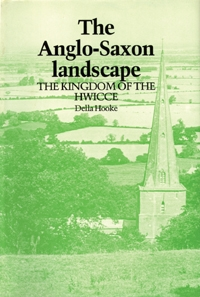
The landscape of pre-Conquest England can often be reconstructed in minute detail. Yet this is one of the first attempts at such a project. Here the evidence is examined for the West Midlands - the counties of Worcestershire, Warwickshire and Gloucestershire, much of which formed the Anglo-Saxon kingdom of the Hwicce. Della Hooke reveals the intimate local landscape through the medium of place names, contemporary documents and archaeological evidence. Her detailed picture brings the Anglo-Saxon countryside very much to life. The patterns which emerge in this period go far to explain the nature of later medieval patterns of settlement and field systems, and provide the key to understanding territorial organisation in the region. ;
Trusted Partner

— Astute analysis of the relationship between politics and the natural sciences — Danger of undermining democratic processes Today, political decision-making processes are closely intertwined with processes of scientific knowledge generation. The natural sciences play a central role in politics. This became particularly clear during the corona pandemic and in the regular press conferences in which politicians largely narrowed their course to scientific findings. The consequence of this maxim is that the rationalisation of politics is accompanied by a politicisation of science. Science is exploited, and sometimes allows itself to be exploited. In his equally brilliant and sharp analysis, Klaus Ferdinand Gärditz explains the consequences of this development for the democratic process in particular.
Trusted Partner

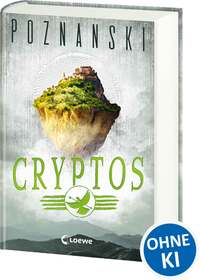
Where do we go when Nowhere is the only destination left? Kerrybrook is Jana‘s favourite virtual escape. An idyllic fishing village with beautiful nature and, every now and then, a breeze of fresh air from the nearby sea. Jana, is this world‘s designer and person in power, she’s satisfied with her masterpiece. Best job so far. Until one day, a dead body is found, in both, ’Virtual Reality‘ and the real world. In times of climate change, VR is the only safe place for humankind. That‘s why Jana needs to solve the crime, she’s responsible for stopping the destruction. • CliFi Thriller (Climate Fiction): Climate change & virtual reality • For fans of Black Mirror (Netflix) • All age readers • Strong, female protagonist • Highly relevant topic WHITE RAVENS recommendation (2021): "In the not too distant future, the world is an inhospitable place: droughts, storms, floods. That’s why world designers construct »alternative realities«, such as landscapes populated by dinosaurs, life at court in the Middle Ages, and surfing and chilling out on a beach. People can switch between these worlds at will and, when they die there, they are not truly dead; instead, they merely return to the »real world« – same as at night when they sleep. Then they are reunited with their body, which is lying inside a capsule. In »Cryptos«, Ursula Poznanski pulls out all the stops of storytelling: She embeds numerous references to human and intellectual history in an action-packed and extremely suspenseful thriller plot. In the process, she raises central existential and ontological questions that result from the interplay between the real and the virtual worlds. This complex dystopian novel is narrated in such an enjoyable way that readers will hardly notice their brains going into overdrive as they devour it."
Trusted Partner
Trusted Partner
Imperial cities explores the influence of imperialism in the landscapes of modern European cities including London, Paris, Rome, Vienna, Marseilles, Glasgow and Seville. Examines large-scale architectural schemes and monuments, including the Queen Victoria Memorial in London and the Vittoriano in Rome. Focuses on imperial display throughout the city, from spectacular exhibitions and ceremonies, to more private displays of empire in suburban gardens. Cconsiders the changing cultural and political identities in the imperial city, looking particularly at nationalism, masculinity and anti-imperialism.
Trusted Partner

Southern Africa played a varied but vital role in Britain's maritime and imperial stories: it was one of the most intricate pieces in the British imperial strategic jigsaw, and representations of southern African landscape and maritime spaces reflect its multifaceted position. Representing Africa examines the ways in which British travellers, explorers and artists viewed southern Africa in a period of evolving and expanding British interest in the region. Drawing on a wide range of archival sources, contemporary travelogues and visual images, many of which have not previously been published in this context, this book posits landscape as a useful prism through which to view changing British attitudes towards Africa. Richly illustrated, this book will be essential reading for scholars and students interested in British, African, imperial and exploration history, art history, and landscape and environment studies.
Trusted Partner
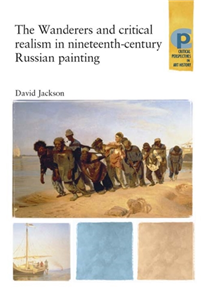
The rise of critical realism in nineteenth-century Russia culminated in 1870 with the formation of the Wanderers, Russia's first independent artistic society. Through depictions of the harsh lives of the peasantry, the fate of political activists, Russian history, landscapes, and portraits of the nation's cultural elite, such as Tolstoy and Dostoevsky, the society became synonymous with dissident sentiments. Yet its members were far from being purveyors of anti-Tsarist propaganda and their canvases reflect also a warm humanity and a fierce pride for such nationalistic themes as Russian myth and legend. Through close readings of single canvases, investigations of major themes and a multi-disciplinary integration of the Wanderers within Russian society, this book gives the first comprehensive analysis of the crucial cultural role played by one of the most successful and genuinely popular schools of art, the legacy of which comprises a fascinating panorama of life and thought in pre-revolutionary Russia.
Trusted Partner

This book examines human disappearances anthropologically in various contexts, ranging from enforced disappearances under oppressive governments and during armed conflicts to disappearing undocumented migrants and, finally, to people who go missing under more everyday circumstances. Two focuses run through the book: the relationship between the state and disappearances, and the consequences of disappearances for the families and communities of missing persons. The book analyses both the circumstances that make some people disappear and the variety of responses that disappearances give rise to; the latter include projects focused on searching for the missing and identifying human remains, as well as political projects that call for accountability for disappearances. While providing empirical examples from a variety of places, with Bosnia-Herzegovina as they key empirical site, the book develops an analytic grip on the slippery category of the 'disappeared'.
Trusted Partner

Decades before the emergence of a French self-styled 'hood' film around 1995, French filmmakers looked beyond the gates of the capital for inspiration and content. In the Paris suburbs they found an inexhaustible reservoir of forms, landscapes and social types in which to anchor their fictions, from bourgeois villas and bucolic riverside cafés to post-war housing estates and postmodern new towns. For the first time in English, contributors to this volume address key aspects of this long film history, marked by such towering figures as Jean Renoir, Jacques Tati and Jean-Luc Godard. Idyllic or menacing, expansive or claustrophobic, the suburb served divergent aesthetic and ideological programmes across the better part of a century. Themes central to French cultural modernity - class conflict, leisure, boredom and anti-authoritarianism - cut across the fifteen chapters.
Trusted Partner
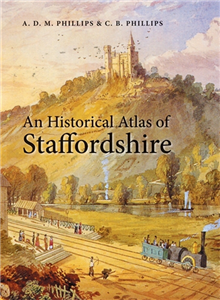
Within its ancient boundaries, Staffordshire is a county of diverse and contrasting historic landscapes. World-renowned industrial complexes sit alongside agricultural systems; castles rub shoulders with urban-industrial housing; the cathedral centre of a vast diocese lies close to the birthplace of primitive Methodism; overtly planned landscapes mingle with the uplands of the Moorlands and the heathlands of Cannock Chase. These many and varied landscapes are both products and reflections of a multiplicity of histories, and students of the county have been keen to explore and relate these pasts. However, no systematic attempt has previously been made to express these accounts in spatial form. This book seeks to demonstrate by maps the various histories that contribute to the diversity of Staffordshire. With its succinct discussions and detailed map presentations of these themes, incorporating new thinking and recent research, the atlas provides an innovative and major contribution to the study of the history of Staffordshire. ;
Trusted Partner


This richly illustrated and clearly structured publication demonstrates how green indoor and outdoor spaces can be used to stabilize individuals’ psychiatric health, to enable relaxation and recovery, to engage people, to enable them to experience inclusion, and to develop creativity and imagination. The author describes the diverse ways that gardening can be used to foster creativity and to engage, and presents the opportunities for interaction that landscapes offer people, animals, and plants. She explains how landscapes can prompt a search for meaning in crisis situations or everyday life and presents spaces for new experiences and taking stock of past experiences in green environments. Target Group: Horticultural therapists, occupational therapists, activity therapists, landscape architects, psychiatric nurses


