
Your Search Results
-

-

Königshausen + Neumann GmbH
The publishing house Königshausen & Neumann was founded in 1979 by the students Johannes Königshausen and Thomas Neumann and has quickly developed into a well-known publishing house for the Humanities in a national and international context. Today we have a backlist of more than 7,000 available (!) titles, with a focus on philosophy, literature and cultural studies, history, psychology, music and art. Our aim is to accompany developments in science with publications and to make developments in science visible and accessible as such in the first place. We want to be an echo chamber not of one thought, but of a plurality of thoughts. Wittgenstein's followers, for example, are represented in our programme, as are his critics. Our authors include philosophers such as Gernot Böhme, Otto Friedrich Bollnow, Karen Gloy, Friedrich-Wilhelm von Herrmann, Vittorio Hösle and Peter Sloterdijk, and literary and linguistic scholars such as Dieter Borchmeyer, Karl Corino, Ulrich Gaier, Walter Hinderer and Volker Klotz, Wolfgang Müller-Funk, Wolfgang Riedel or Hans Rudolf Vaget, psychologists like Johannes Cremerius, Roland Kuhn or Josef Rattner, musicologists like Hermann Danuser, Frieder Reininghaus, Hans-Joachim Hinrichsen, Arnold Jacobshagen, Barbara Meier, Anno Mungen or Arne Stollberg. Many scientists have taken their first steps at K&N. Robert Habeck has published his master's and doctoral theses at K&N. Artists are represented in our programme, such as Diana Damrau, Anja Harteros or Jonas Kaufmann, Marco Goecke or Robert Tewsley. Artists are brought into conversation in a unique way: Richard Wagner or Francisco de Goya, for example. Elazar Benyoëtz entrusts us with his work, but also the young generation of writers, such as Manfred Kern, Markus Orths or Sophie Reyer, published by K&N.
View Rights Portal
-
Promoted Content

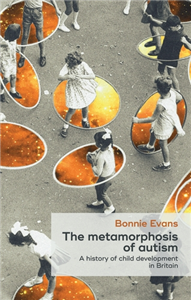 History of medicineFebruary 2017
The metamorphosis of autism
'A history of child development in Britain
by Series edited by Professor Keir Waddington, Bonnie Evans
What is autism and where has it come from? Increased diagnostic rates, the rise of the 'neurodiversity' movement, and growing autism journalism, have recently fuelled autism's fame and controversy. The metamorphosis of autism is the first book to explain our current fascination with autism by linking it to a longer history of childhood development. Drawing from a staggering array of primary sources, Bonnie Evans traces autism back to its origins in the early twentieth century and explains why the idea of autism has always been controversial and why it experienced a 'metamorphosis' in the 1960s and 1970s. Evans takes the reader on a journey of discovery from the ill-managed wards of 'mental deficiency' hospitals, to high-powered debates in the houses of parliament, and beyond. The book will appeal to a wide market of scholars and others interested in autism, neurodiversity and how this relates to wider theories of children's psychological development.
-
Promoted Content
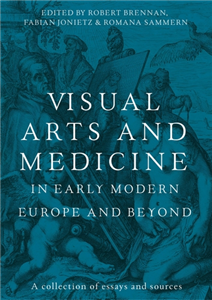 The ArtsFebruary 2026
Visual arts and medicine in early modern Europe and beyond
A collection of essays and sources
by Robert Brennan, Fabian Jonietz, Romana Sammern
This book opens up new perspectives on the relationship between art, medicine, and science in late-medieval and early modern Europe. Looking beyond the traditional nexus of art, anatomy, and optics, the volume sheds light on a broader array of connections between artists and physicians: collaborations between painters and doctors on colour charts, handwork skills common to sculptors and surgeons, the transmission of art theory through medical texts long before the emergence of art writing itself as an independent genre, and the kinship of medical diagnosis with early modes of connoisseurship. Reconfiguring the histories of art, medicine, and science, the book also traverses conventional boundaries between physical and mental health, religious and medical modes of healing, menial and exalted forms of knowledge and labour, as well as vernacular and scientific understandings of human difference, including gender, race, and neurodiversity.
-
 Trusted Partner
 MedicineMarch 2017
The metamorphosis of autism
A history of child development in Britain
by Keir Waddington, Bonnie Evans
This book is available as an open access ebook under a CC-BY-NC-ND licence. What is autism and where has it come from? Increased diagnostic rates, the rise of the 'neurodiversity' movement, and growing autism journalism, have recently fuelled autism's fame and controversy. The metamorphosis of autism is the first book to explain our current fascination with autism by linking it to a longer history of childhood development. Drawing from a staggering array of primary sources, Bonnie Evans traces autism back to its origins in the early twentieth century and explains why the idea of autism has always been controversial and why it experienced a 'metamorphosis' in the 1960s and 1970s. Evans takes the reader on a journey of discovery from the ill-managed wards of 'mental deficiency' hospitals, to high-powered debates in the houses of parliament, and beyond. The book will appeal to a wide market of scholars and others interested in autism.

