Your Search Results

      • Trusted Partner
        Literature & Literary Studies
        October 2012

        Narration in nineteenth-century French short fiction

        Prosper Mérimée to Marcel Schwob

        by Peter Cogman

        The short fiction that flourished in nineteenth-century France has attracted relatively little critical attention compared with the novel. This study focuses on some key stories by major authors of contes and nouvelles from the late 1820s to the 1890s, taking as a starting-point, aspects of narrative technique as a way of exploring not just characteristic strategies of short fiction, but also the ends to which they were put: recurrent themes, and the vision of mankind. Each chapter looks in some detail at three or four stories, referring briefly to other tales for illustration. The underlying point that emerges from this study is that the interest of a tale lies in the telling, not the events. ;

      • Trusted Partner
        Teaching, Language & Reference
        October 2023

        Crafting crime fiction

        by Henry Sutton

      • Trusted Partner
        Humanities & Social Sciences
        March 2026

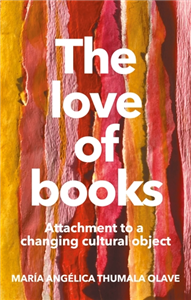
        The love of books

        Attachment to a changing cultural object

        by María Angélica Thumala Olave

        The Love of Books examines the affective bond between people and books in the UK. In the context of the unprecedented abundance of media offering information, storytelling and entertainment, it investigates the attachment to print and digital books amongst readers from a range of backgrounds who read for pleasure, wish to be surrounded by print copies of books, and have trouble discarding books. Unlike existing research, which focuses on prestige, social status, and cultural capital, this study centres on meaning, materiality and emotion. Drawing on interviews and archive material, it shows how attachment emerges from the practical fusion of three elements that have so far been examined separately: the material, surface properties of books, the act of reading, and books' symbolic power.

      • Trusted Partner
        Literature & Literary Studies
        March 2025

        Through the fiction of Phebe Gibbes (1764–90)

        Women, alienation, and prodigality in the long eighteenth century

        by Kathryn Freeman

        Through the Fiction of Phebe Gibbes places this prolific, newly recovered English writer at the centre of the revolutionary period. Gibbes's novels mark the struggles of women for agency in an expanding British empire, from the Seven Years' War to revolutions in American, Haiti and France. With Gibbes as a nexus in a lineage of women writers from Aphra Behn to Jane Austen, Kathryn S. Freeman offers a valuable perspective on the 'long eighteenth century', with Gibbes' own evolution mirroring that of the larger period. The study traces the development of Gibbes' authorial voice from satire to irony through a range of female characters subverting patriarchal oppression. Freeman guides the reader through patterns of narrative voice, concerns with gender and sexuality, and elements of wordplay through detailed discussion of five novels representing Gibbes' evolving representation of a subversive female subjectivity.

      • Family & home stories (Children's/YA)
        February 1905

        Little Women

        by Louise May Alcott

        Little Women "has been read as a romance or as a quest, or both. It has been read as a family drama that validates virtue over wealth", but also "as a means of escaping that life by women who knew its gender constraints only too well".[6]:34 According to Sarah Elbert, Alcott created a new form of literature, one that took elements from Romantic children's fiction and combined it with others from sentimental novels, resulting in a totally new format. Elbert argued that within Little Women can be found the first vision of the "All-American girl" and that her multiple aspects are embodied in the differing March sisters.

      • Trusted Partner
      • Trusted Partner
        July 1995

        Der Glasmensch und andere Science-fiction-Geschichten

        by Marcus Hammerschmitt, Franz Rottensteiner, Marcus Hammerschmitt

        Marcus Hammerschmitt schreibt Science-fiction-Erzählungen, die technologische Phantasie, psychologische Einsicht, Lust am gedanklichen Experiment und poetische Erfindungskraft vereinen. Wie Herbert W. Franke oder Peter Schattschneider basiert er seine Geschichten auf einer soliden Grundlage, entwickelt seine Szenarios und Fabeln spielerisch, verknüpft sie aber dramatisch mit den größeren Problemen von Ökologie einerseits und den Zweifeln und inneren Konflikten des einzelnen andererseits.

      • Trusted Partner
        Literature & Literary Studies
        June 2023

        The politics of male friendship in contemporary American fiction

        by Michael Kalisch

        How might our friendships shape our politics? This book examines how contemporary American fiction has rediscovered the concept of civic friendship and revived a long tradition of imagining male friendship as interlinked with the promises and paradoxes of democracy in the United States. Bringing into dialogue the work of a wide range of authors - including Philip Roth, Paul Auster, Michael Chabon, Jonathan Lethem, Dinaw Mengestu, and Teju Cole - this innovative study advances a compelling new account of the political and intellectual fabric of the American novel today.

      • Trusted Partner
        Literature & Literary Studies
        April 2025

        Invasions

        Fears and fantasies of imagined wars in Britain, 1871-1918

        by Christian K. Melby

        Invasions is an ambitious, new and authoritative study of one of the defining cultural products of the Victorian and Edwardian eras. By the outbreak of war in 1914 invasion-scare fiction had profoundly changed British society, becoming not just a vibrant part of popular culture, but a reference point among military planners, advertisers, and politicians. This intersection between politics and culture, between entertainment and war planning, sets invasion-scare stories apart as one of the most versatile and interesting fictional products in modern British history. Building on recent work in both history and literature studies, Invasions is the first study of invasion-scare fiction to examine both the form (that is, fiction) and the function (the political argument) of the genre.

      • Trusted Partner
        Teaching, Language & Reference
        May 2025

        Writing creatively for work or study

        by Helen Kara

      • Trusted Partner
      • Trusted Partner
        Literature & Literary Studies
        May 2019

        Twenty-first-century fiction

        by Daniel Lea

      • Trusted Partner
        The Arts
        March 2025

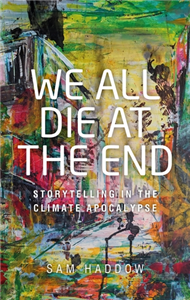
        We all die at the end

        Storytelling in the climate apocalypse

        by Sam Haddow

        We all die at the end offers a survey of contemporary end-of-the-world fiction, spanning literature, children's fiction, video games, theatre and film. It draws on eco-critical philosophy and narrative theory to show ways in which the climate crisis is reorienting storytelling in the face of foreseeable human extinction. In the process, it argues that such stories have a role to play in helping us come to terms with the severity and scale of the crisis that we face.

      • Trusted Partner
        Teaching, Language & Reference
        October 2025

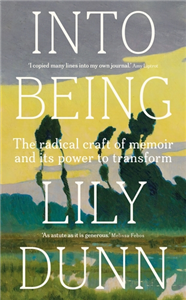
        Into being

        The radical craft of memoir and its power to transform

        by Lily Dunn

        The acclaimed author of Sins of My Father shares the secrets of writing a new, transformative kind of memoir. Into being is an essential guide to writing memoir in a radical and empowering way. Drawing on her experience as a memoirist and a teacher of creative writing, Lily Dunn presents the ground-breaking idea that the craft of memoir itself can offer a form of transformation. Dunn demystifies the memoirist's art, helping readers to find meaning in raw experience and elevate the personal to the universal. She considers intriguing questions, from why our memories give greater significance to certain events to how we can write honestly without intruding too far into the lives of our loved ones. She also explores how writers are extending the memoir form to create something hybrid, playful and subversive. In an age of social media, filled with confessions, re-inventions and distortions of the self, the question of what it means to be an individual is more urgent than ever. Into being shows readers how to turn writing memoir into a journey of discovery - one that can be shared with the whole world.

      • Trusted Partner
        Literature & Literary Studies
        June 2021

        Passing into the present

        Contemporary American fiction of racial and gender passing

        by Sinead Moynihan

        This book is the first full-length study of contemporary American fiction of passing. Its takes as its point of departure the return of racial and gender passing in the 1990s in order to make claims about wider trends in contemporary American fiction. The book accounts for the return of tropes of passing in fiction by Phillip Roth, Percival Everett, Louise Erdrich, Danzy Senna, Jeffrey Eugenides and Paul Beatty, by arguing meta-critical and meta-fictional tool. These writers are attracted to the trope of passing because passing narratives have always foregrounded the notion of textuality in relation to the (il)legibility of "black" subjects passing as white. The central argument of this book, then, is that contemporary narratives of passing are concerned with articulating and unpacking an analogy between passing and authorship. The title promises to inaugurate dialogue on the relationships between passing, postmodernism and authorship in contemporary American fiction.

      • Trusted Partner
      • Trusted Partner
        Literature & Literary Studies
        June 2021

        Sara Paretsky

        Detective fiction as trauma literature

        by Cynthia Hamilton

        Sara Paretsky is known for her influential V.I. Warshawski series, which transformed the masculine hard-boiled detective formula into a vehicle for feminist values. But Paretsky does more than this. Her novels also illustrate the extent to which detective fiction acts as a literature of trauma, allowing Paretsky to address the politics of agency in ways that go beyond the personal, for trauma always has a social and a political dimension. Paretsky's work also exploits the way detective fiction mirrors the writing of history. Here, Paretsky uses the form to expose the partiality of historical accounts - whether they be personal, institutional, or national - that authorise 'forgetting' of a particularly insidious kind. Significantly, all these issues are explored within the framework of the traditional hard-boiled detective novel. As a result, Paretsky's achievement forces us to acknowledge the deeply subversive potential of detective fiction.

      • Trusted Partner
        November 1991

        Studying fiction

        A guide and study programme

        by Roy Johnson

      Subscribe to our

      newsletter