
Éditions de la Pastèque
Livres Canada Books
View Rights Portal

Pastrengo is a Milan-based literary agency founded on September 2016 by Francesco Sparacino and Michele Turazzi. Pastrengo represents Italian authors of fiction (commercial and literary, young adult) and non fiction.
View Rights Portal
The pastor in print explores the phenomenon of early modern pastors who chose to become print authors, addressing ways authorship could enhance, limit or change clerical ministry and ways pastor-authors conceived of their work in parish and print. It identifies strategies through which pastor-authors established authorial identities, targeted different sorts of audiences and strategically selected genre and content as intentional parts of their clerical vocation. The first study to provide a book-length analysis of the phenomenon of early modern pastors writing for print, it uses a case study of prolific pastor-author Richard Bernard to offer a new lens through which to view religious change in this pivotal period. By bringing together questions of print, genre, religio-politics and theology, the book will interest scholars and postgraduate students in history, literature and theological studies, and its readability will appeal to undergraduates and non-specialists.
 Trusted Partner
 Trusted Partner
Trusted Partner
Trusted Partner

Renaissance pastoral poetry is gaining new interest for its distinctive imaginative vein, its varied allusive content, and the theoretical implications of the genre. This is by far the biggest ever anthology of English Renaissance pastoral poetry, with 277 pieces spanning two centuries. Spenser, Sidney, Jonson and Drayton are amply represented alongside their many contemporaries. There is a wide range of pastoral lyrics, weightier allusive pieces, and translations from classical and vernacular pastoral poetry; also, more unusually, pastoral ballads and poems set in all kinds of prose works. Each piece has been freshly edited from the original sources, with full apparatus and commentary. This book will be complemented by a second volume, to be published in 2017, which includes a book-length introduction, textual notes and analytic indices.
Trusted Partner
Trusted Partner
 Trusted Partner

This book describes how human rights have given rise to a vision of benevolent governance that, if fully realised, would be antithetical to individual freedom. It describes human rights' evolution into a grand but nebulous project, rooted in compassion, with the overarching aim of improving universal welfare by defining the conditions of human well-being and imposing obligations on the state and other actors to realise them. This gives rise to a form of managerialism, preoccupied with measuring and improving the 'human rights performance' of the state, businesses and so on. The ultimate result is the 'governmentalisation' of a pastoral form of global human rights governance, in which power is exercised for the general good, moulded by a complex regulatory sphere which shapes the field of action for the individual at every turn. This, unsurprisingly, does not appeal to rights-holders themselves.
Trusted Partner
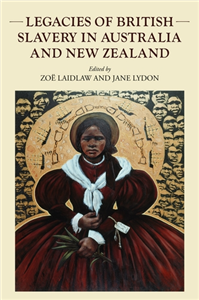
This book investigates the legacies of British slavery beyond Britain, focusing upon the colonisation of Australia and New Zealand, and explores why this history has been overlooked. After August 1833, when the British Parliament abolished slavery in the British Caribbean, Mauritius and the Cape, the former slave-owners were paid compensation for the loss of their 'property'. New research has begun to show that many beneficiaries had ties to other parts of the British Empire, including the settler colonies of Australia, New Zealand, Canada and South Africa. Through a range of case studies, contributors to this collection trace the movement of people, goods, capital, and practices from the Caribbean to the new Australasian settler colonies. Chapters consider a range of places, people and themes to reveal the varied ways that slavery continued to shape imperial relationships, economic networks, and racial labour regimes after 1833.
Trusted Partner
Trusted Partner
Trusted Partner
Trusted Partner
Trusted Partner
Trusted Partner
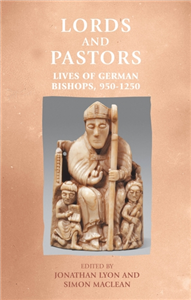
This book presents biographies of six bishops from the medieval German empire, translated into English for the first time. The bishop was a ubiquitous figure across medieval Europe, providing leadership to the community of Christians within dioceses and linking day-to-day life to centres of political power and ecclesiastical authority. They were particularly prominent in the kingdom of Germany, where the most powerful churchmen led armies and advised kings. The texts collected here, originating in the tenth to thirteenth centuries, offer readers a lively entrée to medieval social, religious and political conditions, as well as fascinating biographical details and information about law, architecture, warfare and government. They have been chosen to illustrate changes in the role of bishop over time; and the individuality, in character and activity, of each figure.
Trusted Partner
Trusted Partner
 Trusted Partner


Dieter Borchmeyer, geboren 1941, ist Professor emeritus an der Universität Heidelberg, war Präsident der Bayerischen Akademie der Schönen Künste und lehrt im Rahmen der Stiftungsdozentur »Heidelberger Vorträge zur Kulturtheorie« weiterhin an der Universität Heidelberg. Borchmeyers Arbeitsfeld ist vor allem die deutsche Literatur vom 18. bis 20. Jahrhundert und das Musiktheater mit Monographien zu Goethe, Schiller, Mozart, Wagner und Nietzsche. Zuletzt erschien von ihm Was ist deutsch? (2017).
Trusted Partner
 Trusted Partner



