
La Pollera Ediciones
La Pollera's catalog includes narrative, essay, and chronicle of contemporary and classic authors.
View Rights Portal
La Pollera's catalog includes narrative, essay, and chronicle of contemporary and classic authors.
View Rights Portal
Polperro Heritage Press is an independent British publisher, established in 1995. Recent titles from Polperro Press have included biographies, guides and a growing list of Cornish local history titles.
View Rights Portal Trusted Partner

 Trusted Partner
Trusted Partner
Trusted Partner

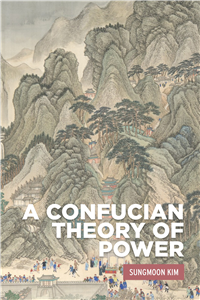
In the book's lead essay, Sungmoon Kim offers a comprehensive analysis of Confucian power. Through a blend of philosophical, political, and historical analysis, Kim challenges the dominant idea that Confucianism is primarily centred on virtue ethics. Instead, he argues that Confucianism perceives power through the prism of responsibility. Kim not only traces this perspective throughout history but also demonstrates its relevance to contemporary society. He contrasts this Confucian perspective with Western political theory's view of power as control. Political theorists and philosophers will offer essay responses to Sungmoon Kim's provocation, offering a dialogue approach to provide a comprehensive analysis of the Confucian conception of power.
Trusted Partner
In the aftermath of the greed vs. grievance debate and the new wars paradigm, the focus of conflict studies shifted decisively to understanding "predatory" behaviours as the raison d'etre of contemporary conflict. Conflict was viewed as a continuum in which the more you engage in criminal behaviour, the less political you are.This approach has been robustly criticised over the past 15 years; however, in the process, we have been left with unsuitable concepts to handle the complex interactions between civil war, political power and criminality. The departure point here is the understanding of politics and criminality as two historically differentiated domains of human activity. Different, but interrelated, often co-constitutive and overlapping. Here, we empirically and theoretically explore their interactions, connections, and convergences, not focusing solely on irregular actors, thus bringing back the State and elites into this debate.
Trusted Partner
Populism in Europe offers a detailed and systematic analysis of the ideology, electoral and governmental performances, organisational model, type of leadership and member activism of the Northern League under its founder, Umberto Bossi (1991-2012). Based on a wealth of original research, the book identifies the Northern League's consistent and coherent ideology, its strong leadership and its ability to create communities of loyal partisan activists as key ingredients of its success. Through their in-depth analysis, Albertazzi and Vampa show that the League has much to teach us about how populists can achieve durability and rootedness and how parties of all kinds can still benefit from a committed and dedicated membership today.
Trusted Partner

Democratising Conservative leadership selection traces the effects of democracy on the British Conservative Party, specifically looking at how changes in the ways the Conservatives elect their leaders have altered their mandate to lead. The book includes analysis of the original undemocratic 'system' whereby a leader 'emerged' from a shadowy process of consultation, and of the six elections between 1965 and 1997 where the parliamentary Conservative Party alone chose the Party leader. This historical perspective is followed by in-depth analysis of the three contests since 2001 that have taken place under the 'Hague rules', according to which ordinary Party members have the final say. This is the most comprehensive account yet published of the operation of those rules on the Conservative Party and the legitimacy of its leadership, and of the 2005 election of David Cameron. This book will be essential reading for students, academic specialists and anyone interested in the recent history and contemporary practice of British Conservatism. ;
Trusted Partner

This book shows how British politics is being transformed from a leadership-run system to one dictated by public needs and demands. No longer confined to party politics, organisations including the monarchy, the BBC, universities, local councils, charities and the Scottish Parliament are adopting the tools of market intelligence to understand their market needs and demands. The political marketing revolution raises many questions, such as whether the student or patient really does know best and can decide their own education and health care. The book calls for a debate about the movement of the British political system towards a market-orientation and a re-negotiation of the relationship between leaders and the market. Whilst recognising the need for political leaders to listen, this debate places some responsibilities on the political consumer, looking to create a new relationship that might work more effectively for both sides.
Trusted Partner

In this accessible and sophisticated exploration of the nature and workings of social and political power, Haugaard examines the interrelation between domination and empowerment. Building upon the perspectives of Steven Lukes, Michel Foucault, Amy Allen, Hannah Arendt, Anthony Giddens, Pierre Bourdieu and others, he offers a clear theoretical framework, delineating power in four interrelated dimensions. The first and second dimensions of power entail two different types of social conflict. The third dimension concerns tacit knowledge, uses of truth and reification. Drawing upon genealogical theory and accounts of slavery as social death, the fourth dimension of power concerns the power to create social subjects. The book concludes with an original normative pragmatist power-based account of democracy. Offering lucid and entertaining illustrations of complex theoretical perspectives, this book is essential reading for scholars and activists.
Trusted Partner
The book addresses what is political in critical theory and which aspects, arguments or notions of critical theory maintain political significance for the 20th and the 21st centuries. The collection of essays comprises itself of a series of clear and critical perspectives that analyze the extent to which critical theory relates political argument to modern societies and, thereby, exerts a critique of the multiple social and political phenomena of late modernity. The contributors focus on a multiplicity of universal phenomena such as globalization, multiple crises, late capitalism and the social role of the sciences, and posit some novel criticism of the contemporary social sphere, as it is situated within the wider system of global capitalism. They also present a plurivalent critique that links arguments in Marxism and Freud to all three generations of critical theory.
Trusted Partner

This book examines Turkey's integration with Europe within structural dynamics of globalisation from a critical political economy perspective. Critical approaches have been sidelined within European Studies. Turkish enlargement is not an exemption. The analyses are based on original data generated by 109 interviews conducted in 2010, 2017 and 2023 with five categories of actors: representatives of capital and labour, political parties, state officials, and struggles around ecology, patriarchy and migration. It argues that the pro-membership was hegemonic in the 2000s which was contested by two rival class strategies, Ha-vet and neo-mercantilism. In the 2010s, pro-membership is no longer hegemonic within rising critical tone of social forces supporting rival class strategies. Unevenness of Turkey's trajectory of integration to Europe is likely to be consolidated through market integration and management of migration through transactional approach.
Trusted Partner

The first edition of this book demonstrated that British political parties now attempt to offer a complete product that will appeal to a majority of voters, rather than being influenced by a political ideology and firm belief system. This new edition provides an updated and more in-depth exploration of the political marketing approach, including analysis of the 2001 and 2005 elections. It re-presents the influential theory of market, sales and product-oriented parties, discussing the potential and the limits of consumerism, and the need to blend business concepts with a traditional understanding of politics. Lee-Marshment examines Blair's New Labour government in order to draw out lessons on delivery, maintaining market intelligence and the effect of changing to a leadership approach that goes against country and party. Analysis of the Conservatives in opposition shows how the best intentions of party leaders to implement a market-orientation can be thwarted by internal resistance and traditional party elites. Providing a more reflective and critical analysis, the second edition offers a more nuanced discussion on how political parties can not only win elections but govern successfully.
Trusted Partner

Egypt and the rise of fluid authoritarianism focuses on the struggle of the post-2013 political authorities for internal political legitimacy after the crisis following the 2013 coup d'état. It explores the microstructural and macro-systemic dynamics of leadership, power, protests and the authority-making process in political systems. These cannot simply be defined as structural, political, social and economic projections of the authoritarianism of the past, but rather as a rupture with that past. The book offers a complex, ground-breaking socio-political and economic analysis into how the forging of an internal political legitimacy claim has eventually modified the regime in Egypt along the authoritarian spectrum, turning into a fluid autocracy closer to a non-exclusivist personalist regime. This shift had implications that resonated both politically and economically.
Trusted Partner

In this book Kauppi develops a structural constructivist theory of the European Union and critically analyses, through French and Finnish empirical cases, the political practices that maintain the Union's 'democratic deficit'. Kauppi conceptualises the European Union as both an arena for political contention and a nascent political order. In this evolving, multi-levelled European political field, individuals and groups construct material and symbolic structures of political power, grounded in a variety of social resources such as nationality, culture, and gender. The author shows how the dominance of both executive political resources and domestic political cultures has prevented the development of European democracy. Supranational executive networks have become more autonomous, reinforcing the dominance of the resources they control. At the same time, national political cultures condition the political status of elected institutions such as the European parliament. The book is particularly suited for undergraduate and graduate students in the fields of European Politics, European Union Studies and International Relations. ;
Trusted Partner
 Trusted Partner
Trusted Partner
Trusted Partner
 Trusted Partner

Democratizing AI offers a powerful rethinking of how artificial intelligence should be governed. Challenging the dominance of tech elites in shaping AI's future, Zimmermann argues that AI deployment is a political act-one that must be subject to democratic control. She proposes a practical "playbook" for reclaiming agenda-setting power through civic participation, public ownership, and institutional reform. Engaging with leading critics, Zimmermann defends a risk-sensitive proceduralist approach while acknowledging the deeper structural challenges posed by capitalism, inequality, and democratic fatigue. This book is a call to action: to resist learned helplessness, confront techno-authoritarianism, and shape AI's trajectory in line with democratic values. Thoughtful, urgent, and visionary, the book is essential reading for anyone concerned with the future of technology and democracy.
Trusted Partner
In defence of councillors is an unashamed defence of local representative democracy and of those elected to serve as councillors from the often ill-informed, ill-judged and inaccurate criticism made by the media, government and public, of councillors' personal, political and professional roles. By using qualitative research from a number of related projects, the book examines the roles, functions and responsibilities of councillors and the expectations placed upon them by citizens, communities and government. It also examines the impact council membership has on other facets of the councillor's life. The book examines how councillors develop strategies to overcome the constraints and restrictions on their office so as to be able to govern their communities, balance their political and public life and democratise and hold to account a vast array of unelected bodies that spend public money and develop public policy without the electoral mandate and legitimacy held by our councillors.



