
Live It Publishing
Live It Publishing is an innovative independent publishing house discovering new titles through its Live It Publishing and Britain's Next Bestseller (BNBS) imprints.
View Rights Portal
Live It Publishing is an innovative independent publishing house discovering new titles through its Live It Publishing and Britain's Next Bestseller (BNBS) imprints.
View Rights Portal
Founded in 2008, Grua publishes high quality fiction and nonfiction, both Brazilian and foreign.
View Rights Portal

This book attempts to establish a more holistic approach to the rehabilitation of war-injured civilians, one that adjusts to the patients' long-term needs. Kovacic not only offers an insight into the daily realities of patients during and after rehabilitation, but seeks to develop a new way to perceive, respect and involve them in health care. Based on comprehensive interviews with patients and MSF staff, as well as extended field observations, Reconstructing lives follows Syrian and Iraqi war-injured civilians in their journey to recovery. From their improvised medical treatment in their home countries, to the MSF-run hospital in Amman Jordan, to their return home, Kovacic explores how individuals attempt to pick up the pieces of their previous lives, add new elements from their treatment and travel experiences, and finally establish a new reconstructed reality. The book explores how the interaction between MSF staff and their patients contributes to the immense task of healing that awaits victims of war. The reader visits the intimate medical and domestic spaces that usually remain closed to the outside observer, spaces rich with human contact, perceptions, emotions, conflicts and reconciliations.
 Trusted Partner

David Livingstone, the 'missionary-explorer', has attracted more commentary than nearly any other Victorian hero. Beginning in the years following his death, he soon became the subject of a major biographical tradition. Yet out of this extensive discourse, no unified image of Livingstone emerges. Rather, he has been represented in diverse ways and in a variety of socio-political contexts. Until now, no one has explored Livingstone's posthumous reputation in full. This book meets the challenge. In approaching Livingstone's complex legacy, it adopts a metabiographical perspective: in other words, this book is a biography of biographies. Rather than trying to uncover the true nature of the subject, metabiography is concerned with the malleability of biographical representation. It does not aim to uncover Livingstone's 'real' identity, but instead asks: what has he been made to mean? Crossing disciplinary boundaries, Livingstone's 'lives' will interest scholars of imperial history, postcolonialism, life-writing, travel-writing and Victorian studies.
Trusted Partner
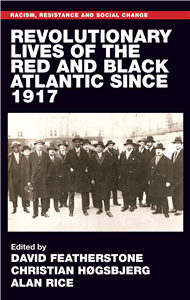
Revolutionary lives of the Red and Black Atlantic brings to light the life histories of a wide range of radical figures whose political activity in relation to the black liberation struggle was profoundly shaped by the global impact and legacy of the Russian Revolution of October 1917. The volume introduces new perspectives on the intellectual trajectories of well-known figures and critical activists including C. L. R. James, Paul Robeson, Walter Rodney and Grace P. Campbell. This biographical approach brings a vivid and distinctive lens to bear on how racialised social and political worlds were negotiated and experienced by these revolutionary figures, and on historic black radical engagements with left political movements, in the wake of the Russian Revolution.
Trusted Partner

This source book offers a comprehensive treatment of solitary religious lives in England in the late Middle Ages. It covers both enclosed recluses (anchorites) and free-wandering hermits, and explores the relationship between them. Although there has been a recent surge of interest in the solitary vocations, especially anchorites, this has focused almost exclusively on a small number of examples. The field is in need of reinvigoration, and this book provides it. Featuring translated extracts from a wide range of Latin, Middle English and Old French sources, as well as a scholarly introduction and commentary from one of the foremost experts in the field, Hermits and anchorites in England is an invaluable resource for students and lecturers alike.
Trusted Partner
Trusted Partner


In the middle of our lives, the cards are reshuffled: marriages are divorced, careers are questioned, friendships are ended, questions of meaning are asked, bodies change - and not just hormonally. At the same time, children leave home and parents become carers. From the age of 45, the majority of our population is at the centre of a second upheaval that affects all facets of our lives and leaves us at a loss in many ways. Not only in our daily lives, but also when it comes to planning for our own old age. This guide is designed to help us find our way. It presents the most important information from all areas relevant to a good life after 45. Leading experts from the fields of medicine, nutrition, philosophy, theology, psychology, care, law and finance give recommendations on what to look out for and what tools are needed to get through these challenging years unscathed. Useful checklists round off the articles. The book shows us the unique opportunity to see these challenges not as a crisis but as a source of strength. Not only can we come through this period of our lives healthy and happy, but we can also shape it so that the next age threshold is no longer frightening. During the second phase of adolescence, we lay the foundations for whether and how we will grow older. Be it in terms of health or living together with family and friends. With contributions from: Prof. Dr. Martin Gessmann (philosophy), Dipl. Psych. Claudia Kühner (psychology), Dr Suso Lederle (medicine), Dr Petra Forster (nutrition), Christian Hald, Anja Heine (law), Prof Dr Philipp Schreiber (finance), Prof Dr Thomas Klie (nursing care insurance), Georg Eberhardt (religion).
Trusted Partner
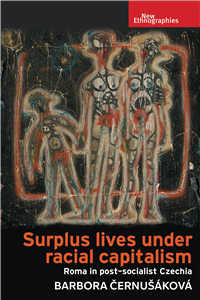
Surplus lives under racial capitalism is a critical contribution to the study of racial capitalism. It theorises the link between political economy, anti-Roma racism and modern forms of white supremacy in East Central Europe. The book shows how the introduction of capitalism in the 1990s overlapped with the rise of racialised disposability of Roma workers. Since then, their surplusing recurrently comes into sharp relief during the time of crisis. Surplus lives under racial capitalism is built on an investigation of how race and class structure the Czech labour regime and how they form a single site of struggle. One which binds workers across racialised divisions as surplusing continuously expands.
Trusted Partner
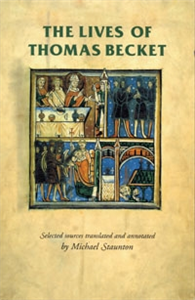
This collection tells the story of Thomas Becket's turbulent life, violent death and extraordinary posthumous acclaim in the words of his contemporaries. The only modern collection from the twelfth-century Lives of Thomas Becket in English and features all his major biographers, including many previously untranslated extracts. Providing both a valuable glimpse of the late twelfth-century world, and an insight into the minds of those who witnessed the events. By using contemporary sources, this book is the most accessible way to study this central episode in medieval history. Thomas Becket features prominently in most medieval core courses. This book allows the subject to be taught as never before, and is highly suitable as a set text. ;
Trusted Partner

This collection tells the story of Thomas Becket's turbulent life, violent death and extraordinary posthumous acclaim in the words of his contemporaries. The only modern collection from the twelfth-century Lives of Thomas Becket in English and features all his major biographers, including many previously untranslated extracts. Providing both a valuable glimpse of the late twelfth-century world, and an insight into the minds of those who witnessed the events. By using contemporary sources, this book is the most accessible way to study this central episode in medieval history. Thomas Becket features prominently in most medieval core courses. This book allows the subject to be taught as never before, and is highly suitable as a set text.
Trusted Partner

With its fantasy of magical travel and inexhaustible riches, Thomas Dekker's Old Fortunatus is the quintessential early modern journeying play. The adventures of Fortunatus and his sons, aided by a magical purse and wishing-hat, offers the period's most overt celebration of the pleasures of travel, as well as a sustained critique of the dangers of intemperance and prodigality. Written following a period of financial difficulty for Dekker, the play is also notable for its fascination with the symbolic, mercantile and ethical uses of gold. This Revels Plays edition is the first fully annotated, single-volume critical edition of Old Fortunatus. It offers scholarly discussion of the play's performance and textual history, including attention to the German version printed and performed in the early seventeenth century. It provides a long overdue critical reappraisal of this unjustly neglected play.
Trusted Partner
 Trusted Partner


With a pinch of humor, the authors tell the story of Julia, her husband Peter, and their little whirlwind Alexander, who is starting elementary school. How do the three of them deal with this new stage in Alexander’s life? What problems do they encounter and what do they find stressful? The book sets out to help parents, uncles, aunts, and grandparents understand how children of elementary school age develop. Professionals who work with children of this age may also find it of interest. Petra Jansen and Stefanie Richter are both parents and psychologists. Through the fictional Julia they share their subjective experience as mothers, while also providing background information based on scientific studies. They demonstrate in a clear and entertaining way that some of the problems experienced by children of this age are not unexpected and are no cause for despair. Target Group: Parents of children in their early years at school.
Trusted Partner
 Trusted Partner
Trusted Partner
Trusted Partner
 Trusted Partner
Trusted Partner
Trusted Partner
 Trusted Partner
 Trusted Partner

Jack Tar to Union Jack examines the intersection between empire, navy, and manhood in British society from 1870 to 1918. Through analysis of sources that include courts-martial cases, sailors' own writings, and the HMS Pinafore, Conley charts new depictions of naval manhood during the Age of Empire, a period which witnessed the radical transformation of the navy, the intensification of imperial competition, the democratisation of British society, and the advent of mass culture. Jack Tar to Union Jack argues that popular representations of naval men increasingly reflected and informed imperial masculine ideals in Victorian and Edwardian Britain. Conley shows how the British Bluejacket as both patriotic defender and dutiful husband and father stood in sharp contrast to the stereotypic image of the brave but bawdy tar of the Georgian navy. This book will be essential reading for students of British imperial history, naval and military history, and gender studies.



