
Rights2 Small Publisher Showcase
The Small Publisher Rights Showcase contains a carefully curated selection of books being published by small and independent publishers from across the UK.
View Rights Portal
The Small Publisher Rights Showcase contains a carefully curated selection of books being published by small and independent publishers from across the UK.
View Rights Portal
Rights & Brands is a 360 licensing and publishing agency bringing Nordic rights and brands to a global arena. Starting from a strategic base in literature, art and design, R&B’s platform is built on knowledge, passion and people. Using all aspects of character representation and branding, from publishing and PR to licensing, merchandising and digital development, with a worldwide network of sub-agents and over 800 clients, R&B’s international insight and business capacity is unique.
View Rights Portal

 Trusted Partner

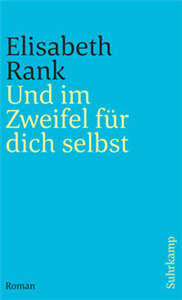
Wenn man zwanzig ist und nie auf die Idee kommen würde, jeden Tag so zu leben, als wäre es der letzte – wie geht man dann mit dem Tod des Geliebten um? Als Lenes Freund Tim bei einem Autounfall stirbt, bricht die Existenz von Lene und Tonia in Stücke. Berlin, Prüfungen, Partys – nichts in ihrem Leben ist bislang besonders schwerwiegend gewesen. »Nutze den Tag« war nur ein hübscher Spruch in Schönschrift. Als sie plötzlich mit einem schrecklichen Verlust klarkommen müssen, setzen sie sich ins Auto und fahren los, erst mal nur weg, kreuz und quer durchs sommerlich heiße Mecklenburg, Hauptsache nicht zurück, denn zu Hause wird alles anders sein. Doch am Meer geht es nicht mehr weiter, und Tonia, die Erzählerin, begreift: So sehr man glaubt, die Welt bleibt stehen, es geht immer weiter. Für die anderen, die noch da sind. Für die neue Liebe. Und im Zweifel für sich selbst. Elisabeth Ranks literarisches Debüt ist ein Generationenporträt und der Roman eines Lebensgefühls: die Geschichte der ersten echten Krise im Erwachsenenleben, erzählt als Roadstory.
Trusted Partner


The book offers interdisciplinary analyses of the impact of Brexit on the rights of EU27 citizens in the UK, Britons in the UK and the EU, and third-country nationals. It combines a historical examination of citizenship and migration between the UK, Europe and the Commonwealth with the analysis of policies and of the experiences of the different groups impacted by Brexit. The book discusses Brexit within the larger history and dynamics of UK and EU citizenship and migration. The individual chapters look at how Brexit is transforming the citizenship rights of different groups, including issues of loss of citizenship and experiences of naturalisation. They further examine the fears of the groups impacted, and larger issues of belonging, marginalisation, political orientations and mobilisations that cross legal status, nationality, ethnicity, race and class.
Trusted Partner
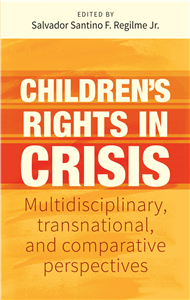
This book rigorously investigates the contemporary state of children's rights and the multifaceted challenges facing children, uncovering the complexities at their core. In 1989, the United Nations introduced the Convention on the Rights of the Child (CRC), ratified by 196 nations, promising a world where children's rights would reign supreme. In practice, however, realising these rights proves intricate and often precarious. Policies may shine on paper, but their implementation grapples with the challenges posed by global governance structures, national strategies, and local factors. Over three decades since the CRC's inception, this book scrutinises the true efficacy of international commitments, shedding light on underexplored issues and revealing shortcomings in both discourse and actions. With diverse, interdisciplinary perspectives, it recognises the profound influence of global and transnational forces in generating outcomes that impact children's rights and welfare.
Trusted Partner

This book rigorously investigates the contemporary state of children's rights and the multifaceted challenges facing children, uncovering the complexities at their core. In 1989, the United Nations introduced the Convention on the Rights of the Child (CRC), ratified by 196 nations, promising a world where children's rights would reign supreme. In practice, however, realising these rights proves intricate and often precarious. Policies may shine on paper, but their implementation grapples with the challenges posed by global governance structures, national strategies, and local factors. Over three decades since the CRC's inception, this book scrutinises the true efficacy of international commitments, shedding light on underexplored issues and revealing shortcomings in both discourse and actions. With diverse, interdisciplinary perspectives, it recognises the profound influence of global and transnational forces in generating outcomes that impact children's rights and welfare. An electronic edition of this book is freely available under a Creative Commons (CC BY-NC-ND) licence.
Trusted Partner
This book describes how human rights have given rise to a vision of benevolent governance that, if fully realised, would be antithetical to individual freedom. It describes human rights' evolution into a grand but nebulous project, rooted in compassion, with the overarching aim of improving universal welfare by defining the conditions of human well-being and imposing obligations on the state and other actors to realise them. This gives rise to a form of managerialism, preoccupied with measuring and improving the 'human rights performance' of the state, businesses and so on. The ultimate result is the 'governmentalisation' of a pastoral form of global human rights governance, in which power is exercised for the general good, moulded by a complex regulatory sphere which shapes the field of action for the individual at every turn. This, unsurprisingly, does not appeal to rights-holders themselves.
Trusted Partner

Stage rights! explores the work and legacy of the first feminist political theatre group of the twentieth century, the Actresses' Franchise League. Formed in 1908 to support the suffrage movement through theatre, the League and its membership opened up new roles for women on stage and off, challenged stereotypes of suffragists and actresses, created new work inspired by the movement and was an integral part of the performative propaganda of the campaign. Introducing new archival material to both suffrage and theatre histories, this book is the first to focus in detail on the Actresses' Franchise League, its membership and its work. The volume is formulated as a historiographically innovative critical biography of the organisation over the fifty years of its activities, and invites a total reassessment of the League within the accepted narratives of the development of political theatre in the UK.
Trusted Partner

Musicians and Copyright explores the role of Collective Management Organizations (CMOs) in shaping the music industry from the mid-nineteenth century to today. Edited by VéroniquePouillard, Marius Buning, and Mala Loth, the book traces the development of CMOs and their impact on copyright and cultural production. Through historical analysis, it examines the challenges CMOs have faced, from colonial contexts to European integration and the digital age, and shows how CMOs have navigated regulatory changes, technological shifts, and internal politics. Offering a detailed history of these important institutions, Musicians and Copyright is a valuable resource for anyone interested in the intersection of music, law, and the cultural industries.
Trusted Partner

The United Nations is one of the largest providers of assistance in post-conflict situations in the world. This book considers the human rights standards applicable to the United Nations and applied by the United Nations in post-conflict situations, including East Timor, Kosovo and Afghanistan. It looks at legal principles, peace agreements, support of democracy, human rights protection, development and other forms of reconstruction with which the UN has become involved, including the grandly-named task of "state-building". It deals both with the obligation upon the UN to respect human rights in post-conflict situations, and the obligation upon the UN to ensure that human rights are respected by those in positions of power in post-conflict situations. Written by an internationally renowned list of contributors, this book will be of vital use to anyone studying conflict analysis, international relations, international law and the role of the United Nations on the world stage. ;
Trusted Partner

This book critically examines how and why Eastern enlargement has impacted on EU human rights policy. By drawing on the EU's intervention in human rights provision in Romania before 2007, it is demonstrated that the feedback effects of this intervention have led to the emergence of an EU child rights policy. Eastern enlargement has also raised the profile of Roma protection, international adoptions and mental health at the EU level. The impact of these developments has been further reinforced by the constitutional and legal provisions included in the Lisbon Treaty. It is argued that Eastern enlargement has led to the emergence of a more robust and well-defined EU human rights regime in terms of its scope and institutional clout. This book makes a substantial contribution to the scholarship on EU enlargement, Europeanisation and EU human rights policy by providing empirical evidence for the emergence and persistence of EU institutional and policy structures upholding human rights. ;
Trusted Partner

Engendering whiteness represents a comparative analysis of the complex interweaving of race, gender, social class and sexuality in defining the contours of white women's lives in Barbados and North Carolina during the era of slavery. Despite their gendered subordination, their social location within the dominant white group afforded all white women a range of privileges. Hence, their whiteness, as much as their gender, shaped these women's social identities and material realities. Crucially, as the biological reproducers of whiteness, and hence the symbolic and literal embodiment and bearers of the state of freedom, they were critical to the maintenance and reproduction of the cultural boundaries of 'whiteness', and consequently the subjects of patriarchal measures to limit and control their social and sexual freedoms. Engendering whiteness draws on a wide variety of sources including property deeds, wills, court transcripts, and interrogates the ways in which white women could be simultaneously socially positioned within plantation societies as both agents and as victims. It also reveals the strategies deployed by elite and poor white women in these societies to resist their gendered subordination, to challenge the ideological and social constraints that sought to restrict their lives to the private domestic sphere, to protect the limited rights afforded to them, to secure independent livelihoods, and to create meaningful existences. A fascinating study that with be welcomed by historians of imperialism as well as scholars of gender history and women's studies.
Trusted Partner

Negotiating sovereignty and human rights takes the transatlantic conflict over the International Criminal Court as a lens for an enquiry into the normative foundations of international society. The author shows how the way in which actors refer to core norms of the international society such as sovereignty and human rights affect the process and outcome of international negotiations. The book offers an innovative take on the long-standing debate over sovereignty and human rights in international relations. It goes beyond the simple and sometimes ideological duality of sovereignty versus human rights by showing that sovereignty and human rights are not competing principles in international relations, as is often argued, but complement each other. The way in which the two norms and their relationship are understood lies at the core of actors' broader visions of world order. The author shows how competing interpretations of sovereignty and human rights and the different visions of world order that they imply fed into the transatlantic debate over the ICC and transformed this debate into a conflict over the normative foundations of international society. ;
Trusted Partner
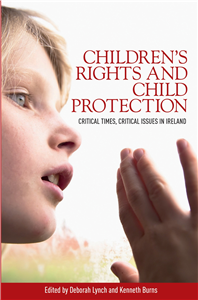
This topical book, now available in paperback, comprehensively draws together diverse perspectives from key leaders in the field to address critical issues for children in relation to their rights, welfare and protection at a critical time in Ireland. The broad array of chapters addresses the changing and complex landscape of policy, practice and law. It discusses the politics of children's rights, the impact of child abuse within the Catholic Church, diverse approaches to service delivery and professional practice, the media and representations of child protection practice and the relationship between research evidence and practice. It offers a critique of governance in children's services and identifies key barriers to fundamental progress in the area of children's rights and the protection of children. This original book fills a gap in publications in this area in Ireland. It is vital reading for academics, practitioners, managers, students and policy-makers, as well as being accessible to individuals with a broad interest in child welfare and protection.
Trusted Partner
 Trusted Partner
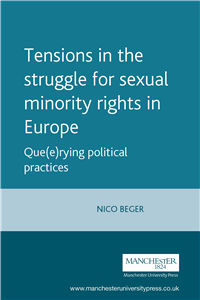
Tensions in the struggle for sexual minority rights in Europe, newly available in paperback, is the first queer and poststructuralist reading of political rights concepts in the specific European transnational context. In the last thirty years Europe has seen the rise of gay, lesbian, bisexual and transgender movements fighting nationally and transnationally for participation rights in society. In addition academic theorists have increasingly paid attention to the epistemological and ontological roles gender and sexuality play in modern politics. However, in the political process of arguing for rights the centrality of those roles is mostly hidden from view in official institutional and movement discourses. This book investigates the conceptual themes of lesbian, gay and transgender rights and lobby politics in Europe and their open and hidden relations to binary and hierarchical orders of dominance. It contributes to an understanding of the conditions upon which politics of inclusion, participation, social justice and equality rest and why struggles for sexual minority rights have been so difficult and slow. It illuminates how the paradigms of political discourse constitute, consolidate and contest the meaning and cultural significance of gender and sexuality on modern, democratic, capitalist European societies. ;
Trusted Partner
This book provides an in-depth analysis of the rise and influence of both radical and mainstream right-wing movements across Latin America. Through country-specific case studies, it explores the evolution of these groups and their impact on politics, culture, and governance, highlighting key figures and strategies shaping the political landscape in the region.
Trusted Partner
Latin America has been a complex laboratory for the development of international investment law. While some governments and non-state actors have remained true to the Latin American tradition of resistance towards the international investment law regime, other governments and actors have sought to accommodate said regime in the region. Consequently, a profusion of theories and doctrines, too often embedded in clashing narratives, has emerged. In Latin America, the practice of international investment law is the vivid amalgamation of the practice of governments sometimes resisting and sometimes welcoming mainstream approaches; the practice of lawyers assisting foreign investors from outside and within the region; and the practice of civil society, indigenous peoples and other actors in their struggle for human rights and sustainable development. Latin America and international investment law describes the complex roles that governments have played vis-à-vis foreign investors and investments; the refreshing but clashing forces that international organizations, corporations, civil society, and indigenous peoples have brought to the field; and the contribution that Latin America has made to the development of the theory and practice of international investment law, notably in fields in which the Latin American experience has been traumatic: human rights and sustainable development. Latin American scholars have been contributing to the theory of international investment law for over a century; resting on the shoulders of true giants, this volume aims at pushing this contribution a little further.
Trusted Partner


Mit schönem Farbschnitt in der Erstauflage – Lieferung je nach Verfügbarkeit Fake-Date oder große Liebe – wer weiß das schon so genau? Jamie Westenberg und Bea Wilmot haben rein gar nichts gemeinsam außer den traumatischen Erinnerungen an ihre erste Begegnung. Doch als die Menschen, die ihnen am nächsten stehen, versuchen Amor zu spielen und sie zu einem Date überreden, wird den beiden klar, dass sie noch eine Gemeinsamkeit haben: ein unbestreitbares Bedürfnis nach Rache. Bald steht ihr Plan fest: Sie wollen ein falsches Date vortäuschen und ihre Freunde davon überzeugen, dass sie total verliebt sind. Es folgt ein spektakulär inszeniertes Schlussmachen, um dem Verkupplungswahn ein für alle Mal ein Ende zu setzen. Jamie und Bea legen den Auftritt ihres Lebens hin – doch je länger sie die Liebenden spielen, desto einfacher wird es. Lovestory zum Mitfiebern voll spannender Kontraste: „Two Wrongs make a Right“. Autorin Chloe Liese ließ sich von Shakespeares romantischer Komödie „Viel Lärm um nichts“ inspirieren – und schrieb eine sehr moderne, absolut hinreißende Story. Für New Adults ab 16 Jahren: sexy Liebesgeschichte um verbotene Gefühle und vermeintliche Gegensätze, die zu Verbündeten werden. Dieses Buch bringt dich mit viel Herzenswärme und Humor gleichzeitig zum Lachen und zum Weinen, denn: „Every way you were my opposite only made me want you more“. Eine neue BookTok-Entdeckung für alle Fans der Liebesromane von Ali Hazelwood und Helen Hoang. Genial ausgestattet in der Erstauflage: Softcover mit Klappen, trendig illustriertem Buchschnitt und coolem Lesezeichen zum Abtrennen.
Trusted Partner
This book, newly available in paperback, argues for greater openness in the ways we approach human rights and international rights promotion, and in so doing brings some new understanding to old debates. Starting with the realities of abuse rather than the liberal architecture of rights, it casts human rights as a language for probing the political dimensions of suffering. Seen in this context, the predominant Western models of rights generate a substantial but also problematic and not always emancipatory array of practices. These models are far from answering the questions about the nature of political community that are raised by the systemic infliction of suffering. Rather than a simple message from 'us' to 'them', then, rights promotion is a long and difficult conversation about the relationship between political organisations and suffering. Three case studies are explored - the Tiananmen Square massacre, East Timor's violent modern history and the circumstances of indigenous Australians. The purpose of these discussions is not to elaborate on a new theory of rights, but to work towards rights practices that are more responsive to the spectrum of injury that we inflict and endure. The book is a valuable and innovative contribution to rights debates for students of international politics, political theory, and conflict resolution, as well as for those engaged in the pursuit of human rights.

