How to Cook Fish
by Myrtle Reed
This book is a collection of recipes for fish cooking.
Magical sweets and real miracles? Elina has experienced them both in Belony, and now she can hardly wait to dip deeper into the world of the candy crafters. But it’s not long before a new problem arises, because just before Robin’s first candy crafting examination, his magic tool goes bust. Old Mr Snotty knows where they can get help, and he takes Elina and her friends to Bittersweet Avenue. It quickly becomes clear, though, that not all candy crafters are well disposed towards “ungifted” people. There are also rumours about the return of the mysterious Otherwise Society, which has tried once before to bring down the mighty Candy Guild. When Mr Snotty suddenly disappears without a trace, it’s up to Elina, Charlie and Robin to follow the clues he has left behind for them. They soon realize that there is a reason for his disappearance, because the Otherwise Society is looking for something in particular – and Elina, Charlie and Robin have the key to this something in their hands…
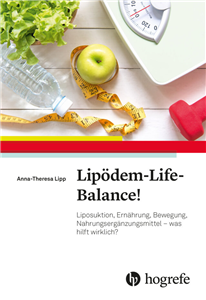
Living with lipedema affects more than appearance – it impactsthe whole person. Written by a physician who is alsoaffected, this guide explains medical options, lifestylestrategies, and mindset shifts that can ease symptomsand support long-term well-being. Real stories, practicaltips, and recipes offer empowering, holistic support. • Medical facts and treatment options explained clearly• Real-life insights and everyday coping strategies• Lifestyle tools for long-term relief and self-care
This book follows a unique path in the ubiquitous food debate: it leads us on the trail of the origins of our food culture, from the Neolithic period to the present day. Thomas A. Vilgis has compiled a guide that combines scientific with cultural or sociological aspects. How did Stone Age man poach food? Which cereal varieties were cultivated first? What is the mysterious umami flavour all about? The cultural historical excursion gets interactive with plenty of recipes for those curious to test Kimchi with birch leaves or red cabbage in their dessert.
Bourgeois Consumption looks at how the middle classes in late nineteenth-century London and Paris used food and dining as forms of social expression and identity. This engaging treatise about how class and gender informed people's eating habits focuses on the complex interactions between bodies, ritual and identity. Forgoing the traditional food history territory of recipes and ingredients in favor of how people ate in different circles, Bourgeois Consumption explores the role of real and imagined meals in shaping Victorian lives. The perception of the middle classes as rigid and upright, found in the extensive pages of their etiquette books, is contrasted with a more flexible and spontaneous bourgeoisie, gleaned from the pages of their own colorful memoirs, diaries and letters, leading us on a lively journey into eating spaces, mealtimes, manners, and social interactions between diners. Further, contrasting Paris with London reveals some of the ways each city shaped its inhabitants but, more surprisingly, throws up a range of similarities that suggest the middle classes were, in fact, a transnational class. Rachel Rich's work will be of interest to anyone intrigued by the history of food, consumption and leisure, as well as to a broader audience curious about how the Victorian middle classes distinguished themselves through daily life and manners. ;

In the corner of a Manchester laboratory in 2004, two scientists stumbled on a major discovery while pulling pieces of Sellotape apart - graphene. This is the story of those scientists, Professors Andre Geim and Kostya Novosolev, their eureka moment, subsequent Nobel Prizes and investigation into the wonder material's potential uses. But it is also the tale of the building they created with architects Jestico + Whiles and others to push graphene's potential ever further. This is the story of the National Graphene Institute.
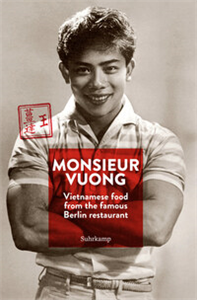
There is a restaurant at 46 Alte Schönhauser Strasse in Berlin's Mitte district that evolved into an international place of pilgrimage many years ago. It is Monsieur Vuong's eatery. His photo hangs on the orange red wall, and has become its symbol. But wait, that's the father, a portrait photographer who came from Vietnam to Germany with his family in 1987 and took this »selfie« at the age of 24. His son Dat is the owner of the restaurant in front of which long queues form. No surprise, because the dishes taste heavenly and are of a soothing, unpretentious simplicity. They are authentic as Dat Vuong, culinary ambassador and culture hopper, cooks in the tradition of his mother and frequently returns to his roots, to Vietnam. Whoever eats at Monsieur Vuong returns. Whoever meets Dat Vuong wants to know his story, how it has led to his success. High time to erect a monument in his honour. Here it is, with the finest recipes from the restaurant, all easy to cook, with advice and inspiration, and all the flair of Vietnamese cook-shop that has become an international hot spot. Ursula Heinzelmann is the author of nine books, the most recent being >Die China-Küche des Herrn Wu<. She has been a regular at Monsieur Vuong since the beginning. Photographer Manuel Krug turns his experience into pictures, accompanying Dat Vuong with his camera on a trip to his roots in Vietnam and at Monsieur Vuong.
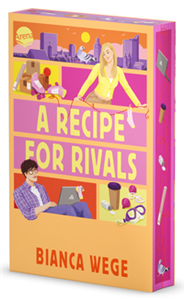
Mit dem perfekten Rezept für Rivalität (oder für die Liebe) startet der neue New Adult-Reihenauftakt von BookTok-Liebling Bianca Wege! Regel Nummer 1: Verliebe dich nicht in deinen Rivalen! Frisch getrennt und ohne Plan zieht Emma nach Leipzig für ein Volontariat bei einer Fernsehproduktion. Mit ihrem unausstehlichen Kollegen Levi soll sie an einer Kochshow arbeiten. Nur einer von beiden kann übernommen werden. Harmonische Zusammenarbeit? Fehlanzeige. Emma und Levi wollen beide diesen Job mehr als alles andere. Selbst wenn das bedeutet, dass sie regelmäßig den anderen im Wettkampf überlisten wollen und dabei die eigentliche Arbeit vergessen. Zuhause streitet Emma mit Levi weiter, denn er wohnt ausgerechnet in der Wohnung unter ihr. Da kann es schon mal passieren, dass sie Pakete öffnen, die peinlicherweise für den anderen sind, oder plötzlich eine Taubenplage am Hals haben. Im Wettkampf um den Job ist schließlich alles erlaubt. Außer sich ineinander zu verlieben. Doch das wäre einfacher, wenn zwischen Emma und Levi nicht eine Prise Romantik und ein großer Schuss Anziehung wäre … Mit Farbschnitt und Charakterkarte in der 1. Auflage! Tropes:Rivals to lovers, workplace romance, neighbors, forced proximity Band 2 der Dilogie: A Guide to Disaster erscheint im Herbst 2026 Weitere Romance-Bestseller von Bianca Wege im Arena Verlag: Today I’ll Talk to Him Today I’ll Steal His Heart Today I’ll Fall For Him
Maths is not everyone’s cup of tea. This may change from now on! This textbook explains the most important types of arithmetic quite simply. One learns ■ what basic arithmetic methods there are, ■ why stoichiometry is important, and ■ how to perform complex calculations for the medicinal formula. The price determination of medicinal products is also included. Videos demonstrate and explain the calculation steps exactly and comprehensibly via QR code, so that nothing can go wrong. A collection of formulas provides the pharmacy-specific calculation methods that can be quickly looked up. You can deepen your knowledge with the help of exercises. The solutions are available via QR code.
Intervals are everywhere. They structure our daily routine and scheduleour lives. However, we have forgotten how to live in tune withoutbiorhythm making us feel stressed and exhausted. The well-knowntime management expert, Lothar Seiwert, and economics journalist, Silvia Sperling, do more than just show the importance of intervals for our lives. Their exercise book also functions as a recipe to resynchronise our daily routine with our natural biology. By using the BOSS method everyone can learn to shape their daily life more efficiently,to work more productively and creatively, and in doing so develop themselves. At the same time, “The Interval Week” also comments on the current societal discourse around shorter working hours and new working time models.
Sara Paretsky is known for her influential V.I. Warshawski series, which transformed the masculine hard-boiled detective formula into a vehicle for feminist values. But Paretsky does more than this. Her novels also illustrate the extent to which detective fiction acts as a literature of trauma, allowing Paretsky to address the politics of agency in ways that go beyond the personal, for trauma always has a social and a political dimension. Paretsky's work also exploits the way detective fiction mirrors the writing of history. Here, Paretsky uses the form to expose the partiality of historical accounts - whether they be personal, institutional, or national - that authorise 'forgetting' of a particularly insidious kind. Significantly, all these issues are explored within the framework of the traditional hard-boiled detective novel. As a result, Paretsky's achievement forces us to acknowledge the deeply subversive potential of detective fiction.
Maybe Someday (MAYBE Trilogy, Vol. 3) Gabriella, Joana and Karla share a flat. To finance their studies, they all work at a catering company. And, the three not only realize their professional dreams, but also find the love of their lives.Motor oil and screeching tires - for Karla, there's nothing better! She used to be passionate about kart racing until her parents could no longer afford the expensive hobby. But an unexpected offer throws her back into the world of motorsports: She is supposed to play the girlfriend of the up-and-coming Formula 2 star Henning Kiefer. In one swoop, Karla would be rid of all her money problems - and player Henning would finally be rid of his bad-boy image with a steady girlfriend at his side. But what happens when a fake relationship suddenly turns serious?• Original plots in heartfelt narrations, leaving out familiar clichés• Girl power: 3 self-confident protagonists and their strong friendship• Stories about first steps towards independence: Career choices, fear of the future, parental pressure, exploring roots to find your place
The four friends Fiona, Aurelia, Jana and Leni thoroughly enjoy their friendship with their sparkling ponies and they’re looking forward to the festival that’s about to take place at Funfield Pony Farm. But there’s a lot to be done first. Only Aurelia can’t really enjoy the prospect because the problem she has to solve with the mare Luna is really giving her a tough time. Suddenly Fiona and Sunny are also given a tricky task. And when the secret of the sparkling ponies is then in danger of being exposed, everything goes topsy-turvy. Will the friends end up enjoying the pony festival or not?
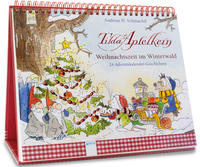
There are 24 days to go until Christmas. In the mouse house there is a delicious smell of punch, and Tilda busily hunts through her pantry: she wants to do some baking. The best of all flavours is still Aunt Emily’s frost-hip jelly. Christmas can’t come without that. But what a shock! There are no frost hips left! And it’s so difficult to get fresh ones, because they only grow in the north. Without further ado, Tilda sets off on an exciting journey through the winter forest, and she has the most weird and wonderful Christmas adventures on the way…
"Rescue” has two fundamentally different “existential” dimensions. One is aimed at “saving” individual lives that are in danger. Firefighters, for instance, rescue people from fires, while the sea rescue services rescue shipwrecked people from the Mediterranean. The second dimension of “rescue”, on the other hand, concerns systems – think of the bailing out of banks, the euro or the climate disaster – and so points to a larger context that creates the conditions for “life” to even be possible, or at least to be preserved. The complex subject of this stringent essay is just to what extent politics enable or prevent “rescue attempts”, to what extent it understands its actions as “rescue actions”, and how decisively the “narrative”, i.e. the “talk of rescue”, ultimately dominates our entire understanding of politics.
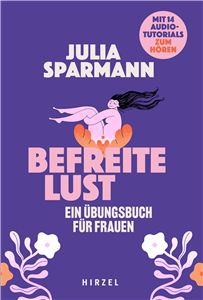
Far too often, everyday stress, pressure to perform or inner blockages spoil our enjoyment of the most beautiful thing in the world: our female sexuality. How can we free ourselves from firmly internalized taboos? What little tricks can we use to get our sex life back on track and keep the imagination in our head running successfully?Experienced sex therapist Julia Sparmann not only offers surprising solutions to typical problems such as loss of libido, communication difficulties or orgasm problems. She also encourages women to deal confidently with their sexuality and develop a positive body image.