
Your Search Results
-

-

Relish Books
Kate B. Gordon publishes middle grade fiction under the imprint Relish Books. The first book in the Unicorn King series, Lily and the Unicorn King, blends the unicorns of European mythology with Maori myths and lore, a trio of brave friends and their ponies. The second book in the series, Sasha and the Warrior Unicorn, will be out late in 2020 with the third book in 2021.
View Rights Portal
-
Promoted Content

 Humanities & Social SciencesOctober 2016
Medicine, health and Irish experiences of conflict, 1914–45
by David Durnin, Ian Miller
-
Promoted Content
 Humanities & Social SciencesDecember 2025
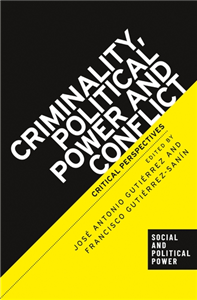
Criminality, political power and conflict
Critical perspectives
by José Antonio Gutiérrez Danton, Francisco Gutiérrez Sanín
In the aftermath of the greed vs. grievance debate and the new wars paradigm, the focus of conflict studies shifted decisively to understanding "predatory" behaviours as the raison d'etre of contemporary conflict. Conflict was viewed as a continuum in which the more you engage in criminal behaviour, the less political you are.This approach has been robustly criticised over the past 15 years; however, in the process, we have been left with unsuitable concepts to handle the complex interactions between civil war, political power and criminality. The departure point here is the understanding of politics and criminality as two historically differentiated domains of human activity. Different, but interrelated, often co-constitutive and overlapping. Here, we empirically and theoretically explore their interactions, connections, and convergences, not focusing solely on irregular actors, thus bringing back the State and elites into this debate.
-
 Trusted Partner
 June 2025
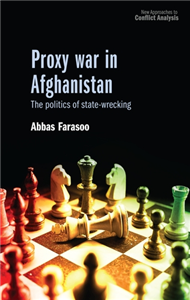
Proxy war in Afghanistan
The politics of state-wrecking
by Abbas Farasoo
This book provides a compelling analysis of proxy warfare and its far-reaching implications for statehood, focusing on the conflict in Afghanistan. Introducing the innovative concept of "state-wrecking," it bridges theory and practice to unravel how external support for insurgent actors fuels violence, undermines territorial control and sovereignty, intensifies violence, and dismantles political legitimacy. The work shifts the discourse on proxy wars from the strategies of global powers to the procedural and structural impacts within target states. Grounded in rigorous empirical research, including interviews, archival data, and conflict analysis, the book critically examines the Pakistan-Taliban nexus and the limitations of US-led interventions. By blending a robust theoretical framework with in-depth case studies, it reveals how proxy dynamics shape conflicts, disrupt governance, and challenge international security. This is an essential resource for those seeking to understand the entanglements of modern warfare and the fragility of states under external influence.
-
Trusted Partner
 Humanities & Social SciencesNovember 2025
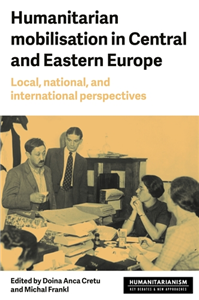
Humanitarian mobilisation in Central and Eastern Europe
Local, national, and international perspectives
by Doina Anca Cretu, Michal Frankl
By focusing on aid Central and Eastern Europe, the volume adds to the existent scholarly explorations of modern humanitarianism, its actors and practices. In the twentieth century, aid workers assisted victims of war and earthquakes, delivered food, supported health care, provided childcare, or sheltered refugees. The contributors not only reconstruct these diverse histories and their protagonists, but also bring international, national, and local actors together: from grassroots activists to private associations to state-driven "socialist humanitarians" to large Western aid organizations. In doing so, they challenge the often unidirectional, from West-to-East, and asymmetrical perspective on donor-recipient relationships in humanitarian processes.
-
Trusted Partner
 The ArtsOctober 2025
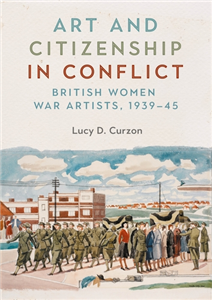
Art and citizenship in conflict
British women war artists, 1939–45
by Lucy Curzon
Art and Citizenship in Conflict examines the work of women war artists in order to highlight the complexity of citizenship and gender in Britain during the Second World War. Evelyn Dunbar, Mary Kessell, Ethel Gabain, Stella Schmolle, and Laura Knight, among others, were commissioned by the War Artists' Advisory Committee (WAAC) to document the millions of women who took up sometimes unconventional roles-in agriculture, the auxiliary services, and manufacturing, among others-to support the British war effort. Indeed, their prints, drawings, and paintings were part of a broader scheme to uphold morale and promote much-needed citizen involvement on the home front. While there is growing interest, the importance of their remit in the history of the Second World War and the quality of their artistry have nonetheless not yet secured them a significant place in scholarship. Art and Citizenship in Conflict seeks to amend this gap while also broadening approaches to the study of war itself.
-
Trusted Partner
 Humanities & Social SciencesNovember 2024
Unofficial peace diplomacy
Private peace entrepreneurs in conflict resolution processes
by Lior Lehrs
This book analyses the international phenomenon of private peace entrepreneurs. These are private citizens with no official authority who initiate channels of communication with official representatives from the other side of a conflict in order to promote a conflict resolution process. It combines theoretical discussion with historical analysis, examining four cases from different conflicts: Norman Cousins and Suzanne Massie in the Cold War, Brendan Duddy in the Northern Ireland conflict and Uri Avnery in the Israeli-Palestinian conflict. The book defines the phenomenon, examines the resources and activities of private peace entrepreneurs and their impact on the official diplomacy, and examines the conditions under which they can play an effective role in peace-making processes. This book is relevant to United Nations Sustainable Development Goal 16, Peace, justice and strong institutions.
-
Trusted Partner
 Business, Economics & LawMay 2008
The contemporary law of armed conflict
by Leslie C. Green, Iain Scobbie, Jean D'Aspremont, Dominic McGoldrick
Green's The contemporary law of armed conflict has been acclaimed as one of the most significant works on the law of armed conflict to appear in recent years. The first edition was adopted as a basic text by military institutions and educational establishments throughout the world and is among the most comprehensive and readable works on the subject. This new edition brings the work up to date, examining the significance of the World Court's Opinion on the legality of the nuclear weapon. It also considers the importance of such matters as the laser weapon agreement, the mines treaty and the jurisprudence of the two war crimes tribunals, that for the former Yugoslavia as well as for Rwanda, and assesses the role of the proposed International Criminal Court as it may affect the law of armed conflict. The book applies a practical as well as a theoretical approach, and draws on an extensive range of national and international practice. It is thus an indispensable reference for the armed forces and government defence organizations, as well as academics and students interested in the modern law of war. ;
-
Trusted Partner
 Business, Economics & LawJuly 2018
The contemporary law of armed conflict (3rd edn)
by Leslie C. Green, Iain Scobbie, Jean D'Aspremont, Dominic McGoldrick
Green's The contemporary law of armed conflict has been acclaimed as one of the most significant works on the law of armed conflict to appear in recent years. The first edition was adopted as a basic text by military institutions and educational establishments throughout the world and is among the most comprehensive and readable works on the subject. This new edition brings the work up to date, examining the significance of the World Court's Opinion on the legality of the nuclear weapon. It also considers the importance of such matters as the laser weapon agreement, the mines treaty and the jurisprudence of the two war crimes tribunals, that for the former Yugoslavia as well as for Rwanda, and assesses the role of the proposed International Criminal Court as it may affect the law of armed conflict. The book applies a practical as well as a theoretical approach, and draws on an extensive range of national and international practice. It is thus an indispensable reference for the armed forces and government defence organizations, as well as academics and students interested in the modern law of war.
-
Trusted Partner
 Humanities & Social SciencesMarch 2014
Transforming conflict through social and economic development
Practice and policy lessons from Northern Ireland and the Border Counties
by Sandra Buchanan
Transforming conflict through social and economic development examines lessons learned from the Northern Ireland and Border Counties conflict transformation process through social and economic development and their consequent impacts and implications for practice and policymaking, with a range of functional recommendations produced for other regions emerging from and seeking to transform violent conflict. It provides, for the first time, a comprehensive assessment of the region's transformation activity, largely amongst grassroots actors, enabled by a number of specific funding programmes, namely the International Fund for Ireland, Peace I, II and III and INTERREG I, II and IIIA. These programmes have been responsible for a huge increase in grassroots practice which to date has attracted virtually no academic analysis; this book seeks to fill this gap. In focusing on the politics of the socioeconomic activities that underpinned the elite negotiations of the peace process, key theoretical transformation concepts are firstly explored, followed by an examination of the social and economic context of Northern Ireland and the border counties. The three programmes and their impacts are then assessed before considering what policy lessons can be learned and what recommendations can be made for practice. This is underpinned by a range of semi-structured interviews and the author's own experience as a project promoter through these programmes in the border counties for more than a decade. The book will be essential reading for students, practitioners and policymakers in the fields of peace and conflict studies, conflict transformation, peacebuilding, post-agreement reconstruction and the political economy of conflict and those interested in contemporary developments in the Northern Ireland peace process. ;
-
Trusted Partner
 Business, Economics & LawMay 2005
The UN, human rights and post-conflict situations
by Nigel White, Dirk Klaasen
The United Nations is one of the largest providers of assistance in post-conflict situations in the world. This book considers the human rights standards applicable to the United Nations and applied by the United Nations in post-conflict situations, including East Timor, Kosovo and Afghanistan. It looks at legal principles, peace agreements, support of democracy, human rights protection, development and other forms of reconstruction with which the UN has become involved, including the grandly-named task of "state-building". It deals both with the obligation upon the UN to respect human rights in post-conflict situations, and the obligation upon the UN to ensure that human rights are respected by those in positions of power in post-conflict situations. Written by an internationally renowned list of contributors, this book will be of vital use to anyone studying conflict analysis, international relations, international law and the role of the United Nations on the world stage. ;
-
Trusted Partner
 Humanities & Social SciencesJuly 2018
Order and conflict
Anthony Ascham and English political thought (1648–50)
by Peter Lake, Marco Barducci, Anthony Milton, Jason Peacey, Alexandra Gajda
This book provides a careful and systematic analysis of Anthony Ascham's career and writings for the first time in English. During the crucial period between the Second Civil War and the establishment of the English Republic, when he served as official pamphleteer of the Parliament and the republican government, Ascham put forward a complex argument in support of Parliament's claims for obedience which drew on the political thought of Grotius, Hobbes, Selden, Filmer and Machiavelli. He combined ideas taken from these authors and turned them into a powerful instrument of propaganda to be deployed in the service of the political agenda of his Independent patrons in Parliament. This investigation of Ascham's works brings together an intellectual analysis of his political thought and an exploration of the interaction between politics, propaganda and political ideas.
-
Trusted Partner
 History of medicineOctober 2016
Medicine, health and Irish experiences of conflict, 1914–45
by Edited by David Durnin, Ian Miller
This book explores Irish experiences of medicine and health during the First and Second World Wars, the War of Independence and the Civil War. It examines the physical, mental and emotional impact of conflict on Irish political and social life, as well as medical, scientific and official interventions in Irish health matters. The contributors put forward the case that warfare and political unrest profoundly shaped Irish experiences of medicine and health, and that Irish political, social and economic contexts added unique contours to those experiences not evident in other countries. In pursuing these themes, the book offers an original and focused intervention into a central, but so far unexplored, area of Irish medical history.
-
Trusted Partner
 Humanities & Social SciencesDecember 2006
Socio-ideological fantasy and the Northern Ireland conflict
The Other side
by Adrian Millar, Peter Lawler, Emmanuel Pierre Guittet
Conducting a Lacanian-inspired psychoanalysis of some of the most candid interview materials ever gathered from former IRA members and loyalists, the author demonstrates through a careful examination of their slips of the tongue, jokes, rationalisations and contradictions, that it is the unconscious dynamics of socio-ideological fantasy, i.e. the unconscious pleasure people find in suffering, domination, submission, ignorance, failure and rivalry over jouissance, that lead to the reproduction of antagonism between the Catholic and Protestant communities in Northern Ireland. In the light of this, he concludes that traditional approaches to conflict resolution which overlook the unconscious are doomed to failure and that a Lacanian psychoanalytic understanding of socio-ideological fantasy has great potential for informing the way we understand and study all inter-religious and ethnic conflicts. Whether you find yourself agreeing with the arguments in this book or not, you are sure to find it a welcome change from both the existing, mainly conservative, analyses of the Northern Ireland conflict and traditional approaches to conflict resolution.
-
Trusted Partner
 Humanities & Social SciencesJanuary 2026
Afterlives of the Troubles
Life stories, culture and conflict transformation in Northern Ireland
by Graham Dawson
Focusing on experiential life stories across a range of forms and practices, this book investigates subjectivity, culture and the cultural politics of representation as a neglected dimension of conflict transformation in the Northern Irish peace process. Interdisciplinary critical perspectives from historical cultural studies, oral history and popular-memory theory inform close interpretive engagement with life stories in their cultural, historical and geographical contexts. This enables exploration of the complex temporal dynamics of 'post-conflict' subjectivities in the lengthening 'afterlife' of the Troubles, where feelings attached to conflict experiences are not 'past' but haunt the present, and memory-work carries future-oriented desires for truth, justice and reconciliation. Through case studies responding to the evolving peace process through this prism of life-storytelling, Afterlives maps a contested history of legacy policy-making and approaches to 'dealing with the past', from devolution in 2005-7 through to the Legacy and Reconciliation Act of 2023.
-
Trusted Partner
 Humanities & Social SciencesOctober 2010
The Northern Ireland experience of conflict and agreement
A model for export?
by Robin Wilson
The Northern Ireland Experience of Conflict and Agreement presents a salutary warning to the international community against the fashionable view that there is an 'Irish model' which can be exported to cauterise ethnic troubles around the globe. The book draws on extensive archive research in London and Dublin on the 1970s power-sharing experiment, and on interviews with senior officials and political figures from the two capitals-as well as reconciliation practitioners-about the negotiation and chequered implementation of the Belfast agreement. It shows how stereotyped conceptions of the problem as a product of 'ancient hatreds', allied to solutions based on Realpolitik, have failed to transform Northern Ireland from a fragile peace, following the exhaustion of protracted paramilitary campaigns, to genuine reconciliation. The book concludes with practical proposals for constitutional reforms which would favour genuine power-sharing-rather than merely sharing power out-and set Northern Ireland on the road to the 'normal', civic society its long-suffering residents desire. It will be essential reading not only for academics and postgraduates interested in ethnic conflict but also for policy-makers who confront it in practice. ;
-
Trusted Partner
 Humanities & Social SciencesMarch 2017
Borders and conflict in South Asia
The Radcliffe Boundary Commission and the partition of Punjab
by Lucy Chester
Borders and conflict in South Asia is the first full-length study of the 1947 drawing of the Indo-Pakistani boundary in Punjab. Using the Radcliffe commission as a window onto the decolonization and independence of India and Pakistan, and examining the competing interests, both internal and international, that influenced the actions of the various major players, it highlights British efforts to maintain a grip on India even as the decolonization process spun out of control. Drawing on extensive archival research in India, Pakistan, and Britain, combined with innovative use of cartographic sources, the book paints a vivid picture of both the partition process and the Radcliffe line's impact on Punjab. This book will be vital reading for scholars and students of colonialism, decolonization, partition, and borderlands studies, while providing anyone interested in South Asia's independence with a highly readable account of one of its most controversial episodes.
-
Trusted Partner
 Humanities & Social SciencesMarch 2016
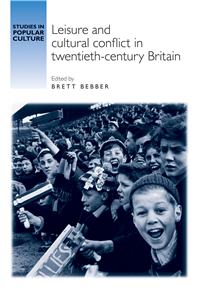
Leisure and cultural conflict in twentieth-century Britain
by Jeffrey Richards, Brett Bebber, Allison Abra, Brad Beaven, Brett Bebber, Kelly Boyd
This collection of essays addresses research trends in the history of British leisure while also presenting a wide range of articles on cultural conflict and leisure in the twentieth century. It includes innovative research on a number of topics, including television, cinema, the circus, women's leisure, dance, football and drug culture. It provides an excellent entry to leisure studies and history, while addressing the contributions of other disciplines and exploring key historiographical trends. Three broad topics structure the collection; cultural contestation and social conflict in leisure; regulation and standardisation; and national identity embodied in leisure and popular culture. The book will be useful to students and educators of twentieth-century and British history, as it offers accessible and topical studies that pique historical curiosity. In addition, historians, sociologists and cultural analysts of the twentieth century will find it essential for understanding pleasure and recreation in twentieth-century British society. ;
-
Trusted Partner

 April 2021
Ukraine's fateful years 2013–2019
Vol. 1: The Maidan uprising in 2013/2014 Vol. 2: The annexation of Crimea and the war in Donbass
by Winfried Schneider-Deters
— Comprehensive and detailled analysis of the Euromaidan and the ongoing war in Ukraine — Brussels versus Moscow, Russian aggression and geopolitical interests — China's role in a new East-West conflict The years between 2013 and 2019 were almost as significant for Ukraine as the attainment of independence in 1991, as this very independence was in danger of being lost again after the Euromaidan. The nationwide popular uprising against the regime of President Yanukovych had led to a change of power: the former parliamentary opposition formed a new government, resulting in a loss of influence for Russia. Russian agents therefore tried to bring about a "Crimea scenario", another secession in the eastern and southern parts of Ukraine. The resulting "Ukraine conflict", often called a civil war, is in fact a Russian war of attrition against Ukraine. President Putin intends to resolve it on his terms in the Minsk process: through a de facto "autonomous" part of the Donbass in the Ukrainian state, independent of Kiev, as a lever for Russian political influence. Winfried Schneider- Deters, a renowned expert on Ukraine, analyses narratively and in detail the events from 2013 to 2019 and places the Russian- Ukrainian conflict in the context of the dawning "Chinese century".
-
Trusted Partner
 Humanities & Social SciencesJanuary 2025
The four dimensions of power
Understanding domination, empowerment and democracy
by Mark Haugaard
In this accessible and sophisticated exploration of the nature and workings of social and political power, Haugaard examines the interrelation between domination and empowerment. Building upon the perspectives of Steven Lukes, Michel Foucault, Amy Allen, Hannah Arendt, Anthony Giddens, Pierre Bourdieu and others, he offers a clear theoretical framework, delineating power in four interrelated dimensions. The first and second dimensions of power entail two different types of social conflict. The third dimension concerns tacit knowledge, uses of truth and reification. Drawing upon genealogical theory and accounts of slavery as social death, the fourth dimension of power concerns the power to create social subjects. The book concludes with an original normative pragmatist power-based account of democracy. Offering lucid and entertaining illustrations of complex theoretical perspectives, this book is essential reading for scholars and activists.
-
Trusted Partner
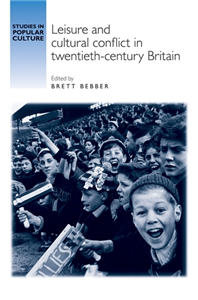 Social & cultural historyJuly 2012
Leisure and cultural conflict in twentieth-century Britain
by Allison Abra, Brad Beaven, Brett Bebber, Kelly Boyd
This collection of essays addresses research trends in the history of British leisure while also presenting a wide range of articles on cultural conflict and leisure in the twentieth century. It includes innovative research on a number of topics, including television, cinema, the circus, women's leisure, dance, football and drug culture. It provides an excellent entry to leisure studies and history, while addressing the contributions of other disciplines and exploring key historiographical trends. Three broad topics structure the collection; cultural contestation and social conflict in leisure; regulation and standardisation; and national identity embodied in leisure and popular culture. The book will be useful to students and educators of twentieth-century and British history, as it offers accessible and topical studies that pique historical curiosity. In addition, historians, sociologists and cultural analysts of the twentieth century will find it essential for understanding pleasure and recreation in twentieth-century British society.

