
Rights2 Small Publisher Showcase
The Small Publisher Rights Showcase contains a carefully curated selection of books being published by small and independent publishers from across the UK.
View Rights Portal
The Small Publisher Rights Showcase contains a carefully curated selection of books being published by small and independent publishers from across the UK.
View Rights Portal
Rights & Brands is a 360 licensing and publishing agency bringing Nordic rights and brands to a global arena. Starting from a strategic base in literature, art and design, R&B’s platform is built on knowledge, passion and people. Using all aspects of character representation and branding, from publishing and PR to licensing, merchandising and digital development, with a worldwide network of sub-agents and over 800 clients, R&B’s international insight and business capacity is unique.
View Rights Portal

This important book provides new understandings of how the politics of memory impacts peace in societies transitioning from a violent past. It does so by developing a theoretical approach focusing on the intersection of sites, agency, narratives, and events in memory-making. Drawing on rich empirical studies of mnemonic formations in Cyprus, Bosnia and Herzegovina, Rwanda, South Africa and Cambodia, the book speaks to a broad audience. The in-depth, cross-case analysis shows that inclusivity, pluralism, and dignity in memory politics are key to the construction of a just peace. The book contributes crucial and timely knowledge about societies that grapple with the painful legacies of the past and advances the study of memory and peace.

Industrial memory in North East England examines how the region's industrial myth and memory have been articulated in the renegotiation of northernness. The book offers a critical contextualisation of the concept of northernness and the English North, and an introduction to the concept of the PopCultural Portfolio, a mixed-methods approach to conjunctural analysis in cultural and memory studies. The book provides six richly illustrated case studies to demonstrate the practical application of cultural studies' expansive and inclusive understanding of texts, bringing together materials from North East football, folk, indie and exhibition culture to establish how the North East's industrial past continues to be remembered and functionalised as industrial memory. In turn, the conjunctural analysis demonstrates how industrial memory is articulated and mythologised as north(east)ernes in contemporary popular culture.
 Trusted Partner
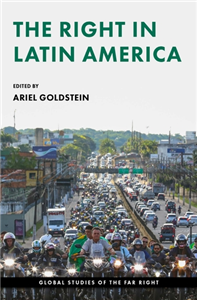
This book provides an in-depth analysis of the rise and influence of both radical and mainstream right-wing movements across Latin America. Through country-specific case studies, it explores the evolution of these groups and their impact on politics, culture, and governance, highlighting key figures and strategies shaping the political landscape in the region.
Trusted Partner

The 1948 war that led to the creation of the State of Israel also resulted in the destruction of Palestinian society when some 80 per cent of the Palestinians who lived in the major part of Palestine upon which Israel was established became refugees. Israelis call the 1948 war their 'War of Independence' and the Palestinians their 'Nakba', or catastrophe. After many years of Nakba denial, land appropriation, political discrimination against the Palestinians within Israel and the denial of rights to Palestinian refugees, in recent years the Nakba is beginning to penetrate Israeli public discourse. This book, available at last in paperback, explores the construction of collective memory in Israeli society, where the memory of the trauma of the Holocaust and of Israel's war dead competes with the memory claims of the dispossessed Palestinians. Against a background of the Israeli resistance movement, Lentin's central argument is that co-memorating the Nakba by Israeli Jews is motivated by an unresolved melancholia about the disappearance of Palestine and the dispossession of the Palestinians, a melancholia that shifts mourning from the lost object to the grieving subject. Lentin theorises Nakba co-memory as a politics of resistance, counterpoising co-memorative practices by internally displaced Israeli Palestinians with Israeli Jewish discourses of the Palestinian right of return, and questions whether return narratives by Israeli Jews, courageous as they may seem, are ultimately about Israeli Jewish self-healing rather than justice for Palestine.
Trusted Partner
 Trusted Partner

Investigates the dynamic relationship between experiences of profound social and cultural disruption, and human memory. Critical comparisons are made across a wide variety of catastrophic experiences and memories; not just of war, but also of massacre, genocide, rebellion, famine, partition, shipwreck and fire. The book is an accessible showcase for a wide range of methodological approaches to the study of memory, including literary studies, cultural studies, participant-observation and historical studies, and uses a variety of oral, visual and written sources. Offers a diverse chronological and geographical range of catastrophic cases, from seventeenth-century England to the recent conflicts in the former Yugoslavia, from Ireland to the Indian sub-continent, from Mexico to wartime Leningrad. Well-written and accessible - a fascinating read. ;
Trusted Partner

Photography and memory in Mexico traces the 'life stories' of some of the famous photographic images made during the 1910 revolution, which have been repeatedly reproduced across a range of media in its aftermath. Which photographs have become icons of the revolution and why these particular images and not others? What is the relationship between photography and memory of the conflict? How do we construct a critical framework for addressing the issues raised by iconic photographs? Placing an emphasis on the life, afterlife and also the pre-life of those iconic photographs that haunt the post-revolutionary landscape, Andrea Noble approaches them as dynamic objects, where their rhetorical power is derived from a combination of their visual eloquence and their ability to coordinate patterns of identification with the memory of the revolution as a foundational event in Mexican history. Richly-illustrated, this book will be of interest to all those interested in photography, memory studies, and Mexican cultural history. ;
Trusted Partner
Trusted Partner
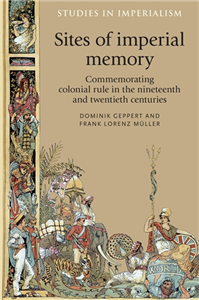
Europe's great colonial empires have long been a thing of the past, but the memories they generated are still all around us. They have left deep imprints on the different memory communities that were affected by the processes of establishing, running and dismantling these systems of imperial rule, and they are still vibrant and evocative today. This volume brings together a collection of innovative and fresh studies exploring different sites of imperial memory - those conceptual and real places where the memories of former colonial rulers and of former colonial subjects have crystallised into a lasting form. The volume explores how memory was built up, re-shaped and preserved across different empires, continents and centuries. It shows how it found concrete expression in stone and bronze, how it adhered to the stories that were told and retold about great individuals and how it was suppressed, denied and neglected. ;
Trusted Partner
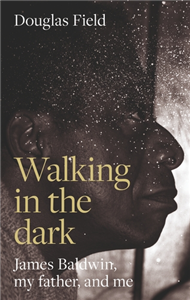
A moving exploration of the life and work of the celebrated American writer, blending biography and memoir with literary criticism. Since James Baldwin's death in 1987, his writing - including The Fire Next Time, one of the manifestoes of the Civil Rights Movement, and Giovanni's Room, a pioneering work of gay fiction - has only grown in relevance. Douglas Field was introduced to Baldwin's essays and novels by his father, who witnessed the writer's debate with William F. Buckley at Cambridge University in 1965. In Walking in the dark, he embarks on a journey to unravel his life-long fascination and to understand why Baldwin continues to enthral us decades after his death. Tracing Baldwin's footsteps in France, the US and Switzerland, and digging into archives, Field paints an intimate portrait of the writer's life and influence. At the same time, he offers a poignant account of coming to terms with his father's Alzheimer's disease. Interweaving Baldwin's writings on family, illness, memory and place, Walking in the dark is an eloquent testament to the enduring power of great literature to illuminate our paths.
Trusted Partner
 Trusted Partner

This book, newly available in paperback, reveals the Conservative Party's relationship with the extreme right between 1945 and 1975. For the first time, this book shows how the Conservative Party, realising that its well known pre-Second World War connections with the extreme right were now embarrassing, used its bureaucracy to implement a policy of investigating extreme right groups and taking action to minimise their chances of success. The book focuses on the Conservative Party's investigation of right-wing groups, and shows how its perception of their nature determined the party bureaucracy's response. The book draws a comparison between the Conservative Party machine's negative attitude towards the extreme right and its support for progressive groups. It concludes that the Conservative Party acted as a persistent block to the external extreme right in a number of ways, and that the Party bureaucracy persistently denied the extreme right within the party assistance access to funds and representation within party organisations. It reaches a climax with the formulation of a 'plan' threatening its own candidate if he failed to remove the extreme right from the Conservative Monday Club.
Trusted Partner


— How politics are increasingly influencing the rule of law in Germany — Systematic failures of democracy to protect itself — Based on numerous interviews with different members of Germany's legal system Ever since the right-wing party “Alternative for Germany” (AfD) secured representation in the Bundestag and in all state parliaments, Germany’s judiciary is facing a new challenge for which it is unprepared: AfD-affiliated judges and public prosecutors are attracting attention through right-wing biased decisions and investigations. Other members of the legal system cause further damage by ignoring the right-wing extremist and anti-Semitic background of crimes and thus punishing offenders too leniently or not at all. Both the judiciary and policy-makers have so far underestimated the new danger from the right. As a result protection against the appointment of right-wing legal professionals has been insufficient. Joachim Wagner systematically analyses numerous examples from German courts in recent years. He calls on the democratic judiciary to remember the principles of a well-fortified democracy.
Trusted Partner

This book offers the first examination of extremist Heathenry and occultism in the UK and how anti-racist Heathens act to counter this discourse. It explores the spectrum of Heathen practice today and the historical origins of racist Heathenry in nineteenth century Germanic romanticism and twentieth century folkish nationalism. Treating each of the three main extremist Heathen organisations, the book extends the analysis to the neo-Nazi occult organization the Order of the Nine Angles (O9A), and the wider racist Heathen cultural scene in Black Metal and Dark Folk music. The authors balance this with discussion of how inclusivist Heathens are countering this discourse, from visible protests at far-right rallies to inter-faith forums and an active presence on social media platforms. The book makes an important contribution to the intersecting fields of new religious movements, nationalist history and racist politics.
Trusted Partner

On 16 March 1968, two US infantry companies entered a Vietnamese village and in the course of a single morning killed over 400 of its unarmed, unresisting inhabitants . . . This is the first book to examine the response of American society to the My Lai massacre and its ambiguous place in American national memory. Kendrick Oliver argues that the massacre revelations left many Americans untroubled. It was only when the soldiers most immediately responsible came to be tried that opposition to the conflict grew, for these prosecutions were regarded by supporters of the war as evidence that the national leaders no longer had the will to do what was necessary to win. Oliver goes on to show that, contrary to interpretations of the Vietnam conflict as an unhealed national trauma or wound, many Americans have assimilated the war and its violence rather too well, and they were able to do so even when that violence was most conspicuous and current. US soldiers have been presented as the conflict's principal victims, and this was true even in the case of My Lai. It was the American perpetrators of the massacre and not the Vietnamese they brutalized who became the central object of popular concern. Both the massacre and its reception reveal the problem of human empathy in conditions of a counter-revolutionary war - a war, moreover, that had always been fought for geopolitical credibility, not for the sake of the Vietnamese. This incisive enquiry into the moral history of the Vietnam war should be essential reading for all students of the conflict, as well as others interested in the war and its cultural legacies. ;
Trusted Partner
 Trusted Partner
 Trusted Partner

Bordering social reproduction explores what happens when migrants subject to policies that seek to deny them the means of life nonetheless endeavour to make and sustain meaningful lives. Developing innovative theorisations of welfare bordering, the volume provides rich ethnographic insights into the everyday lives of destitute mothers and children who are denied mainstream welfare support in the United Kingdom due to their immigration status. This book shows how enforced destitution and debt work alongside detention and deportation as part of a tripartite of exclusionary technologies of the racial state. It advances the novel concept of weathering to comprehend mother's and children's life-making practices under duress - arguing that these are neither acts of heroic resilience nor solely symptomatic of lives rendered disposable, but indications of the fragilities of repressive migration regimes and, on occasion, refusals to accept their terms of existence.
Trusted Partner

One of the first books to put memory at the centre of analysis when exploring the relationship between film culture and the past. Provides a sustained, interdisciplinary perspective on memory and film from early cinema to the present, drawing from film studies, American studies and cultural studies. Adopts a resolutely cultural perspective and unlike psychoanalytic or formalist approaches to memory, explores questions of culture, power and identity. Contributes to the growing debate about the status and function of the past in cultural life and discourse, discussing issues of memory in film, and of film as memory. Considers such well known films as Forrest Gump, Pleasantville, and Jackie Brown.
Trusted Partner

Written by an interdisciplinary team of scholars, this authoritative text explores the emotive issues surrounding the commemoration of war and atrocity, and the profound challenges for conservators posed by 'virtual', 'intangible' and 'multicultural' heritage. New international case studies demonstrate that while interest in the memorialisation of the great national upheavals of the last century has never been more acute, many of the problems of conserving the past in diverse and disparate societies remain to be resolved. Aimed primarily at students in heritage studies and professionals in heritage industries, this book is one of three in the Understanding Global Heritage series.

