

The Arts
March 2021


 Trusted Partner
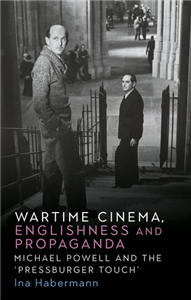
This book provides a fresh analysis of the wartime work of Michael Powell and Emeric Pressburger and their team 'the Archers'. It argues that in their earlier work, Powell and Pressburger should be seen as middlebrow storytellers whose stories explore national identity in times of war. Their wartime work is discussed in four phases: While the first phase covers their contributions to the 'phoney war', the second traces their engagement with the 'people's war'. The third phase sees the Archers move beyond propaganda, towards memodramas of Englishness, cross-cultural alliances and quests for spiritual modernity. The fourth phase dramatizes post-war preoccupations with an increasing focus on memory and trauma. Following up these thematic concerns, the conclusion is devoted to Pressburger's later work, including his two published novels Killing a Mouse on Sunday and The Glass Pearls.
Trusted Partner

The first and only book length study of British screenwriter, director and producer Sally Wainwright. Authors Gorton and Johnson brings together Wainwright's key television series and television films with theoretical work on the concept of emotion and feminist television criticism, exploring Wainwright's contributions to British television through the heroic female characters she creates. The book covers a wide range of theoretical work on melodrama, genre and emotion to explore Wainwright's televisual texts, offering analysis of globally recognised television series such as Happy Valley, Last Tango in Halifax, and Gentleman Jack.
Trusted Partner
Trusted Partner

Lynda La Plante is Britain's most successful and well known screenwriter and the first woman to win the prestigious Dennis Potter writer's award. Attracting millions of viewers, the popular and critical success of La Plante's work is central to understanding changes that shook the UK television industry in the late twentieth century. This critical introduction, the first account of her work, focuses on three innovative serials: Widows (ITV, 1983), Prime Suspect (ITV 1991) and Trial and Retribution (ITV 1997). In each chapter questions of gender and genre, acting and stardom and authorship and value are mapped against the changing relationship between women and the television industry. The final chapter traces La Plante's metamorphosis from 'just a writer for hire' to the astute businesswoman she has become through a focus on the trans-national appeal of dramas such as Killer Net (C4 1997) and Bella Mafia (CBS 1997). ;
Trusted Partner
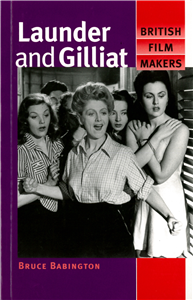
Bruce Babington analyses the achievement of one of the central partnerships in British film history, the screenwriters of famous films by Hitchcock and Carol Reed, who became the producer-writer-directors of a succession of famous and well-loved films including Millions Like Us, Two Thousand Women, Waterloo Road, The Rake's Progress, I See a Dark Stranger, The Blue Lagoon and The Happiest Days of Your Life. This study of the pair is notable both for its contextualising of them within English and British culture over four decades, including British cinema's 'golden age' of the war and immediate post-war years, and for its close reading of films that have been critically neglected, despite their popularity. Scholarly but not pedantic, the book shows its subjects to be not ordinary mainstream practitioners but deceptively serious filmmakers registering the 'ideological weather' of wartime and post-war Britain in engaging and creative ways. ;
Trusted Partner
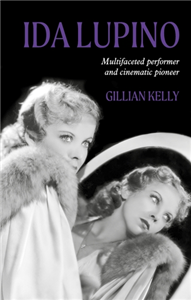
This book contributes to a welcome new wave focusing on the importance of female filmmakers, providing a reappraisal of Ida Lupino, a cinematic figure of significant importance. Given her ability to move between popular and independent cinemas and her status as both a Hollywood star and director/writer/producer of socially relevant films overlooked by the mainstream, Lupino is a particularly interesting case study. Employing a range of critical approaches, including feminist theory, auteur theory and critical theory, this book investigates key themes and motifs that developed across Lupino's unusual and unique career as one of the most significant female players in film history. Investigating her oeuvre as actress, director, writer and producer, it discusses Lupino as a complex and important filmmaker whose career, on both sides of the camera, requires substantially more critical attention than it has been awarded thus far.
Trusted Partner

With well over 6,300 articles, including over 500 new entries, this fourth edition of The Encyclopedia of British Film is a fully updated invaluable reference guide to the British film industry. It is the most authoritative volume yet, stretching from the inception of the industry to the present day, with detailed listings of the producers, directors, actors and studios behind a century or so of great British cinema. Brian McFarlane's meticulously researched guide is the definitive companion for anyone interested in the world of film. Previous editions have sold many thousands of copies and this fourth edition will be an essential work of reference for enthusiasts interested in the history of British cinema, and for universities and libraries.


