
Self-Counsel Press
Livres Canada Books
View Rights Portal

Contrappunto House Of Books accompanies its authors in every aspect of their publishing journey: review and editing of the manuscript, negotiation with potential publishers, promotion, press and communication office. Thanks to its professional staff, the company covers the entire publishing chain, providing authors with a path that combines the creative aspect of writing with editorial and commercial ones. Contrappunto House Of Books goes beyond the traditional concept of a literary agency, working on the development of the Personal Branding of each author. The Agency also works along with publishers on the promotion of their catalogs, enhancing the "mission" of each brand. From the work on the text to that of promotion, from the organization of events to the participation in book fairs, Contrappunto traces an original path for each individual author.
View Rights Portal Trusted Partner
Trusted Partner
Trusted Partner
Trusted Partner
Trusted Partner

 Trusted Partner


Air policing was used in many colonial possessions, but its most effective incidence occurred in the crescent of territory from north-eastern Africa, through South-West Arabia, to North West Frontier of India. This book talks about air policing and its role in offering a cheaper means of 'pacification' in the inter-war years. It illuminates the potentialities and limitations of the new aerial technology, and makes important contributions to the history of colonial resistance and its suppression. Air policing was employed in the campaign against Mohammed bin Abdulla Hassan and his Dervish following in Somaliland in early 1920. The book discusses the relationships between air control and the survival of Royal Air Force in Iraq and between air power and indirect imperialism in the Hashemite kingdoms. It discusses Hugh Trenchard's plans to substitute air for naval or coastal forces, and assesses the extent to which barriers of climate and geography continued to limit the exercise of air power. Indigenous responses include being terrified at the mere sight of aircraft to the successful adaptation to air power, which was hardly foreseen by either the opponents or the supporters of air policing. The book examines the ethical debates which were a continuous undercurrent to the stream of argument about repressive air power methods from a political and operational perspective. It compares air policing as practised by other European powers by highlighting the Rif war in Morocco, the Druze revolt in Syria, and Italy's war of reconquest in Libya.
Trusted Partner


This title helps people with autism to effectively cope with anger, frustration, and injustice. This practical book offers a training-program which can be completed alone, based on scientifically examined treatment methods. It is especially suited to be used together with a caretaker. The first part of the book clearly describes the connection between autism and self-control issues. The second part offers practical exercises which explain how to recognize anger in time and how strong emotions such as anger and frustration. Numerous tips, exercises and relatable examples help the reader to experience more direction and control. Target Group: Adults with autism and involved caretakers
Trusted Partner
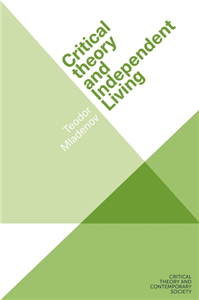
Critical theory and Independent Living explores intersections between contemporary critical theory and disabled people's struggle for self-determination. The book highlights the affinities between the Independent Living movement and studies of epistemic injustice, biopower, and psychopower. It discusses in depth the activists' critical engagement with welfare-state paternalism, neoliberal marketisation, and familialism. This helps develop a pioneering comparison between various welfare regimes grounded in Independent Living advocacy. The book draws on the activism of disabled people from the European Network on Independent Living (ENIL) by developing case studies of the ENIL's campaigning for deinstitutionalisation and personal assistance. It is argued that this work helps rethink independence as a form of interdependence, and that this reframing is pivotal for critical theorising in the twenty-first century.
Trusted Partner
This book analyses the world of selective reproduction by a critical analysis of three modes of controlling birth, namely contraception, reproductive violence, and repro-genetic technologies. All population control policies target and vilify women (Black women in particular), and coerce them into subjecting their bodies to state and medical surveillance; Birth controlled argues that assisted reproductive technologies and repro-genetic technologies employ a similar and stratified burden of blame and responsibility based on gender, race, class and caste. The book draws on gender studies, sociology, medical anthropology, politics, science and technology studies, theology, public health and epidemiology to provides a critical, interdisciplinary and cutting-edge dialogue around the interconnected issues that shape reproductive politics in an ostensibly 'post-population control' era.
Trusted Partner


Minor illness or a serious disease ? Through systematic questioning, pharmacists or pharmaceutical technicians can establish the possibilities and limits of self-medication. Each monograph on the over 100 indications for self-medication includes: - A flow chart: basis for the structured consultation - A brief description: additional information about the symptoms - Recommended medications/groups of medications: the treatment options - Additional advice: individual supportive and alternative treatment options - Specific knowledge for advising particular patient groups: e.g. pregnant women, children and senior citizens New for the 7th edition: Monographs that explore the possibilities of supportive self-medication for indications such as hypertension and diabetes. Information about what to do in the case of poisoning, scabies or inflammation of the nail bed (paronychia) is also provided! The details about active substances, products and additional tips have been updated. The pocket guide has long been the standard for providing advice on self-medication – a “must-have”!
Trusted Partner
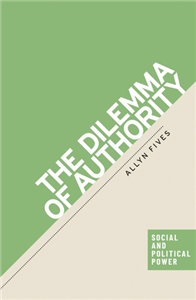
The moral problem of authority is the challenge of reconciling legitimate authority (the right to rule) with the demands of freedom and rationality. In this book, I argue that authority can have legitimacy, but when it does it generates a moral dilemma, where the obligation to obey comes at some cost to freedom and reason. Hence, not only do I depart from the views of those who insist that authority can never have legitimacy, but also those who maintain that insofar as authority is legitimate it simply satisfies the demands of freedom or rationality. My focus here will be on both what it is that justifies authority (in particular focusing on membership, and the goods of membership) as well what type of reason an authoritative directive is, how it can come into conflict with others reasons, and how those conflicts are resolved.
Trusted Partner
Trusted Partner
Trusted Partner

Cough, hay fever or herpes are at least as troublesome during pregnancy and breast-feeding as under normal “conditions” - and yet everything is different. Physiological changes to the body in pregnancy and lactation, together with the vulnerability of the unborn baby or infant, set particular requirements when selecting the correct, safe medication. Especially in the area of self-medication, the needs of pregnant and breast-feeding women for information are great and call for competent advice! This comprehensive handbook is the key: General information about pharmacotherapy, supplementary measures, vaccinations, questions about diet and infections in pregnancy and lactation creates a broad knowledge base. The core feature of the book are the traffic light tables, with precise recommendations for medicinal products for all types of treatment. All the important indications for selfmedication in pregnancy and lactation are listed and the tables are supported by detailed explanations of the individual assessments. The sections “Advice from medical specialists” are particularly useful, with additional tips from gynaecologists and “Footnotes” with relevant information on the use of prescription- only medicines – and as the ultimate practical tool: the enclosed sales counter leaflets with all traffic light tables to enable quick reference for first-class advice!
Trusted Partner

In 1841, the Welsh sent their first missionary, Thomas Jones, to evangelise the tribal peoples of the Khasi Hills of north-east India. This book follows Jones from rural Wales to Cherrapunji, the wettest place on earth and now one of the most Christianised parts of India. As colonised colonisers, the Welsh were to have a profound impact on the culture and beliefs of the Khasis. The book also foregrounds broader political, scientific, racial and military ideologies that mobilised the Khasi Hills into an interconnected network of imperial control. Its themes are universal: crises of authority, the loneliness of geographical isolation, sexual scandal, greed and exploitation, personal and institutional dogma, individual and group morality. Written by a direct descendant of Thomas Jones, it makes a significant contribution in orienting the scholarship of imperialism to a much-neglected corner of India, and will appeal to students of the British imperial experience more broadly.
Trusted Partner
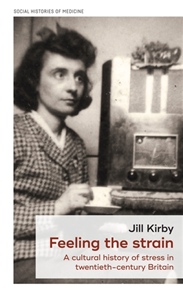
Examining the popular discourse of nerves and stress, this book provides a historical account of how ordinary Britons understood, explained and coped with the pressures and strains of daily life during the twentieth century. It traces the popular, vernacular discourse of stress, illuminating not just how stress was known, but the ways in which that knowledge was produced. Taking a cultural approach, the book focuses on contemporary popular understandings, revealing continuity of ideas about work, mental health, status, gender and individual weakness, as well as the changing socio-economic contexts that enabled stress to become a ubiquitous condition of everyday life by the end of the century. With accounts from sufferers, families and colleagues it also offers insight into self-help literature, the meanings of work and changing dynamics of domestic life, delivering a complementary perspective to medical histories of stress.
Trusted Partner

Democratizing AI offers a powerful rethinking of how artificial intelligence should be governed. Challenging the dominance of tech elites in shaping AI's future, Zimmermann argues that AI deployment is a political act-one that must be subject to democratic control. She proposes a practical "playbook" for reclaiming agenda-setting power through civic participation, public ownership, and institutional reform. Engaging with leading critics, Zimmermann defends a risk-sensitive proceduralist approach while acknowledging the deeper structural challenges posed by capitalism, inequality, and democratic fatigue. This book is a call to action: to resist learned helplessness, confront techno-authoritarianism, and shape AI's trajectory in line with democratic values. Thoughtful, urgent, and visionary, the book is essential reading for anyone concerned with the future of technology and democracy.
Trusted Partner

From a psychological perspective, there are many aspects to negotiating. Given the right knowledge of backgrounds and mechanisms, it is an art form possible to get to grips with and put into practice. In an entertaining and informative way, this book introduces the reader to the basics of communication and body language, cooperative negotiation, strategic negotiation, the different personalities of negotiators, and negotiating. Using practical exercises and valuable practical tips, this book takes the reader through the main psychological strategies and methods so he can negotiate in a flexible, goal-oriented, and successful manner. Target Group: For people who want to improve their negotiating skills.
Trusted Partner
Imperial power, both formal and informal, and research in the natural sciences were closely dependent in the nineteenth century. This book examines a portion of the mass-produced juvenile literature, focusing on the cluster of ideas connected with Britain's role in the maintenance of order and the spread of civilization. It discusses the political economy of Western ecological systems, and the consequences of their extension to the colonial periphery, particularly in forms of forest conservation. Progress and consumerism were major constituents of the consensus that helped stabilise the late Victorian society, but consumerism only works if it can deliver the goods. From 1842 onwards, almost all major episodes of coordinated popular resistance to colonial rule in India were preceded by phases of vigorous resistance to colonial forest control. By the late 1840s, a limited number of professional positions were available for geologists in British imperial service, but imperial geology had a longer pedigree. Modern imperialism or 'municipal imperialism' offers a broader framework for understanding the origins, long duration and persistent support for overseas expansion which transcended the rise and fall of cabinets or international realignments in the 1800s. Although medical scientists began to discern and control the microbiological causes of tropical ills after the mid-nineteenth century, the claims for climatic causation did not undergo a corresponding decline. Arthur Pearson's Pearson's Magazine was patriotic, militaristic and devoted to royalty. The book explores how science emerged as an important feature of the development policies of the Colonial Office (CO) of the colonial empire.
Trusted Partner
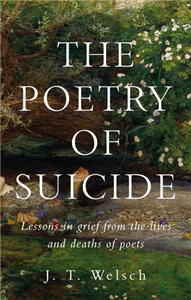
A profound exploration of the connection between poetry and suicide. 'Suicides have a special language,' Anne Sexton wrote in her 1964 poem 'Wanting to Die'. But is it a language we can learn to read? In The poetry of suicide, J. T. Welsch interweaves stories of poets who took their own lives with the long history of suicide in his own family, searching for a new way of understanding these difficult deaths. Beginning with Hamlet's 'To be or not to be?', he delves into the work of Dante, Sylvia Plath, Vladimir Mayakovsky and others, asking what it can teach us about suicide's messy reality. Suicide is more like poetry than we realise, Welsch argues. Both are filled with ambiguities, contradictions and unknowable intentions. Both demand and resist interpretation. Recovering the personal dimension often lost in our medicalised public discourse, Welsch finds practical ways of confronting suicide's poem-like difficulties.



